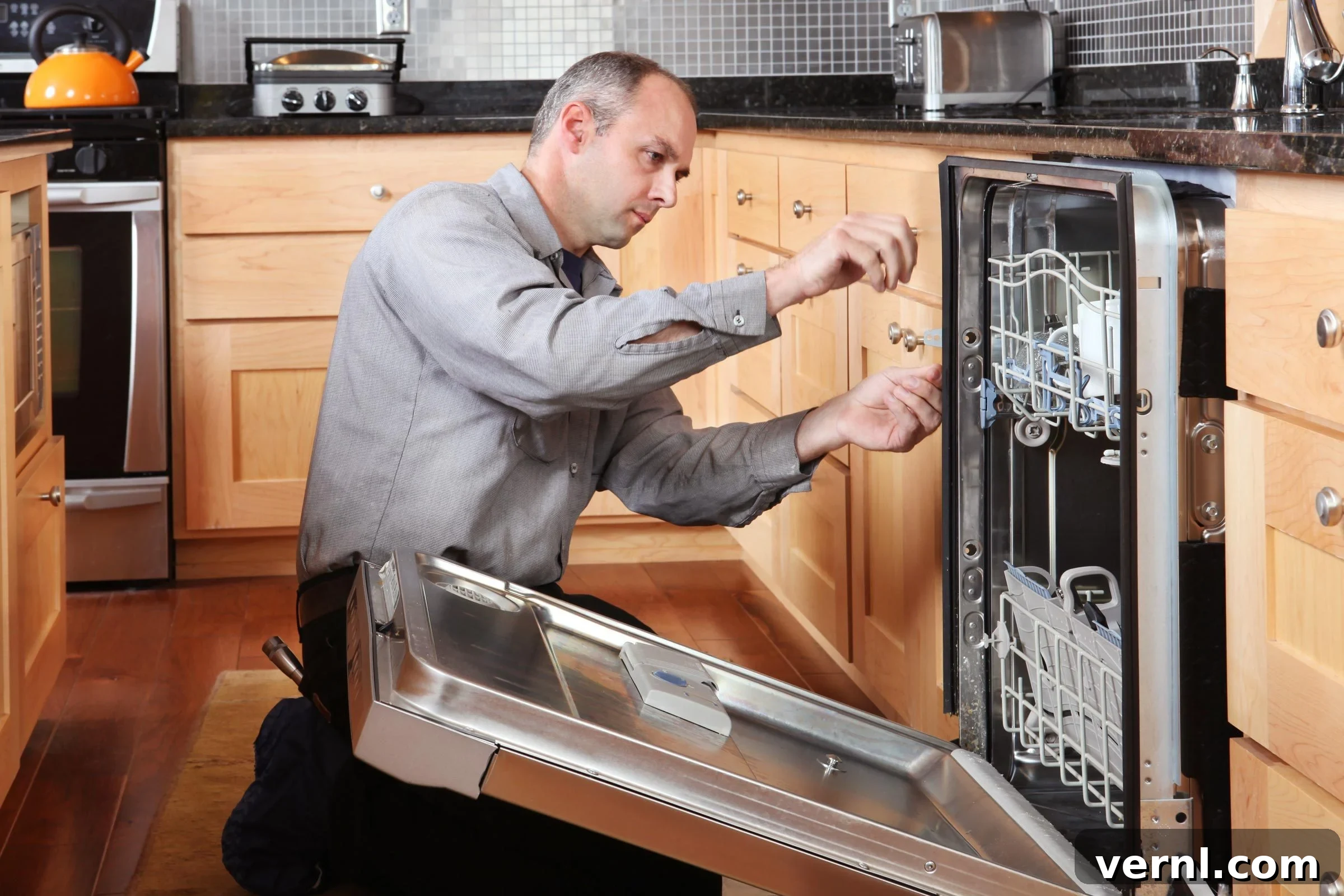
As a seasoned appliance repair technician with over three decades of hands-on experience, I’ve encountered countless dishwashers exhibiting the frustrating symptom of a leak from the bottom corners of the door. This particular issue, while seemingly daunting to homeowners, is one I always welcome. It almost invariably points to a common, easily diagnosable problem, allowing me to implement a swift and effective solution within minutes, often requiring just a few basic supplies.
The insidious drip from the lower corner of a dishwasher door is a universal predicament that many appliance owners face at some point. If left unaddressed, even a small leak can lead to significant and costly damage, warping kitchen flooring, discoloring cabinets, and potentially fostering mold growth. Understanding the root causes and implementing timely repairs is crucial for maintaining both your appliance and your home’s integrity. In this comprehensive guide, I will share my extensive knowledge, detailing all possible reasons why your dishwasher might be leaking from the door and providing straightforward, step-by-step DIY fixes that you can confidently undertake.
About the Appliance Repair Expert
Scott Flint (aka Scott the Fixit Guy) is a highly respected authority in the appliance repair industry, boasting more than 30 years of dedicated service as both an appliance technician and an educator. His vast expertise spans a wide array of household appliances, including washers, dryers, dishwashers, refrigerators, stoves, and ovens. Scott is also a prominent figure in the DIY community, operating three popular YouTube channels that collectively boast over 60,000 subscribers and consistently achieve an impressive average of 1,000,000 views per month. His commitment to empowering homeowners with practical repair knowledge makes him a trusted resource for anyone looking to tackle appliance issues themselves.
Why is My Dishwasher Leaking from the Bottom of the Door? Understanding the Common Causes
When a dishwasher begins to leak from the bottom of its door, it’s a clear indicator that something is amiss within its sealed system. While several factors can contribute to this problem, the vast majority of cases stem from a few core culprits. Understanding these will help you diagnose the issue accurately and proceed with the correct repair.
In most instances, the primary reason for a leak near the door is a compromised black rubber door seal – either it’s become excessively dirty or it’s lost its original shape due to compression. However, other mechanical issues, such as a slightly bent dishwasher door or a malfunctioning water fill valve that remains stuck open, can also be responsible. Let’s delve deeper into each potential cause.
The Compromised Door Seal: Dirt and Compression
Over time, the dishwasher’s harsh environment takes its toll on the critical door seal. A combination of detergent residue, food particles, grease, and mineral deposits from hard water can accumulate on the surface of the black rubber door gasket. As these contaminants dry and harden, they form a gritty, non-flexible film. This film prevents the rubber seal from fully compressing against the dishwasher tub and door frame, creating microscopic gaps that are no longer watertight.
During the hot wash cycle, the dishwasher’s powerful spray arms propel water at high pressure throughout the tub. If the rubber seal is no longer able to form a perfect watertight barrier, some of this forcefully ejected water can find its way past the compromised seal. It then dribbles down the side of the door, typically manifesting as a visible leak from either the right or left lower corner of the door, eventually reaching your kitchen floor.
Furthermore, consistent pressure from the door closing over many cycles can cause the rubber seal to become compressed. This compression reduces the seal’s thickness and elasticity, preventing it from expanding sufficiently to make a tight contact with the door frame, even if it’s perfectly clean.
Also, it’s worth noting that other water-related issues can occur. For instance, find out what to do when water comes from your dishwasher air gap, which is a different, though equally important, plumbing concern.
A Misaligned or Bent Dishwasher Door
Another common, yet often overlooked, cause of leaks is a door that has become slightly bent or misaligned. Through regular use, or sometimes due to accidental impacts, the door can subtly shift its shape. When this occurs, the door may not close completely flush with the dishwasher tub, especially in the upper corners. Even a small gap prevents the door seal from achieving the necessary compression to create a watertight seal, allowing water to escape during operation.
A Stuck Dishwasher Water Fill Valve
While less common than seal issues, a malfunctioning water fill valve can also be the culprit behind a door leak. The fill valve is responsible for controlling the flow of water into the dishwasher. If this valve becomes stuck in the ‘open’ position, it will allow water to continuously enter the dishwasher, even when the appliance is turned off or unplugged. This constant influx of water will eventually overflow the tub, leading to water pouring out from the bottom of the door, creating a significant and immediate flooding risk.
How To Stop a Dishwasher From Leaking in the Front: Expert-Approved DIY Solutions
When faced with a leak from the front of their dishwasher, many homeowners instinctively assume the worst: a completely failed door seal requiring an expensive replacement. However, based on my decades of experience diagnosing and repairing dishwashers, I can confidently state that I have rarely, if ever, needed to replace the main bottom door seal. The fix is almost always simpler and more cost-effective, primarily involving proper cleaning and minor adjustments. Before you begin any repair, always ensure the dishwasher is disconnected from its power supply for safety.
For most of these DIY fixes, you’ll need just a few simple items: a bowl of hot water, a mild liquid detergent, an old toothbrush (excellent for scrubbing tight spots), and some clean paper towels.
Step 1: Thoroughly Clean the Dishwasher Door Seal
This is often the first and most effective step in resolving a dishwasher door leak. A clean seal is a functional seal. Over time, the build-up of food particles, detergent residue, and grease can harden, creating an uneven surface that prevents the seal from doing its job. Restoring its pristine condition is crucial for a watertight closure.
- Begin by creating a powerful yet gentle cleaning solution. Add approximately one teaspoon of mild liquid detergent (dish soap works perfectly) to a bowl of hot water. The hot water helps to loosen stubborn grime, and the detergent breaks down grease and food residue.
- Dip your old toothbrush into the cleaning solution. The small bristles of a toothbrush are ideal for reaching into the crevices and textured surfaces of the rubber seal.
- Carefully and thoroughly scrub the entire length of the black rubber door seal that runs along the perimeter of the dishwasher tub opening. Pay close attention to corners and areas where debris tends to accumulate most heavily. Apply gentle pressure, ensuring you remove all visible and hidden grime. Don’t forget the underside and sides of the seal.
- Once you’ve scrubbed the entire seal, take a clean, wet paper towel and wipe down the seal. This step removes any loosened debris and excess cleaning solution. Repeat if necessary until the seal feels smooth and free of residue.
- Finally, use fresh, dry paper towels to thoroughly dry the seal. It’s important to remove all moisture. After this process, the seal should look visibly cleaner, feel supple and pliable, and be free of any gritty texture.
- Close the dishwasher door firmly and run a short wash cycle (at least 10 minutes) to test the repair. Observe closely for any signs of leakage.
- If there’s no more leak, congratulations! You’ve successfully resolved the issue. If the leak persists, move on to the next potential solution.
Step 2: Adjust the Dishwasher Door Seal to Restore Compression
Even a perfectly clean seal can leak if it has become compressed over time and no longer makes adequate contact with the door. This simple adjustment often restores its original sealing capability.
- Locate the black rubber seal. You’ll notice it sits within a metal or plastic channel around the dishwasher tub opening.
- Using your thumb and index finger, gently pinch a small section of the black rubber seal. Lightly pull it outwards, towards you, by approximately one-quarter inch (about 6mm). The seal is held in place by friction within its channel, and over time, constant pressure from the door can push it deeper, causing it to become overly compressed.
- By subtly pulling the seal out of its channel, you effectively increase its outward projection. This brings the seal back into firm contact with the dishwasher door when closed, thereby re-establishing a robust and watertight barrier.
- Work your way around the entire perimeter of the seal, adjusting it in one-inch increments. Be gentle but firm, ensuring you pull it out consistently all the way around.
- This straightforward procedure is remarkably effective and is applicable to virtually all major brands and models of dishwashers.
- After adjustment, close the door and run another test cycle, checking for leaks.
Step 3: Straighten a Slightly Bent Dishwasher Door
It’s surprisingly common for dishwasher doors to become slightly bent or misaligned over time, often due to leaning on them, heavy loading, or simply wear and tear. When this happens, the door may not fully seal, particularly in the upper corners, leading to water escaping. Fortunately, correcting a bent door can often be achieved with a simple household item.
- Begin by folding a standard washcloth in half, then fold it one more time to create a thick, padded cushion. This cloth will protect the dishwasher’s finish while providing the necessary leverage.
- Identify the side of the door that appears bent or where the seal isn’t making full contact. Position the folded washcloth precisely between the dishwasher door and the tub, near the hinge on the problematic side. The cloth should act as a soft, raised fulcrum.
- With the washcloth securely in position, apply gentle but firm pressure to the top corner of the bent door. Administer three controlled pulses, gradually increasing the pressure with each push. The washcloth will distribute the force, helping to gently bend the door back into its correct, straight alignment without damaging the surface.
- Remove the washcloth and carefully check if the door now closes correctly, making full and even contact with the tub all around. You may need to repeat this process several times, making small, incremental adjustments, until the door achieves a perfectly straight and flush closure. Patience is key here.
- Once the door appears straight, run a test cycle to confirm the leak has stopped.
Step 4: Remove Improperly Loaded Large Items
Sometimes, the solution to a leak is astonishingly simple and has nothing to do with the dishwasher’s mechanics. Incorrect loading can be a significant factor. If a large item, such as a tall cookie sheet, an oversized cutting board, or a baking tray, is loaded vertically or positioned awkwardly, it can obstruct the spray arms or even directly interfere with the door seal. The powerful jets of water from the spray arm can deflect off these items and be forced past the door seal, leading to a leak.
The fix here is straightforward: simply open the dishwasher, identify any oversized or poorly placed items that might be causing an obstruction, and either remove them or reposition them properly. Ensure that nothing is protruding past the edges of the racks or interfering with the spray arm’s rotation or the door’s ability to seal completely. Run another cycle to confirm the issue is resolved.
Step 5: Address a Malfunctioning Water Fill Valve
This particular cause is less about a gradual drip and more about a potentially significant water spill. If your dishwasher door leaks because the water fill valve is stuck in the ‘on’ position, you will notice water continuously entering the appliance, even when it is supposedly off or unplugged. A clear sign of this problem is if you open the dishwasher door and a large volume of water immediately pours out onto your kitchen floor. This indicates that the tub has overfilled due to an uncontrolled water supply.
The immediate and crucial solution is to turn off the main water supply to your dishwasher, typically located under the sink. Once the water supply is secured, the permanent fix involves replacing the faulty fill valve. This is a more involved repair than cleaning a seal, and if you’re not comfortable with plumbing or electrical work, it’s advisable to consult a professional. A new fill valve will restore proper water regulation and prevent future overflows.
Preventative Maintenance for a Leak-Free Dishwasher
Once you’ve successfully fixed a dishwasher leak, adopting a few preventative maintenance habits can significantly extend the life of your appliance and prevent future issues:
- Regular Seal Cleaning: Make it a habit to wipe down your dishwasher’s door seal with a damp cloth every few weeks. This prevents the buildup of food particles and detergent residue that can harden and compromise the seal. A monthly thorough cleaning with a toothbrush and mild detergent, as described in Step 1, is even better.
- Proper Loading: Always ensure dishes are loaded correctly. Avoid overcrowding, and never allow large items to block the spray arms or protrude so they interfere with the door’s closure or the door seal. Refer to your dishwasher’s manual for optimal loading patterns.
- Check for Debris: Periodically check the dishwasher filter and drain area for any food debris that could cause blockages or spray irregularities, indirectly leading to leaks.
- Inspect for Wear: Every few months, quickly inspect the door seal for any visible signs of cracking, tearing, or excessive compression. Catching these issues early can prevent more significant problems down the line.
- Use Quality Detergent: Opt for high-quality dishwasher detergents and use the correct amount. Too much detergent can create excessive suds that might escape the door, while low-quality detergents can leave behind more residue.
When to Call a Professional Appliance Technician
While many dishwasher leaks from the door can be resolved with DIY efforts, there are instances when professional help is the wisest course of action:
- Persistent Leaks: If you’ve tried all the suggested DIY fixes and the leak persists, it might indicate a more complex underlying issue, such as a cracked tub, a faulty pump, or a damaged spray arm that’s harder to diagnose and repair without specialized tools and expertise.
- Unidentified Leak Source: If you can’t pinpoint the exact source of the leak, a professional technician can conduct a thorough diagnostic to identify the problem accurately.
- Internal Component Issues: Repairs involving internal components like the pump, motor, or intricate plumbing often require significant disassembly and specific technical knowledge.
- Electrical Concerns: Any issue involving electrical components beyond simply unplugging the appliance should always be handled by a qualified technician to ensure safety.
- Warranty Considerations: If your dishwasher is still under warranty, attempting complex repairs yourself might void it. Check your warranty terms before proceeding with extensive DIY work.
By following this expert guide, you’re well-equipped to diagnose and fix most common dishwasher leaks from the bottom of the door, saving you time, money, and the hassle of water damage. Remember, a little preventative care goes a long way in keeping your dishwasher running efficiently and leak-free.