
Wire Gauge Sizes: Understanding Electrical Wiring
When undertaking any electrical project at home, understanding wire gauge sizes is paramount. Selecting the right wire size is critical for safe and efficient electrical flow. Different wire gauges are designed to handle specific electrical loads, and using the incorrect size can lead to serious hazards. This comprehensive guide will explain everything you need to know about wire gauge, ensuring you can confidently and safely complete your electrical work.
Why Wire Gauge Matters: Safety and Performance
The wire gauge, or the thickness of an electrical wire, directly impacts its ability to carry electrical current safely. Using the right gauge wire is fundamental to preventing potential problems. Undersized wires can overheat, posing a fire risk or causing damage to connected appliances and fixtures. Incorrectly sized wires also lead to circuit breaker trips, causing power disruptions.
Choosing the correct wire gauge ensures:
- Safety: Prevents overheating and reduces the risk of electrical fires.
- Efficiency: Allows for optimal electrical flow, ensuring appliances and fixtures function correctly.
- Longevity: Protects your electrical system from damage, extending its lifespan.
- Code Compliance: Ensures your work meets local and national electrical codes, which is essential for safety and legal requirements.
Quick Wire Size Estimation: The Nickel and Dime Test (and its Limitations)
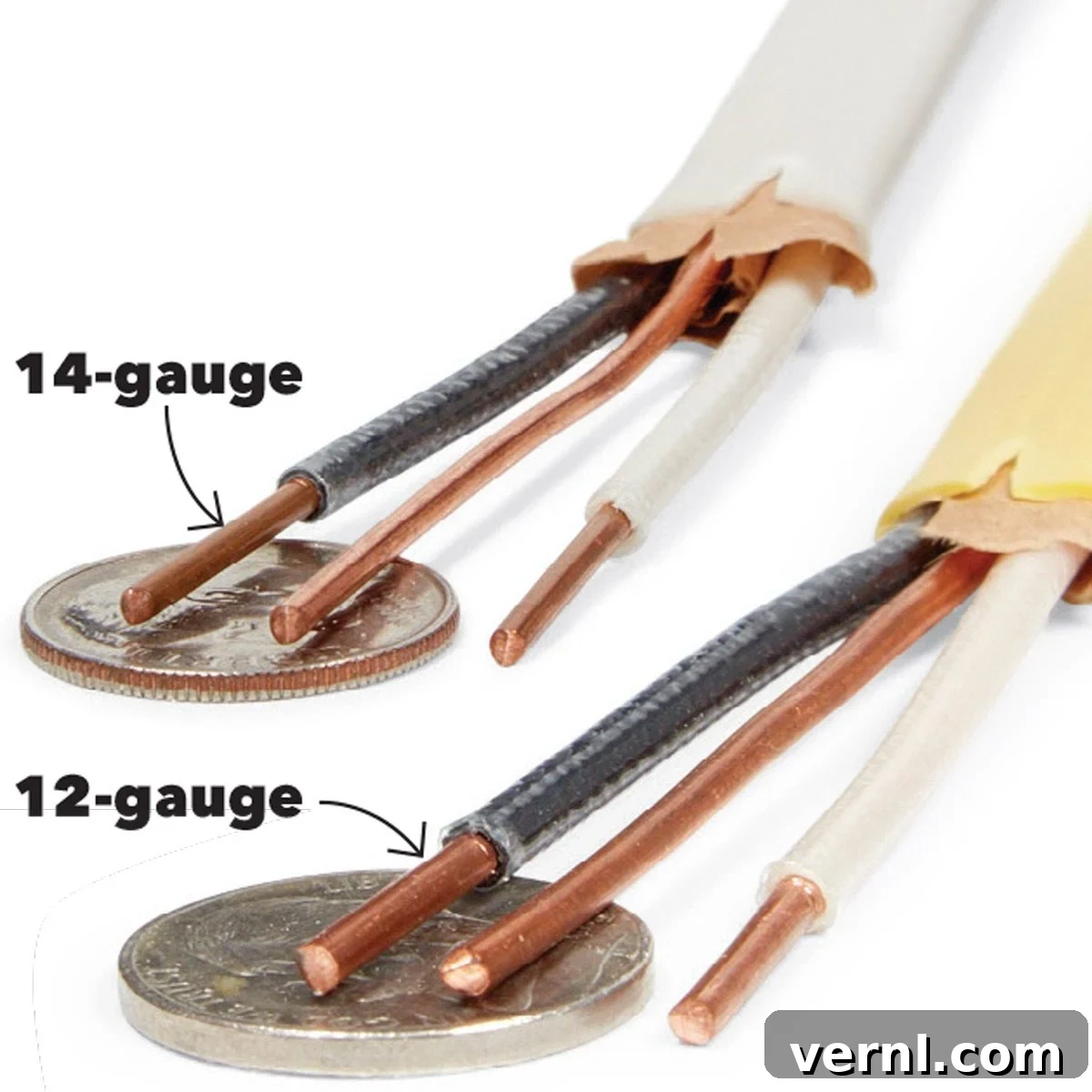
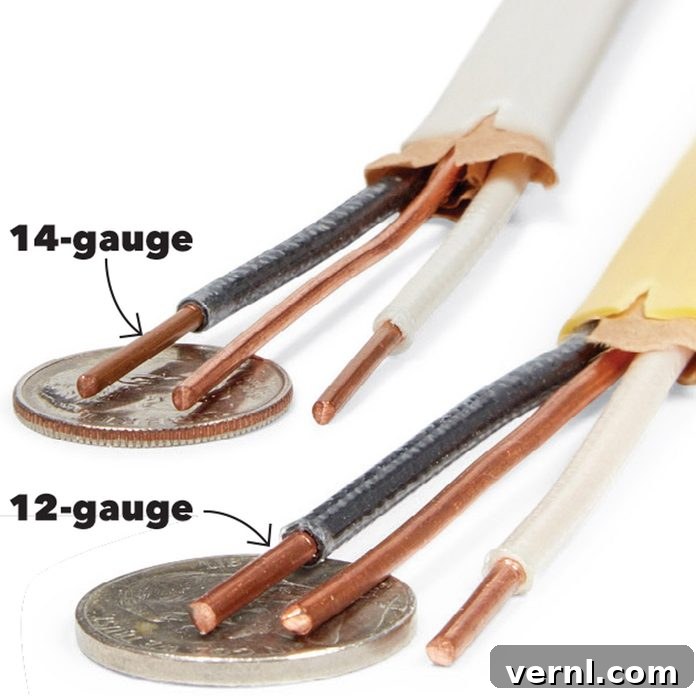
In a pinch, a quick estimation of wire size can be made by comparing the wire’s thickness to everyday objects. For instance, 12-gauge wire is approximately the thickness of a nickel, while 14-gauge wire is closer to the thickness of a dime. While this method can provide a very rough estimate, it’s not a reliable substitute for accurate measurement, especially for those new to electrical work.
Important Note: This method is not recommended for definitive identification. Electrical work requires precision, and relying on visual estimation can be dangerous. Always verify with a wire gauge or consult a qualified electrician.
Accurate Wire Sizing: Using a Wire Gauge
To eliminate guesswork and ensure electrical safety, a wire gauge is essential. A wire gauge is a tool that accurately measures the diameter of electrical wires. It provides precise readings, allowing you to select the correct size of wire for your project. Wire gauges are inexpensive and readily available at most hardware stores.
Using a wire gauge is straightforward. Simply insert the wire into the appropriate slot on the gauge. The gauge will indicate the wire’s size. This ensures that you’re using the correct wire for your specific needs, preventing errors and promoting safety.
Understanding Common Wire Gauges and Their Applications
Different wire gauges are designed for different electrical loads. Selecting the correct gauge depends on the amperage of the circuit. Here’s a breakdown of common wire gauges and their applications:
- 14 AWG (American Wire Gauge): Typically used on 15-amp circuits and suitable for low-energy-draw fixtures like lights and bedroom outlets.
- 12 AWG: Used on 20-amp circuits, providing a bit more power. This is common in kitchens, garages, and outdoor lighting.
- 10 AWG: Designed for 30-amp circuits, powering larger appliances such as water heaters and clothes dryers.
- 6 AWG: Necessary for 50-amp circuits, which are typically used for electric ranges, central air conditioning units, and electric vehicle charging stations.
Important Note: Always check your local electrical codes before starting any electrical project. These codes specify the required wire sizes and other safety measures.
Wire Gauge and Circuit Breaker Compatibility
Wire gauge and circuit breakers must be compatible. The circuit breaker protects the circuit by interrupting the current flow if it exceeds a safe level. The breaker’s amperage rating must match or be lower than the wire’s capacity. For instance, a 15-amp circuit should have 14-gauge or larger wire, and a 20-amp circuit needs 12-gauge or larger wire.
If you have a circuit breaker that repeatedly trips, the problem may stem from undersized wires. Always inspect the wiring and ensure it matches the breaker’s rating.
Planning Your Electrical Project: A Step-by-Step Guide
Follow these steps to ensure you’re using the right wire gauge for your electrical project:
- Determine the Electrical Load: Identify the appliances, fixtures, or devices that will be connected to the circuit. Add up the total wattage of all devices on the circuit.
- Calculate the Amperage: Divide the total wattage by the voltage (usually 120V in residential settings) to get the amperage.
- Choose the Correct Wire Gauge: Use the information provided in the “Understanding Common Wire Gauges and Their Applications” section to select the appropriate wire gauge.
- Select the Correct Circuit Breaker: Choose a circuit breaker that matches the wire’s amperage rating (or is lower).
- Install the Wiring: Follow all safety guidelines and electrical codes when installing the wiring. If you’re unsure, consult a qualified electrician.
Safety First: Precautions for Electrical Work
Working with electricity can be hazardous. Always take the following precautions:
- Turn Off the Power: Always shut off the power to the circuit you’re working on at the circuit breaker panel.
- Use Proper Tools: Use insulated tools and equipment to reduce the risk of electric shock.
- Inspect Wires and Connections: Before beginning any work, visually inspect the wires and connections for damage. Replace damaged wires.
- Wear Appropriate Safety Gear: Wear safety glasses and gloves to protect yourself.
- Don’t Work Alone: It’s always a good idea to have a helper nearby, especially for more complex projects.
- If in Doubt, Consult a Professional: If you’re not confident in your ability to perform electrical work safely, always consult a licensed electrician.
Troubleshooting Common Electrical Issues
Understanding wire gauge helps you troubleshoot common electrical problems:
- Circuit Breaker Tripping: This often indicates an overload or a short circuit. Check the wire gauge to ensure it matches the breaker’s rating. Look for loose connections or damaged wires.
- Flickering Lights: This might be a sign of a loose connection or overloaded circuit. Check the wire gauge and connections.
- Appliance Failure: Underpowered circuits can damage appliances. Make sure the circuit has the correct wire gauge to handle the appliance’s power draw.
Frequently Asked Questions About Wire Gauge
What does AWG mean?
AWG stands for American Wire Gauge, the standard unit of measurement for wire size in the United States and Canada.
Can I use a wire with a higher gauge than recommended?
Yes, you can use a wire with a higher gauge (thicker wire) than recommended. For example, you can use 12 AWG wire on a circuit designed for 14 AWG wire. However, you can’t go the other way around as it can be a safety issue.
What is the difference between solid and stranded wire?
Solid wire consists of a single solid conductor, while stranded wire is made up of multiple smaller wires twisted together. Solid wire is generally used for permanent wiring, while stranded wire is more flexible and ideal for applications like appliance cords.
How do I determine the voltage rating of a wire?
The voltage rating of a wire is printed on its insulation. It’s important to use wire with a voltage rating that’s equal to or greater than the voltage of the circuit.
Conclusion: Prioritize Safety and Accuracy in Your Electrical Work
Understanding wire gauge is fundamental to safe and effective electrical work. Always prioritize safety, use the correct tools, and verify your work against local electrical codes. By taking the time to understand wire gauge, you can confidently and safely perform electrical projects in your home, minimizing risks and ensuring the longevity and reliability of your electrical system.
Remember, when in doubt, consult a licensed electrician.