
Rocky Talkie Mountain Radio Review: Your Essential Communication Companion for Any Challenge
Throughout my life, two-way radios have been a constant source of fascination and a critical tool. From relying on compact models for essential communication during intense mountain climbs and exhilarating snowboarding descents to logging thousands of hours with bulkier, professional-grade walkie-talkies on demanding film sets, I’ve experienced firsthand the indispensable value of reliable short-range communication. These devices have consistently proven their worth, bridging communication gaps where cell service falters or is simply impractical.
More recently, the utility of two-way radios has extended to our home. My partner and I have been navigating an extensive home renovation project, and the ability to communicate instantly across our property has been a revelation. Instead of resorting to shouting or constantly tracking each other down, we’ve discovered the simple efficiency of requesting tools or an extra pair of hands with a quick press of a button on our Rocky Talkie Mountain Radio. This seamless communication dramatically reduces frustration and boosts productivity. Beyond renovation, these rugged walkie-talkies are equally handy for a myriad of activities, including mountain biking trails, kayaking expeditions, or keeping convoys connected during road trip caravanning.
Whether your needs are for thrilling outdoor adventures, demanding job sites, managing family visits to crowded theme parks, assembling crucial home emergency kits, or enhancing personal security, selecting the right two-way radio is paramount. This comprehensive Rocky Talkie review delves into the features, performance, and real-world applications of a device that has quickly become a top contender in its category.
What is the Rocky Talkie Mountain Radio?
The Rocky Talkie Mountain Radio stands out as an exceptionally durable and rechargeable two-way radio. Its origin story is rooted in necessity, born from the personal experiences of two passionate adventurers who recognized a significant gap in the market for a radio tough enough to withstand the demanding conditions of backcountry climbing and skiing. Traditional radios often fell short, proving unreliable and impractical when adventurers needed them most.
Bryce Jones, President and Co-Founder of Rocky Talkie, recounts the pivotal moment: “Rocky Talkie started as a passion project that kicked off when our co-founder Alex Page and I were climbing Castleton Tower in Utah. We saw a climbing party above us grappling with a communication breakdown, and it got us thinking, ‘Why don’t climbers use radios more often?'” This observation sowed the seeds of an idea, but it was a more personal experience that solidified their mission.
“Our lightbulb moment came later that very same day when our generic, Amazon-bought radios bit the dust,” Jones continues. “We realized that radios weren’t a common sight in the backcountry because the existing choices proved unreliable and impractical for adventurers. That sparked a multi-year mission to craft our own solution, culminating in the launch of Rocky Talkie in late 2019.” This dedication to solving a real-world problem for the outdoor community is embedded in the Rocky Talkie’s DNA, making it a product designed by adventurers, for adventurers.
A significant advantage of the Rocky Talkie is its operation on the FRS (Family Radio Service) communication band. This means that, unlike some higher-power radio systems, it does not require an FCC license to operate. This ease of use and accessibility makes it an ideal choice for a wide range of users, from casual hikers to serious backcountry enthusiasts, without the burden of licensing requirements or complex regulations.
Out of the Box: First Impressions of the Rocky Talkie
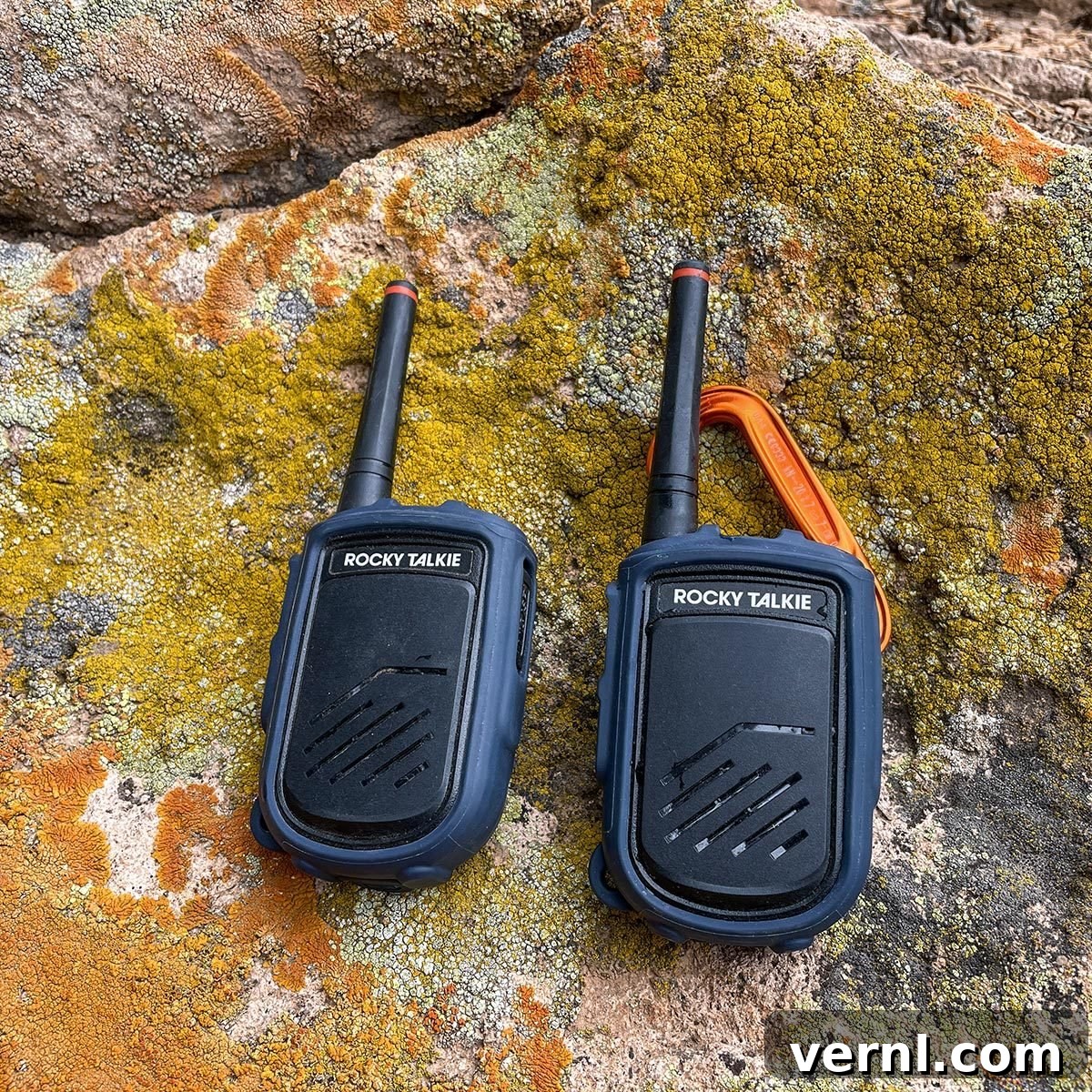
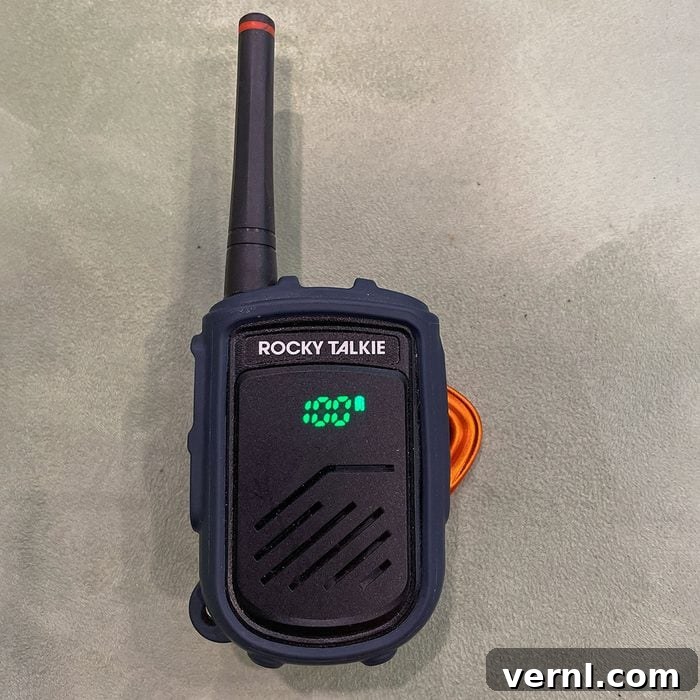
Upon unboxing for our Rocky Talkie review, the Mountain Radios immediately conveyed a sense of robust reliability, hinting at their destiny as our new constant companions. Compared with other two-way radios we’ve owned and experimented with over the years, these felt supremely solid and thoughtfully constructed. They are encased in rugged, non-slippery plastic, a choice that not only enhances grip in adverse conditions but also contributes to their overall durability. The screens are a standout feature, being shatterproof LED displays protected by thermoplastic—a deliberate design choice eliminating fragile glass components typically found in less robust devices.
Even the accompanying accessories speak to the Rocky Talkie’s commitment to quality. Each radio includes climbing-grade, name-brand carabiner clips made by Mammut, a testament to the manufacturer’s refusal to skimp on critical components. At first glance, it was evident that every detail had been considered with the end-user, often operating in challenging environments, in mind.
Beyond their physical resilience, these radios are incredibly simple and intuitive to operate. We found ourselves using them right away, a testament to their user-friendly design, even neglecting to read any instructions first. (We did, however, go back later and delve into all of their more subtle features, which revealed even greater versatility.) This plug-and-play simplicity is invaluable, especially in situations where quick, unhindered communication is vital.
While Rocky Talkies were meticulously designed to accommodate heavier-duty users in need of emergency radios for extreme conditions, we were still eager to put them through our own rigorous tests. We challenged them in sub-zero temperatures and beyond, pushing their limits in various scenarios. It quickly became clear why these radios have earned their reputation as a favorite among ice climbers, ski patrollers, and other professionals whose lives and safety depend on absolutely reliable communication across varied and often treacherous terrain.
We Tried It
Rocky Talkie Mountain Radio

Image Credit: VIA MERCHANT
Created with climbers and skiers in mind, the compact radio is suited for any rugged adventure where communication is critical.
Shop on Rocky Talkie
Key Features of the Rocky Talkie Mountain Radio
- Long-lasting, Cold-resistant Battery: The robust 1550 mAh replaceable lithium-ion battery is engineered to deliver exceptional performance, capable of lasting up to four days on a single charge, even in extreme conditions as low as -20 degrees Fahrenheit. This reliability is crucial for extended trips where recharging opportunities are scarce.
- 2-Watt Transmission Power: This is the maximum legally allowed transmission power without requiring an FCC license, striking an optimal balance between range and regulatory compliance.
- Low-Power Mode (0.5 Watts): For situations where conserving battery power is paramount, the Rocky Talkie offers a low-power mode, extending operational time when full range isn’t necessary.
- Impressive Range Capabilities: While the maximum theoretical range can reach up to 35 miles in ideal, unobstructed conditions, real-world performance varies. Typically, users can expect one to five miles in mountainous terrain, 0.5 to two miles in dense forests and rolling hills, and up to one mile in urban environments, showcasing its adaptability across diverse landscapes.
- Shatterproof LED Screen: Featuring a robust thermoplastic protective covering, the screen eliminates fragile glass components, ensuring durability against impacts and harsh handling.
- Extensive Channel Options: Comes equipped with 22 FRS standard channels, augmented by 106 preset channel/privacy code sub-channels. This vast selection minimizes interference and allows users to find clear communication lines.
- 121 Privacy Codes and 22 Unique Frequencies: Offering thousands of potential combinations, these features ensure private and clear communication. Channels 23 through 128 are preassigned with privacy codes for immediate, hassle-free use.
- Metal Carabiner Clip: A high-quality, climbing-grade metal carabiner is included for securely attaching the radio to a belt, jacket, backpack, or climbing harness, preventing accidental loss.
- Coiled Backup Leash: For an extra layer of security in rough situations, a coiled leash provides a fail-safe against dropping or losing the radio, particularly useful in challenging environments.
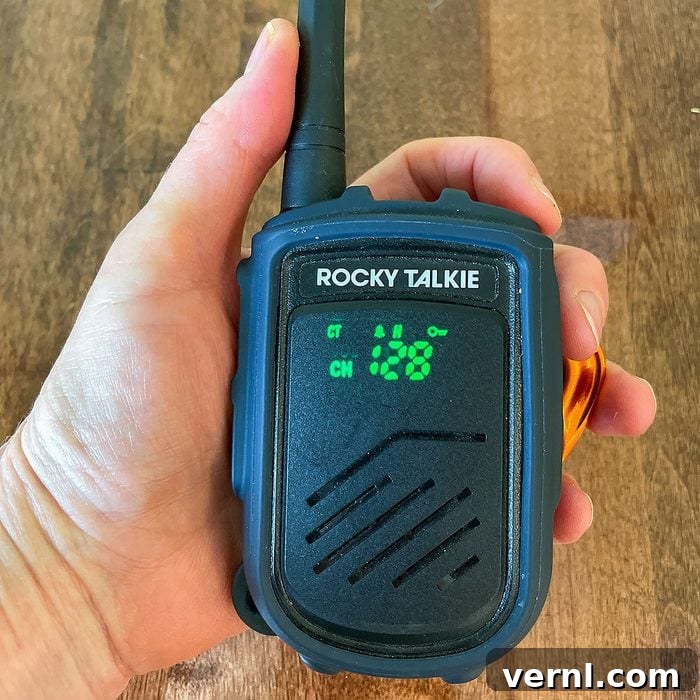
- Compact and Portable Size: Measuring 6.4 inches tall x 2.5 inches wide x 1 inch thick (or a more compact 3.6 inches tall with the antenna removed), the Rocky Talkie is designed to be highly portable and easily integrated into your gear without adding significant bulk.
- Intuitive Five-Button Interface: Engineered for ease of use, the simple five-button layout ensures that the radio can be operated instinctively, even with gloves on or in stressful situations.
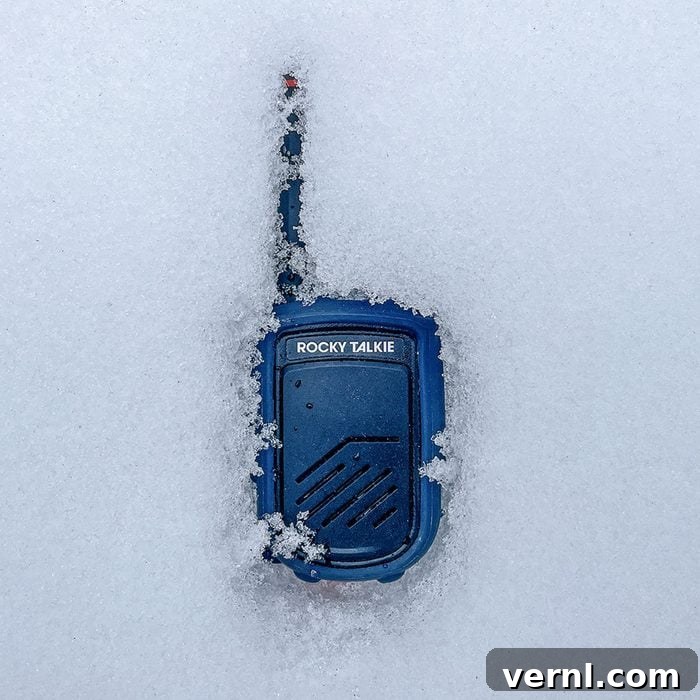
- IP56 Waterproof/Snow-proof Rating: This rating signifies that the Rocky Talkie is splash-proof and fully capable of surviving heavy rain and snow. While it is not designed to be submersible, its resistance to the elements makes it highly reliable in most outdoor weather conditions.
- Lightweight Design: The radio itself weighs a mere 6.1 ounces; including the carabiner and leash, the total weight is a manageable 8.0 ounces, making it an easy addition to any kit.
- Headset Port: Equipped with a K1 (two-prong) style headset port, allowing for hands-free operation and private communication with compatible accessories.
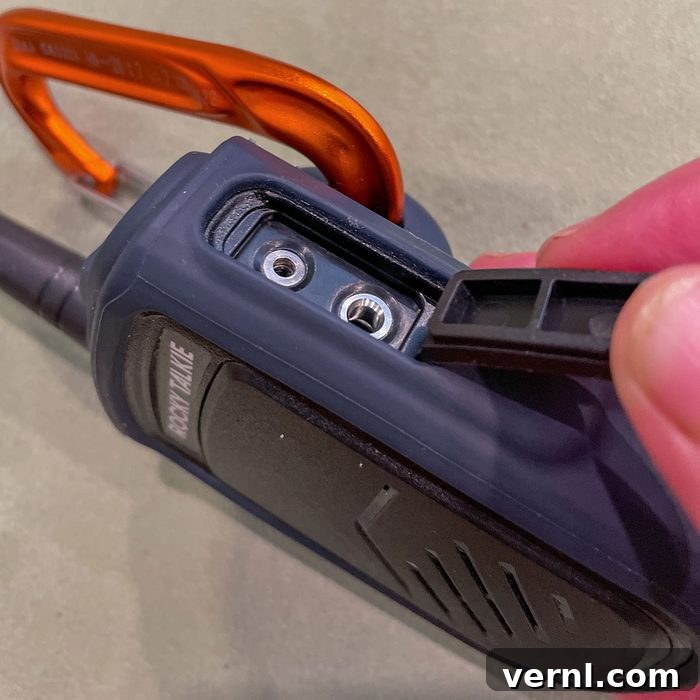
- USB-C Rechargeable: Modern and convenient, the radio recharges via a ubiquitous USB-C port, making it easy to power up from various sources, including power banks or vehicle chargers.
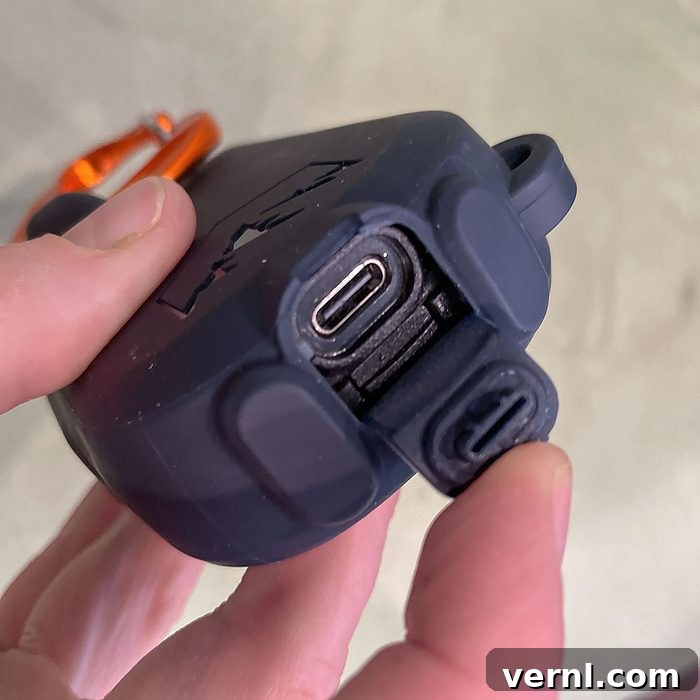
- Optional Waterproof Hand Mic: For even greater versatility in wet conditions, an optional waterproof hand mic is available, allowing the main unit to remain protected while still enabling clear communication.
- Optional Extra Batteries: For truly extended expeditions, additional batteries can be purchased, offering peace of mind and continuous operation.
- Two-Year Warranty: A comprehensive two-year warranty underscores the company’s confidence in the product’s quality and durability.
- Commitment to Sustainability: Rocky Talkie demonstrates a strong company commitment to sustainability through net-zero practices, the use of sustainable packaging, a focus on product durability to reduce waste, and influencing their supply chain for responsible sourcing.
How We Tested the Rocky Talkie Mountain Radio
To provide a thorough and honest assessment for this Rocky Talkie review, we subjected the radios to a variety of real-world scenarios, both mundane and extreme. We wanted to see how they would perform under typical everyday stress and how they would stand up to the rigorous demands of outdoor adventure.
Job Site Durability
Our initial trial for the Rocky Talkies unfolded during a demanding house renovation project. While perhaps not the “extreme conditions” some might envision for a mountain radio, a construction site presents its own unique set of challenges for electronic devices. They were frequently stomped on, dropped from various heights, and generally handled without much care, as we often neglected to use the convenient carabiners to secure them to our clothing. In one memorable instance, a radio slid off the second-story roof, only to be recovered later without so much as a scuff—a remarkable testament to its robust construction.
Despite not working on an enormous property, having the radios dramatically improved communication. The frustration of yelling across different rooms or outdoor areas became a thing of the past. Need to know “Where’s the hammer?” A simple push of a button provided an instant answer. Accidentally dropped the screw gun while holding up a heavy beam? No problem. A quick call for help, and assistance would appear, minimizing downtime and increasing safety. Beyond these typical radio conveniences, the Rocky Talkies excelled at weathering the pervasive dust and debris of a renovation. They shrugged off sawdust, drywall dust, and even the frequent dust storms that sweep through our valley. Furthermore, on occasions when we inadvertently left them outside overnight, they reliably survived rain, frost, snow, and even sub-zero temperatures, proving their impressive resilience against the elements.
Adventure Sports Performance
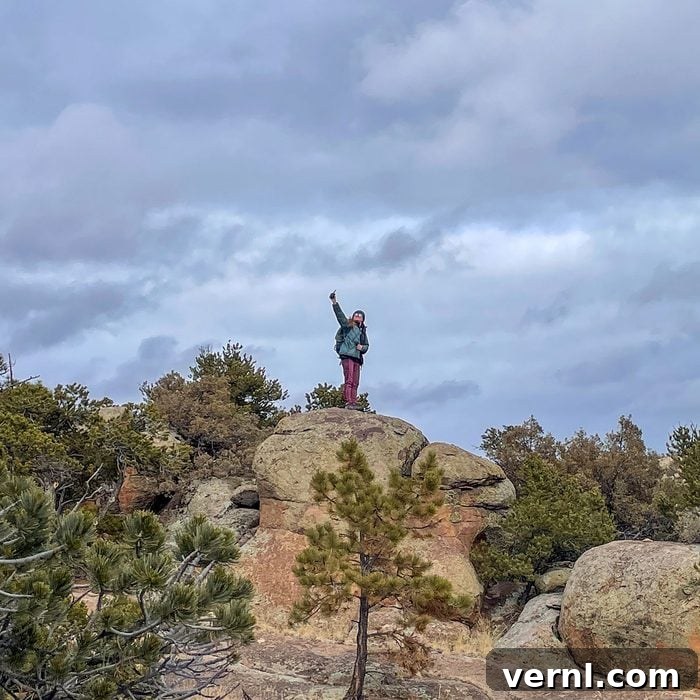
In contrast to the unintentional abuse they endured during the home renovation, we deliberately put the Rocky Talkies through their paces on our mountain biking and hiking adventures for this review. We intentionally subjected them to harsh treatment: running over them with our bicycles, packing them deep in snow, and banging them against unforgiving rocks while scrambling up mountainsides. We understood that other athletes had already pushed these radios in far more extreme conditions, so we weren’t entirely astonished that they held up to our simpler tests without issue. However, what truly surprised us was the sheer effortlessness of using them, even while wearing bulky winter gloves, and in my case, mittens.
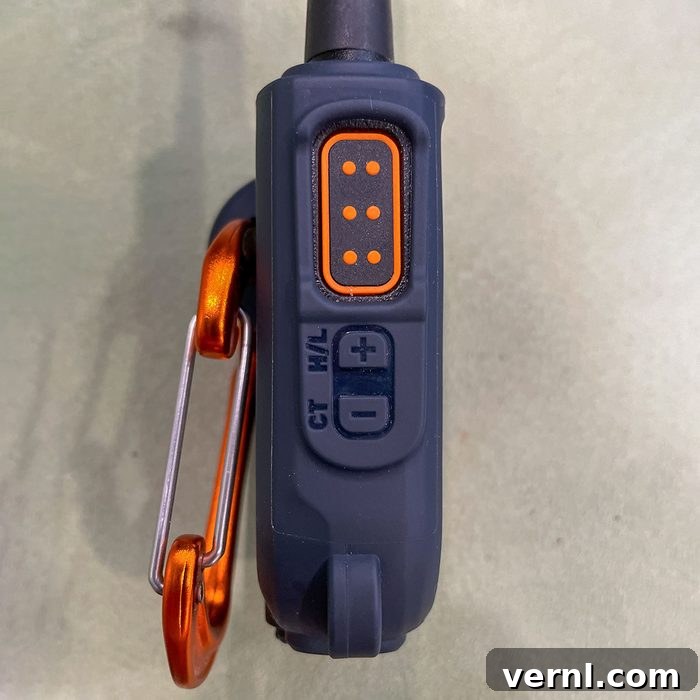
The large, prominent push-to-talk button and the smaller volume buttons are not only easy to locate and depress, but they also provide excellent tactile feedback. This ensures that you can always tell when a button has been activated, a crucial detail when your hands are encased in thick gloves and direct visual confirmation is difficult. This thoughtful design minimizes fumbling and ensures reliable communication when it matters most.
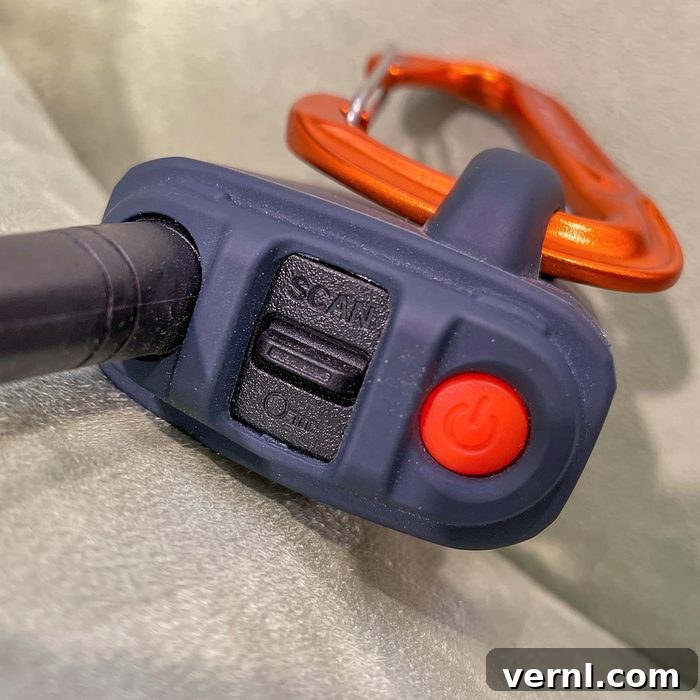
Conversely, the top toggle button, responsible for channel selection, is ingeniously protected by the radio’s housing. This design prevents it from being accidentally tripped or changed, which could lead to frustrating communication breakdowns in the field. Such attention to detail in button placement and protection truly enhances the user experience in dynamic outdoor environments.
Road Trip Communication
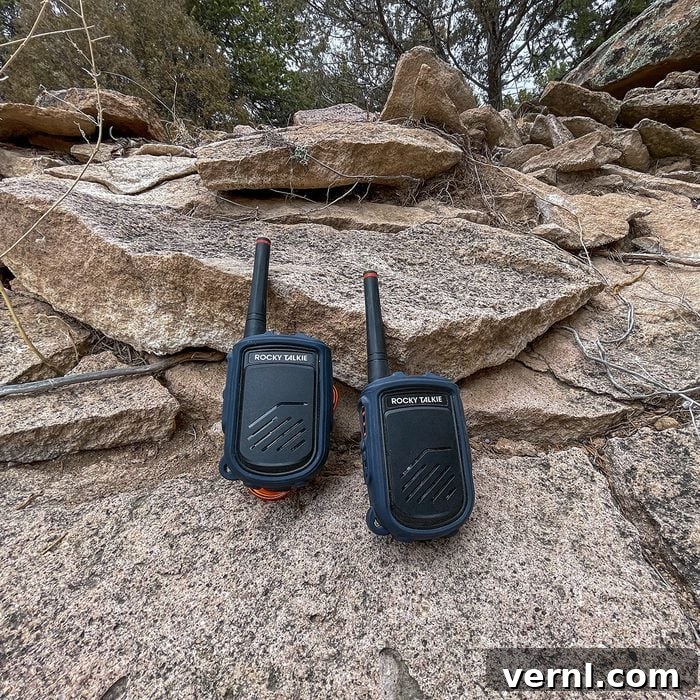
Last fall, we embarked on an epic six-week camping trip, caravanning from Colorado to Montana, and then south through the stunning Utah desert. When exploring new areas, our preferred method involves two vehicles: our converted van for camping and our more rugged Xterra for off-roading and detailed exploration. Traditionally, coordinating between two vehicles on the road can be a hassle, often involving dangerous phone calls or texts while driving. For this reason, we habitually rely on two-way radios for communication.
With our old radios, communication was often kept to a bare minimum due to limited range and clarity. However, the superior sound clarity and extended range of the Rocky Talkies transformed our experience. We found ourselves having actual, enjoyable conversations, simply for the fun of it, knowing that our signal typically stretched for at least a mile, and often more, even with varying terrain. We would certainly recommend this camping product for any multi-vehicle travel. The enhanced communication not only made the journey safer but also far more engaging.
The only minor downside we encountered was that, depending on engine and road noise, the volume could sometimes be a little soft. This occasionally required us to hold the radios closer to our ears rather than leaving them in the cupholders. Additionally, within the confines of our vehicles, the carabiners and coiled leashes, while excellent for outdoor security, proved to be a bit cumbersome, preventing the radios from sitting upright cleanly in the center consoles. This was an easy enough issue to remedy by simply removing them for the driving portions of the trip, though this did, unfortunately, lead to us losing one set of them—proof that klepto-camping gremlins are indeed real!
Exceptional Battery Life
The actual battery life, as opposed to the company’s stated claims, was a testing element we were particularly interested in for our Rocky Talkie review. We are pleased to report that it did not disappoint. Over the course of a few thousand miles and six weeks on the road, we only had to charge the radios twice. This incredible longevity surpassed our expectations. Even after forgetting to power them off before being unexpectedly holed up for ten days in a hotel room with COVID-19, they still retained enough juice to power our communication for another 1,000 miles, taking us from northern Montana all the way to Lake Powell, Utah.
More than just a convenience, this kind of unparalleled battery life has significant implications for emergency preparedness. It makes these walkie-talkies ideal components for home emergency kits, as they are likely to work reliably even if they haven’t been actively attended to or charged for an extended period. This level of dependability can be life-saving in critical situations.
Pros of the Rocky Talkie Mountain Radio
- Over-the-Top Durable: Built to withstand extreme conditions, impacts, and rough handling, making it suitable for the most demanding environments.
- Intuitive and Simple to Use: Designed for straightforward operation, allowing users to communicate effectively without complex instructions or a steep learning curve.
- Easy to Use with Gloves On: Large, tactile buttons ensure effortless operation even when wearing thick winter gloves or mittens.
- Very Clear Audio: Provides crisp, understandable voice transmission, crucial for clear communication in noisy or critical situations.
- Longer-Than-Average Range: Offers superior range compared to many FRS radios, especially in challenging terrains like mountains and forests.
- Rechargeable: Convenient USB-C charging ensures easy power replenishment from various sources.
- Excellent Battery Life: Boasts exceptional longevity, capable of days of use on a single charge, even in cold temperatures.
- Comfortable Grip: The rugged, non-slippery plastic casing feels secure and comfortable in hand, reducing the risk of accidental drops.
Cons of the Rocky Talkie Mountain Radio
- More Expensive: Priced higher than some entry-level or run-of-the-mill two-way radio sets, reflecting its premium durability and performance.
- Non-Standard Lithium Batteries: While replaceable, the batteries are proprietary, meaning you can’t easily swap in generic AA/AAA batteries in a pinch.
- Not Fully Submersible Waterproof: Rated IP56 (splash/rain-proof), it’s not designed for full submersion, which might be a consideration for avid boaters or extreme water sports enthusiasts.
- No Integrated Weather Radio: Lacks a built-in NOAA weather alert function, though including this feature typically adds bulk to units.
Frequently Asked Questions (FAQ)
How far do Rocky Talkies reach?
Rocky Talkie Mountain Radios are engineered for impressive range, boasting a maximum reach of 35 miles under ideal, line-of-sight conditions. However, real-world conditions significantly influence range. Typically, users can expect one to five miles in mountainous terrain, 0.5 to two miles in dense forests and rolling hills, and up to one mile in congested urban environments. These figures represent reliable communication distances in their respective settings.
Do Rocky Talkies work with other radios?
Yes, absolutely. The Rocky Talkie Mountain Radio is fully compatible with all other FRS (Family Radio Service) or GMRS (General Mobile Radio Service) radios. To ensure seamless communication, simply match both the channel (channels one through 22) and the privacy code (also known as the subchannel) on all radios. There is no limit to how many Rocky Talkies you can use together, or in combination with other brands of FRS and GMRS radios, making them highly versatile for group communication.
Who makes Rocky Talkies?
Rocky Talkie is an independent company dedicated to designing and manufacturing high-performance two-way radios. Their headquarters are situated in Colorado, USA, where all product design, engineering, and rigorous testing take place. For the manufacturing of parts and electronic assembly, they collaborate with trusted manufacturing partners located in China, Taiwan, and Italy, ensuring a global standard of quality and precision.
Rocky Talkie vs. Motorola: A Head-to-Head Comparison
When considering a rugged two-way radio, it’s natural to compare the Rocky Talkie with established brands like Motorola. Two Motorola models often considered comparable in the consumer FRS/GMRS market are the T600 and the more entry-level Talkabout T100.
The Motorola T600 is slightly smaller than the Rocky Talkie and features a specific design for full waterproofing, making it an excellent choice for avid boaters or those consistently working in exceptionally wet conditions. It also boasts additional features such as NOAA weather alerts and a built-in red and white flashlight beam, which can be valuable in certain emergency scenarios. However, if your primary use isn’t directly on or near water, the T600 offers less value in other areas. Its battery life is significantly shorter, and its range is not quite as robust as the Rocky Talkie, which may limit its utility in vast outdoor environments.
The Motorola Talkabout T100 is notably smaller and significantly less expensive than the Rocky Talkie. However, this cost difference is reflected in its performance. The T100 generally offers a less impressive range, reduced clarity in audio, and is not designed with the same level of intuitive ease of use, durability, or extended battery life. While it serves as a basic, affordable communication device for casual use or short distances, it doesn’t stand up to the rigorous demands and premium features that the Rocky Talkie provides for serious adventurers or professionals.
Final Verdict: Why the Rocky Talkie Mountain Radio Stands Out
If your search is for a sturdy, compact, and utterly reliable two-way radio that can perform under the most challenging working conditions—especially cold ones—and in potentially dangerous situations, the Rocky Talkie Mountain Radio is, hands-down, the one to bet your life on. Its engineering for extreme environments makes it an unparalleled choice for anyone who values dependable communication. This robust design also makes it a no-brainer if you’re concerned about it being accidentally launched off a second-story roof or if your child drops it in the mud at a bustling music festival—it’s built to take a beating and keep on transmitting.
However, there are a few important caveats to consider:
- Extreme Wet Conditions: If your activities frequently involve extremely wet conditions or potential submersion, we strongly recommend purchasing the optional waterproof hand mic. This accessory allows you to protect the main radio unit safely under your jacket or in a dry bag, while still having full, hands-free communication capability.
- Enhanced Range or Submersibility: For those requiring an even longer range or a fully submersible waterproof unit (up to one meter), consider Rocky Talkie’s new 5W radio. It’s important to note that with this higher wattage, you are legally obligated to register for a license with the FCC (Federal Communications Commission). This more powerful unit offers the same outstanding durability and ease of use as the Mountain Radio but with increased power to penetrate dense forests and achieve greater distances. It also comes with expanded features, including dual weather channel watch, access to NOAA weather channels, emergency alert monitoring, and GMRS repeater capability for truly extended range.
Otherwise, you will undoubtedly enjoy the Rocky Talkie Mountain Radio’s straightforward operation, outstandingly rugged design, and its excellent balance of range, clarity, and exceptional battery life. After conducting this thorough Rocky Talkie review, we are confident that our units will remain permanent fixtures in our gear for a very long time. Their compact size and light weight have made them essential additions to our camping checklist, always finding a spot in our day packs and reliably present on our job sites, proving their versatility across all facets of our lives.
Where to Buy the Rocky Talkie Mountain Radio
We Tried It
Rocky Talkie Mountain Radio

Image Credit: VIA MERCHANT
The radio transmits a max range of over 35 miles and provides over four days of battery life, making it ideal for any adventure.
Shop on Rocky Talkie
The Rocky Talkie Mountain Radio retails for an investment of $110. You can conveniently find it available for purchase directly on the company’s official website, ensuring you receive an authentic product. Additionally, it is stocked at select local mountaineering and outdoor gear stores, allowing you to experience its robust feel firsthand before making a purchase.