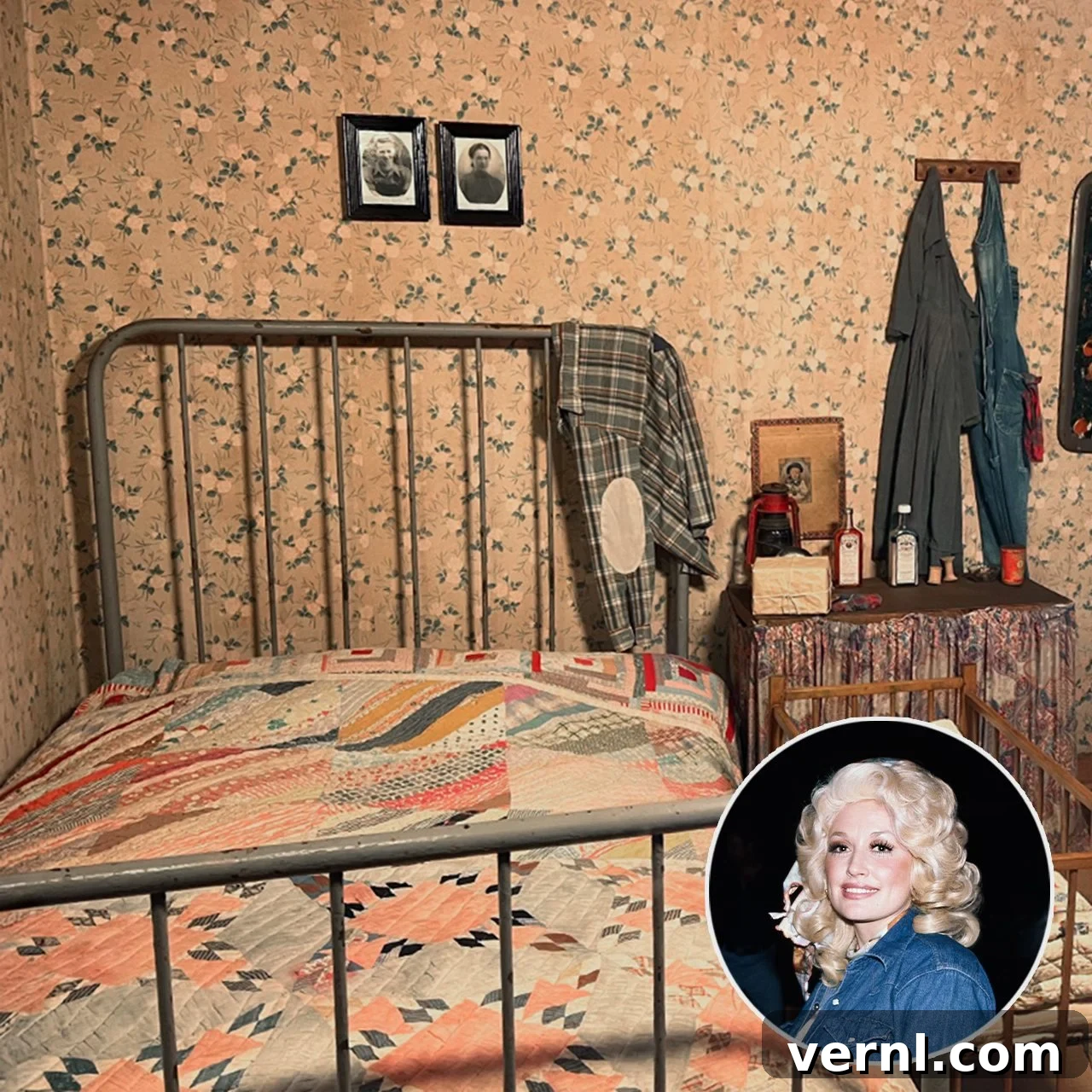
The late Dolly Parton grew up in a small cabin in East Tennessee with her parents and 11 siblings. Their Locust Ridge home was simple and unadorned, without electricity or running water. Those early years shaped much of the music, storytelling and public persona she cultivated over a lifetime.
Many of the places and scenes from Parton’s childhood became recurring themes in her songs and public reflections. Following her death on Aug. 25, attention has returned to the Tennessee landmarks tied to her life, including the original cabin where she was raised and the carefully crafted replica on display for visitors. Below is a clear look at what that childhood cabin was like and how visitors can experience a faithful representation of it today.
Inside Dolly Parton’s Childhood Cabin
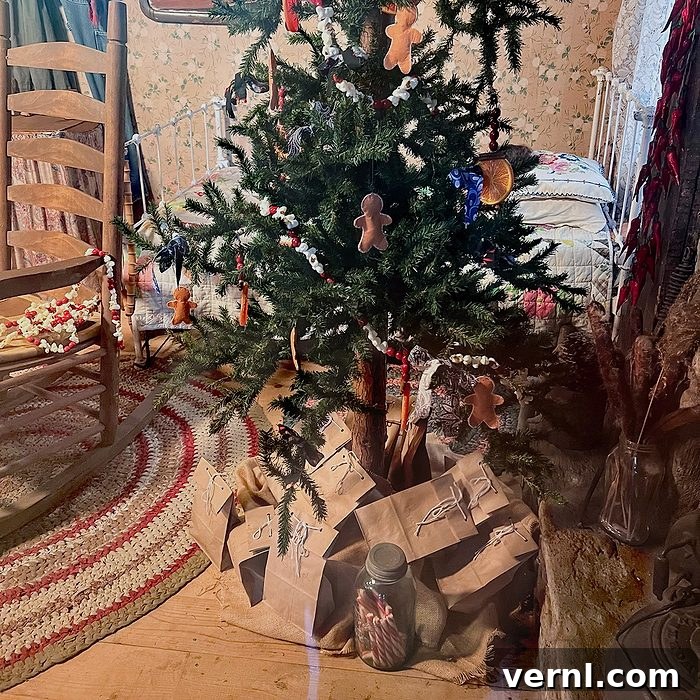
Dolly Parton spent her earliest years in Locust Ridge, a rural area near the foothills of the Great Smoky Mountains. The family lived in a modest log cabin with only a few multipurpose rooms: a cooking area and combined sleeping quarters that accommodated all thirteen family members. The house lacked modern conveniences such as electricity and running water. Walls were patched in places with newspaper, and furnishings were simple—handmade quilts, basic cookware, wooden chairs and a wood-burning stove for heat and cooking.
Despite the material scarcity, people who write about Parton’s upbringing emphasize the warmth and close family bonds that filled the house. Those formative surroundings gave Parton the images and narratives that recur across her songwriting: the practical details of mountain life, the rhythms of rural work, and the kind of family stories that become folklore. The cabin and the surrounding landscape later appeared explicitly in her work, including the imagery on the cover of her album My Tennessee Mountain Home.
Parton’s childhood experience also shaped her songwriting approach. Her lyrics often echo the direct storytelling of Appalachian ballads, using compact narratives, plainspoken language and touches of humor to convey full human dramas. She turned specific memories and regional tales into universal songs about aspiration, hardship, love and resilience. Biographical resources note that her upbringing was central both to her artistic identity and to the realistic tone of many of her best-known songs.
How Fans Can See the Cabin at Dollywood Today
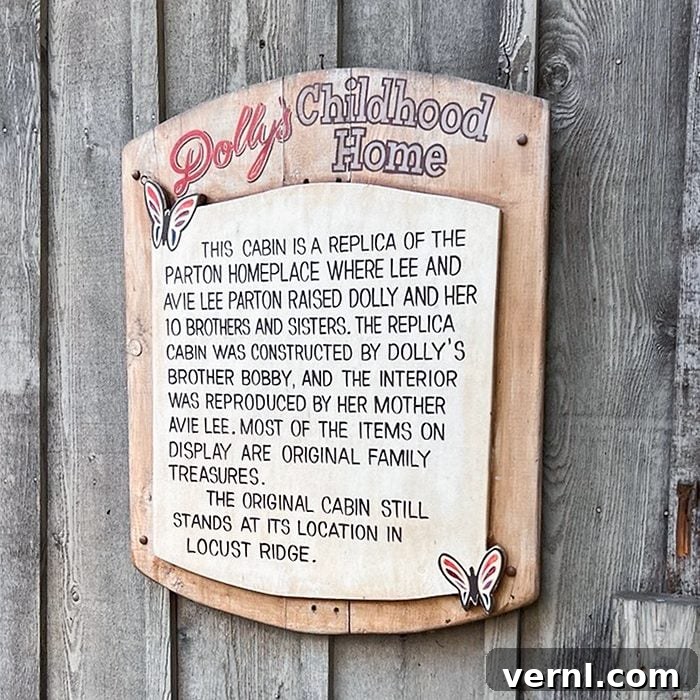
For visitors who want a tangible sense of Parton’s early environment, Dollywood in Pigeon Forge, Tennessee, offers a reconstructed version of the family cabin called Dolly’s Tennessee Mountain Home. Located in the Rivertown Junction section of the park, this two-room replica is designed to reflect the compact, practical layout of the original Locust Ridge cabin.
The replica has close family involvement in its creation: Parton’s brother contributed to building the structure, and their mother helped guide the interior recreation. Some items displayed inside the cabin are family heirlooms or period-appropriate possessions that help tell the story of daily life in a mountain household. Visitors can see the small kitchen area with its wood stove, the sparse but functional furniture, handmade quilts and other domestic objects that show how a large family shared very limited space.
Walking through the Dollywood cabin gives a vivid sense of scale and routine—how people arranged their living areas, how meals were prepared and how much closeness and cooperation were required under one roof. The exhibit is intended not as a theatrical set but as an interpretive, respectful presentation of the environment that influenced Parton’s childhood memories and later creative work.
For many fans, the display at Dollywood complements visits to the Locust Ridge area and to historical collections that document Appalachian life. Together, these places provide context for Parton’s songs and public narratives, showing how a small mountain cabin and a large, close-knit family contributed to a distinctive artistic voice.
Sources
Dollywood: Dolly’s Tennessee Mountain Home
Library of Congress: Locust Ridge, Tennessee
Library of Congress: Dolly Parton
Country Music Hall of Fame and Museum: Dolly Parton