Mastering Winter Pruning: A Comprehensive Guide for Healthy Trees and Shrubs
For most deciduous trees and shrubs, the quiet dormancy of winter offers the perfect window for pruning. As the garden sleeps, plants shed their leaves, revealing their intricate skeletal structure. This bare state makes it significantly easier to assess the overall form, identify problematic branches, and execute precise cuts. Beyond the visual advantage, winter pruning aligns perfectly with the plant’s natural biological cycles, promoting vigorous regrowth in spring and minimizing the risk of disease and pest infestation through exposed wounds. Understanding the science and art of winter pruning is key to cultivating healthier, more beautiful, and productive landscapes.
Many gardeners find the prospect of pruning intimidating, fearing they might irrevocably damage their beloved plants. However, the truth is, most pruning mistakes are akin to a bad haircut: while it might look a bit awkward for a season, the plant will almost always recover and grow back stronger. With a bit of knowledge and the right approach, winter pruning can become one of the most rewarding tasks in your gardening calendar, ensuring the long-term vitality and aesthetic appeal of your trees and shrubs. Let’s delve into why, how, and what to prune during the dormant season.
Why Winter is the Ideal Time for Dormant Pruning
The choice of winter for pruning is not arbitrary; it’s rooted in several biological and practical advantages:
- Plant Dormancy: During winter, most deciduous plants enter a state of dormancy. Their metabolic processes slow down significantly, sap flow is minimal, and energy reserves are concentrated in the roots. Pruning during this period causes less stress to the plant, as it’s not actively growing and can direct its energy towards healing cuts rather than supporting foliage. This reduced activity also means a lower risk of bleeding from cuts, especially for sap-heavy trees.
- Enhanced Visibility: With no leaves to obscure the branches, the entire structure of the tree or shrub is laid bare. This allows for an unobstructed view of crossing branches, dead wood, weak limbs, and the overall shape, enabling more informed and strategic cuts. You can easily visualize the plant’s natural form and identify areas needing improvement for better light penetration and air circulation.
- Promotes Spring Regrowth: Pruning in late winter or early spring, just before new growth begins, stimulates a burst of vigorous growth when the warmer weather arrives. This is particularly beneficial for plants that flower on new wood or those you wish to rejuvenate. The plant’s energy, which would have gone into supporting the removed branches, is redirected to remaining buds, encouraging strong new shoots.
- Reduced Pest and Disease Risk: Many insect pests and disease-causing fungi are less active during the cold winter months. Pruning wounds, while necessary, create entry points for pathogens. By pruning when these threats are at their lowest, you significantly reduce the chance of infections and infestations taking hold before the plant has a chance to form a protective callus.
Compelling Reasons to Pick Up Your Pruners
Before making any cut, it’s crucial to have a clear objective. Pruning without a purpose can be detrimental. Here are the primary reasons gardeners undertake this essential task:
1. Enhancing Plant Health and Vigor
One of the most critical reasons for pruning is to remove the “three D’s”: dead, damaged, or diseased wood. These components are not only unsightly but can also become breeding grounds for pests and diseases, potentially spreading to healthy parts of the plant. Removing them improves the plant’s overall health and prevents further issues. Pruning also improves air circulation within the canopy, which helps to reduce humidity and discourage fungal diseases.
2. Shaping, Training, and Size Control
Pruning is an invaluable tool for shaping young plants, such as fruit trees, into a strong, balanced, and open canopy structure that encourages light penetration and fruit production. For ornamental shrubs, pruning helps maintain a desired size and shape, preventing them from outgrowing their allocated space or overwhelming other garden features. It allows you to train plants to grow in a specific direction or pattern, enhancing their aesthetic appeal in the landscape.
3. Encouraging Flowering and Fruit Production
Many flowering shrubs and fruit trees benefit immensely from strategic pruning. By removing older, less productive wood or thinning out crowded branches, you can direct the plant’s energy towards producing more flowers and larger, higher-quality fruit. For specific plants like forsythia or highbush blueberries, targeted pruning ensures a continuous flush of blooms or a bountiful harvest year after year.
4. Improving Safety and Accessibility
Overgrown, broken, or hanging branches pose significant safety hazards, especially during strong winds or heavy snow. They can fall on people, structures, or vehicles. Pruning these hazardous limbs eliminates potential dangers and improves accessibility around the plant and in your garden. For trees near utility lines, professional pruning is often necessary to maintain safety clearances.
Essential Winter Pruning Do’s: Techniques for Success
Approach your pruning tasks with confidence by following these proven practices for optimal plant health and growth:
- DO Pick a Dry, Sunny Day: Always opt for a day when plants are dry and the weather is mild and sunny. This not only makes the task more comfortable for you but also reduces the risk of spreading fungal diseases, as moisture can facilitate pathogen transfer.
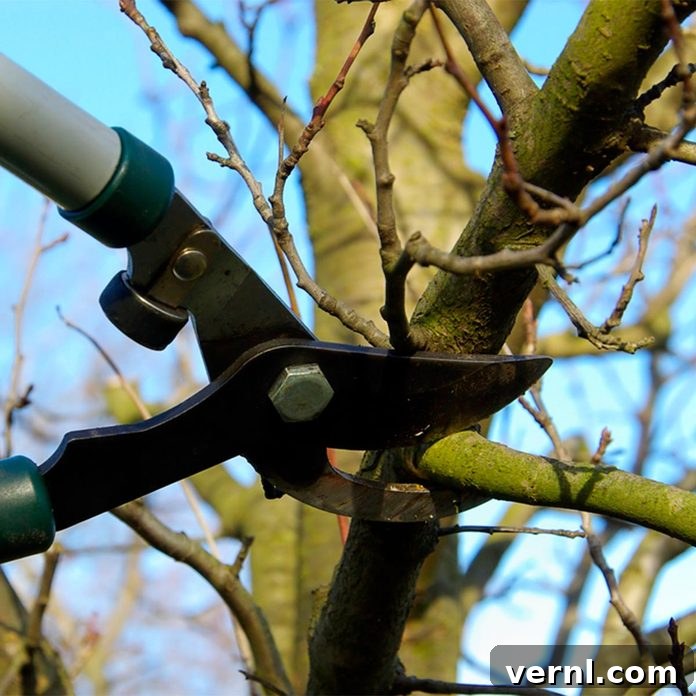
- DO Start with Clean, Sharp Tools: Sharp tools make clean cuts, which heal faster and minimize plant stress. Dull tools tear and crush tissue, creating ragged wounds susceptible to disease. Always sterilize your tools with a 10% bleach solution or rubbing alcohol, especially after pruning diseased wood, to prevent cross-contamination.
- DO Study the Plant’s Shape Before You Cut: Take a moment to step back and observe the natural form of the plant. Envision the desired outcome. Each cut should be deliberate and serve a specific purpose. Don’t rush; thoughtful planning is key to achieving a balanced and natural look.
- DO Begin by Removing the Three D’s: Prioritize removing any branches that are dead, damaged, or diseased. These are non-negotiable cuts that immediately improve plant health and appearance. Dead wood often looks discolored, brittle, or lacks buds, while damaged branches may be split or broken.
- DO Take Out Any Crossing and Rubbing Branches: Branches that rub against each other can create open wounds, which are prime entry points for pests and diseases. Typically, remove the smaller or weaker of the two crossing branches, or the one that detracts more from the plant’s overall form.
- DO Remove Water Sprouts and Suckers: These are vigorous, fast-growing shoots that can drain energy from the plant without contributing to its structure, flowering, or fruiting. Suckers grow from the base of the trunk or roots, while water sprouts emerge vertically from branches. They should be removed at their point of origin to redirect energy to more productive parts of the plant. On fruit trees, water sprouts also block sunlight and air, hindering fruit development.
- DO Trim Long, Unbranched Stems Back to an Outward-Facing Bud (Heading Cut): This technique, known as heading, involves cutting a stem back to a healthy bud or small side branch that points in the direction you want new growth to occur. It encourages bushier growth and directs the plant’s development. Ensure the cut is made at a slight angle, about ¼ inch above the bud.
- DO Prune Overgrown or Bushy Trees and Shrubs with Thinning Cuts: Thinning involves removing an entire branch or stem back to its point of origin (the main stem, trunk, or ground level). This is the most common and often preferred type of cut as it opens up the plant’s canopy, allowing more light and air to penetrate, which promotes overall health and robust growth without stimulating excessive regrowth.
- DO Take Frequent Breaks and Step Back: Regularly pause your work, step away from the plant, and view it from different angles. This perspective allows you to assess the balance and natural appearance of your pruning. It helps prevent over-pruning and ensures you’re achieving your desired aesthetic and structural goals.
Crucial Winter Pruning Don’ts: Mistakes to Avoid
Knowing what not to do is just as important as knowing what to do. Avoid these common pruning pitfalls:
- DON’T Leave Unsightly Stubs: Stubs, short remnants of branches, don’t heal properly and can become entry points for diseases, pests, or lead to dieback. Always prune back to a healthy bud, a main stem, or the branch collar.
- DON’T Shear Shrubs into Unnatural Shapes: Unless you are intentionally creating a formal hedge or intricate topiary, avoid indiscriminately shearing shrubs. This often results in a dense outer layer of foliage that shades out the interior, leading to sparse growth inside. Most trees and shrubs thrive and look their best when allowed to grow in their natural, genetically predetermined forms.
- DON’T Overprune: A common mistake is removing too much plant material at once. A general rule of thumb is to remove no more than one-fourth to one-third of the plant’s total canopy in a single year. Excessive pruning can severely stress the plant, leading to weakened growth, increased susceptibility to disease, or even death.
- DON’T Be Shy About Rejuvenating Neglected Shrubs: For overgrown, multi-stemmed shrubs like lilacs, forsythias, or dogwoods that have become woody and sparse, a gradual rejuvenation pruning can restore their vigor. This involves removing one-fourth to one-third of the oldest, thickest stems at ground level each year over several seasons. This encourages new, more vigorous growth from the base without shocking the plant.
- DON’T Cut Tree Limbs Flush to the Trunk: Never make a flush cut that removes the branch collar. The branch collar is the swollen area at the base of a branch where it joins the trunk or a larger limb; it contains specialized tissue vital for wound healing. Instead, cut just outside the branch collar, leaving it intact. This promotes quick and healthy callusing of the wound and negates the need for pruning paint, which can actually hinder natural healing.
- DON’T Forget Safety!: Pruning, especially on larger plants, can be dangerous. Always wear appropriate eye protection to shield against flying debris. For branches that are too high to reach safely with a pole pruner or require climbing, and particularly if they are near power lines, always call a certified arborist. Never attempt to prune near utility lines yourself, as this can be life-threatening.
What to Prune in Winter: A Seasonal Guide
Identifying which plants benefit most from winter pruning is crucial for optimal results:
- Summer-Flowering Shrubs and Trees: Plants that bloom on new wood, meaning they produce flowers on growth that emerges in the current season, are ideal candidates for winter pruning. This includes popular varieties such as Rose of Sharon (Hibiscus syriacus), Crape Myrtle (Lagerstroemia), Potentilla, Smoke Bush (Cotinus coggygria), Butterfly Bush (Buddleia davidii), and Beautyberry (Callicarpa). Dormant pruning encourages a flush of strong new growth that will bear abundant flowers in the summer.
- Shrubs Grown Primarily for Foliage: Many shrubs valued for their colorful or interesting leaves, rather than their flowers, also respond well to winter pruning. Examples include Barberry (Berberis), Privet (Ligustrum), and Burning Bush (Euonymus alatus). Pruning helps maintain their shape, density, and vibrant foliage display.
- Deciduous Fruit Trees: Apples, pears, cherries, and plums all benefit significantly from dormant winter pruning. While some flower buds may be removed, the primary goal is to open up the tree’s canopy to more light and air, which is essential for improving overall tree health, increasing fruit size, and enhancing fruit quality. It also helps in shaping the tree for easier harvesting.
- Fruiting Shrubs: Highbush blueberries, currants, and gooseberries are excellent candidates for renewal pruning in winter. Removing the oldest, less productive stems at ground level encourages the growth of fresh, vigorous fruiting branches, ensuring a continuous supply of berries.
- Most Deciduous Shade Trees: Large deciduous trees like oaks, honey locusts, and lindens are generally best pruned in winter. As with smaller plants, the absence of leaves allows for a clear view of the branch structure, making it easier to identify and remove dead, damaged, or crossing limbs, and to shape the tree for structural integrity and aesthetic appeal.
What NOT to Prune in Winter (and When to Prune Instead)
Just as important as knowing what to prune is understanding which plants should be left alone during the dormant season, or pruned at a different time:
- Spring-Flowering Shrubs and Trees: Plants that form their flower buds on old wood (wood from the previous year) should never be pruned in winter. Doing so would remove all the developing flower buds, resulting in a significantly reduced or absent spring bloom. This category includes popular favorites like Forsythia, Lilac (Syringa), Flowering Quince (Chaenomeles), Bigleaf Hydrangea (Hydrangea macrophylla), Rhododendron, and Azalea. These are best pruned immediately after they finish flowering in spring.
- Trees with Heavy Winter Sap Flow: Certain trees are known as “bleeders” because they exude a significant amount of sap when pruned during their dormant period, especially in late winter or early spring as temperatures begin to rise. While sap loss typically won’t harm the tree’s long-term health, it can create a sticky, messy situation on nearby structures, cars, or garden furniture. Maples (Acer), Dogwoods (Cornus), and Birches (Betula) fall into this category. These trees are best pruned in mid-summer, once their leaves have fully developed and sap flow is less problematic.
- Most Conifers (Evergreens): The pruning needs of conifers differ significantly from deciduous plants. Most conifers should be pruned during their active growth spurt in late spring to early summer. Pruning too late in the season can lead to dead spots that don’t fill in, as conifers often lack dormant buds on old wood that can be stimulated. Always research specific conifer varieties for precise pruning tips, as requirements can vary widely (e.g., pines vs. spruces vs. junipers).
Embrace the Winter Garden: The Rewards of Dormant Pruning
Winter pruning, far from being a daunting chore, is a fundamental practice that underpins the health, beauty, and productivity of your garden. By understanding the principles of proper technique, identifying the right tools, and knowing which plants benefit most from dormant season attention, you can transform your landscape. This annual task not only shapes your trees and shrubs for aesthetic appeal but also invigorates them, ensuring a vibrant display of foliage, abundant flowers, and bountiful fruit when spring finally awakens. So, arm yourself with sharp pruners, embrace the quiet beauty of the winter garden, and set the stage for a thriving growing season ahead.