
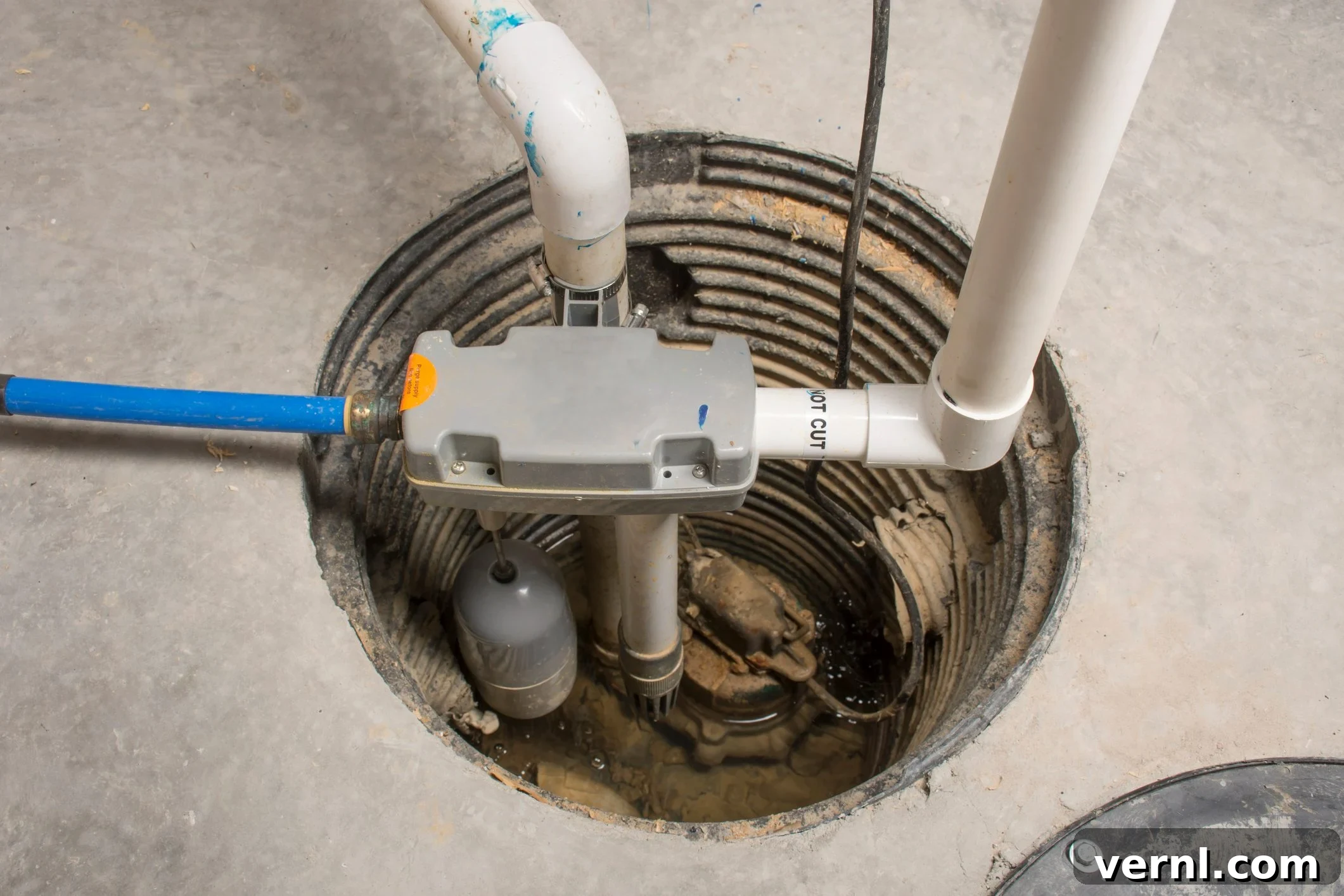
For those of us living in arid regions like California, where rainfall is scarce and water tables are typically low, the idea of needing a sump pump might seem like a luxury. It conjures images of abundant water, a problem many would envy. However, a friend residing in the Detroit area, familiar with regular heavy rainfall and high groundwater levels, would quickly challenge that perspective.
His experience vividly illustrates the critical importance of a properly functioning sump pump. While his family was away, their sump pump failed, leading to a flooded basement upon their return. The aftermath involved an extensive cleanup, the costly disposal of expensive furniture, and a lingering battle with persistent mold two years later. This unfortunate incident underscores a crucial lesson: a sump pump, often tucked away in a dimly lit corner of the basement, is easy to forget about until it falters. Like a water heater, it only truly demands attention when it malfunctions, transforming from an unseen guardian into the source of a major headache. A little proactive care and attention now can prevent a catastrophic problem later, safeguarding your home and peace of mind.
Understanding Sump Pump Lifespan: How Long Do They Really Last?
Sump pumps are essential appliances designed to protect your home from basement flooding, yet their operational lifespan is often shorter than many homeowners anticipate. While the average warranty period for most models hovers around three years, plumbing experts generally recommend considering a replacement after seven to ten years of service. This timeframe is a crucial guideline for proactive home maintenance, helping to mitigate the risk of unexpected failures.
It’s true that some sump pumps defy these averages, with certain high-quality models lasting up to 20 years. Pedestal sump pumps, which typically have their motors mounted above the sump pit and are less exposed to water, have even been known to perform reliably for as long as 30 years. The longevity of a sump pump is influenced by several factors, including the quality of its components, the frequency of its operation, the cleanliness of the water it handles (sediment can cause significant wear), and the overall quality of its initial installation.
Many homeowners, in an effort to be economical, tend to keep appliances well beyond their recommended service lives. While this can sometimes save money in the short term, it also introduces significant risk. We learned this lesson firsthand when our own well water pump, which had dutifully served us for over three decades, abruptly failed. This left us reliant on trucked-in water during the precarious fire season until a replacement could be installed. Interestingly, the new pump not only restored our water supply but also cut our electric bill in half, a clear indicator that we should have acted sooner. Sump pump owners should take heed of this cautionary tale, as sump and well pumps share similar operational mechanics and vulnerability to age-related wear.
The decision to replace an aging sump pump shouldn’t solely be based on its age, but rather on a combination of factors, including its performance, the signs of wear it exhibits, and your personal risk tolerance. Investing in a new, more efficient model can not only provide greater peace of mind but also potentially offer energy savings and improved flood protection for your home.
The 10-Year Mark: Is Automatic Sump Pump Replacement Necessary?
While a general guideline suggests replacement after 7-10 years, an automatic replacement at the 10-year mark isn’t always strictly necessary. A well-maintained sump pump, operating efficiently, could easily continue to function reliably for another five to ten years. However, waiting for a complete failure can lead to severe consequences, including extensive water damage, mold growth, and costly repairs. Therefore, to proactively avoid potential disaster, it is absolutely essential to closely monitor your older sump pump for telltale signs of impending wear or malfunction. Recognizing these warning signs can empower you to take action before a minor issue escalates into a major basement flood.
Key Warning Signs Your Sump Pump May Be Failing:
- It Runs for a Long Time or Never Shuts Off: This is a critical red flag. Ideally, a sump pump should activate, clear the water, and then promptly shut off. If your pump is constantly running, or running for extended periods, it usually indicates it’s struggling to keep pace with the incoming water volume. This could be due to an undersized pump for your basement’s needs, a partially clogged discharge line, or worn internal seals that reduce the pump’s efficiency. Another common culprit is a faulty or miscalibrated float switch, which fails to signal the pump to turn off. Regardless of the cause, a continuously running pump wastes electricity, causes unnecessary wear and tear on the motor, and significantly increases the risk of burnout and subsequent basement flooding.
- It Doesn’t Run When It Should: This is arguably the most alarming sign, as it directly means your basement is vulnerable to flooding. There could be several reasons for this. The float switch, which activates the pump when water levels rise, might be out of calibration, stuck due to debris, or simply faulty. The pump itself might be off-level, preventing the float from rising correctly. Power issues, such as a tripped GFCI outlet (common in damp basement environments) or a power outage, can also prevent operation. A clogged intake port, preventing water from reaching the pump’s impeller, is another possibility. If repositioning the pump, manually adjusting the float, or resetting the GFCI doesn’t resolve the issue, it’s a strong indication that a replacement or professional repair is needed.
- It Runs But Doesn’t Pump Water: Hearing your sump pump motor hum but seeing no water being discharged is a clear sign of trouble. The most common cause is a blocked intake port, which can often be corrected with a thorough cleaning to remove debris. However, if there’s no visible blockage, the problem is likely more serious. This could indicate a damaged or worn impeller (the component that pushes water), an airlock in the system, or a complete motor failure. In such cases, the pump is essentially useless and requires immediate attention to prevent flooding.
- You Can See Rust or Corrosion: Visible rust on the casing of a submersible pump is a dire warning sign. If the exterior is corroding, it’s a very strong bet that internal components – such as the impeller, motor shaft, and seals – are also compromised. Rust indicates water ingress where it shouldn’t be, leading to deterioration of vital parts and potential electrical shorts. Beyond rust, also look for any physical damage, cracks, or unusual sediment buildup around the pump or inside the pit.
- Unusual Noises or Vibrations: A healthy sump pump typically operates with a consistent, relatively quiet hum. Any new grinding, rattling, clanking, or excessive vibration could signal worn bearings, a bent shaft, or damage to the impeller. These noises suggest internal friction and wear, indicating the pump is working harder than it should and is likely nearing the end of its functional life.
For homeowners who prefer to play it safe and avoid last-minute emergencies, a simple yet effective strategy is to affix a sticker with the installation date in a prominent, easily visible location near the pump. This removes the guesswork from determining its age and allows you to plan your budget for a potential replacement well in advance, transforming a reactive scramble into a proactive decision.
Maximizing Sump Pump Life Expectancy: Essential Maintenance Tips
Extending the life of your sump pump and ensuring its reliable operation doesn’t require extensive effort or specialized skills. A few simple maintenance tasks, performed at least once a year (or more frequently in particularly wet conditions or if your pump runs often), can significantly increase its lifespan and prevent costly basement floods. Dedicating an hour or so to these checks can provide immense peace of mind and protection for your home.
Key Maintenance Practices for Longevity:
- Check the Pump’s Level and Stability: This is especially critical for pedestal pumps but also applies to submersible units. The powerful vibrations generated when the pump engages can cause it to shift, lean to one side, or even dislodge within the sump pit. An unlevel pump can interfere with the intake of water, cause the float switch to stick, and force the motor to work harder, leading to premature wear. If your pump frequently goes out of level, consider installing a simple bracing mechanism or ensuring it’s securely placed on a stable base to hold it firmly in position. This ensures optimal water flow and proper float operation.
- Inspect the Electrical Outlet and Connections: For safety reasons and effective operation, a sump pump must always be plugged into a Ground Fault Circuit Interrupter (GFCI) outlet. GFCI outlets are designed to trip and cut power in the presence of moisture or electrical faults, preventing electrocution. In a damp basement environment, GFCIs can sometimes trip unexpectedly. Regularly check the outlet and push the ‘reset’ button (usually the bottom one) if it has tripped to restore power. If the GFCI frequently trips, it could indicate an underlying electrical issue or a problem with the pump itself, and it should be investigated by a qualified electrician. Ensure all connections are secure and free from corrosion.
- Test the Pump Regularly: This is perhaps the most important proactive measure. To test your sump pump, simply pour enough water into the sump pit (typically a few gallons) to raise the water level sufficiently to trigger the float switch. Observe the pump as it activates:
- Does it turn on promptly when the water level rises?
- Does it run smoothly without excessive noise or vibration?
- Does it effectively pump the water out through the discharge pipe?
- Is the outflow strong and consistent?
If the pump runs but the outflow is weaker than expected, immediately look for blockages in the intake port (the screen or grate where water enters the pump) and carefully remove any visible debris, such as gravel, silt, or leaves. Also, check the discharge pipe for any signs of obstruction.
- Keep the Sump Pit Covered: An often-overlooked but crucial maintenance step is to keep the sump pit covered with a sturdy, airtight lid. A cover serves multiple purposes: it prevents large debris (like toys, tools, or even small animals) from accidentally falling into the pit and potentially clogging or damaging the pump. It also helps to prevent odors and radon gas from entering your living space and deters pests. A clear or transparent cover can be particularly useful for visual inspections without removal.
- Clean the Sump Pit Periodically: Over time, sediment, silt, and debris can accumulate at the bottom of the sump pit. This sludge can reduce the pit’s capacity, interfere with the float switch, and even get drawn into the pump, causing wear or blockages. Annually, or more often if your area has high sediment levels, disconnect the pump (unplug it!), remove it from the pit, and thoroughly clean out any accumulated muck.
- Inspect the Discharge Pipe and Check Valve: Ensure the discharge pipe, which carries water away from your home, is free of obstructions and properly sloped. In colder climates, confirm it’s designed to prevent freezing. The check valve, typically located on the discharge pipe just above the pump, prevents water from flowing back into the pit once the pump shuts off. Listen for any clunking sounds of water rushing back or watch for the pump cycling on and off too frequently, which could indicate a faulty check valve.
- Consider a Battery Backup System: While not strictly “maintenance,” installing a battery backup sump pump system is an excellent proactive measure, especially if your primary pump is older or if you live in an area prone to power outages. These systems automatically activate if the power fails, ensuring your basement remains protected even when your main pump cannot operate.
- Professional Annual Inspection: For complete peace of mind, especially with older units, consider scheduling an annual inspection by a professional plumber. They can identify subtle issues, perform deeper diagnostics, and recommend repairs or replacements before they become critical.
By consistently performing these simple maintenance tasks, you not only extend the operational life of your sump pump but also significantly reduce the risk of basement flooding, protecting your home, your belongings, and your health from the potentially devastating effects of water damage and mold.