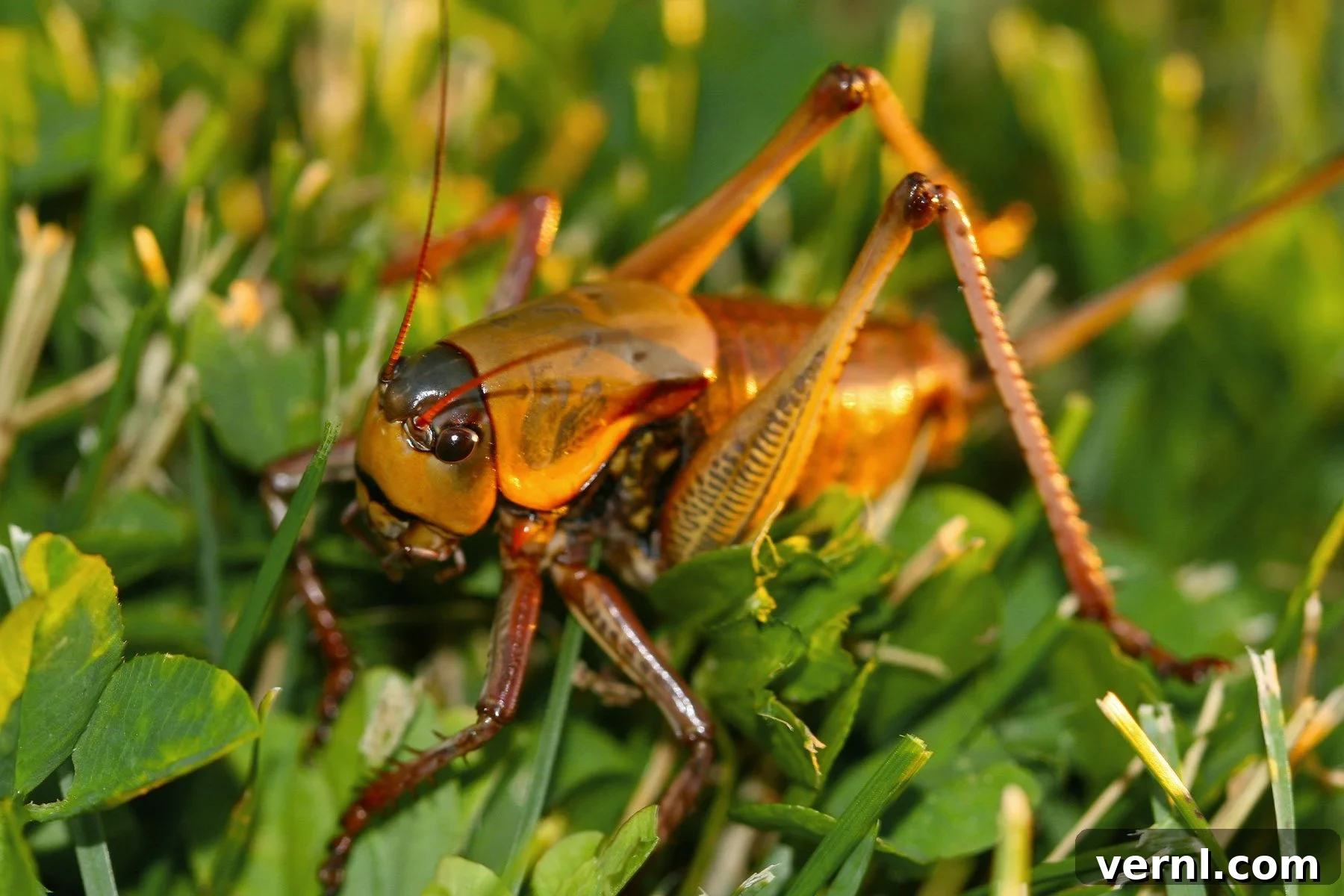
The vast, untamed landscapes of the American West are globally celebrated for their breathtaking natural phenomena, from the majestic migrations of sandhill cranes soaring across vast skies to the swift movements of American pronghorn traversing open plains. Yet, amidst these iconic images, another remarkable mass migration captures attention, albeit with a less romanticized allure: that of the Mormon cricket. Often overlooked in popular imagery, these ground-dwelling insects have, for millennia, been an undeniable, and sometimes overwhelming, presence across the Western states. Evidence of their enduring historical significance was unearthed in a Wyoming cave, where archaeologists discovered the cooked remains of hundreds of Mormon crickets on a roasting pit dating back over two millennia, affirming their role as a historical food source and a persistent feature of the region’s ecology.
While their presence is constant, Mormon crickets truly enter the spotlight during specific years when their populations explode. These periods lead to the formation of immense “bands” – vast, marching armies of crickets that can number in the millions, systematically moving across the landscape. When these colossal swarms encounter human settlements, they transform from a natural phenomenon into a significant public nuisance, and sometimes, a genuine hazard. One of their most notorious and disturbing behaviors manifests on roadways. As countless crickets attempt to cross highways and local roads, they are inevitably crushed by passing vehicles. What follows is a grisly scene: the surviving crickets, driven by an instinctive need for vital nutrients, pause to consume their fallen comrades. This seemingly macabre act of cannibalism is a direct response to their physiological requirements. Mormon crickets have an insatiable demand for protein and salt, which are essential for their growth, development, and reproductive health. An injured or deceased member of the swarm provides an readily available, nutrient-rich bounty, making this opportunistic scavenging a critical survival strategy during their arduous migrations. Beyond the unsettling sight, the accumulation of crushed cricket bodies creates a slick, greasy layer on the pavement, turning otherwise safe roads into perilous stretches, particularly in wet conditions. This phenomenon underscores the complex relationship between these ancient insects and the modern human landscape.
This article delves deeper into the world of Mormon crickets, exploring their biology, history, ecological role, and how humans contend with their periodic, overwhelming presence.
Unveiling the Mormon Cricket: A Closer Look at This Western Native
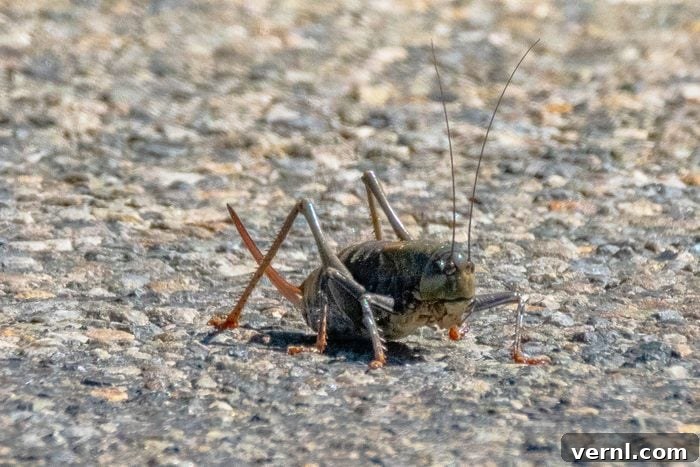
Despite their common moniker, Mormon crickets are a fascinating and often misunderstood component of the Western American ecosystem. Scientifically known as Anabrus simplex, these formidable insects are large, ground-dwelling creatures unequivocally native to the vast and varied landscapes of the Western United States. Their appearance can be quite striking, often leading to misidentification. Many observers liken them to overgrown grasshoppers due to their robust bodies and powerful hind legs; however, a key distinguishing feature is their complete inability to fly.
Adding to the nomenclature confusion, Mormon crickets are not, in fact, true crickets. They are classified as a type of katydid, belonging to the family Tettigoniidae, which is characterized by their long antennae, often exceeding their body length, and their distinctive shield-like pronotums (the plate-like structure covering the thorax). Their coloration varies, typically ranging from black or dark brown to reddish-brown, often with hints of green or purple, allowing them to blend into their rugged environments. Adults can reach lengths of 1.5 to 2 inches (3.8 to 5 cm), making them quite substantial insects.
These hardy insects thrive in a variety of habitats across states like Nevada, Utah, Idaho, Wyoming, and Oregon. Their primary domain consists of sagebrush rangelands, where they find abundant food sources and suitable conditions for laying eggs. However, their adaptability allows them to inhabit more elevated terrains, including mountainous regions and high desert areas, demonstrating a remarkable resilience to diverse environmental conditions. It is in years of significant population booms that Mormon crickets truly capture public attention, forming vast, cohesive bands that embark on relentless, directed migrations. These swarms, sometimes stretching for miles, can overwhelm rural communities and even urban fringes, as witnessed in highly publicized events in Nevada and Idaho during 2023, where their sheer numbers created extraordinary challenges for residents and local authorities. Understanding their true classification and ecological niche is crucial to appreciating their impact on both natural and human-modified environments.
The Historical Naming: Unraveling the Legend of Mormon Crickets
The common name “Mormon cricket” is deeply rooted in a fascinating and pivotal moment in American pioneer history, directly linked to the early settlers of The Church of Jesus Christ of Latter-day Saints. While these insects are scientifically known as Anabrus simplex or more descriptively as shield-backed katydids, their popular nomenclature tells a dramatic story of survival and divine intervention that has become a foundational legend in Utah.
The saga began in the mid-1840s when pioneers, having traversed vast stretches of unforgiving terrain, established their first settlements in the Salt Lake Valley of what is now Utah. They bravely faced the arduous task of transforming the arid, high desert landscape into fertile farmland, a desperate effort to grow essential crops for their fledgling community. Their initial planting season showed promise, but as spring turned to summer in 1848, their hopes were suddenly threatened by an unprecedented biological onslaught. Millions upon millions of large, dark crickets emerged from the surrounding foothills, descending upon their precious fields. These were the insects we now know as Mormon crickets, and they began systematically devouring every green sprout in their path, from wheat and corn to potatoes and beans.
The situation quickly became dire. The crops, meticulously planted and nurtured, were on the brink of total annihilation, threatening the very existence of the pioneering community with starvation. The settlers, having exhausted every imaginable human effort to repel the relentless swarms – digging trenches, attempting to burn the swarms, and beating them with sticks – found themselves at the precipice of despair. In their desperation, they turned to prayer, appealing for divine intervention.
As the story, often referred to as the “Miracle of the Gulls,” goes, their prayers were answered in a miraculous fashion. Flocks of California gulls, an unexpected sight so far inland, began to arrive from the Great Salt Lake. These gulls descended upon the fields, voraciously consuming the invading crickets. According to eyewitness accounts, the gulls would eat until they were full, then regurgitate the cricket remains, drink water, and return to feed again, effectively clearing the fields without harming the precious crops. This intervention, which lasted for several weeks, saved the harvest and, by extension, the settlement from certain famine.
As Jeff Knight, State Entomologist for the Nevada Department of Agriculture, aptly explains, “They asked for relief, which came in the form of seagulls that came through and ate the crickets. This is how they got the name of Mormon crickets, and also why the seagull is the state bird of Utah.” This extraordinary event not only etched the crickets into the annals of Mormon history but also cemented the California gull’s status as a revered symbol in Utah, commemorated by a monument on Temple Square in Salt Lake City. The name “Mormon cricket” thus serves as a perpetual reminder of this dramatic struggle for survival against overwhelming natural forces, and the profound significance of that timely avian assistance.
The Dynamic Lifecycle of the Mormon Cricket: From Nymph to Migratory Adult
The life cycle of the Mormon cricket is a meticulously timed annual event, intricately linked to the environmental conditions of the Western United States. Understanding this cycle is crucial for predicting and managing their periodic outbreaks.
Spring Awakening and Nymphal Growth:
The annual cycle begins in the spring, typically from late March through April, as the ground temperatures consistently rise, triggering the hatching of eggs. These eggs, laid deep within the soil the previous summer, overwinter safely, protected from the cold. Upon hatching, the young crickets emerge as nymphs, small versions of the adults, but lacking fully developed reproductive organs. As they grow, they undergo a series of developmental stages, known as instars, each separated by a process called molting. During a molt, the cricket sheds its rigid outer exoskeleton to allow for growth. This process occurs multiple times, usually five to seven, over several weeks as the nymphs mature into adults.
Formation of Bands and Epic Migrations:
It is during these nymphal and early adult stages that Mormon crickets exhibit their most notorious behavior: the formation of massive migratory bands. Driven by a combination of factors including population density, food availability, and the pressing need for protein and salt, these individuals coalesce into cohesive groups that can span hundreds of yards and comprise millions of insects. These formidable columns march relentlessly across the landscape, sometimes covering distances of up to a mile per day. This migratory phase represents the peak of human-cricket interaction, as these vast swarms often traverse agricultural fields, cross major roadways, and occasionally inundate entire towns and suburban areas, creating widespread disruption and concern. Their powerful legs, while incapable of flight, are perfectly adapted for sustained overland travel.
Summer Maturation and Reproduction:
By mid-summer, typically from late July through August, the surviving crickets reach full maturity. The primary focus of this final stage is reproduction. Females, equipped with a long, sword-like ovipositor at the rear of their abdomen, begin to lay their eggs. They meticulously deposit these eggs into the soil, often preferring undisturbed, firm ground in sagebrush rangelands. Each female can lay hundreds of eggs over her lifespan, ensuring the continuation of the species. Following this intense period of reproduction, the adult crickets gradually begin to die off, their life cycle for that year complete.
Cyclical Population Dynamics:
Mormon crickets have only one generation per year, but their population numbers are far from stable. Instead, they exhibit a dramatic cyclical pattern, fluctuating wildly between years of immense outbreaks and periods of relative scarcity. High population densities, often termed “outbreaks” or “infestations,” can persist for three to six consecutive years. These periods are characterized by the massive bands and widespread disruption. Conversely, these intense periods are typically followed by much longer stretches – sometimes eight to 15 years – during which their numbers remain very low, making them a much less noticeable presence in the landscape.
Scientists are actively studying the factors that drive these boom-and-bust cycles. While the exact mechanisms are complex, there is strong evidence to suggest a correlation between environmental conditions and population surges. Specifically, prolonged periods of drought are suspected to encourage larger outbreaks. Drought conditions can concentrate available food resources, reduce fungal pathogens that might otherwise control cricket populations, and create ideal conditions for egg survival. As climate patterns shift, understanding these environmental triggers becomes increasingly vital for predicting and preparing for future Mormon cricket invasions.
Assessing the Impact: Are Mormon Crickets a Threat?
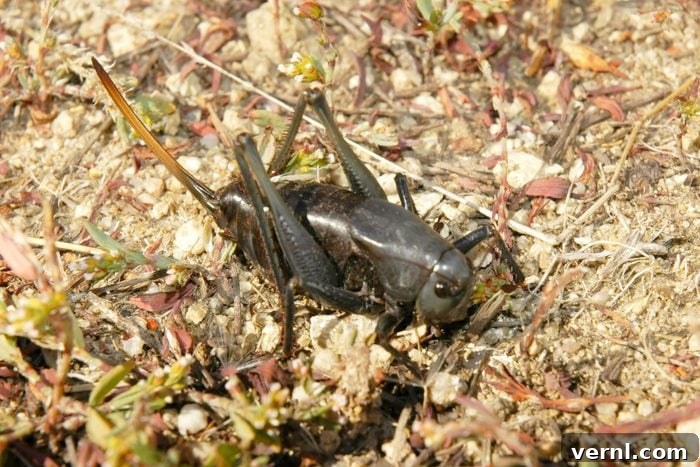
The question of whether Mormon crickets pose a danger is multifaceted, encompassing both direct interactions with humans and broader ecological and economic impacts. While they might appear intimidating in large numbers, it’s important to differentiate between perception and actual threat.
Direct Human Interaction and Health Risks:
According to Jeff Knight, State Entomologist for the Nevada Department of Agriculture, “While Mormon crickets may bite if picked up, they do not carry any diseases.” This is a crucial distinction. A bite from a Mormon cricket is typically a defensive reaction, usually resulting in a minor pinch that is more startling than painful, and generally does not break the skin or cause any significant injury. Furthermore, unlike some other insects, they are not known vectors for any human pathogens, meaning they do not transmit diseases. So, from a direct health perspective, the danger to humans is minimal.
Agricultural and Horticultural Devastation:
However, the scale of Mormon cricket outbreaks presents a formidable risk to agriculture and residential landscaping. When millions of these hungry insects march through an area, their collective appetite can be devastating. They are generalist herbivores, meaning they feed on a wide variety of plants. Farmers can experience significant, sometimes total, crop loss, impacting grains, alfalfa, and rangeland forage crucial for livestock. For homeowners, entire gardens – from vegetables to ornamental plants – can be stripped bare in a matter of hours, leading to considerable frustration and financial loss. The economic impact on agricultural communities during a severe outbreak can be substantial, necessitating costly control measures and often resulting in federal disaster declarations.
Public Safety Hazards:
Beyond agricultural damage, Mormon crickets create significant public safety hazards, especially on roadways. As discussed, their mass migration often leads to countless crickets being crushed by vehicles. The resulting accumulation of insect biomass on the pavement creates an incredibly slick, greasy surface, dramatically reducing tire traction. This condition is exacerbated during or after rainfall, turning roads into treacherous ice-like paths where vehicles can easily lose control, leading to accidents and hazardous driving conditions. Additionally, the sheer volume of crickets on roadsides can cause foul odors as they decay, and their presence can be an immense psychological nuisance for residents trying to navigate their daily lives.
Ecological Role and Importance:
Despite their destructive potential from a human perspective, it’s vital to remember that Mormon crickets are an integral and natural component of their native ecosystems. They play a critical role in the food web, serving as a vital protein source for a wide array of wildlife. Their natural predators include:
- Birds: California gulls (as famously demonstrated during the 1848 miracle), crows, ravens, magpies, and various predatory birds eagerly feast on the abundant crickets.
- Mammals: Coyotes, foxes, badgers, skunks, and numerous rodent species rely heavily on crickets as a seasonal food source, especially during outbreak years.
- Insects and Arachnids: Certain predatory beetles, spiders, and even other larger insects will prey on Mormon crickets.
Beyond providing sustenance, Mormon crickets contribute significantly to nutrient recycling. As they consume plant matter and subsequently die, their bodies decompose, returning essential organic nutrients to the soil. This process accelerates the breakdown of vegetation and enhances soil fertility, playing a crucial role in maintaining the health and productivity of arid and semi-arid rangelands. Therefore, while their outbreaks pose challenges to human endeavors, Mormon crickets remain a vital, albeit sometimes overwhelming, link in the complex tapestry of Western ecosystems.
Effective Strategies for Managing Mormon Cricket Invasions
Given the potential for significant damage to agriculture, gardens, and roadways, effective management and control strategies for Mormon crickets are crucial, particularly during periods of high population. Since these insects are flightless and relatively poor jumpers, physical barriers prove to be one of the most practical and environmentally friendly methods for prevention and diversion.
Cricket Fences: Your First Line of Defense
The most widely recommended and effective non-chemical control method is the construction of specialized cricket fences. These barriers are designed to exploit the crickets’ inability to fly and their limited jumping capacity. As Jeff Knight of the Nevada Department of Agriculture explains, “When the crickets reach the plastic, they won’t be able to climb or jump over it and will go around.”
Here’s how to construct an effective cricket fence:
- Height: The barrier should be at least 18 to 24 inches (approximately 45-60 cm) tall. This height is typically sufficient to prevent them from jumping over.
- Material: The key is to use a slick, smooth material that crickets cannot grip and climb. Common choices include:
- Plastic sheeting: Often made of polyethylene or similar smooth plastics, available in rolls.
- Aluminum flashing: Durable and slick, but can be more expensive.
- Smooth metal or vinyl siding remnants: Reused materials can be effective.
- Installation:
- Trenching: Dig a shallow trench, about 4-6 inches deep, along the desired barrier line.
- Anchoring: Bury the bottom edge of the plastic or material firmly into this trench and backfill it with soil. This creates a tight seal with the ground, preventing crickets from crawling underneath.
- Support: Use stakes or posts spaced every few feet to keep the barrier upright and taut. A slight angle (leaning outward from the protected area) can make it even harder for crickets to gain purchase.
- Continuous Barrier: Ensure there are no gaps or breaks in the fence. Crickets will exploit any opening.
These fences are most effective when installed proactively around gardens, individual homes, or agricultural fields located in the path of an anticipated cricket migration. The crickets will encounter the smooth barrier, be unable to scale it, and will typically follow the fence line, diverting them away from protected areas.
Other Management Approaches (Primarily for Large-Scale Outbreaks):
While fences are excellent for localized protection, broader, governmental efforts often employ other strategies for extensive outbreaks:
- Baiting Programs: In large-scale rangeland scenarios, insecticidal baits can be deployed. These baits contain a feeding attractant mixed with a slow-acting insecticide. Crickets consume the bait and die, and the slow action allows them to return to the swarm, potentially passing the insecticide to others (secondary poisoning), though this effect is often limited. These programs are carefully managed to minimize impact on non-target species.
- Mechanical Control: For very localized, intense infestations, sometimes physical methods like sweeping, shoveling, or even specialized vacuuming equipment can be used to remove crickets from specific areas. This is labor-intensive and generally not practical for widespread outbreaks.
- Cultural Practices: In agricultural settings, certain planting dates or crop choices might help mitigate damage, though crickets are notoriously adaptable. Maintaining healthy soil and promoting natural predators can also contribute to long-term resilience, but are not immediate solutions during a migration.
It’s important for residents in affected areas to stay informed by their local agricultural extension offices or state entomologists, as these experts can provide the most current and localized advice on management strategies during an outbreak. Proactive measures, combined with understanding the cricket’s behavior, are key to minimizing the impact of these unique Western migrants.
Distinguishing the “Crickets”: Mormon Crickets vs. Jerusalem Crickets
The world of Western American insects features several species that carry the “cricket” moniker despite not being true crickets. Among these, the Mormon cricket (Anabrus simplex) is often confused with another distinctive, flightless insect: the Jerusalem cricket. While both are native to the Western U.S. and share a common misnomer, they are distinctly different creatures with unique characteristics and ecological niches.
Jerusalem Crickets: The Enigmatic “Potato Bugs”
Jerusalem crickets, belonging to the genus Stenopelmatus, are known by an array of fascinating common names, including potato bug, stone cricket, skull cricket, and sand cricket. These epithets hint at their physical appearance and habitat. Like Mormon crickets, they are robust, ground-dwelling insects and are completely flightless. However, the similarities largely end there.
- Appearance: Jerusalem crickets possess a strikingly different physique. They are characterized by their large, disproportionately sized, bald heads (often likened to a human skull, giving rise to “skull cricket”) and a stout, segmented, often striped body. Their coloration typically ranges from light brown to reddish-brown, and they lack the distinct “shield-back” of their Mormon counterparts. They also have exceptionally powerful jaws, well-suited for their subterranean lifestyle.
- Habitat and Behavior: The most significant divergence lies in their lifestyle. Jerusalem crickets are predominantly subterranean. They spend the vast majority of their lives burrowing through soil, feeding on decaying plant matter, roots, and occasionally other small invertebrates. Consequently, they are seldom seen by people unless disturbed, perhaps by digging in a garden or overturning a rock. Their nocturnal nature further contributes to their elusive reputation.
- Diet: Primarily detritivores and opportunistic omnivores, they play a role in soil aeration and nutrient cycling underground.
- Naming Origin: The origin of the name “Jerusalem cricket” is less clear-cut than that of the Mormon cricket. A popular theory suggests that early Western settlers, upon encountering these startlingly alien-looking insects when unearthing them, might have exclaimed “Jerusalem!” – a common exclamation of surprise or alarm in that era – or possibly “Jehovah!” This spontaneous outcry then became associated with the creature. It is also speculated that the name could be a corruption of a Spanish term.
- Relationship to True Crickets: Like Mormon crickets, Jerusalem crickets are not true crickets (family Gryllidae). They belong to their own distinct family, Stenopelmatidae, making them distant relatives within the larger order Orthoptera (which includes grasshoppers, crickets, and katydids) but not closely related to Mormon crickets or common house crickets.
Key Differences Summarized:
| Feature | Mormon Cricket (Anabrus simplex) | Jerusalem Cricket (Stenopelmatus spp.) |
|---|---|---|
| Appearance | Dark, robust body; distinct shield-like pronotums; long antennae. | Large, bald head; stout, segmented, often striped body; powerful jaws. |
| Primary Habitat | Sagebrush rangelands, mountains; primarily surface-dwelling. | Predominantly subterranean; found under rocks, logs, in soil. |
| Behavior | Forms massive migratory bands; active on the surface. | Solitary; nocturnal; rarely seen above ground. |
| Diet | Herbivorous; consumes vast amounts of plant matter. | Detritivorous/omnivorous; eats roots, decaying matter, small invertebrates. |
| Notoriety | Known for large-scale migrations and crop destruction. | Known for startling appearance when unearthed; generally harmless to crops. |
Understanding these distinctions is essential for proper identification and for appreciating the diverse roles these unique insects play within the Western American landscape. While both are fascinating examples of flightless Orthopterans, their ecological impacts and interactions with humans are vastly different.