Flying Ants vs. Termites: The Ultimate Guide to Identification and Home Pest Control
Discovering winged insects swarming in or around your home can be an alarming experience for any homeowner. While it’s natural to feel concerned, the crucial first step in effectively addressing these unwelcome guests is accurate identification. Two of the most common, and often confused, winged pests are flying ants and termites. Both can cause significant distress, but understanding their distinct characteristics is vital for choosing the correct pest control strategy. Misidentification can lead to ineffective treatments, continued damage, and unnecessary expenses.
This comprehensive guide, enhanced by insights from pest control expert Steven Rossetti of Florence Pest Solutions, will equip you with the knowledge to confidently distinguish between flying ants and termites. We’ll delve into their unique physical traits, behavioral patterns, and the specific types of damage they can inflict on your property. By the end, you’ll be better prepared to protect your home from these potential destroyers.
The Critical Importance of Accurate Pest Identification
When it comes to potential home invaders, not all pests are created equal. While a common house ant might be a nuisance, a carpenter ant or termite infestation can spell disaster for your home’s structural integrity. The visual similarity between flying ants and termites, especially during their swarming phases, often leads to confusion among homeowners. However, mistaking one for the other can have severe consequences, as each requires a different approach to treatment.
Steven Rossetti, a seasoned expert with over 30 years in the pest control industry and owner of Florence Pest Solutions, emphasizes the gravity of correct identification. “Termites are sneaky,” Rossetti states. “You often don’t notice them until they’re a real issue.” This stealthy nature means that by the time an infestation is obvious, considerable damage may have already occurred. Applying the wrong treatment not only wastes valuable time and money but also allows the true culprits to continue their destructive work unabated. Therefore, learning the precise differences between these two wood-tunneling pests is not just helpful—it’s essential for effective pest management and safeguarding your most valuable asset: your home.
Understanding Flying Ants: Identifying the Winged Invaders
Flying ants are a common sight, particularly during warmer months when colonies prepare to reproduce. It’s important to note that “flying ant” isn’t a specific species but rather a stage in the life cycle of many ant species. These winged individuals are typically reproductive males and virgin queens undertaking their nuptial flight to find mates and establish new colonies. While most flying ants are primarily a nuisance, species like carpenter ants can pose a significant threat to wooden structures.
Life Cycle and Swarming Behavior of Flying Ants
The appearance of flying ants is a seasonal event, often triggered by specific weather conditions, such as high humidity after recent rain. During this swarming period, which can occur throughout spring and summer, reproductive males and virgin queens emerge from their nests, take flight, and mate in the air. This aerial mating ritual is known as a nuptial flight. After mating, the males typically die, having fulfilled their purpose. The fertilized queens, on the other hand, shed their wings, seek out a suitable nesting site—which could be in the soil, under rocks, or, concerningly, within wooden structures—and begin the process of establishing a new colony. This swarming behavior is crucial for the dispersal and survival of ant species, but it often causes alarm for homeowners who might confuse them with termites.
Key Distinguishing Features of Flying Ants
While often mistaken for termites due to their wings, flying ants possess several distinct physical characteristics that allow for accurate identification:
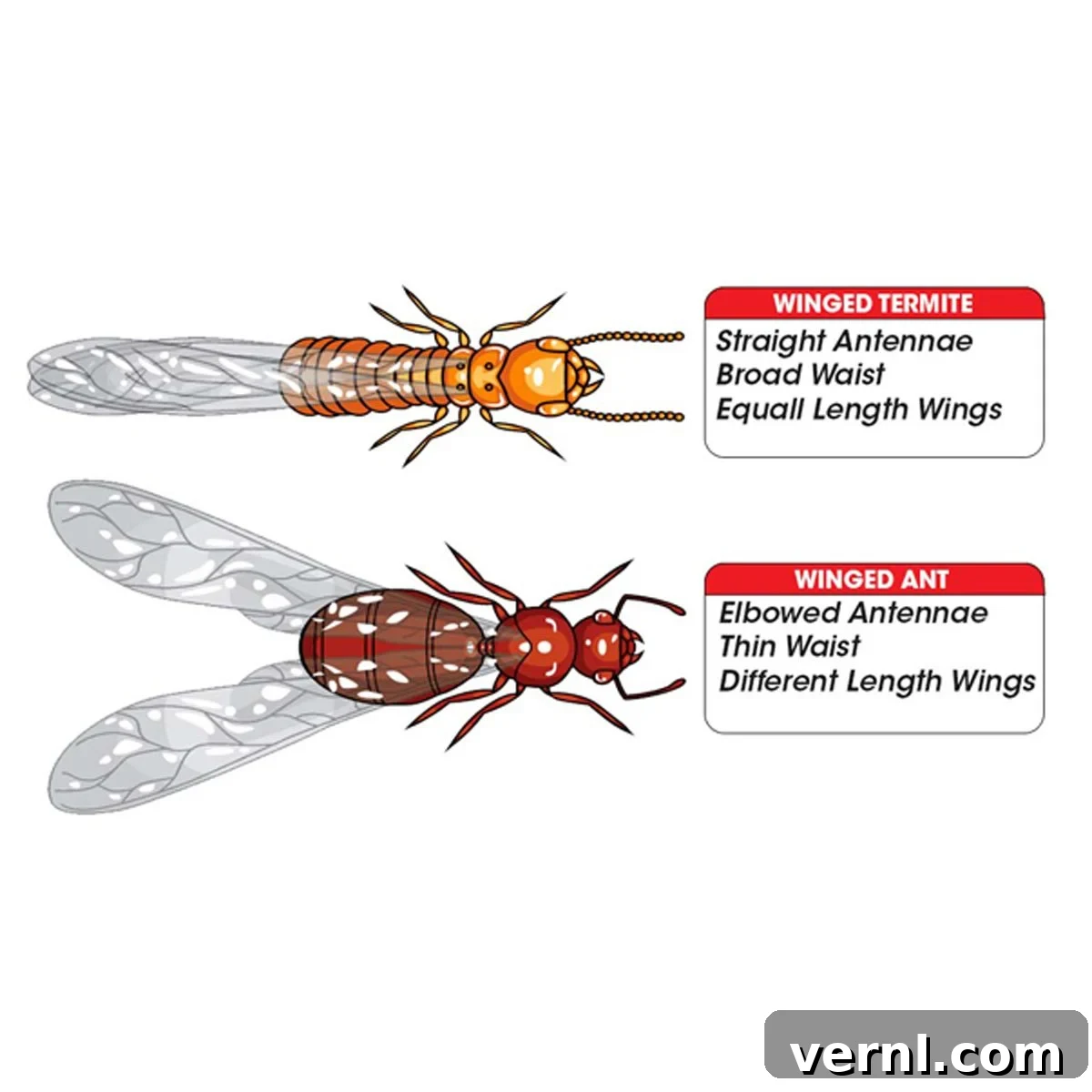
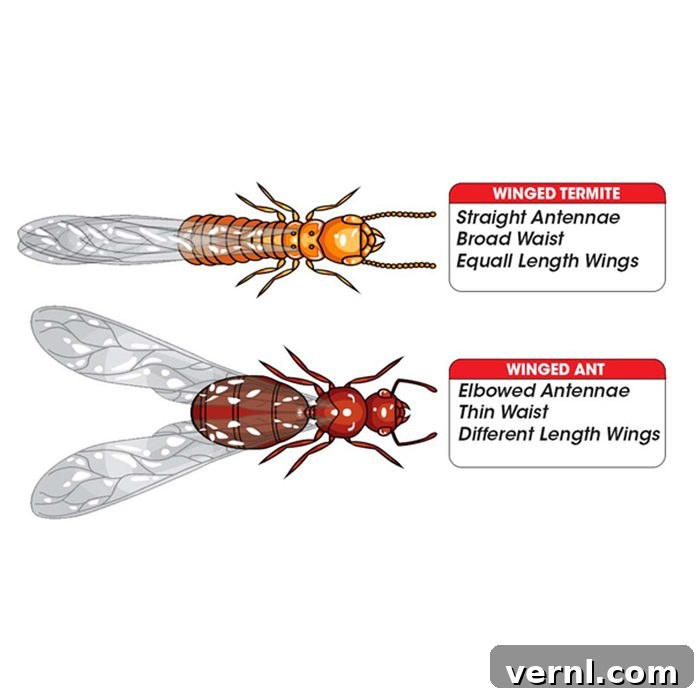
- Antennae: Flying ants have distinctly “elbowed” or bent antennae. Imagine a tiny elbow joint about halfway down the antenna, giving it an angled, L-shaped appearance. This is a primary differentiator from the straight antennae of termites.
- Waist: Their bodies feature a clearly “pinched” or constricted waist, creating a three-segmented body appearance (head, thorax, and abdomen). This hourglass shape is usually quite noticeable and stands in stark contrast to the broad waist of a termite.
- Wings: Flying ants have two pairs of wings, but these wings are unequal in size. The front pair of wings is typically longer and larger than the hind pair. Additionally, ant wings are often more veined and somewhat opaque compared to the translucent wings of termites. After mating, queens will often shed these wings, leaving behind small piles of discarded wings near potential nesting sites, which can be a key sign of infestation.
- Body Color: Body colors can vary widely depending on the species, ranging from black to brown to reddish. For instance, flying carpenter ants are often dark brown or black, while other species might have reddish hues.
Focus on Carpenter Ants: Wood-Damaging Flying Ants
Among the various species of flying ants, carpenter ants are of particular concern to homeowners because they can cause significant structural damage, much like termites. Unlike termites, which eat wood for sustenance, carpenter ants tunnel through wood to create nests and galleries for their colonies. This behavior weakens wooden structures over time, potentially compromising their integrity.
- Nesting Habits: Carpenter ants prefer to nest in wood that is damp, wet, or rotting, as it’s easier for them to excavate. However, they are also capable of tunneling through sound, dry wood, especially if it’s softened by prior moisture issues. Common nesting sites include wood around windows, door frames, porches, decks, utility pipes, and even within wall voids.
- Signs of Infestation: Besides seeing the flying adults, other key indicators of a carpenter ant infestation include trails of wood shavings (frass) which resemble sawdust, often mixed with insect body parts. You might also hear faint rustling or chewing sounds coming from within walls or wooden structures, particularly at night when the colony is most active. Smooth, clean tunnels inside damaged wood are another tell-tale sign, distinguishing them from the mud-packed tunnels of subterranean termites.
- Diet: While they tunnel through wood, carpenter ants do not eat it. They forage for a variety of food sources, including nectar, plant juices, other insects (both living and dead), and human food debris found in and around your home.
Effective Strategies for Flying Ant Control
Addressing a flying ant infestation requires a multi-pronged approach, especially if carpenter ants are involved. Early intervention is key to preventing extensive damage:
- Identify and Repair Moisture Sources: Since carpenter ants prefer damp wood, eliminating moisture problems is paramount. Repair leaky pipes, seal cracks in foundations, improve drainage around your home, and ensure proper ventilation in basements and crawl spaces. Replace any rotted or water-damaged wood promptly.
- Direct Treatment for Indoor Nests: If you’ve located a carpenter ant nest indoors, direct application of an appropriate insecticide can be highly effective. Insecticide dusts or aerosols specifically designed for carpenter ants can be applied directly into the galleries or entry points, targeting the colony where it lives.
- Ant Baits: When the nest is inaccessible or multiple colonies are suspected, ant baits are an excellent option. Available at home centers, hardware stores, and online, these baits contain a slow-acting insecticide that foraging ants carry back to the colony, ultimately eliminating the queen and the entire nest. Place baits near ant trails or where you’ve observed ant activity, ensuring they are out of reach of children and pets.
- Seal Entry Points: Prevent future infestations by sealing cracks and gaps in your home’s foundation, walls, and around windows and doors. Trim tree branches that touch your house, as they can provide pathways for ants to access your home.
- Professional Assistance: For large, persistent, or hard-to-locate carpenter ant infestations, consulting a pest control professional is highly recommended. Experts like Steven Rossetti have the specialized tools, knowledge, and experience to accurately locate nests and apply targeted treatments safely and effectively, providing long-term solutions.
For more detailed information on managing various ant species, you can refer to resources on how to get rid of flying ants, as well as other common household pests.
Deciphering Termites: The Silent Destroyers
Termites are often called “silent destroyers” for a good reason: they can cause extensive, hidden damage to a home’s structure without any immediate or obvious signs. They feed continuously on cellulose-based materials, including wood, paper, fabric, and even some plastics, making them one of the most destructive pests a homeowner can face. Understanding their castes, habits, and identifying features is crucial for early detection and prevention, as a mature colony can consume significant amounts of wood annually.
Termite Castes and Their Roles in the Colony
A termite colony is a complex social structure divided into several castes, each with specific roles, ensuring the colony’s survival and growth:
- Workers: These are the most numerous members of the colony and are responsible for all labor, including foraging for food, building and maintaining tunnels, and caring for the young. They are creamy white or translucent, soft-bodied, and typically measure about 3 to 4 mm long. Workers are rarely seen outside the colony’s tunnels or food sources, making their activity largely hidden.
- Soldiers: Soldiers are responsible for defending the colony against threats, primarily ants. They have larger, often darker heads with powerful mandibles that are specialized for defense. Like workers, they are sterile and wingless.
- Reproductives (Alates or Swarmers): These are the winged termites that homeowners are most likely to see. Swarmers are mature, fertile termites whose primary role is to leave the existing colony, mate, and establish new ones. They are typically dark brown or black, measure around 4 mm long, and possess two pairs of equal-sized wings.
- Queen: The queen is the primary reproductive individual in the colony, responsible for laying eggs. She can live for decades, producing millions of offspring throughout her lifespan, making her elimination critical for colony eradication.
Key Distinguishing Features of Termites
To avoid confusing them with flying ants, pay close attention to these distinct termite characteristics:
- Antennae: Termites have straight, bead-like antennae. Unlike the elbowed antennae of ants, termite antennae appear as a string of uniform beads extending straight from the head, without any bends or angles.
- Waist: Termites have a broad, uniform waist. Their body segments (head, thorax, abdomen) appear to be joined without any noticeable constriction, giving them a more cylindrical or brick-like body shape, which is a major contrast to the pinched waist of ants.
- Wings: Swarming termites have two pairs of wings that are equal in size and length, extending well beyond their body. These wings are often translucent with a delicate vein pattern and are shed easily after the mating flight. Finding piles of these discarded, uniform wings, especially near windowsills or light sources, is a strong indicator of a nearby termite infestation.
- Body Color: While worker termites are pale or creamy white (rarely seen), swarmers are typically dark brown or black, allowing them to withstand exposure to light during their flight.
Termite Swarming and Infestation Indicators
Similar to ants, termites also swarm as part of their mating process, usually in spring or early summer, though exact timing varies by species and region. The sudden appearance of swarming termites inside your home is a definitive sign of an active termite infestation nearby, if not within your own structure. Males and females mate during this flight, after which the new queens drop their wings and seek out suitable locations to start new colonies.
Beyond the sight of swarmers, other critical signs of termite activity include:
- Mud Tubes: Subterranean termites construct distinctive “mud tubes” (shelter tubes) from soil and wood particles. These pencil-sized tubes protect them from predators and dry air as they travel between their underground nests and food sources within your home’s foundation or walls.
- Discarded Wings: As mentioned, finding piles of small, translucent wings, especially near windows, doors, or light fixtures, is a strong indicator that a termite swarm has occurred and an active colony is present.
- Damaged Wood: Termites consume wood from the inside out, leaving a thin veneer of wood or paint on the surface. Tapping on suspected areas might produce a hollow sound. Small holes in wood, or bubbling/buckling paint/wood, can also indicate hidden termite activity.
- Frass (Termite Droppings): Drywood termites expel small, hexagonal fecal pellets, often found in tiny piles near infested wood. These pellets can resemble sawdust or sand and are a clear sign of their presence.
Check out these 13 must-know tips for DIY termite control.
The Devastating Impact of Termites on Your Home
Termites are not just a nuisance; they pose a severe threat to the structural integrity and value of your home. Their relentless feeding habits can go unnoticed for years, leading to significant and costly damage. Steven Rossetti attests to this, stating, “I’ve witnessed extreme termite damage in homes,” underscoring the severity of the problem when left unchecked.
Left untreated, termites can hollow out essential structural wood components such as floor joists, support beams, wall studs, and subflooring. This can compromise the entire stability of your house, leading to sagging floors, warped walls, and even eventual structural collapse in severe cases. The financial burden of repairing termite damage can run into tens of thousands of dollars, far exceeding the cost of proactive prevention and professional treatment. Their activity can also damage non-wood items like books, documents, insulation, and even electrical wiring, posing additional hazards.
Strategies for Termite Eradication and Prevention
Due to the destructive potential and hidden nature of termite infestations, professional intervention is almost always necessary for effective control. However, homeowners can take proactive steps for prevention:
- Eliminate Moisture: Fix leaky pipes, seal foundation cracks, ensure proper gutter drainage, and maintain good ventilation in crawl spaces and attics. Termites thrive in moist environments, so controlling water sources is critical.
- Reduce Wood-to-Soil Contact: Keep wood components of your home (siding, window frames) from directly touching the soil. Create a buffer zone of at least six inches between wood and soil by using concrete or gravel.
- Remove Food Sources: Clear away wood debris, old stumps, and firewood piles from around your foundation. Store firewood off the ground and away from the house, as these can attract termites.
- Regular Inspections: Schedule annual professional termite inspections, especially if you live in an area prone to termites. Early detection is key to minimizing damage and identifying problems before they become severe.
- Professional Termite Treatment: For active infestations, professional pest control is imperative. Experts employ various advanced treatments, including:
- Liquid Termiticides: Creating a protective chemical barrier in the soil around your home’s foundation. This barrier either kills termites on contact or repels them, preventing access.
- Bait Systems: Installing bait stations in the ground around the perimeter of your home. Termites feed on the bait and share it with the colony, leading to its gradual elimination.
- Fumigation: For severe drywood termite infestations that are widespread within a structure, tent fumigation may be required to eliminate termites throughout the entire building.
While some DIY termite control products exist, they are often insufficient for established colonies and typically only address surface-level issues. A professional pest management company can provide a comprehensive treatment plan, often backed by warranties, to ensure long-term protection and peace of mind.
You might also be interested in learning about wood foundation basics and techniques, which can involve treated wood to deter pests.
Expert Insights from Steven Rossetti
Steven Rossetti, the distinguished owner of Florence Pest Solutions in Florence, Massachusetts, brings over three decades of invaluable experience to the pest control industry. His practical knowledge and firsthand encounters with severe infestations underscore the critical message that homeowners need to be vigilant and informed when it comes to managing household pests.
Rossetti consistently emphasizes that while some pest issues can be managed with DIY methods, the deceptive nature and potential for extensive damage from pests like termites and carpenter ants often necessitate professional intervention. His advice serves as a crucial reminder: understanding the enemy is the first step, but sometimes, bringing in an expert is the only way to truly win the battle against these destructive invaders and ensure the long-term safety and value of your home.
Photo; Courtesy of Amco Pest Solutions, Inc.