
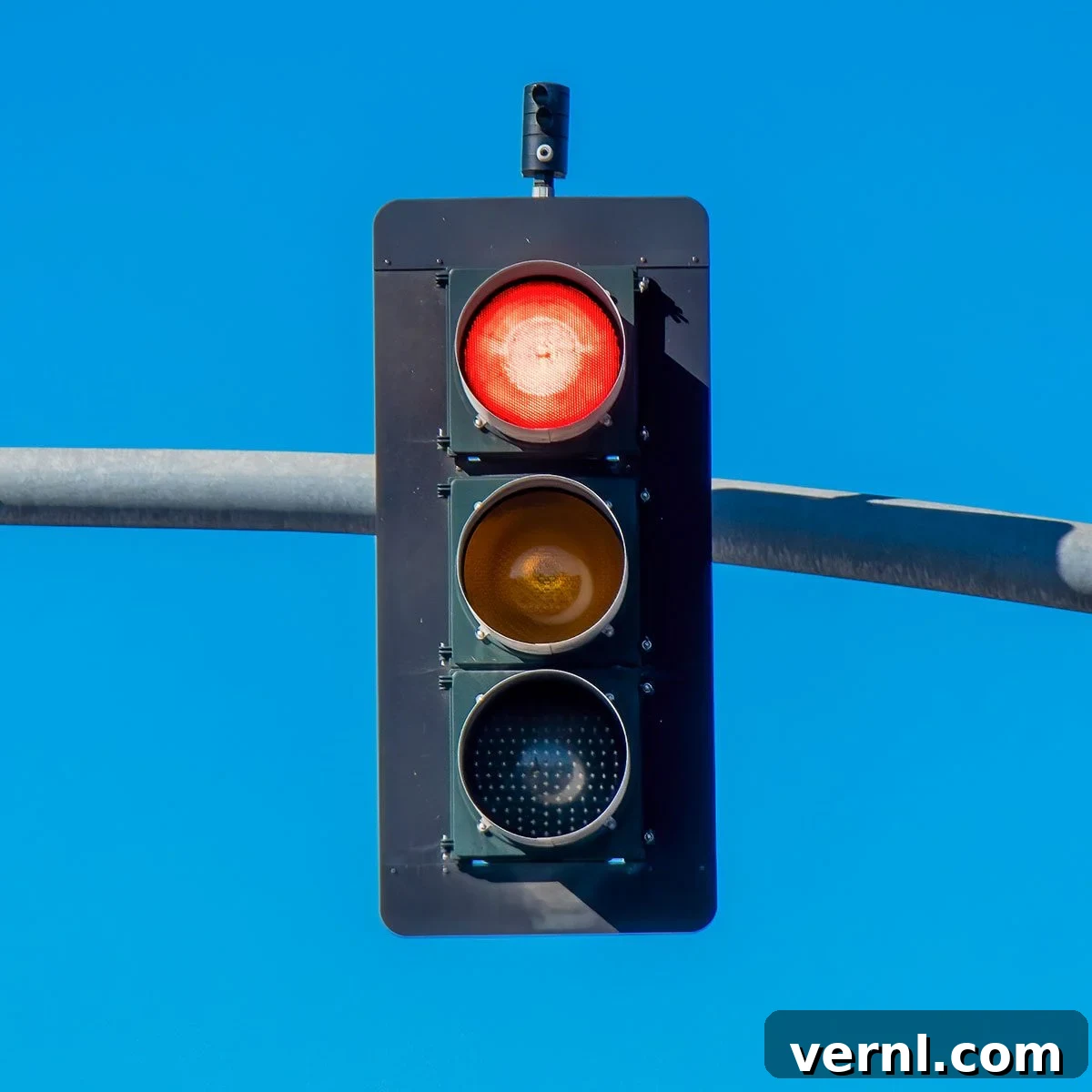
Navigating the complex world of traffic laws can often feel like a guessing game, especially when faced with a red light that seems to stretch into eternity. We’ve all experienced that moment of indecision, wondering if it’s safe to make a turn or if patience is truly the best virtue. Understanding red light laws is paramount for every driver, not just to avoid costly tickets but, more importantly, to ensure the safety of everyone on the road. These regulations are meticulously crafted to maintain order and prevent accidents at busy intersections, yet their precise application can differ significantly from one state to another. Through countless daily commutes and witnessing near misses, it becomes abundantly clear that a solid grasp of what each type of red light signifies is crucial for preventing confusion and upholding road safety standards.
This comprehensive guide aims to demystify red light regulations, providing clarity on common scenarios and lesser-known rules. Ahead, you will learn the specific conditions under which it is legal to turn right on red, the precise meaning and required actions for a blinking red light, who is permitted to proceed through a red signal, and the essential regulations regarding the types of red lights allowed on your personal vehicle. By the end, you’ll be equipped with the knowledge to make confident and safe decisions at any intersection.
Can You Always Turn Right on Red? Understanding the Rules
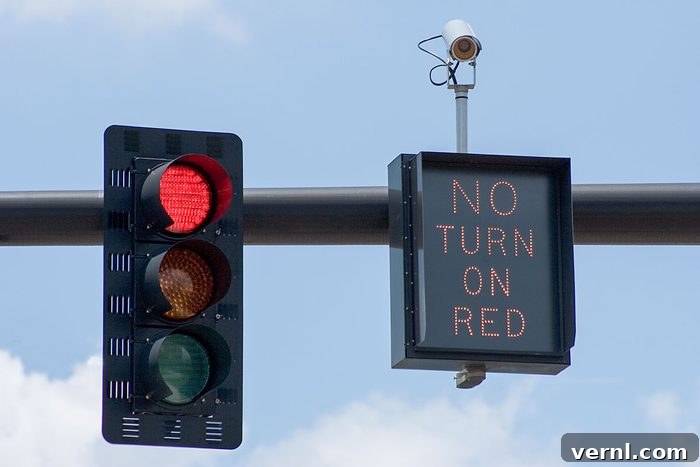
The short answer is no, you cannot always turn right on a red light. While the “right on red” rule is a widely accepted practice designed to improve traffic flow, it is strictly conditional and not an automatic privilege. In most jurisdictions across the United States, you are permitted to make a right turn after coming to a complete and full stop behind the limit line or crosswalk, provided there is no explicit sign prohibiting the action. Crucially, before initiating any turn, you must yield the right-of-way to all pedestrians, cyclists, and other vehicles that are lawfully proceeding through the intersection or are approaching in a manner that creates a hazard. Failing to yield can lead to severe accidents and significant legal penalties.
For instance, the California Driver’s Handbook explicitly states that a solid red light mandates a complete stop. A right turn is permissible only if a “No Turn on Red” sign is absent, you execute a full stop at the designated limit line, and the path is absolutely clear of conflicting traffic. It’s vital to differentiate this from a red arrow signal. A red arrow signifies that you must remain stopped in the designated lane until a green light or a green arrow specifically for your direction appears. Attempting to turn on a red arrow is a direct violation of traffic law and can result in citations and potential accidents, as it indicates a specific traffic conflict or hazard.
The underlying principle behind the conditional right turn on red is to balance traffic efficiency with safety. Allowing drivers to turn when safe reduces congestion, but the priority always remains preventing collisions and protecting vulnerable road users like pedestrians and bicyclists. Always exercise extreme caution and ensure a clear understanding of the specific rules governing the intersection before proceeding.
Which States Allow a Right Turn on Red, and What About Left Turns?
In the United States, all 50 states and the District of Columbia generally permit drivers to turn right on red after stopping, making it a near-universal driving rule. However, this allowance is never absolute and is consistently subject to exceptions. The most common exception, and one that drivers must always be vigilant for, is the presence of a “No Turn on Red” sign. These signs are strategically placed at intersections where right turns on red would pose a significant safety risk, often due to high pedestrian traffic, complex signal phasing, or limited visibility for turning vehicles. Such prohibitions are particularly common in dense urban areas, school zones, or intersections near hospitals.
Beyond the standard right turn, some progressive states also permit a “left turn on red” under very specific circumstances. This is typically allowed when a driver is turning from a one-way street onto another one-way street, provided there is no sign prohibiting the maneuver. States like California, Oregon, Washington, Nevada, and Texas are notable examples where this rule applies. The rationale behind this is similar to the right-on-red rule: when traffic is flowing only in one direction on both streets, the potential for conflicting traffic is significantly reduced, allowing for safer movement and improved traffic flow. However, as with right turns, drivers must come to a complete stop and yield to all pedestrians and cross-traffic before proceeding.
Given the nuanced variations in traffic laws, even between neighboring states or sometimes even between cities within the same state, it is always the driver’s responsibility to verify local regulations. Relying on assumptions can lead to unintentional violations and dangerous situations. Consulting your state’s official driver’s handbook or local Department of Motor Vehicles (DMV) website is the most reliable way to stay informed about the precise rules that apply in your driving area.
What Does a Blinking Red Traffic Light Mean?
A blinking or flashing red traffic light serves a critical purpose: it functions identically to a stop sign. When you encounter a blinking red signal, it is imperative that you come to a complete and full stop before the stop line, crosswalk, or edge of the intersection. Just as you would at a stop sign, you must then carefully observe the traffic flow in all directions, looking for any vehicles, pedestrians, or cyclists that may have the right-of-way. Only after ensuring the intersection is entirely clear and safe to proceed, and after yielding to any existing traffic, should you move forward. This rule is non-negotiable and designed to prevent collisions in situations where standard traffic lights may be inoperable, malfunctioning, or temporarily removed.
Blinking red lights are commonly deployed in several scenarios. They might indicate a temporary condition, such as during a power outage, after a major accident has disabled the regular traffic signals, or when maintenance work is being performed. In some instances, a blinking red light might be a permanent fixture at less busy intersections, signaling that drivers on that particular street must always stop before entering the main flow of traffic. It is crucial not to confuse a flashing red light with a flashing yellow light, which signifies “proceed with caution” and requires slowing down but not necessarily stopping. The “stop, then go when safe” directive for a flashing red light is absolute and critical for intersection safety.
When Can You Run a Red Light? (Hint: Almost Never)
To be unequivocally clear: you cannot “run” a red light. Doing so is not only illegal but also incredibly dangerous, irrespective of whether the road appears clear. Disregarding a solid red light is a severe traffic offense that carries significant penalties, including hefty fines, points on your driving record, potential insurance premium increases, and, most importantly, a high risk of causing serious accidents, injuries, or fatalities. The legal framework surrounding traffic signals is designed to create a predictable and safe environment for all road users, and violating these signals undermines that fundamental safety principle.
The only legitimate exception to stopping at a red light applies exclusively to authorized emergency vehicles – police cars, fire trucks, and ambulances – when they are actively responding to an emergency call and are utilizing their audible sirens and flashing lights. In such situations, other drivers are legally obligated to yield to these vehicles by pulling over to the nearest edge of the roadway and stopping until the emergency vehicle has passed. Even emergency responders exercise extreme caution when proceeding through a red light, often slowing down significantly to ensure the intersection is clear before crossing.
Robert Dillman, founder at NEVO Driving Academy, offers valuable insight: “Always remember that a right turn on red is an option, not a requirement. You always have the choice to wait for a green light if you feel uncomfortable or uncertain about proceeding. Come to a complete stop, take a moment to assess the crosswalk for pedestrians, scan the oncoming lane, and check for any movement that might alter your plan. Only turn when the space is unequivocally clear and you feel completely confident in making that move. Safe driving is never about rushing or taking unnecessary risks; it’s about making informed and cautious decisions.”
Funeral processions present a unique “gray area” regarding red light compliance, and laws vary considerably by state. In some jurisdictions, once the lead vehicle of a funeral procession has lawfully entered an intersection, all subsequent vehicles in the procession are permitted to follow, even if the light turns red, provided they are clearly identifiable as part of the procession (e.g., with headlights on, flags). However, in many other states, every vehicle in a funeral procession is still required to obey normal traffic signals unless a police escort is present and actively directing traffic. If you are participating in a funeral procession, the safest course of action is to stop and wait for the green light before continuing, unless explicitly directed otherwise by law enforcement.
Furthermore, the proliferation of red light cameras at many intersections has made running a red light an even more direct path to a citation. These automated systems capture images or video of vehicles that enter an intersection after the light has turned red, automatically issuing tickets to the vehicle’s registered owner. These cameras reinforce the strict adherence to traffic signals and remove any ambiguity about being caught in the act.
Can You Have Red Lights on a Car?
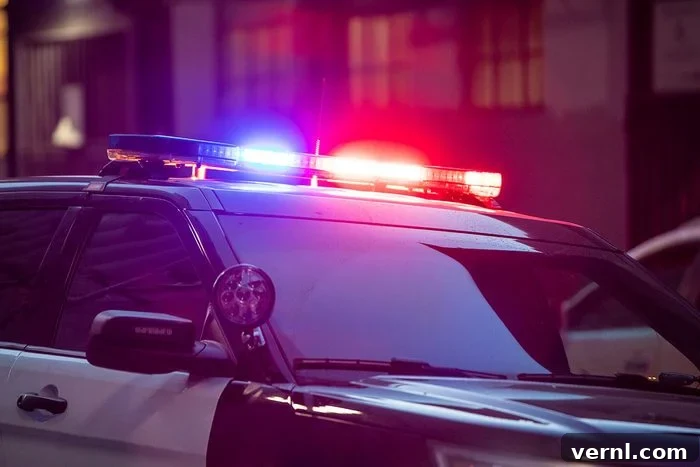
The unequivocal answer is no, you cannot have red lights on the front of your personal vehicle, nor can you use flashing red or blue lights unless you are operating an authorized emergency vehicle. The reason for this strict regulation is profoundly important for public safety and the efficient functioning of emergency services.
As Joshua Branch, Founder and Personal Injury Attorney at Law Offices of Joshua W. Branch, emphasizes, “Red and blue lights have been universally recognized symbols of urgency and emergency for decades. This is precisely why they are strictly reserved for emergency vehicles or official law enforcement purposes. Drivers are prohibited from modifying their personal vehicles to include red and blue lights because it creates dangerous confusion for other motorists. By making the use of red and blue lights illegal on ordinary vehicles, it ensures that drivers can instantly and accurately identify a genuine emergency responder, allowing them to take appropriate and timely action, such as pulling over, to clear the path as required by law.”
Vehicle lighting regulations are not arbitrary; they are governed by federal safety standards, most notably Federal Motor Vehicle Safety Standard (FMVSS) 108. This comprehensive standard outlines in detail what color lights belong where on a vehicle, their brightness, and their flashing patterns. The primary goal of FMVSS 108 is to ensure that all drivers can easily and instantly understand the intentions and type of any vehicle on the road, thereby preventing misinterpretation and enhancing overall road safety. Standardized lighting helps drivers quickly recognize whether a vehicle is braking, turning, backing up, or approaching as an emergency unit.
- Red lights are legally designated for the rear of a vehicle, serving as essential brake lights and tail lights to indicate the vehicle’s presence and deceleration.
- Turn signals, both front and rear, are universally required to be amber (yellow) in color, clearly distinguishing them from brake lights and headlights.
- Headlights and reverse lights are mandated to be white, providing illumination for the driver and indicating the vehicle’s forward or backward movement respectively.
- Placing red lights on the front of your car can critically confuse other drivers, potentially leading them to believe you are an emergency vehicle or misjudging your vehicle’s actions, which is illegal in virtually all jurisdictions.
- Flashing red or blue lights are exclusively reserved for authorized emergency vehicles, law enforcement, and certain service vehicles (like tow trucks or utility vehicles, with specific color regulations), under specific operational conditions.
If you are considering adding aftermarket or decorative lights to your vehicle, it is absolutely essential to thoroughly research and comply with both federal and your state’s specific regulations. Lights that flash in patterns reserved for emergency vehicles, change colors, or mimic the appearance of police lights are almost invariably illegal on public roads and can lead to fines, vehicle impoundment, and severe safety consequences. Always prioritize compliance and safety over aesthetic modifications to avoid legal trouble and ensure clarity for fellow motorists.
Other Red Light Rules You Might Not Know But Should
Beyond the common scenarios, several other nuances within red light laws can often catch drivers by surprise. Being aware of these specific rules can prevent citations and contribute significantly to overall road safety:
- Red Arrows: The Absolute Stop Signal: Unlike a solid red light which may permit a right turn on red, a red arrow is an absolute command to stop and remain stopped. You cannot turn in the direction of a red arrow, even if the intersection seems clear and you would normally be able to make a right turn. The red arrow indicates that traffic moving in that specific direction is not permitted to proceed due to conflicting traffic or pedestrian movements, making it a critical safety measure.
- “Dead-Red” Situations and Malfunctioning Signals: In certain states, specific provisions exist for “dead-red” or malfunctioning traffic lights. This typically applies to motorcycles, bicycles, and sometimes even smaller cars that may not be detected by older or less sensitive traffic light sensors after waiting a reasonable amount of time (often specified as 2-3 minutes or more). If the light fails to change after a significant wait, and after ensuring the intersection is entirely clear and safe, some states permit these vehicles to proceed through the red light. This rule is designed to prevent these vehicles from being perpetually stuck. However, this is a state-specific allowance and requires extreme caution; it is not a blanket permission to run a red light. Always check local laws before assuming this applies.
- “No Turn on Red” Signs: The Overriding Command: While turning right on red is generally allowed, a “No Turn on Red” sign always overrides this general rule. If you encounter such a sign at an intersection, you must remain stopped until the light turns green, regardless of how clear the intersection appears. These signs are often implemented at intersections with high pedestrian traffic, poor visibility, or complex traffic patterns where turning on red would present an unacceptable risk. Disobeying this sign is a traffic violation.
- Yielding Always Applies: Your Foremost Responsibility: This is a fundamental principle that cannot be overstated. Even in situations where it is legally permissible to turn right on red, or when proceeding through a flashing red light, your absolute first priority is to yield the right-of-way. This means yielding to all pedestrians who have entered or are about to enter the crosswalk, to bicyclists, and to any vehicles that are already lawfully in the intersection or are approaching with the right-of-way. Failure to yield is a common cause of accidents and carries severe penalties. Always scan thoroughly and prioritize the safety of others.
- Pedestrian Signals and Walk Cycles: Always be mindful of pedestrian signals. Even if you have a green light or are legally making a right turn on red, pedestrians often have their own walk signals. If pedestrians are legally crossing with a walk signal, they have the right of way, and you must yield to them. Being aware of the pedestrian cycle is an integral part of safe intersection navigation.
- Vehicle Lighting Compliance: Extending Beyond Red: The same federal and state standards (like FMVSS 108) that strictly govern the use of red lights on your vehicle also apply to all other vehicle lighting equipment. This includes the color, intensity, and location of headlights, tail lights, turn signals, and side marker lights. Any modification to your vehicle’s lighting system that deviates from these standards, causes confusion for other drivers, or impairs visibility can be illegal, resulting in fines and potentially contributing to accidents. Maintaining compliant vehicle lighting is a crucial aspect of responsible driving.
About the Experts
- Robert Dillman, founder of NEVO Driving Academy, is a distinguished veteran driving instructor. His extensive experience spans training a diverse range of drivers, from novices to highly skilled professional and security drivers. Dillman’s impressive background also includes high-performance coaching with Porsche and advanced driver training programs for the U.S. Department of State, making him a trusted authority on driving safety and techniques.
- Joshua Branch, Founder and Personal Injury Attorney at the Law Offices of Joshua W. Branch, has dedicated over two decades to representing accident victims across Georgia. He is widely recognized for his exceptional legal expertise, earning an AV® Preeminent™ rating from Martindale-Hubbell®—the highest possible rating for both legal ability and ethical standards—a testament to his profound trial experience and commitment to justice.
SOURCES
- California Driver’s Handbook – Section 7: Laws and Rules of the Road (Traffic Control / Traffic Signals)
- Federal Motor Vehicle Safety Standards; Lamps, Reflective Devices, and Associated Equipment (49 CFR § 571.108)
- Funeral Procession Laws in All 50 States
- Vehicle LED Lighting Regulations in the U.S.
RELATED: Enhance Your Driving Knowledge
- Do You Know What That Little Button on Your Seat Belt Is For?
- What Those Lines on Your Backup Camera Really Tell You
- Here’s What The Small Panel On Your Car’s Front Bumper Is For