
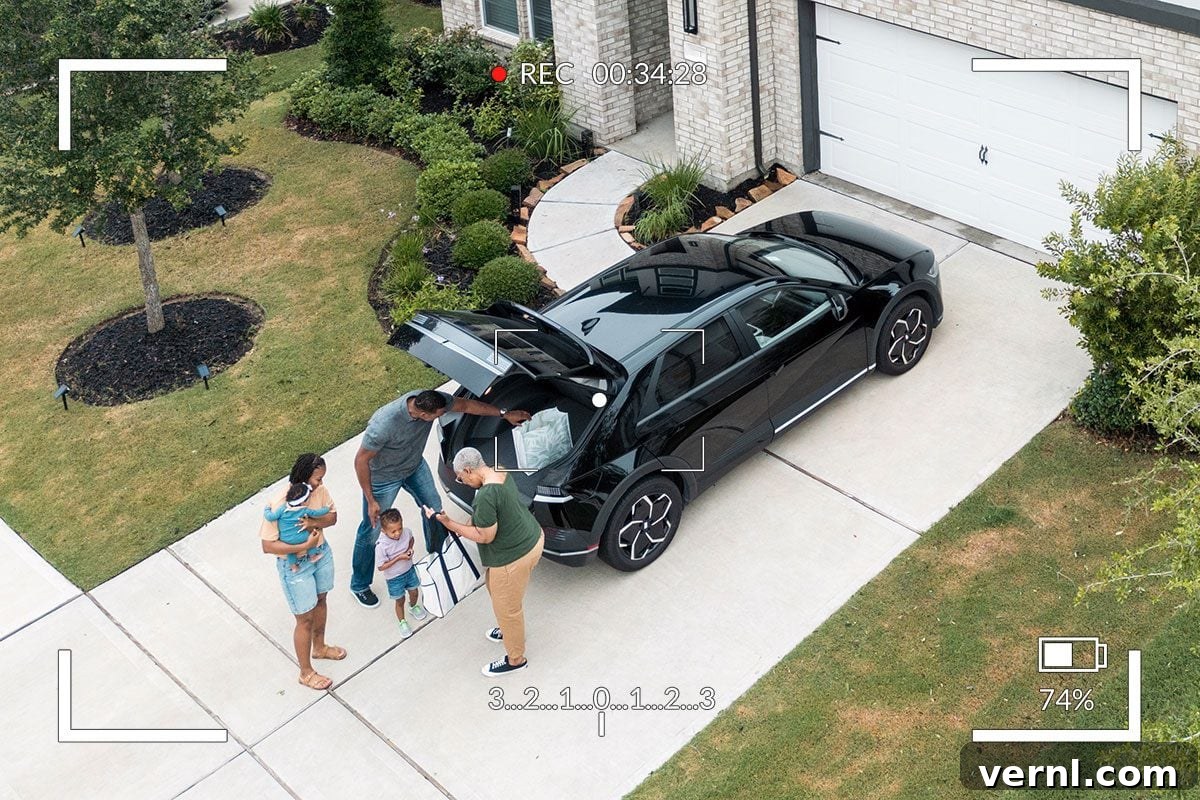
Are you wondering if your home insurance provider is watching you from above? The idea might seem like something out of a futuristic movie, but the reality is that aerial images of your home could be captured right now. This practice, while concerning for many, is a growing trend in the home insurance industry across the country. Take, for instance, the case of Tracy Gartenmann from Texas, whose story recently gained traction through a KUT News report. Gartenmann received an email from a Travelers Insurance representative notifying her that her home had been photographed via aerial imaging without her prior knowledge or consent. What’s more, this unexpected notification came with a stark warning: her more than decade-long home insurance policy might not be renewed if an undisclosed issue, identified through these aerial images, wasn’t rectified within two months. This scenario raises crucial questions about privacy, policyholder rights, and the evolving landscape of home insurance.
In this comprehensive guide, we delve deep into the world of home insurance renewals and surveillance. We’ve gathered insights from leading consumer advocacy experts, seasoned insurance professionals, and legal advisors to shed light on how insurance companies assess coverage renewals, whether they are indeed “spying” on you, and the potential repercussions of their actions, including what happens if an insurance company makes an error. Understanding these dynamics is more critical than ever for homeowners navigating an increasingly complex insurance market.
Understanding Home Insurance Renewal: Factors Beyond Your Control?
When it comes to renewing your home insurance coverage, providers consider a multifaceted array of criteria designed to assess risk. Erika Tortorici, owner and principal of Optimum Insurance Solutions, highlights several key factors. These commonly include a homeowner’s payment history, meticulously reviewing for any late or missed payments that might indicate financial instability or a higher risk profile. Previous claims filed by the policyholder also play a significant role, with a history of frequent or high-value claims often prompting closer scrutiny. Furthermore, the current condition of the property itself is a paramount concern, as insurers aim to identify any existing damage or neglected maintenance that could lead to future claims.
Adding another layer to this assessment, Michael DeLong, a research and advocacy expert with the Consumer Federation of America, points out that a homeowner’s credit score can also significantly influence an insurance company’s decision to renew coverage. A strong credit score is often correlated with responsible financial behavior, which insurers may interpret as a lower risk. Perhaps one of the most impactful, yet often overlooked, factors is the growing influence of climate change. DeLong notes that insurers are increasingly considering environmental risks, such as flood zones, wildfire susceptibility, or severe storm frequency, when evaluating renewal offers, leading to non-renewals or significant premium hikes in vulnerable areas.
Given that home insurance policies and coverage options are not “one-size-fits-all,” Michael R. Naimy, Esq., a partner at Claims Advocacy Center licensed in Florida, Michigan, and Missouri, advises homeowners to engage directly with their insurance agents. This proactive approach allows policyholders to gain a clear understanding of the specific renewal criteria applicable to their individual plan and property. Simple yet effective strategies can also improve your chances of renewal. As Tortorici succinctly puts it, “Keeping the home well-maintained, making timely payments, and limiting non-essential claims can significantly improve the chances of renewal.” Beyond these, regular communication with your insurer about any improvements or maintenance projects can also demonstrate a commitment to property upkeep.
The Truth About Homeowners Insurance and Surveillance: Are They Watching You?
While the term “spying” might evoke images of covert operations, the reality of how homeowners insurance companies collect information is often more nuanced and, for many, still unsettling. It’s less about active espionage and more about systematic data collection and risk assessment. As DeLong explains, “Homeowners insurance companies collect a lot of information about their policyholders, and attempt to slice and dice them into many different categories. This includes information about the houses but also the people themselves, including their economic situation.” This vast data pool helps insurers create detailed risk profiles, which in turn dictate policy terms, premiums, and renewal decisions.
Crucially, this data collection extends beyond traditional paperwork and credit checks to encompass physical surveillance of your home. “Some insurers do use technology like drones or satellite imagery to assess property conditions, particularly when issuing a new policy or reviewing a renewal,” states Tortorici. These advanced technologies allow insurers to conduct virtual inspections, capturing high-resolution images of properties without ever stepping foot on your land. They meticulously scrutinize these images for potential red flags such as overhanging trees that could damage a roof during a storm, visible roof damage like missing shingles or excessive wear, or other overt signs of neglect that might significantly increase the likelihood of a future claim. This remote assessment can be incredibly efficient for insurers but can feel intrusive for homeowners.
For many homeowners, the revelation that their property has been photographed from above without explicit, real-time consent can feel like a profound violation of privacy, even if technically permitted. While there’s a high probability that you may have implicitly signed off on such image-taking practices when you initially enrolled in your policy, often buried deep within the terms and conditions, that doesn’t alleviate the feeling of intrusion. The lack of direct notification about when or how this surveillance occurs can make it feel as though your home insurance company is indeed “spying” on you, transforming a routine policy review into a deeply personal and unsettling experience.
Which Insurance Companies Employ These Surveillance Tactics?
The use of aerial imaging and drone technology is not universal across all insurance providers or states, but its adoption is growing. According to KUT News and other reports, some insurers operating in states like Texas, Florida, North Carolina, Pennsylvania, and California are actively employing these tactics, particularly in the context of homeowners insurance renewals. It’s important to note that these evaluations are often carried out not by the insurance companies themselves, but through third-party aerial imaging companies specializing in property data collection. While Travelers Insurance and Nationwide have confirmed their utilization of these technologies, it’s interesting to observe that Only Travelers and State Farm have specifically denied using drones, indicating a distinction in the specific aerial methods employed. This highlights the varied approaches within the industry, yet the underlying principle of remote property assessment remains consistent across many players.
The Role of Artificial Intelligence (AI) in Insurance Claims and Renewals
The integration of Artificial Intelligence (AI) into the insurance industry is rapidly transforming how claims are assessed and policies are renewed, though the extent of its application varies significantly among companies and geographical locations. The question of whether insurers use AI for these processes is less about a simple yes or no, and more about the degree and specific applications of the technology. For instance, KUT News reports that many homeowners insurance companies leverage third-party firms that employ AI to analyze aerial images. These sophisticated AI algorithms can scan vast amounts of visual data, evaluating homes and roofs based on perceived levels of risk. This analysis might identify everything from tree limbs too close to a roof, unkempt landscaping, or even subtle signs of wear and tear on a roof structure, all of which can influence homeowners insurance policy renewal decisions.
The reach of AI extends beyond simple image analysis. The National Association of Insurance Commissioners (NAIC) conducted a survey where 70% of 194 responding home insurers “reported they use, plan to use, or plan to explore AI/ML models in their operations.” This indicates a broad and growing commitment to integrating AI and Machine Learning (ML) across various operational facets. While AI’s role in assessing claims might seem more ambiguous, it is increasingly used for fraud detection, automating initial claim reviews to flag suspicious patterns, and even personalizing policy recommendations. Predictive analytics driven by AI can forecast future risks more accurately, helping insurers price policies more precisely and identify properties that might pose a higher risk of future claims. This technological advancement promises greater efficiency for insurers but also raises important questions about transparency, fairness, and potential biases in algorithmic decision-making, impacting homeowners insurance policyholders significantly.
When Mistakes Happen: What to Do If Your Insurance Company Errs
No industry is immune to errors, and the homeowners insurance sector is no exception. Instances of mistakes can occur, sometimes with significant repercussions for policyholders. A notable example involved a homeowner who was denied coverage by Nationwide due to the review of an incorrect aerial report. This highlights a critical vulnerability in systems heavily reliant on remote data collection: the potential for misidentification or outdated information. The consequences of such errors and the processes for addressing them can vary widely depending on the specific circumstances and jurisdictional regulations. In the Nationwide case, for instance, the state was prompted to launch an investigation, underscoring the role of regulatory bodies in consumer protection.
Policyholders are not without recourse when faced with an insurer’s mistake. As Naimy explains, “Some states have bad faith statutes which may allow the policyholder to recover damages resulting from the insurance company’s activity during the claims handling process.” These statutes are designed to protect consumers from unreasonable or deceptive practices by insurers. If an insurance company denies a claim or refuses to renew a policy based on faulty information or without proper investigation, a homeowner might have grounds for legal action. It’s crucial for homeowners to meticulously document all communications, evidence, and timelines related to the issue. Tortorici adds that “minor mistakes can oftentimes easily be fixed,” suggesting that not all errors escalate to legal battles. Often, a clear and concise appeal, backed by strong evidence, can resolve misunderstandings directly with the insurer. This emphasizes the importance of understanding your policy, questioning discrepancies, and knowing your rights as a policyholder to ensure fair treatment.
The Evolving Landscape: What Now for Homeowners?
The increasing use of aerial imagery and AI in the homeowners insurance sector has undeniably sparked significant concern and dissatisfaction among consumers. The revelation that their homes are being monitored from above, sometimes without their explicit awareness, has ignited a broader discussion about privacy rights in the digital age. In response to these growing concerns, advocacy groups and lawmakers are beginning to take action. Michael DeLong notes that some states, notably California, are at the forefront of proposing new legislation. These bills aim to increase transparency and consumer protection by mandating that insurance companies provide homeowners with a minimum 30-day notice before conducting any aerial imaging. Furthermore, such legislation would grant homeowners explicit access to copies of these images, allowing them to review the data upon which critical insurance decisions are made.
Beyond legislative efforts, some homeowners are taking more direct action. Cases are emerging where homeowners are even taking insurance companies to court. These lawsuits often stem from policies being canceled or non-renewed based on what homeowners assert are false or inaccurate aerial photos, leading to significant financial and emotional distress. These legal challenges highlight the need for insurers to not only utilize advanced technology responsibly but also to maintain robust systems for verifying information and correcting errors promptly. For homeowners, staying informed about policy terms, understanding their rights, and actively advocating for transparency are becoming indispensable in navigating the complexities of modern home insurance. The conversation around technology, privacy, and fairness in insurance is far from over, promising further evolution in how homes are insured and how consumers are protected.
About the Experts
- Michael DeLong is a research and advocacy expert with the Consumer Federation of America, dedicated to protecting and promoting consumer interests.
- Erika Tortorici is the owner and principal of Optimum Insurance Solutions, bringing extensive experience in insurance brokerage and client advocacy.
- Michael R. Naimy, Esq., is a partner at Claims Advocacy Center, a legal professional licensed in Florida, Michigan, and Missouri, specializing in insurance claims and consumer protection.
Sources
- Kut.org: “In Texas, insurers are watching your home from above. It could cost you coverage.”
- Content.naic.org: “Artificial Intelligence”
- Insurance.ca.gov: “Commissioner Lara supports legislation to protect homeowners’ privacy and increase transparency in insurers’ use of aerial imagery”
- Sfchronicle.com: “California homeowner sues Liberty Mutual, claims insurance dropped over ‘demonstrably false’ photo”
Related Articles & Resources
- How To Strategically Place Your Security Cameras for Maximum Safety
- The Legal Dos and Don’ts of DIY Home Security Systems
- Why a No-Subscription Home Security System Might Be Perfect for You