The Essential Guide to Gutter Cleaning: Protect Your Home Like a Pro
Introduction: The Unsung Hero of Home Maintenance
Cleaning out your gutters might not be the most glamorous home maintenance task, but it is undeniably one of the most critical. Often overlooked until a problem arises, well-maintained gutters are your home’s first line of defense against a myriad of potential water-related damages. While the thought of climbing a ladder might deter some, understanding the process and the profound benefits of regular cleaning out your gutters will empower you to tackle this chore with confidence.
It’s not a difficult task; rather, it’s a matter of remembering to do it and knowing the proper techniques. This comprehensive guide will walk you through everything you need to know, from why it’s so important to step-by-step instructions, essential tools, and crucial safety precautions. Prepare to master the art of gutter cleaning and safeguard your most valuable asset – your home.
Why Gutter Cleaning is Non-Negotiable: Preventing Costly Damage
Imagine your home as a fortress, and your gutters as its strategic defense system against rain and melting snow. When this system becomes clogged with leaves, twigs, shingle grit, and other debris, it can no longer perform its vital function. Water, instead of being channeled safely away, overflows and wreaks havoc. Here’s a breakdown of the serious problems clogged gutters can cause:
1. Foundation Damage
Perhaps the most severe consequence of overflowing gutters is damage to your home’s foundation. When water continuously pools around the foundation, it can seep into cracks, weakening the concrete or stone over time. This can lead to costly structural repairs, basement flooding, and even foundation settlement, which manifests as cracks in walls and uneven floors.
2. Roof Damage and Leaks
Water backing up from clogged gutters can sit on your roofline, especially under the shingles. This standing water can penetrate the roofing materials, leading to rot in fascia boards, soffits, and roof decking. Eventually, this can result in roof leaks, damaging your attic, ceilings, and interior walls. Ice dams in colder climates are also a direct result of clogged gutters preventing proper drainage, causing water to back up under shingles.
3. Siding and Exterior Wall Damage
Overflowing water can run down your home’s siding, leading to unsightly stains, mold and mildew growth, and even rot in wood siding. Over time, constant moisture can compromise the integrity of your exterior walls, leading to peeling paint and the need for expensive repairs or replacement.
4. Landscape Erosion and Pest Infestation
The relentless drip of overflowing gutters can erode soil around your home, washing away valuable topsoil and damaging landscaping. Furthermore, standing water in clogged gutters creates an ideal breeding ground for mosquitoes and other pests, turning your yard into an unwelcome habitat for insects.
When to Clean Your Gutters: Timing is Key
The frequency of gutter cleaning largely depends on your home’s environment. Homes surrounded by many trees, especially deciduous ones, will require more frequent cleaning. As a general rule, most homes benefit from at least two cleanings per year:
- Late Fall (after all leaves have fallen): This is arguably the most crucial cleaning. Removing accumulated autumn leaves prevents them from turning into a sodden, frozen mess over winter, which can lead to ice dams and blockages.
- Late Spring (after pollen and spring debris have settled): This cleaning addresses any winter debris, tree blossoms, seeds, and early spring pollen buildup. It ensures your gutters are ready for heavy spring and summer rains.
If you live in an area with particularly heavy tree cover or frequent storms, consider quarterly cleanings or inspecting your gutters more often.
DIY Gutter Cleaning: A Step-by-Step Guide
Tackling gutter cleaning yourself can be a satisfying and cost-effective endeavor. Here’s how to do it safely and effectively:
1. Safety First: Preparing for the Job
Before you even think about climbing a ladder, prioritize safety. This step cannot be overstated:
- Sturdy Ladder: Use an extension ladder that is tall enough to allow you to reach the gutters comfortably without overstretching. Ensure it’s placed on firm, level ground. Have someone spot you if possible.
- Work Gloves: Protect your hands from sharp debris, grime, and potential bacteria.
- Eye Protection: Falling debris can cause serious eye injuries. Always wear safety glasses or goggles.
- Appropriate Clothing: Wear long sleeves and pants to protect your skin.
- No Overreaching: Always move the ladder instead of leaning too far to reach. Maintain three points of contact with the ladder at all times.
2. Essential Tools and Materials
Gathering your tools before you start will make the process much smoother:
- Sturdy extension ladder
- Heavy-duty work gloves
- Safety glasses
- Small plastic scoop or trowel (or a gutter cleaning tool)
- Buckets (to collect debris)
- Garden hose with a spray nozzle
- (Optional) Gutter grabber or tongs for hard-to-reach spots
- (Optional) Pressure washer (use with caution to avoid damage)
3. The Cleaning Process: Step-by-Step
- Position Your Ladder: Place your ladder securely, ensuring it extends several feet above the gutter line.
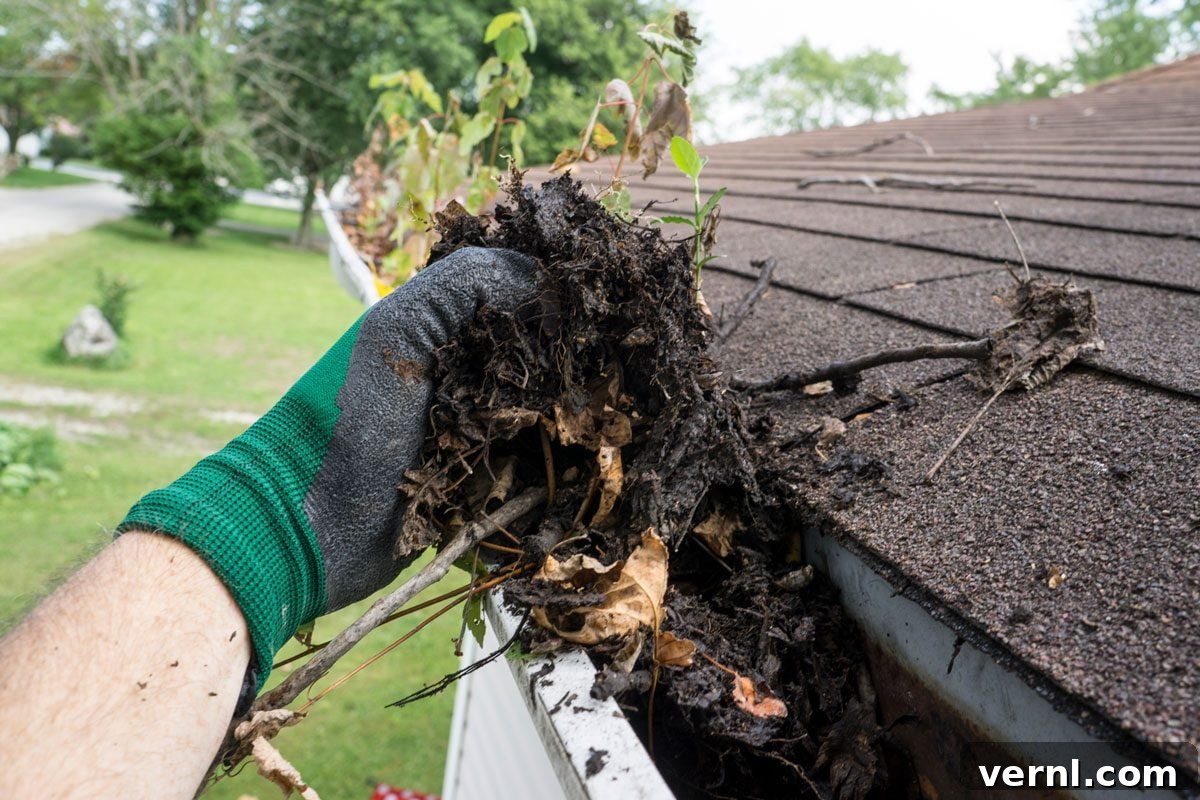
- Scoop Out Debris: Starting from one end, use your scoop or gloved hands to remove all large debris (leaves, twigs, shingle grit) from the gutter trough. Place the debris directly into buckets or onto a tarp laid below to facilitate easy cleanup. Work your way along the gutter, moving the ladder as needed.
- Flush with Water: Once all solid debris is removed, use a garden hose with a strong nozzle to flush out any remaining grime and smaller particles. Start at the opposite end from your downspout and spray towards it. This will help confirm your downspouts are clear.
- Check Downspouts: As you flush, observe if water flows freely from the downspout exit. If water backs up or doesn’t flow, you likely have a clog in the downspout.
- Clear Downspout Clogs: For stubborn downspout clogs, you can try several methods:
- Use the hose nozzle to blast water down the downspout from the top.
- If that fails, use a plumber’s snake or a specialized downspout auger to break up and push the clog through.
- In extreme cases, you might need to disassemble sections of the downspout to manually clear the blockage.
- Final Inspection: After flushing and clearing, ensure all gutters and downspouts are free of blockages and draining properly. Look for any signs of damage like sagging sections, rust, or loose fasteners that might need attention.
Beyond the Basics: Advanced Gutter Maintenance
Once you’ve mastered the art of basic gutter cleaning, consider these additional steps to further enhance your home’s water management system:
1. Gutter Guards: Are They Worth It?
Gutter guards come in various forms (mesh, foam, reverse curve) and are designed to keep large debris out of your gutters while allowing water to flow freely. While they can significantly reduce the frequency of cleaning, they are not maintenance-free. Smaller particles, shingle grit, and seeds can still accumulate on top of or under guards, occasionally requiring cleaning. Research different types to find one suitable for your home and tree coverage.
2. Downspout Extensions
Ensuring that water is carried far enough away from your foundation is just as important as clearing your gutters. Downspout extensions direct rainwater several feet away from your home, preventing erosion and foundation issues. There are flexible and rigid options available, often easily attachable.
3. Regular Visual Inspections
Even between major cleanings, it’s a good habit to visually inspect your gutters from the ground after heavy rains. Look for obvious overflows, sagging sections, or visible debris. Addressing minor issues promptly can prevent them from escalating into major problems.
When to Call a Professional Gutter Cleaner
While DIY gutter cleaning is manageable for many, there are situations where hiring a professional is the smarter, safer choice:
- Height and Safety Concerns: If your home is multi-story or has very steep roofs, the risk of a fall is significantly higher. Professionals have the right equipment and training for such tasks.
- Extremely Clogged Gutters: If your gutters are severely neglected and packed with compacted debris, a professional can clear them more efficiently and effectively.
- Pest Infestations: If you discover nests of wasps, bees, or other pests in your gutters, it’s safer to let experts handle removal.
- Time Constraints or Physical Limitations: If you simply don’t have the time, or if physical limitations prevent you from safely performing the task, a professional service is invaluable.
The Long-Term Benefits of Regular Gutter Maintenance
Investing time and effort (or money in professional services) into regular gutter cleaning yields significant returns. You’ll enjoy:
- Peace of Mind: Knowing your home is protected from water damage.
- Extended Home Lifespan: Protecting your roof, foundation, and siding ensures your home lasts longer.
- Increased Curb Appeal: Clean gutters and well-managed drainage contribute to a tidier exterior.
- Avoidance of Costly Repairs: Proactive maintenance is always cheaper than reactive repairs for water damage.
- Pest Control: Eliminating standing water reduces breeding grounds for mosquitoes and other insects.
Conclusion: A Small Task, A Big Impact
Cleaning your gutters is more than just a chore; it’s a vital component of responsible homeownership. It’s a relatively simple task that, when done regularly and correctly, offers immense protection against a wide array of potential damages. By understanding the importance, knowing when to act, and following proper safety and cleaning procedures, you can ensure your home remains dry, safe, and sound for years to come.
So, schedule those cleaning dates on your calendar, gather your tools, and get ready to protect your home with this essential maintenance routine. Your home (and your wallet) will thank you.