
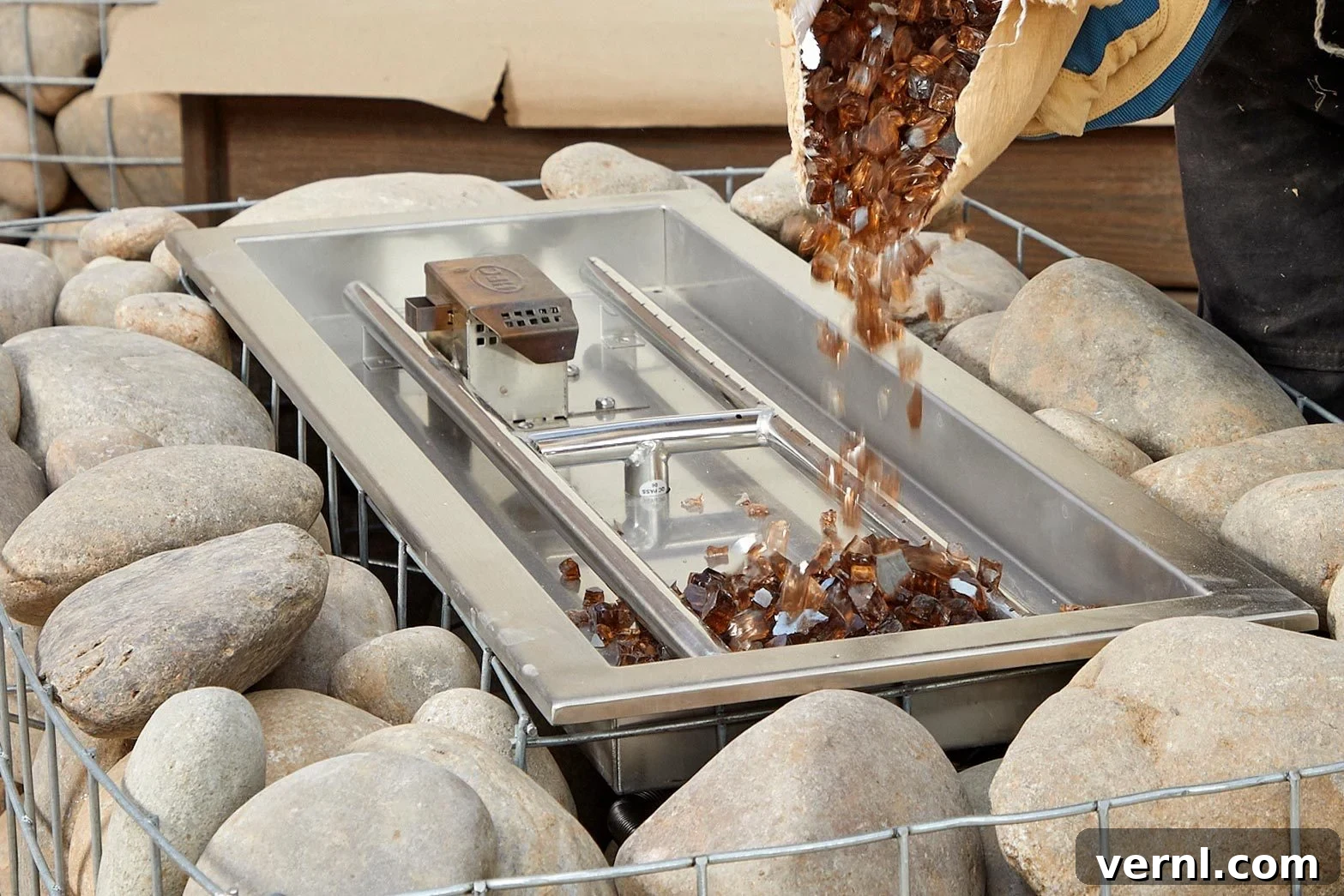
Transforming your backyard into an inviting oasis often involves the warmth and ambiance of a gas fire pit. Whether you’re embarking on a brand-new DIY fire pit or table construction, replacing a worn-out component in an existing setup, or meticulously researching the best models before making a significant purchase, understanding the core of these magnificent outdoor features is crucial. At the heart of every gas-fueled fire pit lies its burner, a pivotal component that dictates not only the visual appeal of your flames but also the safety and efficiency of your entire system. This comprehensive guide will equip you with all the essential knowledge you need about fire pit burners, ensuring you make an informed decision for a mesmerizing and safe outdoor experience.
What Is a Fire Pit Burner?
A fire pit burner is the central mechanism in any gas-powered fire pit, responsible for generating the captivating flames that draw people together. More than just a simple component, it’s the carefully engineered element that defines the shape, size, and overall pattern of your fire. Essentially, it acts as the conduit for gas, transforming inert fuel into a vibrant, dancing fire. Its design and construction are paramount, influencing everything from fuel efficiency to the aesthetic impact of your outdoor living space. Understanding its fundamental role is the first step toward appreciating the intricate engineering that goes into creating a perfect flame.
How Do Fire Pit Burners Work?
The operation of a fire pit burner is a testament to simple yet effective engineering, mirroring the principles found in many common gas appliances. At its core, a fire pit burner consists of a series of robust metal tubes, meticulously perforated with numerous small holes. The process begins when gas fuel, whether natural gas or liquid propane, is supplied under pressure into this tube network. The design ensures an even distribution of gas throughout the burner, allowing it to escape uniformly through the precisely drilled or punched holes.
Once the gas is released, an integrated ignition system, which can range from a simple manual spark igniter to a sophisticated electronic system, creates the initial spark or pilot flame. This ignites the escaping gas, initiating a controlled combustion process. The result is a consistent and natural array of flames, emerging from the burner’s surface. This continuous cycle of supply, distribution, and ignition ensures a stable and beautiful fire. While the burner itself is often concealed beneath decorative media like lava rocks or fire glass, its function is analogous to the more visible burners on a gas grill or a kitchen gas stove, both of which employ the identical principles of gas delivery and combustion to produce heat and flames.
Modern fire pit burners often incorporate additional features beyond the basic perforated tube. These can include specialized gas nozzles designed to optimize air-to-gas mixture, different shapes and sizes to accommodate various fire pit designs, and a selection of durable materials to withstand the elements. However, before delving deeper into these variations, it’s essential to consider the type of fuel that will power your fire pit, as this choice has significant implications for the burner system.
Propane vs. Natural Gas
Gas fire pits are fueled by one of two primary sources: natural gas or liquid propane (LP). The choice between these fuels is a critical decision, as it dictates the specific burner and delivery system required. While both fuel types produce attractive flames, their chemical properties and infrastructure requirements are distinct.
Natural gas is delivered directly to your home via an underground pipeline, offering a continuous and often more cost-effective fuel source. It burns cleanly and is lighter than air, meaning any uncombusted gas dissipates rapidly into the atmosphere. The primary advantage of natural gas is convenience; you’ll never run out of fuel, making it ideal for frequent and prolonged use without the need for tank refills.
Propane, on the other hand, is stored as a liquid under pressure in portable tanks, typically 20-pound cylinders (similar to those used for gas grills) or larger stationary tanks. Propane burns at a higher temperature than natural gas, requiring a different orifice size on the burner to achieve comparable flame heights. Its portability is a major advantage, allowing fire pits to be placed in locations without a direct gas line. However, the need for tank refills means a finite burn time, and larger tanks might be required for extended use.
Crucially, a burner designed for natural gas cannot be directly used with propane, and vice versa, without proper conversion. Each fuel type requires specific gas pressure and orifice sizing to ensure safe and efficient combustion. When selecting a burner, it is imperative to verify its compatibility with your chosen fuel. Many manufacturers offer burners in dedicated natural gas or propane models, and some even include adapter kits for conversion. Always ensure the burner you select is explicitly rated for your intended fuel type to guarantee both performance and safety.
Burner Plate or Pan: An Essential Component
Beyond the burner itself, the fuel type also significantly influences the requirement for another critical component: the burner plate or pan. This is typically a flat or slightly raised metal disc that sits directly beneath the burner within the fire pit enclosure. While the terms “plate” and “pan” are often used interchangeably, a pan generally features a raised outer lip, whereas a plate is flat. For the purpose of this discussion, we’ll consider their primary function as a support and safety element.
For fire pits fueled by propane, a burner pan is almost universally required. This is due to propane’s unique properties: it is heavier than air. If uncombusted propane were to accumulate at the bottom of the fire pit enclosure, it could create a hazardous situation, potentially leading to a sudden, uncontrolled ignition or explosion. The burner pan serves to contain the propane closer to the igniter and the burner, preventing it from settling and pooling in the lower recesses of the fire pit structure. Additionally, propane requires a specific air-to-gas mixture to burn cleanly without producing soot. Many propane fire pits therefore incorporate an air mixer into the supply line to optimize this combustion.
Natural gas, being lighter than air, dissipates harmlessly if uncombusted and burns more cleanly, thus generally not requiring a pan for safety reasons. However, many DIY enthusiasts and manufacturers still opt to include a pan in natural gas fire pits. This decision is driven by practical benefits: pans provide a stable platform for decorative media such as lava rocks, fire glass, or ceramic logs, making the filling process easier and maintaining a cleaner appearance. Furthermore, a removable pan can act as a pseudo-lid, offering convenient access to the bottom of the fire pit for routine maintenance, cleaning, or troubleshooting of gas lines. If you do use a burner pan, particularly in outdoor settings, it’s vital to ensure it has adequate weep holes or other drainage mechanisms. Water accumulation in the pan can lead to corrosion, damage to the burner, and potentially obstruct the gas holes.
Types of Fire Pit Burners
Beyond the fundamental choice between propane and natural gas, the world of fire pit burners offers a variety of designs and specifications, each catering to different aesthetic desires, performance expectations, and budgets. Understanding these variations will help you select the ideal burner for your specific fire pit project.
Standard Fire Pit Burner
The standard fire pit burner is the most common and economical option. These burners feature a series of small, precisely spaced holes through which the gas escapes and ignites. There are two primary methods for creating these holes: drilling or punching.
- Punched-Hole Burners: These are generally more cost-effective to manufacture. However, the punching process can sometimes leave slight dimples or indentations around the holes. While often minor, these dimples can potentially allow small amounts of water to pool, which over time could lead to corrosion or minor obstructions.
- Drilled-Hole Burners: These burners are typically considered a step up in quality. The drilling process creates cleaner, more defined holes. Manufacturers of drilled burners often leave a small, raised burr around the edge of each hole. This burr isn’t a defect; rather, it acts as a subtle shield, helping to deflect water and minimize the chances of water penetration into the burner’s interior. Drilled holes often result in a more uniform and consistent flame pattern.
Standard burners provide a classic, natural-looking flame pattern and are a reliable choice for most fire pit applications.
Nozzle Fire Pit Burner (High-Performance)
Distinguished by their sophisticated design, nozzle fire pit burners represent the pinnacle of fire pit technology, offering dramatically larger and more vibrant flames while consuming significantly less gas. Instead of simple holes, these burners are equipped with specialized metal nozzles, often resembling miniature pressure washer tips, strategically arranged around the burner ring or pan.
The magic of nozzle burners lies in their advanced air-intake technology, often referred to as a Venturi effect. As gas flows through the narrower part of the nozzle, it creates a lower pressure zone, drawing in ambient air. This optimal pre-mixing of air and gas before combustion leads to a more complete and efficient burn. The result is a much taller, fuller, and more impressive flame with the same or even lower BTU input compared to a standard burner. Popular examples include Bullet Burners from Outdoor Plus or Crossfire by Warming Trends, though many brands offer their own patented versions.
While nozzle burners typically come with a higher upfront cost, their superior flame output and reduced gas consumption often justify the investment for those seeking a premium fire pit experience and long-term operating savings.
Shapes
Fire pit burners are available in a vast array of shapes and sizes, designed to complement virtually any fire pit design or aesthetic. While some shapes can influence flame distribution, for the most part, the choice of shape is largely a matter of personal preference and how it integrates with your fire pit’s overall design.
Common shapes include:
- Round: The most traditional and versatile shape, perfect for circular fire pits or bowls, offering a centralized flame presence.
- Square: Ideal for square or rectangular fire tables and pits, providing a more structured and contemporary flame pattern.
- Linear (H, T, U): These shapes are excellent for creating long, continuous lines of fire, often seen in modern linear fire tables or trench-style fire features. An “H” burner might offer two parallel lines of flame, while a “T” or “U” burner extends the flame along specific edges.
- Custom-Designed: For unique or unusually shaped fire pits, custom-fabricated burners can be created to fit specific dimensions and contours, ensuring a perfect match for bespoke projects.
Larger burners inherently generate more heat and can accommodate a wider spread of flames. When selecting a shape, consider the dimensions of your fire pit enclosure and the desired visual impact of the flame.
Btus (British Thermal Units)
The heating capacity of fire pit burners is quantified in Btus (British Thermal Units), a standard unit of energy. Btus indicate the amount of heat a burner can generate. A higher BTU rating generally translates to larger flames and greater heat output. Selecting the appropriate BTU level depends on several factors:
- Personal Preference: Do you desire a roaring, intensely warm fire or a more ambient, decorative flame?
- Climate and Environment: In colder climates, a higher BTU burner might be preferred for substantial warmth.
- Fire Pit Size: Larger fire pits naturally accommodate higher BTU burners to fill the space with adequate flame.
- Gas Supply: For natural gas users, your home’s gas line capacity will dictate the maximum BTU you can effectively support. For propane users, the size and number of propane tanks will influence burn time at different BTU levels.
Most residential gas fire pits typically range from 80,000 to 120,000 Btus at their maximum flame height. It’s important to note that most gas-fueled fire pits feature adjustable flame controls, allowing you to modulate the heat output and flame size to your preference.
To put BTU ratings into perspective for propane users: a standard 20-pound propane tank, commonly used for gas grills, contains approximately 430,000 Btus of energy. Therefore, if you operate a 100,000 BTU fire pit burner at its full flame height, a single 20-pound propane tank would provide roughly 4.3 hours of continuous burn time (430,000 Btus / 100,000 Btus/hour = 4.3 hours). This calculation is vital for planning your fuel needs, especially for longer gatherings.
Material
The material from which a fire pit burner is constructed directly impacts its durability, longevity, and resistance to environmental factors. The two most common materials are stainless steel and brass.
- Stainless Steel: This is the more common and significantly less expensive option. Stainless steel offers good corrosion resistance, especially high-grade alloys like 304 or even 316 marine-grade stainless steel, which is ideal for coastal or harsh environments. It is also more malleable, making it easier to fabricate into intricate or custom shapes, offering greater design flexibility for curved or unique fire pit designs. However, stainless steel can be susceptible to warping or bending under extreme heat or physical stress over very long periods, and prolonged exposure to certain chemicals or saltwater can still lead to discoloration or pitting if not properly maintained.
- Brass: Renowned for its exceptional durability and superior corrosion resistance, brass is considered the premium choice for fire pit burners. It holds up remarkably well against extreme temperatures, harsh weather conditions, and corrosive elements, making it an excellent investment for longevity. Brass is significantly denser and more rigid than stainless steel, providing robust performance without warping. While the upfront cost of a brass burner is considerably higher than stainless steel, its extended lifespan and minimal maintenance requirements often make it a worthwhile investment for those seeking the highest quality and durability for many years of use.
Your choice of material should balance your budget with your desired level of durability, the local climate, and the expected frequency of use for your fire pit.
Key Considerations for Fire Pit Burners
Beyond the basic types, shapes, and materials, several other factors contribute to the safety, functionality, and overall experience of your fire pit. These considerations are crucial for both new installations and upgrades.
Ignition Systems
The method by which your fire pit burner ignites can significantly impact convenience and ease of use. Common ignition systems include:
- Manual Ignition: The simplest and most economical option. This typically involves turning a gas valve to release fuel and then using a long lighter or match to ignite the gas manually.
- Push-Button (Spark) Ignition: A step up in convenience, these systems feature a piezoelectric igniter that creates a spark with the push of a button, igniting the gas.
- Electronic Ignition (Automatic): The most advanced and convenient option. These systems use a battery or mains power to ignite the gas electronically, often with the flip of a switch, a wall timer, or even a remote control. Some advanced systems include flame-sensing technology and automatic relight features for added safety and reliability.
Safety Features
Modern fire pit burners and associated components often incorporate vital safety features to prevent gas leaks and ensure safe operation:
- Thermocouple: A safety device that monitors the presence of a pilot flame or main burner flame. If the flame goes out, the thermocouple will detect the absence of heat and signal the gas valve to shut off the gas supply, preventing uncombusted gas from accumulating.
- Flame Sensing (FFD – Flame Failure Device): Similar to a thermocouple, this system automatically cuts off the gas supply if the flame extinguishes, protecting against gas leaks.
- Automatic Shut-Off: Some advanced electronic ignition systems feature timers or sensors that can automatically shut off the fire pit after a set period or if unusual conditions are detected.
Certifications and Standards
Always look for burners and components that meet recognized safety standards. Certifications from organizations such as UL (Underwriters Laboratories) or CSA (Canadian Standards Association) indicate that the product has undergone rigorous testing for safety and performance. These certifications provide peace of mind that your fire pit burner meets industry safety benchmarks.
How To Choose a Fire Pit Burner
The process of selecting the right fire pit burner will vary depending on your specific project: buying a new fire pit, replacing a damaged burner, or building a custom DIY unit.
Shopping for a New Gas Fire Pit (Off-the-Shelf)
When purchasing a complete, pre-built gas fire pit, your focus should be on the overall design, the type of fuel you’ll use, and the desired aesthetic. If longevity and resistance to the elements are top priorities, opt for a model featuring a brass burner. For those who prioritize dramatic, large flames that make a statement, a fire pit equipped with a high-performance nozzle burner will be an excellent choice. Beyond these performance aspects, simply decide whether a natural gas or propane model better suits your lifestyle and budget, and choose a BTU rating that aligns with your desired heat output and flame size for your outdoor space. Always check for certified components and reputable brands.
Buying a Replacement Fire Pit Burner
If you’re replacing a damaged or worn-out burner in an existing fire pit, the primary goal is to find a compatible replacement. Begin by measuring the existing burner’s dimensions (length, width, diameter) and noting its shape. Also, identify the fuel type (natural gas or propane) and its BTU rating. While sticking to the existing burner type is generally the safest and easiest path to ensure proper fit and function, this can also be an opportune moment to consider an upgrade. You might choose to upgrade from a standard stainless steel burner to a more durable brass burner, or enhance your flame experience with a high-performance nozzle burner, provided it fits within the existing enclosure and is compatible with your gas supply system. Always consult your fire pit’s manual for specific replacement part recommendations.
Building a DIY Gas Fire Pit
This is where you have the most creative freedom, but also the greatest responsibility regarding safety and compliance. When designing a custom gas fire pit, meticulous planning is essential. Ensure you select all components, especially the burner, to be explicitly compatible with your chosen fuel type. It’s highly recommended to consult with a qualified gas technician for the installation of gas lines and connections, especially for natural gas systems, to ensure all local codes and safety regulations are met.
When it comes to burner sizing for a DIY project, a crucial guideline is to maintain at least three inches of clearance between the outer edge of the burner and the interior walls of your fire pit enclosure. This buffer space is vital for several reasons: it ensures adequate air circulation for complete and clean combustion, prevents flames from impinging directly on the fire pit’s structure, which could cause heat damage or discoloration, and provides a safe boundary for decorative media. While some burner manufacturers may have slightly different specifications, this three-inch rule is a widely accepted best practice to ensure flames have sufficient air and don’t spill out of the enclosure, creating a safer and more visually appealing fire. Additionally, ensure your fire pit enclosure has proper ventilation openings to prevent gas accumulation, especially for propane installations. Carefully consider the materials for your fire pit enclosure, ensuring they are non-combustible and capable of withstanding high temperatures.