
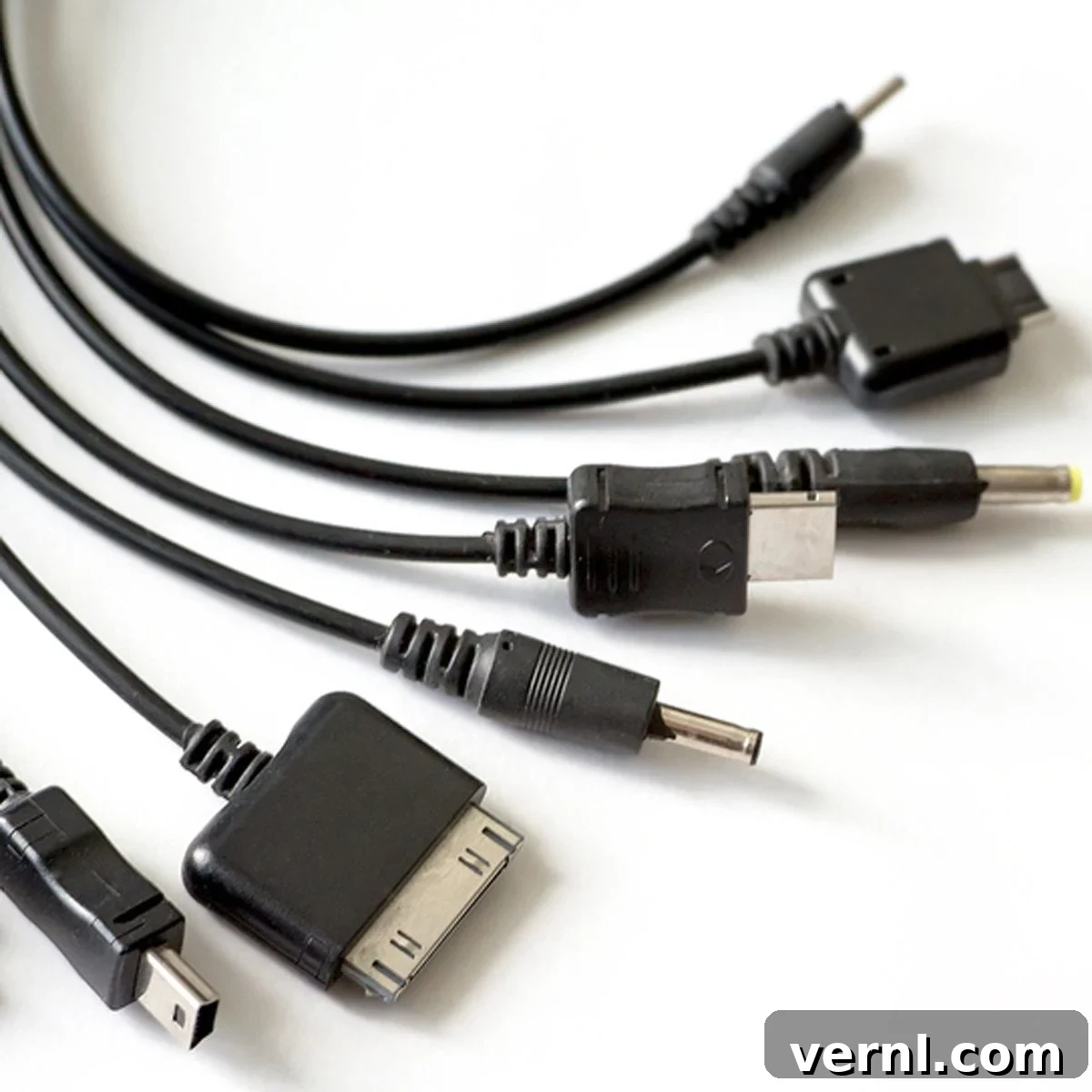
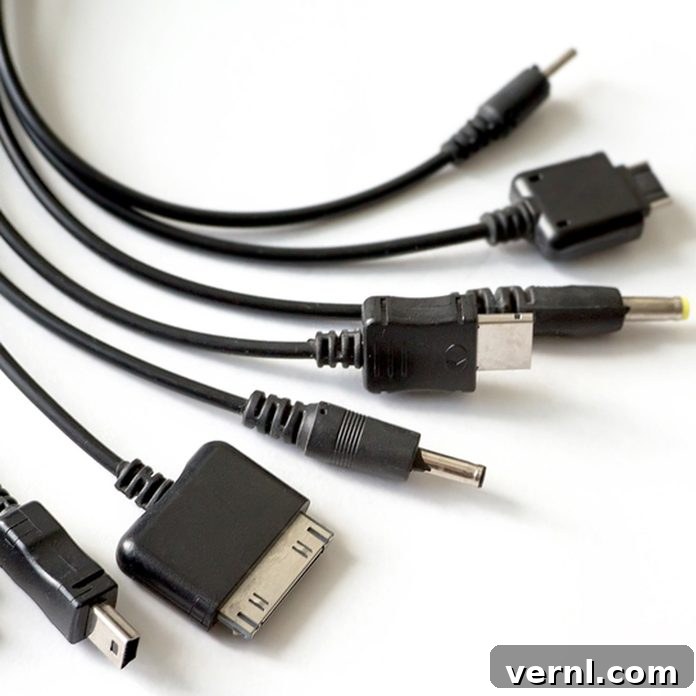
In our rapidly evolving digital world, electronic devices have become indispensable, shaping how we live, work, and connect. However, this convenience comes with a growing environmental challenge: electronic waste, or e-waste. Shockingly, e-waste is the fastest-growing waste stream globally. This alarming trend is fueled by the ever-shortening lifespan of our gadgets and an insatiable demand for the newest high-tech products. The Environmental Protection Agency (EPA) highlighted this issue back in 2009, estimating that only about 25 percent of discarded televisions, computers, cell phones, and peripherals were collected for recycling, with the vast majority ending up in landfills. This raises a crucial question for environmentally conscious consumers: what exactly should you do with your old cords, cables, and chargers when they’re no longer needed? Fortunately, disposing of them responsibly goes far beyond simply tossing them in the trash.
It’s a common scenario: you use an electronic device for a while, and as soon as a newer, sleeker model hits the market, you upgrade. The problem often arises when the new device features a different charging port or connector, rendering your entire collection of old charging cables and power adapters virtually useless. These seemingly insignificant items contribute significantly to the mountain of e-waste, and understanding their impact and proper disposal methods is vital for protecting our planet.
The Critical Importance of Proper E-Waste Disposal
While the thought of tossing old chargers and cables into your regular trash might seem like an easy solution, the reality is that such actions carry significant and detrimental environmental consequences. These common household items are not mere plastic; they are complex assemblies containing a variety of materials, some of which are highly valuable, and others that are distinctly hazardous.
Within these seemingly innocent cords, you’ll find valuable metals like copper, aluminum, and sometimes even trace amounts of precious metals. They also contain various types of plastics and, concerningly, hazardous substances such as lead, cadmium, mercury, and brominated flame retardants. When e-waste, including these seemingly small components, is dumped into landfills, these toxic elements don’t simply disappear. Over time, they can leach out into the surrounding soil and groundwater, contaminating vital natural resources and posing serious risks to both environmental ecosystems and human health. Exposure to these substances can lead to various health problems, from developmental issues to cancer.
Properly managing and disposing of electronics is crucial for several reasons. Firstly, it ensures that these valuable materials, such as copper and other metals, can be efficiently recovered and reintegrated into the manufacturing cycle. This process, known as resource recovery, drastically reduces the need for new raw material extraction, thereby conserving natural resources, minimizing energy consumption, and lessening the environmental footprint associated with mining and processing virgin materials. Secondly, effective e-waste management guarantees that hazardous components are handled safely, preventing them from polluting our environment and protecting communities from potential health risks. By choosing responsible disposal methods, we contribute to a more sustainable future and foster a circular economy where resources are reused and recycled, rather than discarded after a single use.
Navigating the Responsible Disposal of Old Electronics
Before you consider throwing away your old electronic accessories, let’s explore a range of responsible and beneficial alternatives. These e-waste management tips offer pathways that are kinder to the environment and, in some cases, can even benefit others or put a little cash back in your pocket.
Evaluate Functionality and Explore Sharing Options
- Test Them Thoroughly: The first step is always to verify. Are your old cords and chargers truly obsolete or broken beyond repair? It’s not uncommon for a charger or cable to still be perfectly functional with an older device you own, or even one used by a friend, family member, or neighbor. Before making any disposal decisions, take a moment to test their functionality with various compatible devices. A working cable might just need a new home.
- Offer to Friends, Family, or Community: Not everyone upgrades their computers, smartphones, or other electronics at the same pace. Your outdated charging cables might be exactly what someone else needs to keep their older, still-functional device running. Before you discard your collection of cables and chargers, reach out to your social network. Additionally, many universal home entertainment cords and cables (with the exception of some proprietary connectors like Apple’s) can be cross-compatible with various devices. This simple act of sharing helps extend product lifecycles and reduces immediate waste.
- Donate to STEM Programs or Schools: Educational institutions and many nonprofit organizations often run Science, Technology, Engineering, and Mathematics (STEM) programs or projects that greatly benefit from technological donations. Your old cable cords, chargers, and wires, while perhaps “outdated” for your personal use, may be perfectly suitable and highly valuable for educational purposes. These programs appreciate all kinds of electronic donations, from old phones and computers to even a lone power cord or an Ethernet cable that wasn’t quite long enough for your home setup. They can be used for learning about electronics, repairing devices, or simply as spare parts for various student projects. Check with local schools, community centers, or youth organizations for their specific needs.
Embrace E-Waste Recycling for Chargers and Cables
When repurposing or donating isn’t an option, recycling old chargers and cables stands as one of the most environmentally responsible actions you can take. These items are categorized as e-waste, meaning they require specialized processing and should never be tossed into your regular curbside recycling bin. Standard recycling facilities are not equipped to handle the diverse materials and potential hazards present in electronics, and attempting to recycle them incorrectly can lead to machinery damage or improper material separation.
The good news is that these items hold inherent value. Pure copper wire, when removed from its protective sheath, can be sold for salvage. While it might not fetch a fortune, collecting these wires can still yield a modest return and, more importantly, ensures this valuable metal is reused. Most metal recycling centers will readily accept your copper-cored wires and are often equipped to handle other small electronics, including various types of cables and wires. These centers play a crucial role in diverting precious resources from landfills and reducing the need for new mining operations.
Locating Certified E-Waste Recycling Programs
Finding a reliable e-waste recycling solution is easier than you might think. Several accessible options exist to ensure your old cables and chargers are handled responsibly:
- Retail Drop-off Programs: Many major electronics retailers recognize their role in managing e-waste. One of the simplest ways to recycle old cables and chargers is by visiting your local Best Buy. Nearly every Best Buy store in the US features a convenient kiosk or designated area near the entrance for recycling electronics. According to their website, they accept a wide range of items, including “rechargeable batteries, wires, cords, cables, and plastic bags.” It’s always a good practice to visit their website or contact your local store directly to confirm their specific acceptance policies before your visit, as these can sometimes vary. Other retailers like Staples or manufacturers’ own stores (e.g., Apple, Samsung) may also offer similar take-back programs, so it’s worth checking their policies too.
- Local E-Waste Collection Events: Many municipalities, county governments, or local environmental groups actively organize special e-waste collection days or establish permanent drop-off locations throughout the year. These events are specifically designed to collect and properly process electronic waste. To find such programs near you, check your city or county’s official website – look under sections like “waste management,” “recycling,” or “hazardous waste disposal.” You can also utilize national resources and directories like Earth911.com or Call2Recycle.org, which provide searchable databases of certified recycling centers and collection events based on your location.
- Manufacturer Take-back Programs: A growing number of electronics manufacturers are implementing their own mail-in or drop-off recycling programs for their products. Companies like Dell, HP, Apple, and Samsung often provide options for customers to return old devices and accessories, ensuring they are recycled according to specific environmental standards. Visiting the support or sustainability sections of their official websites can provide detailed information on how to participate in these programs.
- Certified E-Waste Recyclers: For larger quantities of e-waste, or if other options prove difficult to access, seeking out certified e-waste recyclers is the best course of action. Organizations such as E-Stewards and R2 (Responsible Recycling) certify recyclers who adhere to stringent environmental and ethical standards. These certifications ensure that electronics are recycled in an environmentally sound manner, protecting worker health and preventing hazardous materials from being illegally exported or improperly disposed of. Using a certified recycler offers peace of mind that your e-waste is handled with the utmost care and responsibility.
Innovative Ways to Repurpose Old Cords and Wires
Before you commit to recycling, consider whether your old cords and wires still have some life left in them, even if not for their original charging purpose. Repurposing not only reduces waste but can also spark creativity and provide practical solutions around your home. Here are some simple yet ingenious ideas:
- Superior Cable Management Solutions: Decluttering your workspace or entertainment center can be a simple task with old cables. Shorter, unwanted USB cables or sturdy power cords can be transformed into effective ties to neatly organize the chaotic tangle of wires behind your TV, computer, or desk. Imagine taking an old, coiled cord and using it to bundle other active cables, instantly transforming a messy area into an organized, functional space. You can also use colorful cords to identify which cable belongs to which device, preventing mix-ups.
- Eco-Friendly Garden Ties: If you have soft-coated wires or can carefully extract the inner strands of thicker cables, they can serve as gentle yet durable plant ties in your garden. They’re perfect for supporting climbing plants like tomatoes or peas, or providing stability to young saplings without damaging their delicate stems. Their flexibility and weather resistance make them a sustainable alternative to single-use plastic ties.
- DIY Cord Organizers and Protectors: Give your cords a new lease on life and a touch of personality. Wrap colorful yarn, embroidery thread, or even decorative tape around an old charger cable. This not only makes it easily identifiable amidst a sea of similar-looking wires but also adds a bit of flair, transforming a utilitarian object into something aesthetically pleasing. This can prevent family members from accidentally grabbing the wrong charger and makes your tech accessories feel more personal. You can also use tougher material to protect the stress points of active cables, extending their life.
- Creative Craft and Art Projects: Unleash your artistic side! Old wires are incredibly versatile materials for various craft projects. They can be bent and shaped into simple sculptures, twisted into intricate designs for jewelry, or used as robust hanging material for lightweight decorations. Consider incorporating them into mixed-media art pieces, creating unique wall art, or even crafting whimsical beaded tree decorations or garlands by utilizing the internal wires. The possibilities are endless for those with a creative vision.
Important Repurposing Safety Note: When repurposing cables, always exercise caution. Ensure they are not frayed, cut, or damaged in any way that could expose bare wires or pose a safety hazard, especially if they will still be near electrical sources or handled by children. For projects not involving electricity, any minor cosmetic damage is usually fine, but integrity is key for anything that might carry a current.
Essential Safe Disposal Tips for Cables and Chargers
Understanding how to safely dispose of your electronics is crucial, not just for the environment but also for your personal security and for the functionality of our recycling infrastructure. Here are key tips to ensure your cables and chargers are handled correctly:
- Prioritize Data Security: While simple chargers rarely store personal data, some smart charging hubs, power banks, or even cables with integrated storage might. If your accessory has any form of data storage, it’s imperative to ensure all personal data is completely wiped. This can typically be done by performing a factory reset, following the manufacturer’s specific instructions, or using data wiping software if applicable. For larger electronic devices being disposed of, consider professional data shredding services.
- Under No Circumstances Should They Be Trashed: This is a fundamental rule in e-waste management. Never throw electrical cords, cables, or chargers into your regular garbage bin. As discussed, they contain materials that are valuable for recovery and hazardous if sent to landfills. This common mistake directly contributes to environmental pollution and the depletion of natural resources. Break this habit by always seeking out a designated e-waste drop-off location or certified recycling program.
- Avoid Curbside Recycling Bins: Similarly, resist the temptation to place these items in your standard curbside recycling bin. While you might think you’re doing the right thing, these items can cause significant problems at traditional recycling facilities. The long, flexible cords can easily tangle and jam sorting machinery, leading to costly breakdowns and operational disruptions. Furthermore, these facilities are not equipped to properly separate the complex mix of plastics, metals, and potentially hazardous components found in e-waste.
- Check for Removable Batteries: Some larger charging docks, portable power banks, or multi-device charging stations may contain internal batteries. Before disposing of the main unit, always check the manufacturer’s instructions to see if the batteries are designed to be removed. If they are, these batteries often need to be recycled separately at specialized battery collection points, as they contain unique chemicals and metals that require different processing than the rest of the electronic device.
Frequently Asked Questions About E-Waste
What is e-waste, and why is it such a significant problem?
E-waste, or electronic waste, refers to discarded electrical or electronic devices. This includes everything from old smartphones and computers to household appliances, batteries, and, of course, chargers and cables. It’s a significant problem because it’s the fastest-growing waste stream globally, driven by rapid technological advancements and consumer demand for new gadgets. E-waste often contains hazardous materials (like lead, mercury, and cadmium) that can harm the environment and human health if improperly disposed of, while also wasting valuable, non-renewable resources.
What happens to recycled electronics?
Recycled electronics embark on a journey to specialized facilities designed specifically for e-waste processing. Upon arrival, they are meticulously sorted, dismantled into their core components, and then processed to separate various materials. This includes isolating valuable metals like copper, aluminum, steel, and even precious metals such as gold and silver, along with plastics and glass. These recovered materials are then cleaned, refined, and sent to manufacturers to be incorporated into new products. This process dramatically reduces the need to mine new virgin resources, conserves energy, minimizes pollution, and supports a more sustainable, circular economy.
Are all types of electronics recyclable?
While most electronics contain valuable and recyclable materials, the ease and method of recycling can vary greatly. Nearly all modern electronics have components that can be recovered. However, some items, particularly those with hazardous components or highly integrated designs, require highly specialized recycling processes. It’s best to consult local e-waste guidelines or certified recyclers to determine the specific recycling options for each type of electronic device.
What are the primary benefits of recycling electronics?
Recycling electronics offers numerous benefits. Firstly, it conserves valuable natural resources by recovering materials like metals, plastics, and glass, reducing the need for raw material extraction. Secondly, it protects the environment by preventing hazardous substances (e.g., lead, mercury, cadmium) from leaching into soil and water in landfills. Thirdly, it saves energy, as manufacturing products from recycled materials often requires less energy than producing them from virgin materials. Lastly, it creates jobs within the recycling and refurbishing industries and reduces greenhouse gas emissions associated with manufacturing and waste disposal.
Sources
- U.S. Environmental Protection Agency (EPA): “U.S. State and Local Waste and Materials Characterization Reports”
- City of San José Environmental Services Department: “Electrical Cords and Cables – San Jose Recycles”
- U.S. Cybersecurity and Infrastructure Security Agency (CISA): “Proper Disposal of Electronic Devices”
- U.S. Environmental Protection Agency (EPA): “Cleaning Up Electronic Waste (E-Waste)”
- Environmental Health Perspectives (NIH/NIEHS): “Developmental Neurotoxicants in E-Waste: An Emerging Health Concern”
- Computer Aid International: “Electrical Recycling and Disposal of Products”
- EcoMENA: “5 Effective Ways to Improve E-Waste Management and Recycling”
- eWASA (E-waste Association of South Africa): “8 Types of eWaste and How to Recycle Them”
- Earth5R: “Executing Effective E-Waste Collection Drives”
- House Digest: “8 Unexpected Ways To Repurpose Charging Cords & Cables Around The House”
- Best Buy: “Electronics, Appliances and E-Waste Recycling at Best Buy”