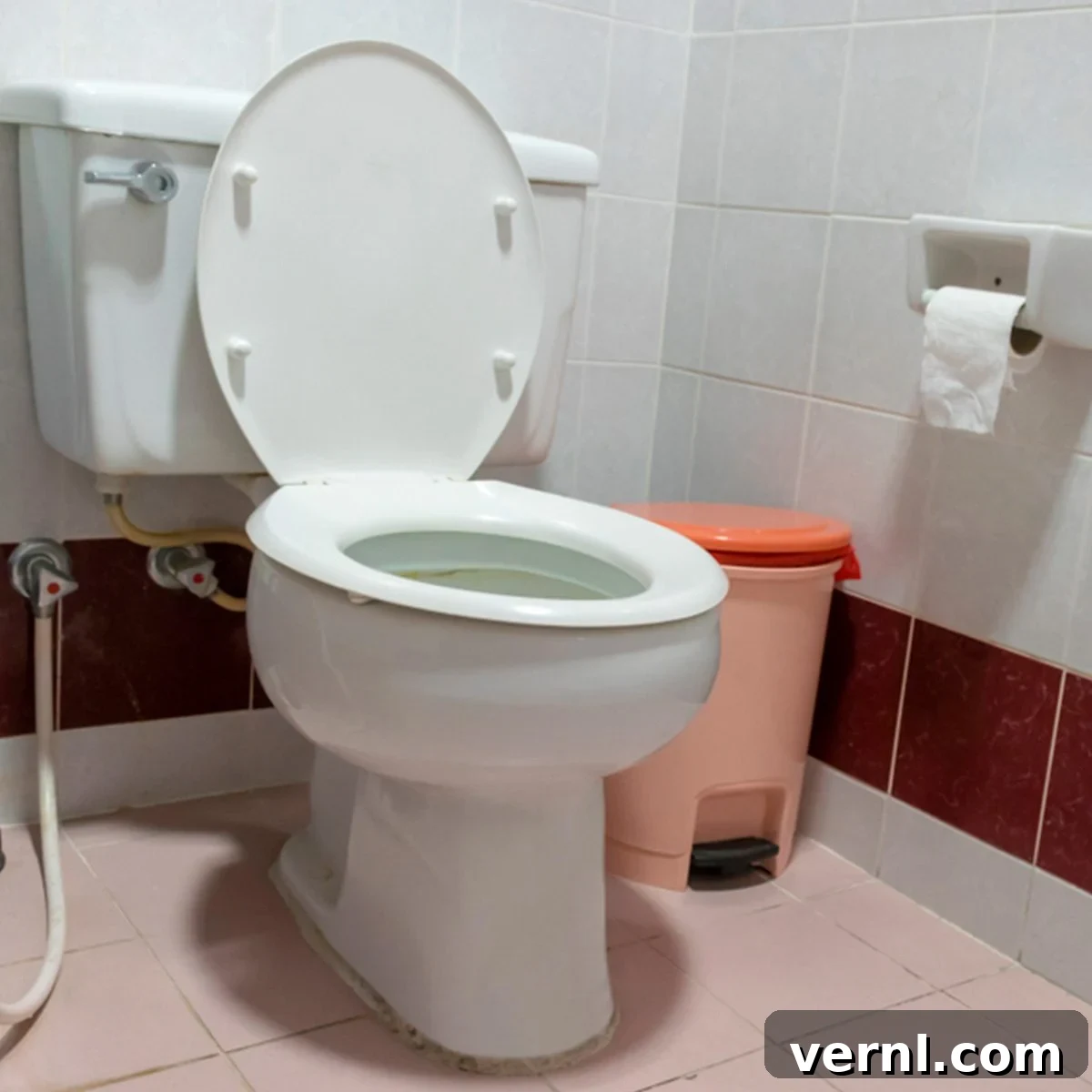
The Hidden Danger of Open-Lid Flushing: Why You Must Close Your Toilet Lid Every Time
It might sound like a minor detail, but the simple act of closing your toilet lid before flushing can dramatically impact the cleanliness and health of your entire bathroom. While it’s likely one of the more unsettling truths you’ll encounter today, understanding this often-overlooked habit is absolutely crucial for maintaining a truly hygienic home environment. Neglecting this step releases an invisible, yet potent, cloud of bacteria and viruses known as “toilet plume aerosols” directly into your personal space. And no, this isn’t a hyperbolic scare tactic—it’s a scientifically validated fact with significant implications for your health.
Pro Tip: Beyond flushing habits, proper toilet maintenance is key. Leaking toilets aren’t sanitary and can contribute to moisture and mold issues. If you notice a leak, here’s how to fix it promptly to ensure your bathroom remains a clean and safe space.
Understanding the Invisible Threat: What is “Toilet Plume Aerosol”?
The concept of “toilet plume aerosols” might sound complex, but the mechanism is quite straightforward. When you flush a toilet, the powerful rush of water combined with the mechanics of the flush creates a turbulent environment within the bowl. This turbulence can aerosolize microscopic droplets of water, waste particles, and, most importantly, any bacteria or viruses present in the bowl. These tiny, airborne particles are then propelled upwards and outwards, forming a “plume” that can travel surprisingly far, settling on various surfaces throughout your bathroom.
A comprehensive review of studies published by the American Journal of Infection Control clearly highlights the potential risks associated with flushing toilets with the lid open. This research underscores that while flushing is intended to clean the bowl, the act itself, without a barrier, can inadvertently spread pathogens. When the toilet contains fecal matter or vomit—common occurrences in any household—the flush can generate a significant volume of potentially infectious aerosols that can linger in the air and on surfaces for hours, if not longer.
The Science of Spread: How Far Do Germs Really Travel?
Studies using high-speed cameras and air sampling have demonstrated that toilet plumes can reach heights of several feet and spread outwards, contaminating surfaces far beyond the immediate vicinity of the toilet. Imagine a fine, invisible mist carrying microscopic organisms throughout your bathroom, landing on your toothbrush, towels, countertops, and even personal hygiene products. This isn’t just about the toilet seat itself; it’s about the entire room becoming a potential breeding ground for unwelcome guests.
The Microscopic Invaders: Pathogens and Their Persistent Survival
When we talk about “microbes” and “pathogens” within the context of a toilet plume, we’re referring to a diverse array of harmful microorganisms capable of causing serious illnesses. The unfortunate reality is that whatever infectious diseases are shed in feces or vomit can become aerosolized during flushing. This includes highly contagious and resilient pathogens such as:
- Shigella: A bacteria causing shigellosis, characterized by severe diarrhea, fever, and abdominal cramps.
- Salmonella: Another common bacterial culprit responsible for salmonellosis, leading to food poisoning symptoms like diarrhea, fever, and vomiting.
- Norovirus: A highly contagious virus often associated with “stomach flu,” causing intense vomiting and diarrhea. Norovirus is notoriously difficult to eradicate and can survive for extended periods on surfaces.
- E. coli (certain strains): Some strains of Escherichia coli can cause severe gastrointestinal illness.
- Hepatitis A: A viral infection that affects the liver, also shed in feces.
What makes these pathogens particularly concerning is their incredible resilience. Research indicates that many of these disease-causing agents can survive on inanimate surfaces for weeks, and in some cases, even months. This means that a contaminated toothbrush or countertop, initially exposed by a toilet plume, could remain a source of infection long after the initial flush, making consistent hygiene practices even more critical.
The American Journal of Infection Control study specifically notes, “Research suggests that this toilet plume could play an important role in the transmission of infectious diseases for which the pathogen is shed in feces or vomit. The possible role of toilet plume in airborne transmission of norovirus, SARS and pandemic influenza is of particular interest.” This highlights the broader public health implications, extending beyond typical household germs to include significant viral threats.
The Impact on Your Health: More Than Just a “Gross” Thought
While the idea of invisible germs spreading throughout your bathroom is inherently “gross,” the real concern lies in the tangible health risks. Cross-contamination is a primary danger. Imagine these airborne particles settling on your toothbrush. The next time you brush, you could be introducing bacteria or viruses directly into your mouth. Similarly, germs on towels or doorknobs can easily transfer to hands and then to the mouth, nose, or eyes, leading to infection.
Certain populations are particularly vulnerable to these airborne pathogens. Young children, the elderly, and individuals with compromised immune systems are at a significantly higher risk of developing severe symptoms from exposure to these germs. For a healthy adult, a minor exposure might result in a few hours of discomfort; for a child or an immunocompromised individual, it could mean a serious illness requiring medical attention.
Beyond Illness: The Pervasive Nature of Bathroom Contamination
Keeping a bathroom clean is a fundamental aspect of home maintenance, yet many people primarily focus on visible dirt and stains. The problem with toilet plume is its invisibility. While we might regularly wipe down surfaces or scrub the toilet bowl, the airborne dispersal of microbes from an open flush can re-contaminate an otherwise clean bathroom within moments. This challenges our traditional understanding of cleanliness, emphasizing that merely “looking clean” doesn’t necessarily mean “germ-free.”
The Simple, Yet Powerful Solution: Keep Your Toilet Lid Closed
Given the scientific evidence, the solution is remarkably simple and requires no special equipment or chemicals: always close the toilet lid before flushing. This singular act serves as an effective physical barrier, containing the vast majority of aerosolized droplets within the toilet bowl. It prevents these potentially infectious plumes from dispersing into the air and settling on every available surface in your bathroom.
Additional Essential Bathroom Hygiene Practices:
While closing the lid is paramount, a holistic approach to bathroom hygiene includes several other vital practices:
- Store Toothbrushes Safely: Keep toothbrushes covered or inside a cabinet, ideally as far away from the toilet as possible. This minimizes their exposure to any residual airborne particles that might escape the lid or linger in the air. For instance, consider investing in the best raised toilet seats, some of which may offer improved lid closure or design.
- Frequent Handwashing: This cannot be overstated. Wash your hands thoroughly with soap and water for at least 20 seconds after every toilet use, and before handling food.
- Regular Disinfection of Surfaces: Routinely clean and disinfect frequently touched surfaces in the bathroom, including light switches, door handles, faucet handles, and countertops. Use EPA-approved disinfectants that are effective against bacteria and viruses.
- Improve Ventilation: Ensure your bathroom has good ventilation, either through an exhaust fan or by opening a window, especially after showering or using the toilet. This helps to remove moisture and airborne particles, reducing the overall microbial load in the air.
- Maintain Your Toilet: A clean and properly functioning toilet is less likely to harbor excessive bacteria. Address leaks promptly and ensure the toilet flushes efficiently.
Debunking Common Myths About Bathroom Cleanliness
Many people underestimate the risk of open-lid flushing due to common misconceptions:
- Myth: “My bathroom looks clean, so it is clean.”
Reality: Visible cleanliness does not equate to microbial cleanliness. Many pathogens are microscopic and invisible to the naked eye. An open flush can contaminate an otherwise spotless bathroom with unseen germs.
- Myth: “A small spray won’t hurt anyone.”
Reality: Even a seemingly small amount of aerosolized particles can contain enough viral or bacterial load to initiate an infection, particularly for highly contagious agents like norovirus. The cumulative effect of repeated exposure also adds up.
- Myth: “Flushing cleans everything.”
Reality: While flushing removes waste from the bowl, the turbulent act of flushing itself is what generates the plume. The flush *process* can be a source of contamination, not just a cleaning agent, if the lid is left open.
Making it a Habit: Integrating Lid-Closing into Your Routine
Changing long-standing habits can be challenging, but the health benefits of closing the toilet lid make it a worthwhile endeavor. Here are a few tips to help you and your household adopt this crucial practice:
- Gentle Reminders: Place a small, discreet sign above the toilet or a sticky note on the lid itself as a visual cue.
- Lead by Example: Ensure all adults in the household consistently close the lid, modeling the behavior for children.
- Educate Others: Share this information with family members and guests. A polite explanation of “toilet plume” can be more effective than a simple command.
Conclusion: A Small Act with Major Health Benefits
In the grand scheme of home hygiene, closing the toilet lid before flushing is an incredibly simple act with profound implications for preventing the spread of infectious diseases. It transforms the toilet lid from a mere decorative cover into an essential barrier against an invisible, yet potent, microbial threat. By understanding the science behind “toilet plume aerosols” and making this small behavioral change, you significantly enhance the safety and sanitation of your bathroom, protecting yourself and everyone in your home from a host of common, and sometimes serious, illnesses.
Make it a non-negotiable rule in your household: close the lid, then flush. Your health, and the health of your loved ones, will undoubtedly thank you for it.