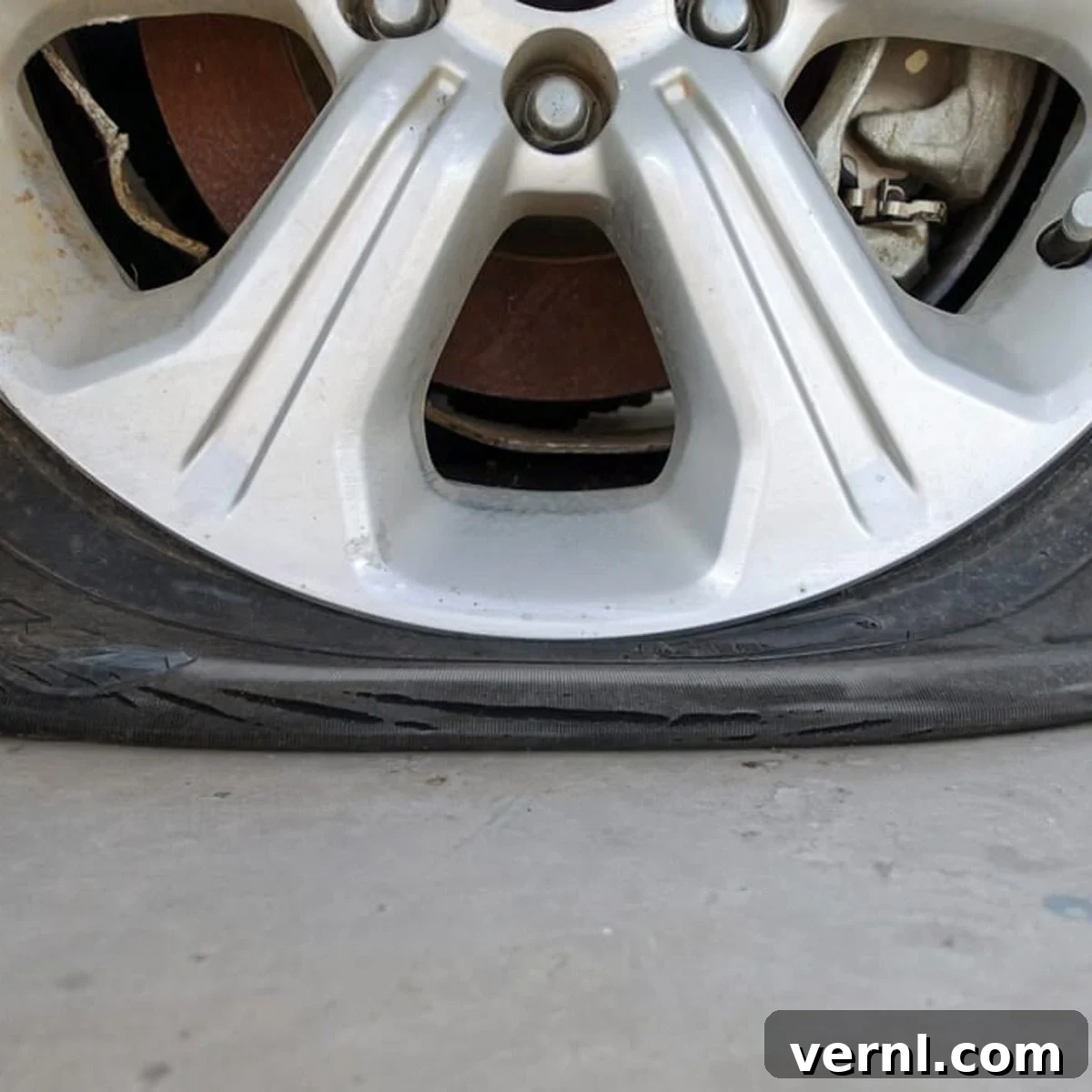
Nothing can be more frustrating for a driver than the persistent hassle of a recurring flat tire, forcing frequent stops for air every week or two. While it’s natural for tires to experience a slight drop in air pressure—typically a few pounds per square inch (PSI)—due to normal temperature fluctuations, a consistent and significant loss of pressure, even when temperatures remain stable, is a clear indicator of an underlying issue: a leak that demands immediate attention. Over time, factors such as age, prolonged exposure to environmental contaminants, and continuous stress from driving can compromise the integrity of various tire and wheel components, leading to air loss. But what if your tire shows no visible signs of damage like punctures or tears? In such cases, the source of your flat tire might be one of the less obvious problems detailed below, requiring a thorough inspection to pinpoint and resolve.
The Stealthy Threat of Sharp Objects
Even the smallest objects on the road can pose a significant threat to your tires. Running over something as seemingly innocuous as a tiny nail, screw, or piece of metal can create a puncture. Often, these sharp objects embed themselves, causing a slow leak, then dislodge without you noticing, leaving behind a pinhole that’s nearly impossible to spot with a casual glance. This type of damage can result in a gradual but steady air loss, typically two to three PSI per week. While this might seem minor, left unaddressed, a slow leak can lead to dangerously under-inflated tires, increasing the risk of a blowout, uneven wear, and reduced fuel efficiency. Regular visual inspections of your tire treads for embedded objects or suspicious marks can help catch these stealthy punctures before they escalate into larger problems, ensuring you maintain optimal tire pressure and safety.
Compromised Valve Stems: A Common Culprit
Valve stems, the small rubber or metal components through which air is added to your tires, are often overlooked but are critical for maintaining tire pressure. Made predominantly from rubber, these stems are susceptible to deterioration over time due to exposure to UV light, road chemicals, and extreme temperatures. This natural aging process can cause the rubber to crack, stiffen, and lose its elasticity, creating tiny pathways for air to escape. Beyond natural wear, valve stems can also suffer damage from external forces, such as scraping against a curb, or even from the abrasive brushes found in some automatic car washes. The small valve cap plays a crucial role in protecting the delicate valve core from dirt, moisture, and debris, while also providing a secondary seal against air leakage. It’s essential to keep your valve stems clean and always ensure the valve cap is securely in place, but be careful not to overtighten it. Excessive force when tightening the cap can damage the valve core inside, leading to a new leak. Hand-tight is usually sufficient to create a secure seal without causing harm. If you suspect your valve stem is leaking, applying a solution of soapy water to it will reveal bubbles if air is escaping, indicating it’s time for a replacement.
The Dangers of Ripped and Damaged Tires
Any significant rip, tear, or large puncture in a tire, particularly if it’s located on the sidewall, renders the tire unsafe for driving. The sidewall is not designed to be repaired, as its structural integrity is paramount for handling vehicle weight, cornering forces, and absorbing impacts. A rip here severely compromises the tire’s strength, making it highly susceptible to catastrophic failure. Even seemingly minor damage or a slow leak in a weakened tire presents substantial risks. Driving on a compromised tire means you’re gambling with your safety and the safety of others. The constant flexing and stress on the weakened area can cause the damage to propagate rapidly. Furthermore, an under-inflated tire generates excessive heat due to increased friction and deformation, especially at higher speeds. This dangerous combination of a weakened structure and overheating creates a perfect storm for a sudden and explosive blowout, leading to loss of vehicle control and potentially severe accidents. Therefore, any visible rip, tear, or significant damage to your tire, particularly on the sidewall, warrants immediate replacement to ensure road safety.
Understanding and Addressing Bead Leaks
The tire bead is arguably one of the most critical components for maintaining tire pressure, as it forms the airtight seal where the tire meets the rim (wheel). A bead leak occurs when this essential seal is compromised, allowing air to slowly escape. Several factors can lead to bead leaks. On older tires, or those suffering from “dry-rot,” the rubber comprising the bead can lose its elasticity and suppleness, preventing it from conforming tightly to the rim’s surface. This age-related degradation creates microscopic gaps through which air can seep. Improper mounting or dismounting of tires is another common cause; without the adequate use of tire lubricant, the bead can become pinched, creased, or otherwise damaged, preventing a proper seal. Furthermore, a corroded rim can significantly contribute to bead leaks. Rust and pitting on the rim’s surface where the bead sits create an uneven and rough texture, making it impossible for the tire bead to form a perfect seal. The only reliable and safe fix for a severely damaged or compromised bead that cannot seal effectively to the rim is the installation of a brand-new tire. Attempting to repair a damaged bead, especially if the rubber is extensively degraded or the rim is heavily corroded, is often a temporary solution that compromises safety and should be avoided.
Rim Issues: More Than Just a Pretty Face
The wheel rim, often overlooked as a potential source of tire leaks, plays a crucial role in maintaining tire pressure. Corrosion where the rim meets the tire bead is an incredibly common and insidious cause of air loss. Materials like die-cast aluminum and magnesium alloy wheels, while lightweight and aesthetically pleasing, are more susceptible to corrosion than steel wheels, especially when exposed to road salt, moisture, and brake dust. This corrosion creates a rough, uneven surface that prevents the tire bead from forming an airtight seal, leading to persistent slow leaks. It is imperative that your tire technician thoroughly inspects this critical sealing area on the wheel before installing new tires. A badly corroded wheel will never properly seal, even with a brand new tire, rendering the new tire prematurely ineffective and unsafe.
Rim Porosity and Cracks
Another often overlooked rim issue is wheel porosity, a defect where air can actually leak through the metal of the rim itself. This usually stems from poor casting during the manufacturing process or localized corrosion exacerbated by using incorrect wheel weights that can damage the protective coating. While less common, rim porosity can be challenging to diagnose. Fortunately, there is a proper, accepted way to repair this type of leak, often involving specialized sealants or welding performed by a qualified professional. Beyond porosity, impact damage from potholes or curbs can lead to hairline cracks in the rim. These cracks, sometimes microscopic, can allow air to escape gradually, presenting a significant safety hazard. A cracked rim not only leaks air but also compromises the structural integrity of the entire wheel, increasing the risk of complete wheel failure.
A Word of Caution on Tire Sealants
It’s crucial to understand that injecting your tire with off-the-shelf tire sealant to fix a leaky rim or a significant tire issue is generally not recommended as a permanent solution. While they might offer a temporary fix, these sealants can be extremely difficult to clean out from the inside of the tire and wheel. This residue can complicate or even ruin a professional tire repair that might otherwise be possible. Furthermore, tire sealants can damage or interfere with your tire pressure monitoring system (TPMS) sensors, leading to costly replacements. Always seek professional advice for persistent tire or rim leaks to ensure the safest and most effective repair.
The Perils of Over-inflated Tires
Some drivers mistakenly believe that by over-inflating a tire with a slow leak, they can prolong the time between refills, effectively “outsmarting” the leak. This is a dangerous game that carries significant risks. While it might seem like a clever workaround, over-inflating tires negatively impacts nearly every aspect of tire performance and vehicle safety. Firstly, it leads to a noticeably rougher and noisier ride due to the stiffening of the sidewalls and tread. More critically, an over-inflated tire causes the tire to wear out quicker and unevenly, primarily in the center of the tread, as this area bears the brunt of the vehicle’s weight. Overall tire performance suffers dramatically. Rigid, over-inflated tires are inherently unstable, reducing the tire’s contact patch with the road (imagine a basketball contact area vs. a properly inflated tire’s wider, flatter contact). This reduced contact area severely diminishes traction, making the vehicle less responsive, particularly during braking and cornering, and increasing stopping distances. Perhaps most alarmingly, over-inflation makes tire sidewalls extremely vulnerable to sudden blowouts when encountering road imperfections like potholes or debris. The increased internal pressure combined with the impact stress can easily cause the sidewall to fail catastrophically. Always adhere to the manufacturer’s recommended tire pressure for optimal safety, performance, and tire longevity.
Navigating the Hazards of the Road
Our roads are full of potential dangers that can cause immediate and significant damage to your tires and wheels, leading to air leaks or even sudden failure. These are collectively considered road-hazard damages and can range from the obvious to the subtle. Common culprits include punctures from sharp objects such as nails, screws, metal fragments, and broken glass. Even a piece of wood can cause a substantial puncture or tear. Beyond direct punctures, hitting potholes, curbs, or other road debris at speed can inflict severe damage. This can manifest as cracked rims, sidewall rips, bulges, or separation within the tire’s internal structure. Sometimes, the damage is immediately apparent, such as a rapidly deflating tire after hitting a large pothole. Other times, it might be a subtle internal injury that leads to a slow leak or structural weakness over time. It’s important to remember that not all road-hazard damages are repairable. For instance, most sidewall damage or large punctures outside the tread area are deemed unsafe to fix. Only a qualified and experienced tire technician possesses the expertise to accurately assess the extent of the damage, determine if a repair is safe and feasible, or if a replacement is the only viable option. After encountering any significant road hazard, it’s always prudent to have your tires and wheels inspected professionally to ensure your continued safety on the road.
The Importance of Proactive Tire Maintenance
As you can see, the reasons behind a flat or under-inflated tire are diverse and can range from simple punctures to complex issues with the wheel itself. Understanding these potential causes is the first step towards prevention and prompt resolution. However, the most effective strategy against unexpected tire problems is proactive maintenance. Make it a habit to inspect your tires visually at least once a month for any signs of damage, unusual wear patterns, or embedded objects. More critically, routinely check your tire pressure using a reliable gauge. This simple check should be performed monthly, and ideally before long trips, when the tires are cold. Properly inflated tires are not just a matter of convenience; they are fundamental to your vehicle’s safety, performance, and longevity. They last longer, wear more evenly, contribute to better fuel efficiency, and most importantly, provide optimal handling and braking capabilities, ensuring a safer driving experience for everyone on the road. Don’t wait for a flat to address your tires; make regular tire maintenance a priority in your automotive care routine.