The Evolution of Comfort: Tracing the Remarkable History and Innovation of Toilet Seats
Often considered a humble and functional item, the toilet seat has an incredibly rich history and has undergone a remarkable transformation over millennia. From its rudimentary origins as simple stone slabs to today’s high-tech, feature-rich designs, this essential bathroom fixture mirrors humanity’s ongoing quest for improved hygiene, comfort, and convenience. Its evolution reflects profound advancements in materials, engineering, and societal attitudes towards personal sanitation, offering a fascinating lens through which to view human progress.
Early Origins: The Dawn of Sanitation and Seated Comfort
The very concept of a dedicated structure for human waste disposal, particularly one designed for sitting, dates back thousands of years. While basic latrines have existed for longer, the idea of a ‘seat’ that provided a measure of comfort and ease of use emerged in various ancient civilizations.
Ancient China: The Genesis of the Stone Seat
Archaeological evidence suggests that one of the earliest forms of the toilet seat originated approximately 2,000 years ago during the Han Dynasty in China. These pioneering designs were crafted from simple, robust stone. Far more than just holes in the ground, these stone structures represented a significant step towards structured and dedicated sanitation. While undeniably basic and hard, they offered a designated and consistent surface for users, indicating an early recognition of the need for a specific seated posture during defecation. These ancient Chinese examples laid the groundwork for future developments in sanitary infrastructure.
A Symbol of Luxury in Ancient Times
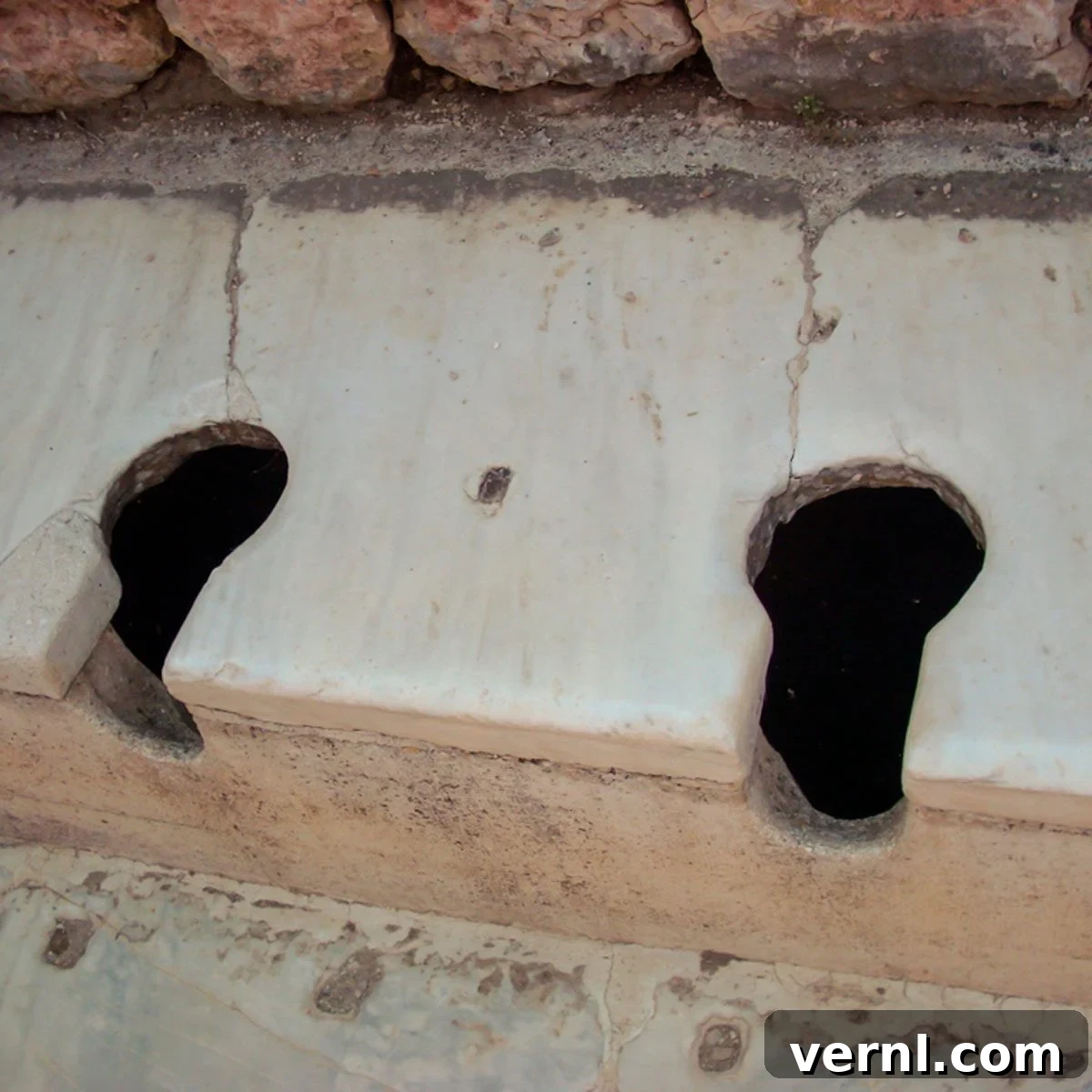
Indeed, in many ancient societies, a proper, well-defined toilet seat was not a universal amenity; it was often perceived as a luxury. Public latrines, which were common fixtures in the bustling urban centers of antiquity, typically featured long benches with multiple holes cut into them. These communal arrangements served as shared spaces where people would sit side-by-side to relieve themselves. In stark contrast, the privilege of an individual, private toilet seat was almost exclusively reserved for the affluent and powerful. Such personal facilities were not merely practical; they served as potent symbols of status, wealth, and access to superior amenities, distinguishing the elite from the common populace.
Ancient Egypt: Private Chambers and Limestone Refinement
The Ancient Egyptians, renowned for their sophisticated architectural and engineering prowess, also demonstrated a remarkable understanding of domestic sanitation. Wealthy Egyptian households frequently featured dedicated bathrooms equipped with private toilets, where seats were meticulously carved from smooth, durable limestone. These private facilities within homes marked a substantial leap towards personal hygiene and comfort, offering a stark contrast to the often-communal and less refined arrangements found elsewhere. The careful selection of limestone underscores a consideration for both the longevity of the fixture and a degree of user comfort, showcasing advanced thinking for its era.
Ancient Rome: Communal Benches and Elite Sanctuaries
Similarly, Ancient Rome showcased a clear dichotomy between public and private sanitation. While the privileged Romans enjoyed opulent private toilets within their lavish villas, often adorned with intricate designs, public bathhouses and latrines catered to the vast majority. These widespread public facilities typically comprised long stone benches with strategically positioned holes, where citizens would conduct their business right next to one another. This communal aspect of Roman latrines, though practical for social interaction, highlights how different the cultural perception of privacy and personal space was compared to modern sensibilities. Regardless of their shared nature, these structured stone seats represented a considerable advancement over rudimentary pits.
The fascinating journey of toilet seat shapes, from these ancient forms to modern designs, reveals a continuous process of adaptation and engineering innovation. To delve deeper into these evolving designs, you can explore more here.
The Medieval Era: From Castles to Communes
The Middle Ages presented a varied landscape for sanitation practices, with significant differences based on social class and geographical location. While certain architectural innovations emerged, overall hygiene standards generally experienced a decline compared to the more advanced systems of the Roman and Egyptian empires.
Garderobes: Ingenious Castle Sanitation
Medieval castles, formidable structures built primarily for defense, incorporated a distinct form of toilet known as the ‘garderobe.’ These ingenious systems involved vertical shafts constructed within the thick castle walls, often projecting outwards from the side of the structure like a small, enclosed balcony. At the top of these shafts, a simple stone seat was typically installed. Waste would then drop directly into the castle moat or a designated cesspit located below. Interestingly, the term “garderobe” itself is derived from French and originally referred to a wardrobe. The prevailing belief was that the constant draft flowing through these shafts would deter fleas and moths, thereby making them ideal for storing clothing. While incredibly clever for waste disposal within a fortified setting, these stone seats offered very little in the way of comfort or warmth.
Peasant Pits and Basic Wooden Planks
For the vast majority of the population—the common people residing in humble huts and villages—sanitation facilities were far more rudimentary. They typically relied on basic pits dug into the ground, often situated at a distance from their living quarters. Their equivalent of a ‘toilet seat’ was usually nothing more than rough wooden planks laid across these pits. The stark contrast between the relatively sophisticated, albeit unglamorous, garderobes of the nobility and the basic, often unhygienic facilities available to the poor starkly illustrates the immense social disparities of the era, even extending to the most fundamental aspects of daily existence.
The March Towards Modernity: Industrialization and Accessibility
As European societies transitioned from the Middle Ages into the early modern and subsequent industrial periods, the approach to sanitation underwent a slow but profound transformation. A burgeoning understanding of public health and hygiene, coupled with significant technological advancements, gradually paved the way for the widespread adoption and improvement of the toilet seat.
The Impact of Industrialization and Mass Production
The Industrial Revolution, with its new methods of manufacturing and distribution, made various goods previously reserved for the affluent more accessible to a broader population. While the development of the flush toilet gained momentum in the 18th and 19th centuries, the toilet seat itself also saw considerable advancements. Wood, becoming more readily available and easier to work with than stone, emerged as a popular material for seats. Early wooden seats found in wealthier homes were often elaborately carved, but as indoor plumbing gradually spread, simpler, mass-produced versions became increasingly common, signaling a move towards greater accessibility.
A New Focus on Health and Cleanliness
The late 19th and early 20th centuries were marked by a burgeoning understanding of germ theory and its critical implications for public health. This scientific enlightenment fueled a growing demand for sanitary and easily maintainable bathroom fixtures. While wooden seats were an improvement over earlier materials, their porous nature meant they could potentially harbor bacteria. This realization became a key driver in the search for more hygienic and durable materials and designs for toilet seats.
The 20th Century: Comfort, Standardization, and the Rise of Plastic
The 20th century proved to be a pivotal era for the toilet seat, characterized by significant strides in standardization, the adoption of advanced materials, and an increasing emphasis on user comfort and paramount hygiene.
The Plastic Revolution in Toilet Seat Manufacturing
Today, the ubiquitous toilet seat is predominantly a hinged unit constructed from plastic. The advent of thermoplastics, particularly polystyrene or sophisticated blends of wood and plastic composites, revolutionized the manufacturing process of toilet seats. Plastic offered a multitude of advantages: it was inherently durable, non-porous (a critical factor for hygiene), easy to mold into ergonomically comfortable shapes (typically round or oval), and, crucially, remarkably simple to clean and sanitize. This decisive shift away from porous, harder-to-clean materials represented a monumental leap forward in bathroom hygiene, making it significantly easier for every household to maintain impeccable cleanliness.
Standardization for Universal Fit and Easy Replacement
The 20th century also witnessed a crucial movement towards standardizing toilet bowl and seat sizes across the industry. This standardization greatly simplified the process of replacement and installation for homeowners, reducing compatibility issues. A typical modern toilet seat design consists of an open ring or oval shape, invariably complete with a lid, securely bolted onto the toilet bowl. This fundamental design has largely endured due to its exceptional practicality, widespread acceptance, and ease of manufacturing.
The Era of Innovation: Smart Toilet Seats and Advanced Features
Individuals from past centuries would undoubtedly be utterly astonished by the sheer sophistication and array of features found in today’s toilet seats. The contemporary bathroom has fully embraced technological integration, transforming a mere functional necessity into a personal sanctuary of unparalleled comfort, hygiene, and luxury.
Slow-Close Seats: Embracing Silence and Safety
One of the most widely appreciated and subtly brilliant modern innovations is the slow-close, or soft-close, toilet seat. Ingeniously designed with specialized hinges, these seats and their corresponding lids descend gently, quietly, and slowly with just a light tap. This simple yet highly effective mechanism completely eliminates disruptive slamming noises, preventing potential damage to the toilet bowl and, crucially, safeguarding fingers from accidental pinching. This feature significantly enhances bathroom tranquility and safety, particularly in busy households with children or in situations where quiet operation is desired.
High-Tech Toilet Seats: Redefining the Bathroom Experience
The cutting-edge realm of high-tech toilet seats now offers an impressive spectrum of features meticulously engineered to elevate the user experience to unprecedented levels:
- Heated Toilet Seats: Imagine the sheer comfort of settling onto a warm seat on a chilly morning! Heated toilet seats, as highlighted by expert resources, provide customizable warmth, transforming what could be a cold, unwelcoming experience into a genuinely cozy and inviting one. This feature has gained immense popularity, especially in colder climates or for individuals seeking an extra layer of luxury and comfort in their daily routine. You can explore some of the best heated toilet seats available here.
- Integrated Bidet Functionality: Drawing inspiration from established European and Asian traditions, advanced bidet functionality is now seamlessly integrated directly into many modern toilet seats. These smart seats deliver a gentle, thorough stream of warm water for superior cleansing, often featuring adjustable water pressure, precise temperature controls, and customizable nozzle positions. This integration promotes exceptional personal hygiene, significantly reduces reliance on toilet paper, and offers an incredibly refreshing experience.
- Warm Air Dryers: Complementing the integrated bidet function, many advanced toilet seats now include a built-in warm air dryer. This innovative feature eliminates the need for paper towels or excessive toilet paper, providing a touch-free, efficient, and eco-friendly drying solution immediately after the cleansing cycle.
- Integrated Nightlights and Deodorizers: Further enhancing both convenience and comfort, some smart seats feature discreet built-in LED nightlights, allowing for easy and safe navigation in the bathroom during darkness. Additionally, integrated deodorizers work continuously to maintain a fresh and pleasant bathroom environment, neutralizing odors at their source.
- Automatic Flushing and Remote Controls: The most sophisticated models push the boundaries even further, incorporating automatic flushing sensors for hands-free operation and intuitive remote controls. These remotes allow users to personalize settings, activate specific features, and manage the entire toilet seat experience effortlessly.
Beyond Function: Aesthetics and Personalization in Modern Design
Today’s toilet seats are no longer solely about core function and advanced features; they have evolved to play a crucial role in the overall aesthetic and design harmony of a bathroom. With an extensive variety of colors, finishes, and distinctive designs now readily available, homeowners have the freedom to select seats that perfectly complement their existing bathroom decor. Options range from sleek, ultra-modern minimalist styles to more traditional or classic looks. The ability to choose customizable options allows for an unexpected touch of personalization and flair even within what was once considered the most purely functional of spaces.
Choosing the Right Toilet Seat: A Practical Guide for Homeowners
Given the immense variety and sophistication available in the current market, selecting the correct toilet seat requires careful consideration and a bit of practical knowledge. A properly fitting and well-chosen seat is absolutely essential for ensuring optimal comfort, maintaining superior hygiene, and guaranteeing long-term durability in your bathroom.
The Unquestionable Importance of Proper Measurement
The single most crucial step when embarking on the purchase of a new toilet seat is taking accurate measurements. Toilet bowls, while generally falling into standard shapes like round and elongated, exhibit slight variations in dimensions between different manufacturers. An ill-fitting seat can lead to discomfort, a tendency to shift unnervingly during use, and can even create crevices that are difficult to clean, compromising hygiene. Learning how to measure a toilet seat properly involves precisely measuring the distance from the bolt holes to the very front edge of the toilet bowl, as well as accurately measuring across the widest point of the bowl itself. These critical measurements ensure a snug, secure, and perfectly compatible fit.
Understanding Shapes, Materials, and Additional Features
Beyond the common round and elongated shapes, the market also offers specialized D-shaped and even square seats, each meticulously designed to fit specific modern toilet bowl styles. The choice of material also profoundly impacts the seat’s comfort, its overall durability, and the ease with which it can be cleaned. While high-grade plastic (typically thermoplastic or thermoset varieties) remains widely popular for its inherent hygiene properties and robustness, wood composite options can offer a warmer tactile feel and introduce a different, often more traditional, aesthetic to the bathroom. Furthermore, practical features such as quick-release hinges can significantly simplify the cleaning process, making daily maintenance considerably easier.
The Humble Yet Essential: A Reflection on Its Enduring Legacy
The toilet seat, an object often taken for granted in our daily lives, embodies centuries of human ingenuity, innovation, and our continuous, unwavering quest for improved living standards. From the rudimentary stone seats crafted by ancient Chinese civilizations to the sophisticated, climate-controlled bidet seats of the contemporary era, its profound evolution seamlessly mirrors the broader trajectory of human civilization’s progress in areas spanning public health, technological advancement, and personal comfort. It stands as a powerful testament to how even the most basic and fundamental necessities of daily life can be transformed and elevated through relentless innovation and a persistent drive for refinement.
For those whose curiosity is piqued by the deeper, more intricate narrative of bathroom fixtures and their historical significance, we invite you to delve further into the fascinating history of toilets through the ages. You can explore more captivating details and historical insights here.