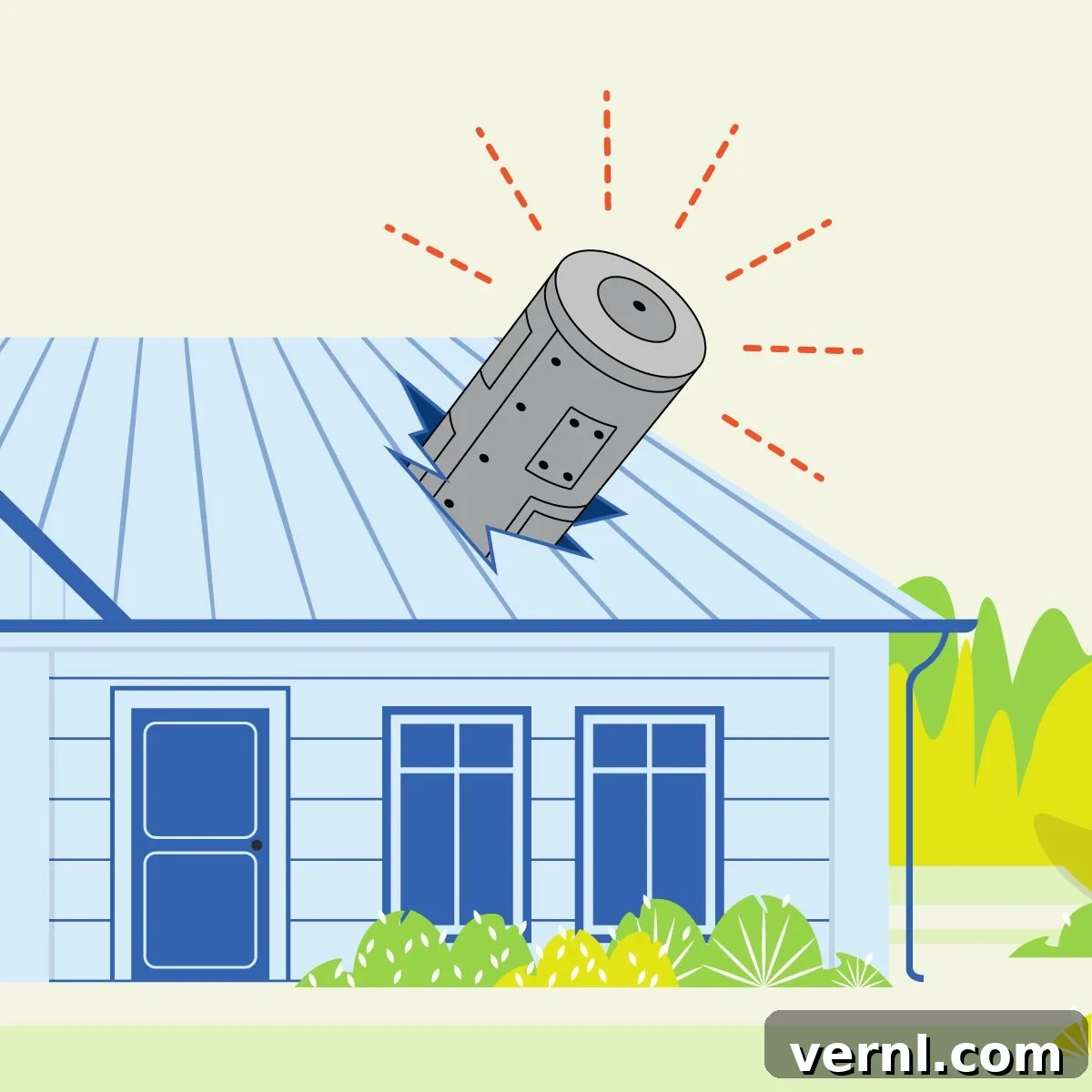
The dawn of the Space Age in 1957, marked by the Soviet Union’s launch of Sputnik, ushered in an era of unprecedented human achievement and exploration. Since that pivotal moment, governments and private entities across the globe have successfully propelled more than 15,000 satellites into Earth’s orbit, transforming communication, navigation, and our understanding of the cosmos. While the vast majority of these launches and missions have been triumphant, not every journey beyond Earth’s atmosphere concludes as planned. Recent high-profile test launches, such as those by SpaceX, have experienced what is euphemistically termed “rapid unscheduled disassembly,” showering debris over extensive areas long before reaching their intended orbital paths.
Regardless of whether these space-faring objects successfully achieve orbit or prematurely return to Earth, a universal truth prevails: “What goes up must come down.” Satellites, booster rockets, and all related space paraphernalia are ultimately subject to the immutable force of gravity. When these objects eventually succumb and begin their descent, the outcome can be highly unpredictable, with the potential for space debris damage to occur literally anywhere on the planet. While the thought of a celestial object impacting your property might send shivers down your spine, take comfort in the astronomical odds; the sheer vastness of Earth’s surface area renders the likelihood of space debris landing on your specific property incredibly remote.
However, “remote” does not mean “impossible.” The probability, though minuscule, is not zero. So, if the improbable does indeed happen, and your home or property suffers damage from falling space debris, will your existing homeowner’s insurance policy provide coverage? To answer this pressing question, we consulted with esteemed insurance experts Melanie Musson and Erika Tortorici. In this comprehensive guide, we’ll share their insights regarding your prospects of recovering expenses for such an extraordinary event. (Spoiler alert: Your chances are surprisingly good!)
The Expanding Universe of Space Debris: A Growing Concern
The term “space debris” might sound like something out of science fiction, but it represents a very real and growing challenge for space agencies and property owners alike. Since the first orbital launches, humanity has been accumulating a significant amount of material in space. This isn’t just a few defunct satellites; it’s a diverse collection of objects ranging from spent rocket stages and upper boosters to fragments from collisions, discarded mission-related items, and even flecks of paint. Over the decades, thousands of these human-made objects, many of which are no longer operational, remain in various orbits around Earth.
Occasionally, one of these retired satellites or a part of a spent rocket will gradually lose altitude, entering a low enough orbit to be pulled back into Earth’s atmosphere. The majority of these re-entering objects burn up completely due to the intense friction generated by their high-speed passage through the atmosphere. This fiery demise is often a spectacular, albeit harmless, light show in the night sky. However, if an object is sufficiently large and dense, it may not fully disintegrate. Instead, it can break into substantial pieces capable of surviving the scorching re-entry and making their way to the ground. This phenomenon, once considered an anomaly, is becoming an increasingly important aspect of space safety and terrestrial risk management.
Decoding Space Debris: What Exactly Is Falling From the Sky?
Space debris, by definition, refers to any human-made object orbiting Earth that no longer serves a useful function. When these objects re-enter the atmosphere and impact the ground, they often carry a distinct signature of their origins. Unlike naturally occurring meteorites, which are typically lumps of rock charred by atmospheric friction, space debris often exhibits recognizable engineering features, materials, and designs that point to its human creators.
History offers several stark examples of significant space debris impacts. In 1978, a Soviet satellite, Cosmos 954, carrying a nuclear reactor, crashed into northern Canada. This incident was not just about physical debris; it sprayed a Florida-sized area with radioactive waste, highlighting the severe environmental and health risks associated with certain types of space junk. More recently, in 2022, CBS News reported that a piece of a SpaceX Dragon capsule landed on an Australian sheep farm, a stark reminder of the global reach of such incidents. The following year, on December 30, 2024, residents of a village in Kenya witnessed a dramatic event when a 1,000-pound metal ring, strongly suspected to be from a launch vehicle, plummeted to the ground.
Another instance, widely reported by Scientific American, occurred on March 8, 2024, when a two-pound piece of debris, jettisoned from the International Space Station, catastrophically crashed through the roof of a home in Naples, Florida. Astonishingly, the object continued its destructive path, tearing through the house and even penetrating the floor. These events underscore that while rare, the impact of space debris can be devastating and highly localized.
How Do You Know If It’s Space Debris?
Identifying space debris typically involves a combination of eyewitness accounts, photographic evidence, and meticulous material analysis. Unlike a meteorite, which is fundamentally a natural rock altered by atmospheric entry, space debris often reveals its human origins through its composition and structure. For example, NASA was able to definitively identify the debris that impacted the Naples, Florida home as part of a battery pack. This identification was made possible because the object contained Inconel, a superalloy frequently employed in high-stress aerospace applications, signaling its artificial creation.
Similarly, debris discovered in a Saskatchewan field in 2024 bore a striking resemblance to the fragment that landed in Australia. SpaceX subsequently identified the Australian debris as a component of a cargo trunk. According to Scientific American, it was described as looking like “the charred, battered hood of a semitruck covered with woven carbon fiber,” a clear indication of its manufactured nature. Meanwhile, the human origin of the massive metal ring that fell in Kenya was readily apparent, its engineered form unmistakable amidst natural surroundings. These cases illustrate that while falling objects might initially spark confusion, experts can usually pinpoint the extraterrestrial — yet man-made — source.
The Impact of Space Debris: Damage On and Off Earth
The concept of “space debris damage” extends far beyond mere terrestrial impacts. In the harsh environment of orbit, where objects travel at incredibly high speeds—tens of thousands of miles per hour—even a tiny piece of debris carries enormous kinetic energy. When these objects collide in space, the resulting forces are powerful enough to puncture holes in advanced metals, disable sophisticated electronic systems, and render operational spacecraft completely inoperable. This phenomenon poses a significant threat to active satellites, astronaut safety, and the sustainability of space operations, potentially leading to a cascade of collisions known as the Kessler Syndrome.
When objects in low Earth orbits gradually descend and encounter the upper layers of Earth’s atmosphere, frictional forces begin to significantly reduce their speed. This deceleration is what ultimately causes them to fall earthward. As mentioned, most smaller pieces burn up completely. However, only large, heavy objects constructed from resilient materials are capable of withstanding the intense heat and pressures of re-entry without entirely disintegrating. When these substantial fragments do reach the ground, they are no longer traveling at their hyper-orbital velocities.
Nonetheless, the speed at which they strike the Earth is still considerable. These re-entering fragments can easily achieve speeds comparable to or even exceeding those of a fast-moving car or a small aircraft, creating significant impact forces. Such impacts are more than sufficient to cause extensive structural damage to buildings, penetrate roofs, destroy vehicles, and pose a severe risk of injury or fatality to people and animals. While less extreme than a high-speed orbital collision, this type of space debris damage on Earth is undeniably consequential and can result in considerable personal and financial loss.
Assessing the Odds: How Likely Is It That Space Debris Will Land On Your Home?
The prospect of space debris falling on your home, while dramatic, is statistically almost negligible. According to Aerospace.org, the chances of your property being struck by space debris are approximately one in a trillion. To put this into perspective, consider other natural phenomena: the chances of your home being struck by lightning, for instance, are roughly one in 1.4 million. This means that a lightning strike is about a million times more likely than an impact from space debris.
These infinitesimal odds offer considerable reassurance to homeowners. The vast majority of re-entering objects burn up harmlessly, and those that do survive are far more likely to land in oceans, uninhabited areas, or wilderness, given that Earth’s surface is predominantly water and sparsely populated land. However, the increasing number of objects in orbit, coupled with the rising frequency of launches, means that while the individual risk remains extremely low, the overall global probability of such incidents is slowly, but steadily, increasing. It’s a risk that, despite its rarity, warrants understanding and preparation.
Homeowner’s Insurance and Space Debris: Are You Covered?
This is the million-dollar question for any homeowner living in the Space Age. The good news, as confirmed by our insurance experts Melanie Musson and Erika Tortorici, is that your homeowner’s policy should indeed provide coverage for damage caused by space debris. This generally falls under the “falling objects” peril, which is a standard inclusion in most comprehensive homeowner’s insurance policies.
Melanie Musson clarifies this crucial point, stating, “The only way your policy would not cover the damage is if space debris was a named exclusion.” This is highly improbable in the current insurance landscape. Space debris damage is an extremely rare phenomenon, so uncommon that insurance companies typically don’t specifically list it as an exclusion on standard policies. Most policies are designed to cover a broad range of sudden and accidental damages, and a falling object from space generally fits this description. However, Musson cautions that this situation could evolve if the frequency of such damage incidents were to significantly increase, prompting insurers to reassess and potentially modify policy language.
Understanding Your Policy: Key Terms and Clauses
To be truly prepared, it’s beneficial for homeowners to understand the type of policy they hold. Most homeowner’s insurance policies fall into one of two categories: “named perils” or “open perils” (also known as “all-risk”). Named perils policies only cover damages from risks specifically listed in the policy. Open perils policies, on the other hand, cover all risks of damage to your home and belongings except for those explicitly excluded. Falling objects are almost universally covered under both types of policies, but an open perils policy offers broader protection against unforeseen events. It’s always advisable to review your specific policy document or consult with your insurance agent to confirm the exact scope of your coverage.
What About Liability?
Another important consideration is liability. If someone were to be injured by space debris while on your property, would you, as the homeowner, be held liable? According to Erika Tortorici, this scenario is highly unlikely. “Liability coverage typically protects homeowners if they’re found responsible for injuries on their property due to their negligence or a hazard they control,” she explains. “Since the trajectory and impact of space debris are entirely beyond a homeowner’s control, assigning liability to you would be extremely difficult, if not impossible.” Nevertheless, Tortorici emphasizes the critical importance of regularly reviewing your policy to ensure you have adequate liability coverage for a wide range of potential incidents. While space debris liability might be rare, other common liability claims are not.
What To Do If You Suspect Space Debris Landed On Your Property: A Step-by-Step Guide
While the odds are low, preparing for the possibility of space debris falling on your property is a prudent measure. The legal and practical implications of such an event can be complex, involving international agreements and specific protocols. Under international agreements signed in the late 1960s and early 1970s, the government of the country responsible for launching the spacecraft is technically liable for damages and injuries caused by its falling debris. In the case of a U.S.-based private company like SpaceX, for example, the U.S. government would, in theory, be responsible. However, these agreements are somewhat outdated and only apply to the countries that originally signed them, leaving gaps in accountability. Furthermore, the situation is complicated by the fact that private space companies, like SpaceX, have been known to retrieve their own debris unilaterally, sometimes without direct government oversight, blurring the lines of responsibility.
Given this inherent uncertainty and complexity, here’s a clear course of action if you suspect space debris has landed on your property:
- Prioritize Safety: Your immediate concern should be safety. Do not touch or get close to the debris if it appears hot, smoking, or unusual. In rare cases, some older space debris, particularly from Soviet-era satellites, could be radioactive. Maintain a safe distance.
- Document Everything: Before doing anything else, thoroughly document the scene. Take numerous photographs and videos from various angles, showing the object, its impact site, and any damage caused to your property. Note the exact time, date, and precise location of the find.
- Contact Your Insurance Company Immediately: This is the most crucial step. File a claim with your homeowner’s insurance company as soon as possible. Your insurance provider is equipped to navigate the intricate process of identifying the debris, determining its origin, and engaging with relevant authorities or international bodies. Let them handle the complexities of contacting space agencies, foreign governments, or private space companies.
- Avoid Disturbing the Debris (Unless Necessary for Safety): Unless there’s an immediate threat to life or property that requires moving it, it is generally best to leave the debris undisturbed. Moving or tampering with the object could not only be dangerous (e.g., if it’s radioactive or sharp) but could also complicate your insurance claim and potentially interfere with any official investigation into its origin.
- Report to Local Authorities (as advised by your insurer): While your insurance company will likely guide you, they might advise reporting the incident to local law enforcement or emergency services, especially if the debris is large or poses a public safety risk.
By following these steps, you can ensure your safety, protect your claim, and facilitate the proper investigation of an extraordinary event.
Expert Insights on Space Debris and Insurance
The consensus among insurance professionals is reassuring for homeowners. Melanie Musson and Erika Tortorici, experts in the field, both affirm that standard homeowner’s insurance policies are generally structured to cover the unexpected. Their collective insights underscore the adaptability of insurance policies to cover novel and rare events, provided they don’t fall under specific exclusions. This expert guidance offers peace of mind in an era where the boundary between Earth and space is increasingly blurred.
About the Experts
- Melanie Musson is a published insurance and finance expert and an agent for Clearsurance.com, a one-stop insurance marketplace.
- Erika Tortorici is the owner and principal of Optimum Insurance Solutions, a broker of home, auto, apartment and life insurance.
Sources
- Scientific American: A New, Deadly Era of Space Junk Is Dawning, and No One Is Ready; (2024)
- Scientific American: Space-Junk Strike in Florida Signals New Era of Orbital Debris; (2024)
- CBS News: Space debris weighing over 1,000 pounds reportedly crashes into village in Kenya; (2025)
- Aerospace.org: Space Debris 101; (2025)