
Our modern kitchens, with their sleek aesthetics and advanced appliances, often feature glass stovetops – a design choice celebrated for its elegant appearance and initial ease of cleaning. Two years ago, when we undertook a comprehensive kitchen remodel, upgrading from an older gas stove with its cumbersome, heavy cast-iron burners to a contemporary model with a glistening glass surface, we embraced this shift wholeheartedly. While the new glass cooktop undeniably simplifies daily tidying compared to its predecessor, it presents its own unique set of challenges. Spills, splatters, and especially burnt-on food can transform that sleek surface into a frustrating landscape of stubborn stains, particularly if left to sit for even a short period. The quest for an effortless yet effective cleaning solution is a common dilemma for many homeowners.
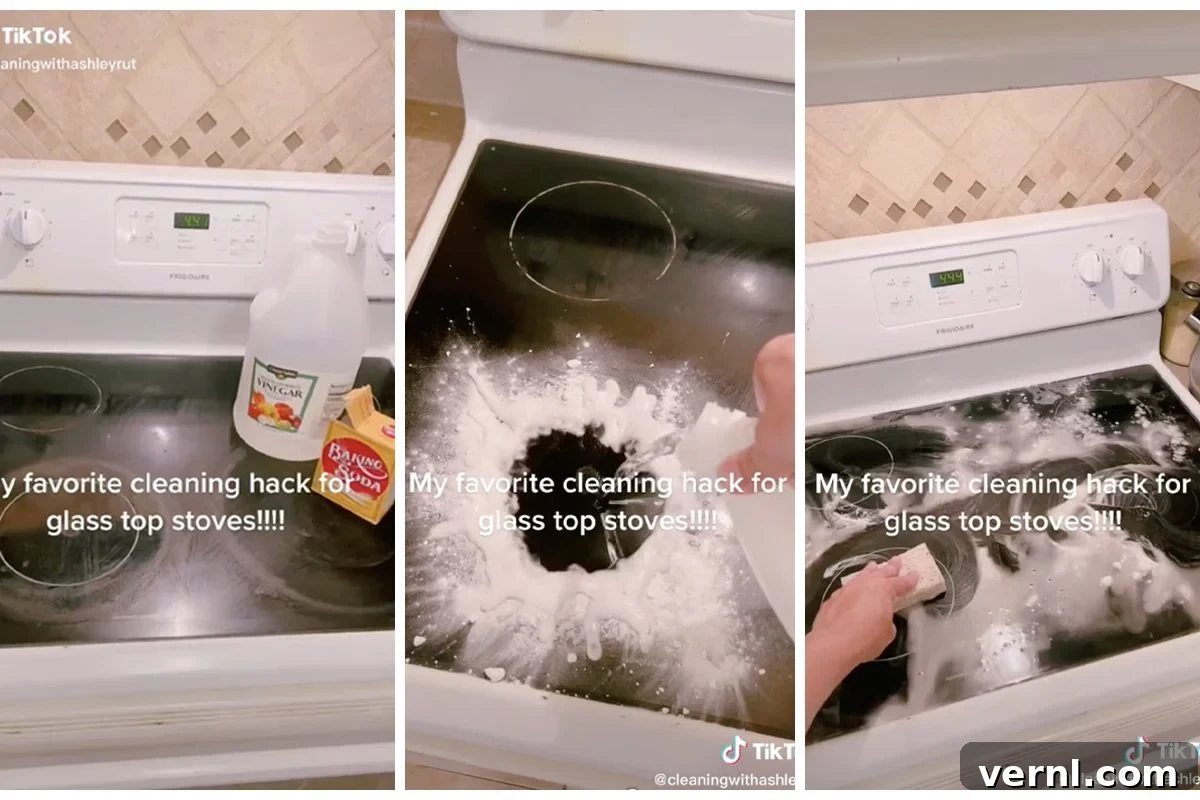
This universal struggle explains why a particular TikTok video recently captivated the attention of countless users, myself included. It promised a remarkably simple cleaning method for glass stove tops, leveraging just two everyday household products found in almost every pantry. The viral clip demonstrated a straightforward process: liberally sprinkle baking soda across the stained stovetop, then follow with a generous pour of white vinegar. The mixture immediately reacts, bubbling and fizzing as it begins to work its magic. Following this effervescent display, the user in the video quickly scrubs the area with a dish brush before wiping it clean with a sponge. While the video garnered immense popularity for its promise of an easy fix, one crucial element was noticeably absent: a clear, satisfying “before-and-after” comparison. This omission left many, including myself, curious but also slightly skeptical about the true efficacy of the hack.
Is This Cleaning Hack Safe for Your Glass Stovetop?
The allure of such a straightforward cleaning hack, particularly one utilizing common, non-toxic ingredients, is undeniable. After all, the combination of baking soda and vinegar isn’t new to the world of natural cleaning; it’s a time-tested duo I frequently employ for various tasks, including maintaining the pristine condition of my beloved Le Creuset Dutch oven. However, when it comes to a relatively new and significant investment like a glass stovetop, caution is always paramount. Before attempting this trending method on my own appliance, I decided to consult an authority on appliance care to ensure its safety and suitability.
I reached out to Jill Notini, Vice President of Communications for the esteemed Association of Home Appliance Manufacturers (AHAM). AHAM is a trusted voice in the appliance industry, advocating for consumers and ensuring appliance safety and performance standards. Her insight was invaluable. Notini provided a reassuring “all-clear,” confirming the general safety of this popular cleaning concoction. She explained, “Generally, a baking soda and vinegar solution is an acceptable cleaner for general purposes.” This expert endorsement gave me the confidence needed to proceed with testing the TikTok hack on my own precious cooktop.
Notini further elaborated on the practical advantages of using these common household staples. “Most people have these items on hand, making them incredibly easy to use and a cost-effective alternative to specialized cleaners,” she noted. This accessibility is a major draw for many looking for quick, natural cleaning solutions without needing a special trip to the store. Beyond convenience, their versatility is another significant benefit. “These ingredients are also nice because you can either make a looser solution or mix them into a paste, depending on how dirty the surface may be,” Notini added. This flexibility allows users to tailor the cleaning power to the specific grime level, from light smudges to tenacious, burnt-on residues, offering a customized approach to glass stovetop maintenance.
The Science Behind the Sparkle: How Baking Soda and Vinegar Work
Understanding *why* baking soda and vinegar are so effective together elevates this simple hack from a mere trick to a scientifically sound cleaning strategy. This dynamic duo harnesses fundamental chemical and physical properties to tackle even the most stubborn stovetop messes.
**Baking Soda (Sodium Bicarbonate):** This common pantry item acts as a mild abrasive. Its fine, crystalline structure allows it to gently scrub away dirt and grime without scratching delicate surfaces like glass. Beyond its physical scrubbing action, baking soda is also alkaline. Many food stains, especially those derived from fats, oils, and sugars, tend to be acidic. The alkaline nature of baking soda helps to neutralize these acidic stains, effectively breaking them down at a molecular level. Furthermore, baking soda is a renowned deodorizer, absorbing lingering food odors that can sometimes cling to stovetop surfaces.
**White Vinegar (Acetic Acid):** The acidic nature of white vinegar is its primary superpower in cleaning. It excels at dissolving mineral deposits, such as hard water stains, and sticky residues often left by spills and sauces. The acidity helps to loosen and break down these tougher deposits, preparing them for removal. Vinegar also possesses mild disinfecting properties, though its main role in this hack is chemical breakdown.
**The Chemical Reaction:** When baking soda and vinegar combine, a powerful effervescent reaction occurs. The acetic acid in vinegar reacts with the sodium bicarbonate in baking soda to produce carbonic acid. This carbonic acid immediately decomposes, releasing carbon dioxide gas. This rapid release of gas creates the characteristic bubbling and fizzing action. This isn’t just for show; the tiny bubbles physically agitate and lift the loosened dirt, grease, and burnt-on food particles from the stovetop surface. It’s like having millions of miniature scrub brushes working tirelessly to separate the grime from the glass, making it significantly easier to wipe away.
This combination of gentle abrasion, chemical neutralization, and physical agitation makes baking soda and vinegar an incredibly versatile and potent, yet safe, cleaning solution for glass stovetops, harnessing the power of simple chemistry for a sparkling finish.
Putting the TikTok Cleaning Hack to the Ultimate Test
The true test of any cleaning hack lies in its performance against real-world messes. I patiently waited for the perfect opportunity to put this TikTok phenomenon to the test, and a hearty pasta dinner certainly delivered. My glass stovetop, after a lively cooking session, was liberally spotted with tenacious tomato sauce spills, caramelized sugars from a simmering pot, and truly “burnt-on crud” – a technical term, I assure you, for those unyielding black marks that seem fused to the surface. It was a challenging canvas, ideal for an honest evaluation of the baking soda and vinegar method.
Following the initial steps outlined in the viral video, I began by applying a generous, almost heavy-handed, layer of baking soda across all the stained areas. The fine white powder settled over the grime, preparing the surface. Next, I carefully poured white vinegar over the baking soda. The reaction was instantaneous and satisfying: a vigorous bubbling and fizzing, precisely as described, creating a gentle foam that began to creep over the cooked-on food. The chemical symphony was underway, and the anticipation of seeing results was palpable.
However, I decided to incorporate a small but significant modification I’d encountered in other online cleaning forums – a subtle enhancement not shown in the original TikTok video. After ensuring the baking soda and vinegar mixture thoroughly covered the problematic spots, I soaked a clean kitchen towel in very hot water, wrung it out just enough to prevent dripping, and carefully laid it over the effervescent mixture. The idea behind this warm, damp compress was to create a mini-steam bath, allowing the mixture to penetrate and soften the burnt-on food more effectively over an extended period. I let this concoction sit for approximately 15 minutes, allowing the heat and the chemical reaction to work in tandem.
And then, the moment of truth. After carefully removing the towel, I was met with an encouraging sight: the burnt-on food and dried tomato sauce spills, once stubbornly adhered, now appeared softened and lifted, almost detached from the glass surface. Using a dish brush, I gently scrubbed the areas, and to my delight, the grime came away with surprising ease. The “voila!” moment was genuine. The combination of the baking soda’s abrasive action, the vinegar’s dissolving power, and the hot towel’s softening effect proved to be incredibly potent. I then simply wiped away the remaining residue with a soft, damp sponge, revealing a remarkably clean and shiny stovetop.
As Jill Notini had pointed out, the versatility of this method allows for adjustment in consistency. Because I had used a substantial amount of baking soda, my mixture was more of a thick paste. While highly effective, it did require a bit more “elbow grease” during the final wipe-up than if I had opted for a more liquid solution. Next time, for slightly less strenuous removal, I might consider adding a little more vinegar to achieve a thinner consistency, making the post-scrub wipe-down even quicker. Regardless, the results were undeniable, transforming a grimy, unappealing stovetop into a gleaming centerpiece once more.
Beyond the Hack: Comprehensive Care for Your Glass Stovetop
While the baking soda and vinegar method is undeniably effective for tackling tough stains, integrating it into a broader strategy of comprehensive glass stovetop care will ensure its longevity and maintain its pristine condition. Proactive measures can significantly reduce the need for extensive deep cleaning sessions.
**Preventative Maintenance is Key:** The simplest way to keep your glass stovetop looking new is to prevent messes from becoming set-in stains. Always wipe up spills immediately, especially sugary liquids or sauces, before they have a chance to cool and harden onto the hot surface. Using cookware with flat, smooth bottoms can also prevent scratching and ensure even heat distribution, reducing the likelihood of burnt spots. Avoid dragging heavy pots and pans across the surface. Regularly wiping down the stovetop after each use with a damp cloth can prevent grease and dust buildup, making future deep cleans much easier.
**Other Effective Cleaning Solutions:** The market offers a variety of specialized glass stovetop cleaners, such as Cerama Bryte or Weiman Cook Top Cleaner. These products are specifically formulated to tackle stovetop grime, often containing gentle abrasives and polymers that leave a protective sheen. Many come with dedicated scrubbing pads and even razor blade scrapers, which, when used with extreme care and at a shallow angle, can be highly effective for removing truly stubborn, carbonized food bits that even baking soda and vinegar might struggle with. For a milder natural alternative, a spray bottle filled with diluted lemon juice can also help cut through grease and leave a fresh scent, thanks to its natural acidity.
**Why Choose Baking Soda and Vinegar?** Despite the array of commercial products available, the enduring appeal of the baking soda and vinegar hack lies in its unparalleled accessibility, cost-effectiveness, and non-toxic nature. It eliminates the need for harsh chemicals, making it a safer choice for households with children or pets, and a more environmentally friendly option. When compared to specialized cleaners, which can be an additional expense and require a trip to the store, baking soda and vinegar are often already present in your pantry, ready to deploy at a moment’s notice.
This natural method offers a powerful, yet gentle, approach to maintaining one of your kitchen’s most prominent features, ensuring its shine and functionality for years to come.
Final Verdict: A Reliable Ally in Your Cleaning Repertoire
In an era saturated with questionable online trends and fleeting social media fads, it’s refreshing to discover a TikTok cleaning hack that genuinely delivers on its promise. This simple yet highly effective method for cleaning glass stovetops, leveraging the power of baking soda and vinegar, proved its worth in my own kitchen. While it’s hardly the world’s most original cleaning idea – the combination has been a secret weapon for generations of homekeepers – its rediscovery and amplification through platforms like TikTok highlight its enduring practical value.
For those who have established effective routines with other trusted products, such as the widely praised Bar Keepers Friend, there’s no inherent need to alter your approach. Different products suit different preferences and cleaning challenges, and consistency in any effective method is key. Bar Keepers Friend, for instance, is an excellent choice for its ability to tackle tough stains and rust with minimal effort, leaving surfaces gleaming.
However, the undeniable advantage of the baking soda and vinegar duo lies in its unparalleled availability. While I occasionally find myself running low on commercial cleaners like Bar Keepers Friend, baking soda and white vinegar are almost perpetually stocked in my pantry. This constant accessibility means I’m never caught unprepared when a sudden spill demands immediate attention or when a deep clean is overdue. For that compelling reason alone, this straightforward and proven trick has earned a permanent and indispensable place in my cleaning repertoire.
In conclusion, this accessible, eco-friendly, and highly effective hack offers a compelling alternative or supplement to conventional cleaning products. It empowers homeowners with a simple, readily available solution to maintain the beauty and cleanliness of their glass stovetops, proving that sometimes, the best tools for the job are the ones you already have on hand.