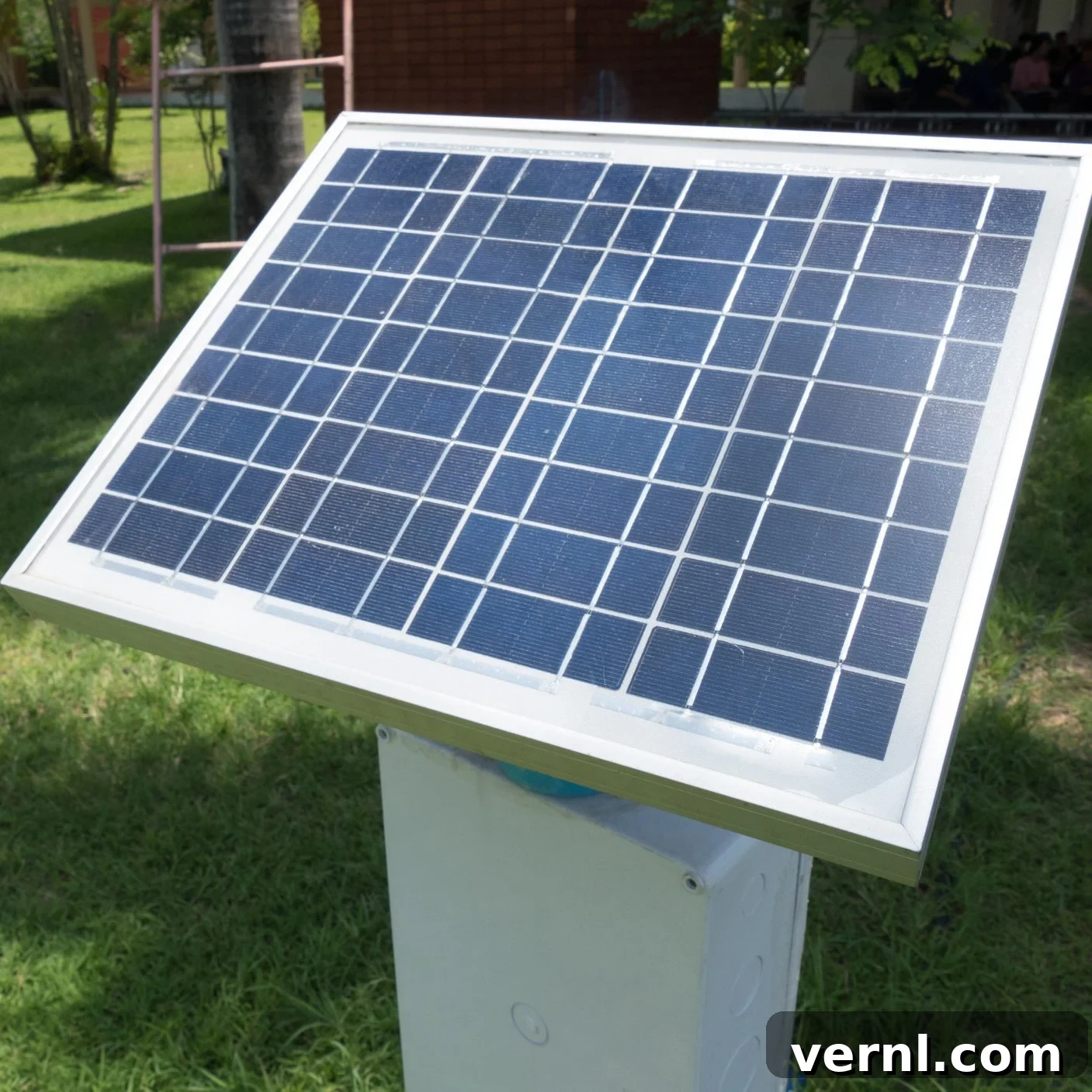
As a co-owner of a California property that has never been connected to the main electric grid, I deeply understand the profound sense of self-reliance and environmental responsibility that comes with a fully functional solar power system. This firsthand experience has been invaluable, teaching us not only the immense benefits of sustainable living but also the inherent challenges and limitations of solar energy. For instance, a direct lightning strike on our system highlighted a crucial vulnerability: solar power components are constantly exposed to the elements, making them susceptible to damage from severe weather, necessitating robust protection and backup plans. During repairs, we had to temporarily rely on the generosity of our grid-tied neighbors, underscoring the importance of system resilience.
One of the most apparent limitations of solar energy, and one that significantly impacts greenhouse applications, is the intermittent nature of sunlight. The sun simply isn’t always shining, creating a fundamental challenge for continuous heating. This means that if you require consistent warmth on cloudy days, during extended inclement weather, or throughout the night, you must implement a robust energy storage solution, typically through advanced batteries, or have a reliable backup generator. This need for uninterrupted power is especially critical when designing an effective solar heating system for a greenhouse, as plants often demand stable temperatures for optimal growth, particularly when natural sunlight is at its lowest. Consequently, solar heating is frequently best utilized as a supplementary solution, complementing other existing or traditional greenhouse heating systems to ensure stable environmental conditions year-round.
Understanding the intricate mechanics of solar greenhouse heating, Joel Worthington, President of Mr. Electric, a Neighborly company specializing in comprehensive residential and commercial electrical services, clarifies that such a system is purpose-built to capture and convert solar energy. Its primary function is to regulate the internal temperature and provide essential warmth within the controlled environment of a greenhouse. “It typically involves the use of specialized solar collectors, such as photovoltaic (PV) panels or dedicated solar air heaters, to efficiently capture sunlight and transform it into usable heat,” Worthington elaborates. “This creates a highly sustainable and energy-efficient solution crucial for maintaining the precise, optimal conditions necessary for vigorous plant growth within a greenhouse setting, ultimately extending growing seasons and improving yields.”
While a few standalone products are marketed specifically as “solar greenhouse heaters,” the most practical and scalable solutions generally involve integrating solar panels with more conventional electric space heaters. Standalone units, often simpler in design, are typically best suited for very small greenhouses, cold frames, or hobby setups where heating demands are minimal. For larger greenhouses, which inherently have greater heating requirements and larger volumes of air to warm, a more comprehensive approach is needed. This usually entails installing a full-scale solar array (multiple PV panels) that powers either an efficient heat pump or a robust resistive electric heater. The choice between these options often depends on factors like local climate, initial budget, the specific needs of the plants being cultivated, and the desired level of automation and control.
Choosing the right solar heating solution for your greenhouse involves evaluating various technologies. Each offers distinct advantages and considerations, from direct air heating to electricity generation for conventional heaters, allowing growers to tailor systems to their unique environments. Below, we’ve highlighted some of the top-performing options available on the market that can form the core of an effective, sustainable solar greenhouse heating strategy, offering both efficiency and reliability.
Top Solar Greenhouse Heating Solutions for Optimal Growth
- Best Solar Furnace for Direct Air Heating: Nakoair Solar Air Collector
- Best Electric Greenhouse Heater for PV Systems: Bio Green Palma Greenhouse Heater
- Best PV Panel Starter Kit for Greenhouse Power: Renogy 200W Solar Starter Kit
When considering practical solar heating options for a greenhouse, two primary pathways stand out as both efficient and widely adopted: a photovoltaic (PV) system combined with a traditional electric space heater, or a dedicated solar furnace designed for direct air heating. Both approaches leverage the sun’s energy but do so through distinct mechanisms, offering varying levels of complexity, installation requirements, and operational characteristics. Below, we delve into some of the best market options for constructing either of these effective solar heating systems, providing in-depth insights into their features, benefits, and potential drawbacks to help you make an informed decision for your specific greenhouse environment and plant cultivation goals.
Best Solar Furnace for Direct Air Heating
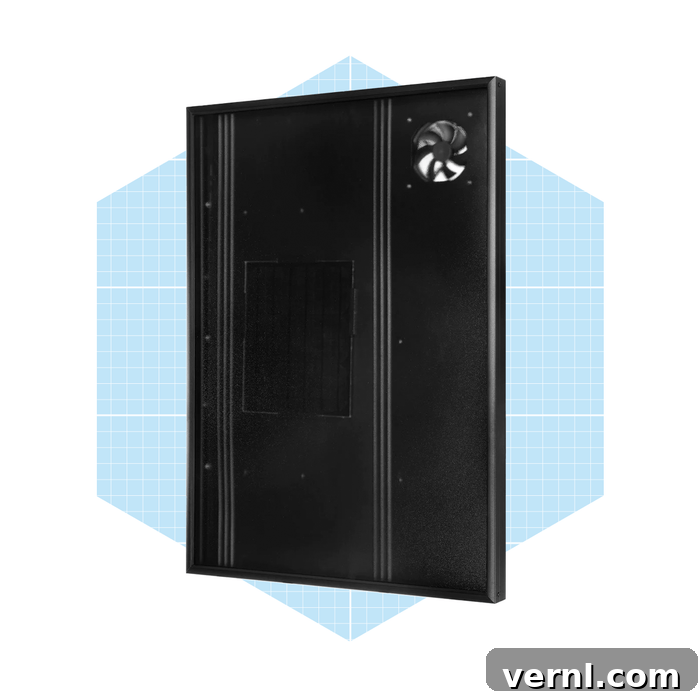
Nakoair Solar Air Collector: An Innovative Approach to Greenhouse Warmth
The Nakoair Solar Air Collector represents an advanced and highly efficient solution for direct solar air heating, capable of significantly raising the internal temperature of a greenhouse. On a bright, sunny day, this innovative unit can inject air into your greenhouse that is an impressive 40 to 85 degrees Fahrenheit warmer than the ambient outdoor temperature, providing a substantial boost to the growing environment. What truly distinguishes the Nakoair is its fully integrated and self-sufficient design: it features its own circulation pump, powered efficiently by a small photovoltaic (PV) panel built directly into the device. This ingenious self-contained power source means the unit operates entirely off-grid during daylight hours, automatically starting and stopping based on the intensity of incoming sunlight, thereby requiring virtually no manual intervention or ongoing maintenance.
Beyond its primary function of powerful heating, the Nakoair Solar Air Collector is equipped with a user-friendly LCD thermostat for precise temperature control and offers versatile ventilation capabilities. Its intelligent system automatically activates internal air vents when the outdoor temperature surpasses the indoor temperature, facilitating crucial air exchange. This automatic ventilation is vital for preventing the buildup of excessive moisture and humidity, which can lead to common greenhouse issues like mold, fungus, and unpleasant odors. By actively managing air quality and humidity, the Nakoair unit helps ensure a healthier and more stable environment conducive to robust plant growth. Its ability to dehumidify and humidify further enhances its utility, making it a comprehensive climate control solution for your greenhouse.
Pros of the Nakoair Solar Air Collector
- Integrated solar collector with an intuitive LCD thermostat automatically processes indoor air, simplifying climate management.
- Designed for minimal upkeep, running efficiently and reliably without the need for constant maintenance or external power.
- Straightforward operation ensures accessibility for all users, regardless of technical expertise.
- Intelligently switches between solar and supplementary electrical energy sources (if connected), ensuring continuous operation even with fluctuating sunlight.
- Provides beneficial dehumidification and humidification functions, promoting ideal plant conditions and preventing common greenhouse problems.
- Completely self-sufficient during daylight hours thanks to its integrated PV panel, offering true energy independence.
- Acts as a ventilator, preventing stale air and reducing pathogen risks.
Cons of the Nakoair Solar Air Collector
- For larger greenhouses, or those situated in areas with consistently low sunlight or poor insulation, a more substantial model or supplementary heating may be necessary to meet heating demands effectively.
- While daily operation is simple, the initial installation might benefit from professional assistance to ensure optimal placement, secure mounting, and peak performance.
- Its heating efficiency is directly tied to sunlight availability, necessitating a backup heating strategy or energy storage for nighttime or extended cloudy periods.
- The internal fan may not be sufficient for very large or poorly insulated spaces.
Shop Now on Amazon
Best Electric Greenhouse Heater for PV Systems
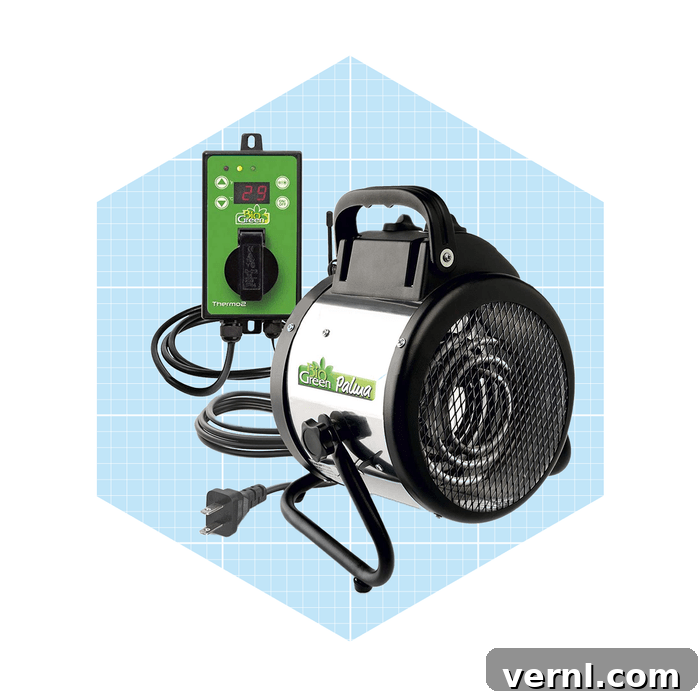
Bio Green Palma Greenhouse Heater: Reliable Warmth with Solar Integration Potential
The Bio Green Palma Greenhouse Heater stands out as a highly efficient and purpose-built electric space heater specifically designed for the demanding environment of greenhouses. Operating at 1,500 watts on a standard 120-volt power supply, it matches the power consumption of many popular domestic space heaters while delivering exceptional heating performance. This compact yet powerful unit generates an impressive 5,118 Btu of heat, which is ample capacity to effectively warm a greenhouse space of up to 120 square feet, making it suitable for many small to medium-sized structures. Its robust construction features a lightweight, sturdy, and splash-proof stainless steel casing, rendering it highly durable and ideal for the humid conditions often found in greenhouses. For added safety and peace of mind, the Palma heater includes an automatic shut-off mechanism that activates in the event of overheating, preventing potential hazards.
To seamlessly integrate this efficient greenhouse heater into a comprehensive solar heating system, you would typically need a photovoltaic (PV) panel array to capture solar energy. Since electric heaters like the Palma operate on alternating current (AC), and solar panels inherently generate direct current (DC), an essential component of this sustainable setup is an inverter. This crucial device converts the DC power harvested from your solar panels into compatible AC power for the heater, allowing you to effectively utilize stored or real-time solar energy to maintain optimal temperatures within your greenhouse. Additionally, a battery bank would be necessary to store excess solar energy for use during nighttime or periods of low sunlight, ensuring continuous warmth for your plants.
Pros of the Bio Green Palma Greenhouse Heater
- Features a compact size and lightweight design, making it exceptionally easy to position, move, and install within the greenhouse.
- Equipped with an intuitive and easy-to-use adjustable thermostat, allowing for precise and consistent temperature regulation.
- Offers powerful heating output (5,118 Btu) while maintaining commendable energy efficiency for its class, helping manage energy consumption.
- Constructed with a sturdy, corrosion-resistant stainless steel casing, making it highly durable and perfectly suited for humid greenhouse environments.
- Splash-proof design significantly enhances its longevity and safety when exposed to the moisture inherent in greenhouse settings.
- Automatic shut-off feature provides an important layer of safety against overheating.
Cons of the Bio Green Palma Greenhouse Heater
- Requires additional purchases, specifically a PV panel array, an inverter, and typically a battery bank, to function as a complete solar heating system, increasing initial costs.
- Does not include integrated energy storage, meaning it needs either direct solar input (during the day) or a sufficient battery bank for nighttime and cloudy-day operation.
- Relies on electricity, meaning a grid-tie connection or substantial off-grid battery capacity is needed for continuous and reliable use, especially in colder climates.
- Its heating capacity, while good for its size, may be insufficient for very large greenhouses or those in extremely cold regions without supplemental heating.
Shop Now on Amazon
Shop Now on Wayfair
Best PV Panel Starter Kit for Greenhouse Power
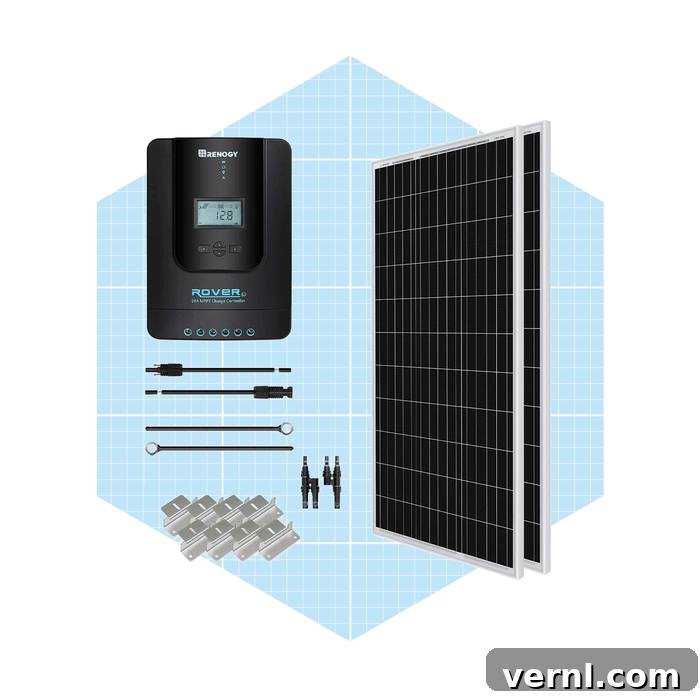
Renogy 200W Solar Starter Kit: Foundation for an Off-Grid Greenhouse
The Renogy 200W Solar Starter Kit offers an excellent and robust foundation for creating a reliable solar power system specifically tailored for greenhouse heating and other electrical needs. This comprehensive kit features a high-efficiency monocrystalline solar panel, renowned for its superior performance in converting sunlight into electricity, even in less-than-ideal lighting conditions. Crucially, the kit includes all the necessary mounting brackets, simplifying the installation process and ensuring a secure, long-lasting setup. This powerful panel is perfectly suited for charging a battery pack, which can then reliably power an electric heater like the Bio Green unit mentioned previously, providing consistent warmth to your greenhouse even after the sun sets.
A key component and significant advantage of the Renogy kit is its advanced 40A MPPT (Maximum Power Point Tracking) charge controller. This sophisticated controller is designed to maximize the power harvest from your solar panel, transferring up to 30% more power compared to older, less efficient PWM (Pulse Width Modulation) controllers. More importantly, it provides critical electronic protections against common electrical issues such as overcharging, overloading, short-circuits, and reversed polarity, safeguarding both your expensive batteries and your entire solar system. The solar panels themselves are engineered for exceptional longevity and durability, featuring a corrosion-resistant aluminum frame that ensures extended outdoor use, guaranteeing decades of reliable service. Furthermore, an IP65-rated junction box offers complete protection against environmental particles like dust and low-pressure water jets, reinforcing its resilience and making it an ideal choice for outdoor greenhouse applications.
Pros of the Renogy 200W Solar Starter Kit
- Advanced MPPT charge controller significantly boosts power transfer efficiency (up to 30% more than PWM controllers), maximizing energy harvest.
- Comprehensive electronic protections safeguard against overcharging, overload, short-circuit, and reversed polarity, enhancing system safety and extending component lifespan.
- Features pre-drilled holes on the back of the panel for quick, secure, and straightforward mounting, easing installation.
- Lightweight design facilitates easier handling and installation, reducing strain and complexity.
- Constructed with a durable, corrosion-free aluminum frame, ensuring exceptional longevity and resistance to harsh outdoor elements.
- Monocrystalline cells offer high efficiency and performance, delivering more power per square foot.
- Ideal for expanding into larger off-grid systems due to its modular design.
Cons of the Renogy 200W Solar Starter Kit
- The initial investment for a high-quality solar starter kit can be considerable, requiring careful budget planning.
- To establish a complete solar heating system, this kit necessitates the separate purchase of an electric heater and a suitable battery bank, adding to the overall cost and complexity.
- Requires careful planning for optimal panel placement and system wiring to maximize efficiency and safety.
- While robust, professional installation might be recommended for those unfamiliar with electrical wiring.
Shop Now on Walmart
Shop Now on Renogy
Comprehensive Types of Solar Greenhouse Heaters Explained
For centuries, clever gardeners have employed ingenious methods to keep their greenhouses warm after sundown. A time-honored, simple DIY trick involves strategically placing dark-colored barrels of water in sunny areas. These barrels absorb solar radiation throughout the day, acting as thermal mass that slowly radiates stored heat back into the greenhouse during the cooler night hours. While this passive solution is effective for small-scale needs, commercial and more advanced systems offer a broader range of sophisticated options for dedicated solar greenhouse heating, each with its unique operational principles, benefits, and applications. Understanding these different types is crucial for selecting the most appropriate system for your specific greenhouse and climate.
- Photovoltaic (PV) Panel Systems: Electricity for Electric Heaters: These are arguably the most versatile solar heating solutions. PV panels convert sunlight directly into electricity, which can then be used to power a variety of electric heating devices, such as efficient space heaters, fan heaters, radiant heaters, or even energy-efficient heat pumps within the greenhouse. The electricity generated can be used instantly during daylight hours, or, more commonly, stored in robust battery banks for use during periods of low sunlight or throughout the night. This modular approach allows for significant flexibility in scaling the system to meet specific heating demands and can also power other greenhouse electrical needs like ventilation fans or grow lights.
- Solar Furnaces (Direct Air Collectors): Instant Warmth Delivery: Often integrated directly into the greenhouse walls or positioned nearby, these specialized panels are designed to efficiently absorb sunlight and directly heat the air passing through them. Cold air from the greenhouse is drawn into the collector, warmed as it circulates past the heated absorption surface, and then released back into the greenhouse. This method provides immediate, direct air heating, making it highly effective for raising ambient temperatures rapidly during sunny periods. Many modern solar furnaces incorporate small, low-power fans, often solar-powered themselves, to enhance air circulation and distribution, ensuring more uniform heating across the greenhouse space. These are particularly effective for rapid temperature boosts.
- Hot Water Panels (Hydronic Heating Systems): Consistent Radiant Heat: This sophisticated method involves solar absorption panels that are specifically designed to heat water rather than air. The heated water is then circulated through a network of durable pipes, typically embedded within the greenhouse floor, walls, or in large thermal mass storage tanks. This creates a highly efficient radiant heating system, which evenly distributes warmth throughout the growing space. Hydronic systems are excellent for creating significant thermal mass, as the heated water and the surrounding structure retain warmth for extended periods, releasing it slowly and steadily. This continuous, gentle heat release is particularly beneficial for maintaining stable nighttime temperatures, preventing drastic temperature drops that can stress plants. They often require more complex plumbing but offer superior heat retention.
Key Considerations When Investing in a Solar Greenhouse Heater
It’s crucial to approach solar greenhouse heating with realistic expectations. While highly beneficial, heating a greenhouse entirely with solar energy can be impractical without a comprehensive system that includes robust energy storage capabilities. Solar heaters are best viewed as powerful tools for significantly reducing the operational costs associated with conventional gas or electric heaters, extending growing seasons, and promoting sustainable practices. When evaluating and shopping for the ideal solar heating system for your greenhouse, several critical factors warrant careful consideration to ensure you select a solution that perfectly aligns with your specific needs, local environmental conditions, and long-term gardening goals.
- The Size and Insulation of Your Greenhouse: This is perhaps the most fundamental factor impacting heating requirements. A larger greenhouse space naturally requires a greater quantity of heat to maintain desired temperatures, which translates to a need for more panels (or more highly efficient ones) and more powerful heating units. Equally important is the greenhouse’s insulation. A well-insulated greenhouse will retain heat far more effectively, significantly reducing the overall energy demand and the size of the solar system needed. For PV systems, choosing panels with monocrystalline cells generally provides superior heating efficiency compared to polycrystalline cells, though they typically come at a higher initial cost. Consider materials like double-layer polycarbonate or insulated glass over single-pane glass for better R-values.
- The Purpose of the Greenhouse and Plant Requirements: Your heating needs will vary dramatically based on what you intend to grow and your local climate. If your goal is to cultivate heat-loving tropical plants (e.g., orchids, citrus) in a region with cold winters, you’ll require a substantially more powerful, reliable, and consistent heating system with significant storage or backup. Conversely, if you’re primarily using the greenhouse for starting seeds early in the spring, hardening off plants, or extending a growing season for temperate crops, your heating demands will be less intense, potentially allowing for a simpler and less expensive solar setup.
- Available Space for Panel Installation: Solar panels, whether PV or heat-absorbing, require unobstructed exposure to sunlight, ideally a clear, south-facing orientation (in the Northern Hemisphere) to maximize energy capture throughout the day. It’s important to have sufficient, shadow-free space near the greenhouse to set up these panels. A critical design consideration is that panels typically cannot be placed directly on the greenhouse roof, as they would block essential sunlight required for plant photosynthesis. Ground mounts, roof mounts on adjacent structures (like a shed or house), or specialized pole mounts are usually preferred, ensuring plants still receive ample direct light.
- Climate and Local Weather Patterns: The amount of consistent sunlight your region receives will directly impact the effectiveness of any solar system. Areas with frequent cloudy days, heavy snowfall, or long, dark winters will necessitate larger solar arrays, more extensive battery storage capacity, or a more robust backup heating solution to guarantee adequate warmth. Research average temperatures, frost dates, and annual sunlight hours for your specific location.
- Budget and Return on Investment (ROI): The initial cost of installing a complete solar greenhouse heating system can be significant, encompassing panels, heaters, inverters, batteries, and potentially installation labor. However, it offers substantial long-term savings on energy bills and provides valuable energy independence. Carefully weigh the upfront investment against the projected operational savings, the added benefits of an extended growing season, and optimized plant health. Consider the payback period for your investment.
- Energy Storage Solutions: As solar energy is inherently intermittent, a reliable storage system is paramount for providing heat when the sun isn’t shining. For PV systems, this means robust battery banks (e.g., deep-cycle lead-acid, AGM, or more advanced lithium-ion batteries). For solar furnaces or hot water systems, this could involve substantial thermal mass elements like insulated water tanks, rock beds, or even phase-change materials that absorb and slowly release heat over time. The capacity of your chosen storage system should be carefully calculated to match your energy consumption during non-sunny periods.
- Maintenance Requirements: While modern solar systems are generally low-maintenance, they do require some periodic attention to ensure optimal performance. Panels need regular cleaning to remove dust, leaves, bird droppings, or snow, all of which can reduce efficiency. Batteries, particularly lead-acid types, may require occasional checks for water levels and terminal corrosion. Factor in the time and effort required for upkeep and the lifespan of various components.
- Integration with Existing Systems: If you already have a backup heater (electric, gas, or wood-burning), consider how the solar system will integrate with it. Automated thermostats and smart controllers can help prioritize solar heat when available and seamlessly switch to backup when needed.
In addition to these practical considerations, it’s beneficial to reflect on the overarching pros and cons of implementing a solar power generation system in general, as these principles apply directly and significantly to solar greenhouse heating.
General Pros of Solar Greenhouse Heating
- Free and Renewable Energy: Once the initial investment is made, the energy you harness from the sun is entirely free, dramatically reducing or eliminating ongoing heating costs for your greenhouse.
- Environmental Friendliness: Solar power is a clean energy source, producing no greenhouse gas emissions during operation, contributing to a reduced carbon footprint and more sustainable, eco-conscious gardening practices.
- Energy Independence: An off-grid or hybrid solar system reduces your reliance on utility companies and fluctuating energy prices, offering greater control over your energy supply and resilience against power outages.
- Extended Growing Season: Reliable solar heating allows you to start seedlings earlier in the spring, grow sensitive plants longer into the fall, and potentially cultivate a wider variety of crops throughout more of the year.
- Improved Plant Health: Stable temperatures and reduced drafts contribute to less plant stress and more vigorous, healthier growth.
General Cons of Solar Greenhouse Heating
- Intermittent Energy Availability: Solar energy is only produced when the sun is out. This fundamental limitation necessitates an efficient storage system (batteries, thermal mass) or a reliable backup heating solution for nighttime, cloudy days, and prolonged periods of low sunlight.
- Initial Installation Complexity and Cost: Setting up solar panels, wiring, inverters, charge controllers, batteries, and potentially plumbing for hydronic systems can be complex and expensive. Professional installation may be required for optimal performance and safety, adding to the initial outlay.
- Maintenance and Vulnerability: Panels require periodic cleaning to maintain efficiency (e.g., removing dust, leaves, snow). They are also physically exposed to the elements, making them vulnerable to severe weather damage, as personally experienced by the author. Batteries also have a finite lifespan and will eventually require replacement, adding to long-term costs.
- Space Requirements: Sufficient, unobstructed space is needed for optimal panel placement. This may not always be readily available or aesthetically desirable for every property, particularly in urban or densely populated areas.
- Efficiency Declines in Winter: Solar panels are less efficient in colder, shorter, and cloudier winter months when heating demands are typically highest.
Why You Can Trust Our Expertise
Our insights into solar power systems and greenhouse heating are rooted in extensive firsthand experience and robust professional expertise. As the co-owner of a California property that has steadfastly remained untethered from the electric grid, I possess a deep, practical understanding of all facets related to solar energy generation, storage, and management. My professional background spans over three decades in the building trades, during which I contributed to the construction of an entire city in the Oregon desert, co-founded two successful landscaping companies, and worked extensively as a skilled carpenter, plumber, and furniture refinisher. Since 2010, I have been dedicated to sharing this wealth of hands-on knowledge through various DIY articles and serving as an online consultant, including for Home Depot’s Pro Referral service. This practical experience ensures our recommendations are grounded in real-world application.
For this comprehensive guide, we also sought expert opinion and authoritative insights from Joel Worthington, the esteemed President of Mr. Electric. Worthington has led the company, renowned for its extensive residential and commercial electrical services, since 2014. His profound knowledge and leadership extend to his role on the executive board of the Electrical Safety Foundation International, making him a highly credible and authoritative voice on electrical systems, safety standards, and energy solutions. Their combined insights ensure this article provides both invaluable practical advice and reliable, professionally vetted information, empowering you to make informed decisions for your greenhouse heating needs.
Frequently Asked Questions About Solar Greenhouse Heaters
What exactly is a solar greenhouse heater and how does it function?
A solar greenhouse heater is an integrated system designed to convert sunlight into usable thermal energy, which is then effectively distributed to warm the interior of a greenhouse. At its core, it requires “collectors” to efficiently capture the sun’s energy. These collectors can primarily take two distinct forms, each with its own operational method: photovoltaic (PV) panels or dedicated solar heat absorption panels.
If you opt for a PV panel system, the panels generate electricity (direct current or DC power) from sunlight. This electricity typically powers an electric heater, which then converts the electrical power into heat. For optimal efficiency and distribution, electric heaters with active air circulation (like fan heaters) are generally best suited for a solar setup, especially when paired with an inverter to convert DC to AC power compatible with household appliances. Such a system often requires buying the PV collectors and the electric heater separately, along with essential components like batteries for energy storage or a significant thermal mass to retain heat for extended periods.
Conversely, a solar furnace, also known as a solar air collector, offers a simpler, often self-contained setup. This unit fundamentally consists of a black, heat-absorbing panel that rapidly warms up when exposed to sunlight. It draws in cooler air from the greenhouse, circulates it around the superheated absorption surface within the panel, and then releases the now-warmed air back into the greenhouse. Given that hot air naturally rises, the cold air intake is typically positioned at the bottom of the panel, with the hot air vent at the top, facilitating natural convection. While convection provides basic circulation, incorporating a small fan (often powered by a small auxiliary PV panel) can significantly enhance air movement and heating efficiency, ensuring more even heat distribution across the greenhouse.
Are solar greenhouse heaters an effective and reliable solution?
According to Joel Worthington, President of Mr. Electric, “Solar power generation systems, including those adapted for greenhouse heating, offer several distinct advantages, notably environmentally friendly energy production, potential for reduced electricity bills, and significant long-term savings.” He emphasizes that adopting solar power for your greenhouse can lead to a more sustainable and cost-effective operation, improving overall plant health and extending growing seasons. “However,” he cautions, “they do come with initial installation costs, a fundamental dependence on sunlight availability, and the necessity for suitable, unobstructed space to install the solar panels.” Despite these initial considerations, Worthington points out that “the ongoing advancements in efficiency and the decreasing costs of solar technology collectively make it an increasingly attractive and highly sustainable option for a wide array of homeowners and gardeners seeking to optimize their greenhouse environments.” This makes them a strong choice, provided planning is thorough.
Is the investment in solar greenhouse heaters truly worthwhile?
The decision of whether a solar greenhouse heater is a worthwhile investment largely hinges on your specific needs, gardening goals, local climate conditions, and long-term financial outlook. Joel Worthington advises a thorough assessment: “When considering the purchase of a solar greenhouse heater, it’s vital to carefully evaluate various factors. These include the unit’s power capacity, its portability (if applicable), the type of battery storage it uses or requires, and any supplementary features it might offer, such as USB charging ports or integrated inverters.” He further stresses, “The key is to meticulously assess your specific energy requirements for your greenhouse and to clearly define how you envision utilizing the solar system. This comprehensive evaluation ensures that the chosen solution effectively meets your demands for powering heating devices, or for providing crucial backup energy during diverse environmental situations.” Ultimately, the worthwhileness is determined by how well the system integrates with your gardening objectives, local climate challenges, and the value you place on sustainable, independent heating solutions. While initial costs can be high, long-term savings and environmental benefits often make them a sound investment.
Understanding Common Alternative Heating Solutions for Greenhouses
While solar power offers a fantastic sustainable and eco-friendly option for greenhouse heating, it’s also beneficial for any gardener to be aware of other popular alternative heating options. Understanding these alternatives can help you design a comprehensive heating strategy, either as a primary solution when solar isn’t feasible, or as a robust and reliable backup for your solar system during extended cloudy periods or severe cold snaps. Explore the nuances of various heating methods, from cost-saving potential to environmental impact considerations and everything in between, to ensure your greenhouse maintains optimal conditions year-round, safeguarding your precious plants.
- A How-To Guide on Electric Heater Installation for Greenhouses
- What to Know About Electric Baseboard Heaters for Supplemental Warmth
- Electric vs. Hydronic Radiant Floor Heating Systems: Which is Right for Your Greenhouse?
- What Is Forced Air Heating and Its Role in Greenhouse Climate Control?
- Top Greenhouse Heaters for All Needs: A Comprehensive Buying Guide