
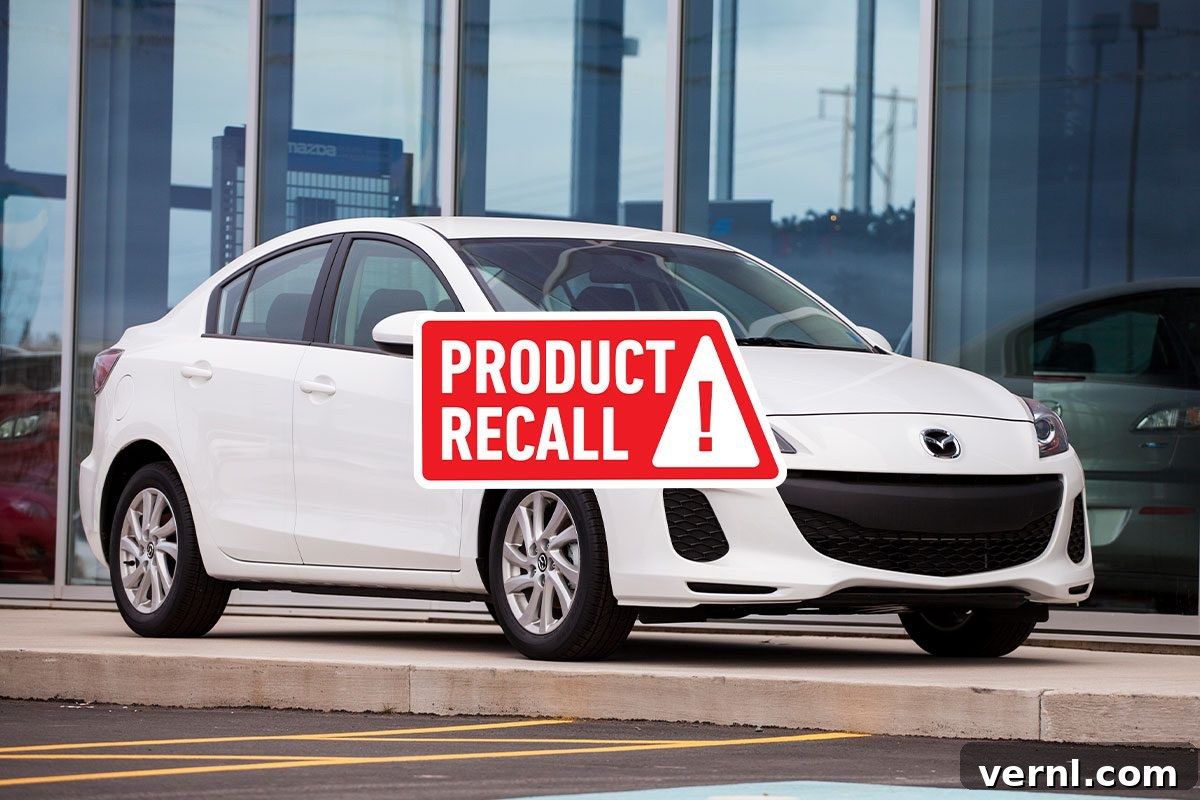
Automotive recalls are an unavoidable aspect of vehicle ownership, serving as a critical mechanism to uphold the safety and reliability of our cars. While some recalls might address minor issues, others, like the recent Mazda airbag recall, highlight serious safety concerns that demand immediate attention. For hundreds of thousands of Mazda owners, this latest recall involves a foundational safety feature: the airbags. The National Highway Traffic Safety Administration (NHTSA) has identified a significant problem with faulty airbags in numerous Mazda models, posing a direct and potentially life-threatening risk to drivers and passengers. It is imperative for owners to determine if their vehicle is affected and to understand the urgent steps required to remedy this critical safety issue.
Understanding Automotive Recalls: A Lifesaving Mechanism
Automotive recalls are formal notifications issued by vehicle manufacturers when a defect, whether in design or manufacturing, is discovered that poses an unreasonable risk to safety or fails to meet federal safety standards. These recalls are far more than mere inconveniences; they are vital safety interventions specifically designed to prevent accidents, injuries, and fatalities that could arise from the defect.
Regulatory bodies such as the NHTSA in the United States play a pivotal role in overseeing these recalls. Their mandate includes monitoring vehicle performance, investigating potential defects reported by consumers or identified through data analysis, and enforcing that manufacturers promptly identify problems, notify owners, and provide free remedies. The recall process typically begins when a pattern of failures or safety risks is confirmed. Once a defect is established, the manufacturer is legally obligated to initiate a recall, which involves notifying all registered owners, often through physical mail, and instructing authorized dealerships to perform the necessary repairs or replacements at no cost to the owner.
Ignoring a recall notice can have severe consequences, as a known defect remains unaddressed, potentially compromising the vehicle’s safety features and significantly increasing the risk of an accident or serious injury. The importance of timely action cannot be overstated. When a vehicle is recalled, it signifies that a component or system is not performing as intended, creating a potential hazard. Owners are strongly encouraged to regularly check for recalls associated with their Vehicle Identification Number (VIN) on the NHTSA website or their manufacturer’s official recall portals, even if they have not yet received a physical letter. This proactive approach ensures you stay informed and can act swiftly to protect yourself and your passengers.
Which Mazda Models Are Affected by the Airbag Recall?
This particular Mazda airbag recall is extensive, impacting a substantial number of vehicles across several popular models. Approximately 172,000 Mazda vehicles are potentially equipped with the faulty airbag components. Owners of the following Mazda models need to be especially vigilant and take immediate action:
- 2024 Mazda3
- 2025 Mazda3
- 2024 CX-30
- 2025 CX-30
If you own one of these listed models, it is crucial to recognize that your vehicle may be equipped with compromised airbag sensors. Mazda is scheduled to mail out official owner notification letters in late July 2025. These letters will provide specific instructions and further detailed information regarding the recall process. However, given the serious nature of this safety concern, waiting for a letter might not be the safest course of action. We highly recommend taking proactive steps to confirm if your vehicle is part of this critical recall immediately.
Until you have received confirmation that the issue in your vehicle has been resolved, exercising heightened diligence and adopting defensive driving practices are paramount. Airbags represent a primary layer of passive safety protection, meticulously engineered to cushion occupants during a collision. If these critical safety devices are compromised or fail to deploy, your vehicle’s ability to protect you and your passengers in the event of an accident is significantly diminished. Therefore, maintaining extra distance from other vehicles, being acutely aware of your surroundings, and avoiding any unnecessary risks on the road become even more vital.
The Critical Role of Airbags in Vehicle Safety Systems
Airbag systems are among the most sophisticated and indispensable safety features integrated into modern vehicles. Designed to deploy instantaneously upon detecting an impact, they provide a soft, protective cushion that minimizes the force of impact on occupants, thereby significantly reducing the risk of severe injury or fatality in a crash. Contemporary vehicles typically incorporate multiple airbags, strategically placed to protect different parts of the body. These include front airbags for the driver and front passenger, side airbags engineered to protect the torso, and curtain airbags that deploy along the side windows to shield occupants during side-impact collisions or rollovers.
The operation of these systems relies on a complex network of highly sensitive sensors that continuously monitor various parameters, such as crash severity, impact direction, and even occupant presence and seatbelt usage. When a collision occurs, these sensors rapidly transmit signals to a central electronic control unit (ECU) – often referred to as the Airbag Control Unit (ACU) or, in the case of Mazda, the Sophisticated Air Bag Sensor (SAS) unit. This unit then analyzes the data and, if necessary, triggers the inflation of the appropriate airbags within milliseconds. This entire deployment process happens faster than the blink of an eye, absorbing kinetic energy and preventing occupants from striking hard interior surfaces, which could otherwise lead to devastating injuries.
The failure of an airbag system, therefore, carries dire consequences. In the event of a crash, non-deploying airbags leave occupants perilously vulnerable to direct impacts with the steering wheel, dashboard, windshield, or the vehicle’s side structures. Such impacts can result in severe head injuries, concussions, debilitating chest trauma, broken bones, internal organ damage, and other life-altering injuries that airbags are specifically engineered to prevent. This profound risk underscores why the Mazda airbag recall, addressing a potential failure in this fundamental safety system, is a matter of utmost urgency and should be treated with the highest priority by affected owners.
Why Is Mazda Recalling So Many Vehicles? A Deep Dive into the Technical Flaw
The root cause of this widespread Mazda recall lies within a critical component known as the Sophisticated Air Bag Sensor (SAS) units installed in the affected Mazda3 and CX-30 models. According to the official NHTSA recall brief, the problem arises when these SAS units “may set an error code and deactivate the airbags due to a low battery condition.” This technical explanation points to a significant and potentially dangerous vulnerability in the airbag system’s overall reliability.
Understanding the Sophisticated Air Bag Sensor (SAS) Unit
The SAS unit is essentially the central intelligence, or the “brain,” of the vehicle’s entire airbag system. It is an advanced electronic control module that constantly monitors and processes data from a multitude of sensors strategically placed around the vehicle. These sensors collect crucial real-time information, including vehicle speed, deceleration rates during sudden braking or impact, the direction of a crash, and even the presence of occupants and their seatbelt status. Based on this complex stream of data, the SAS unit’s primary function is to accurately determine whether a crash is occurring, assess its severity, and decide which specific airbags need to be deployed to offer optimal protection to occupants.
The “Low Battery Condition” Issue Explained
The defect specifically points to a “low battery condition” that can lead the SAS unit to set an error code and subsequently deactivate the entire airbag system. This implies that the SAS unit, under certain power conditions or voltage fluctuations, may incorrectly interpret a reduced voltage as a critical system fault. In response, it might shut down the airbag system as a supposed precautionary measure. While preventing unintended airbag deployment is a safety feature, in this specific scenario, it erroneously deactivates the system, rendering the airbags completely useless precisely when they are most needed during a genuine crash event.
A “low battery condition” that triggers this defect could stem from various factors:
- Vehicle’s Main Battery Voltage: The vehicle’s main 12-volt battery might occasionally dip below an optimal voltage threshold, perhaps due to infrequent driving, prolonged periods of inactivity, or minor issues with the vehicle’s charging system.
- SAS Unit’s Internal Power Management: There could be a specific flaw within the SAS unit’s internal power management circuit itself, causing it to misread normal operating voltage levels as critically low, even if the main battery is otherwise healthy.
- Intermittent Power Fluctuations: Momentary or intermittent power fluctuations within the vehicle’s electrical system could disrupt the SAS unit’s stable operation, thereby triggering the error code and deactivation.
The critical consequence, as explicitly warned by the NHTSA, is that “airbags that do not deploy in the event of a crash increase the risk of injury.” This is not merely a theoretical risk; it poses a direct and tangible threat to the safety and well-being of anyone occupying the vehicle. The fundamental peace of mind that comes with relying on modern vehicle safety features is severely undermined when a core system like airbags cannot be trusted to function reliably in an emergency situation.
Your Action Plan: How Mazda Will Remedy the Airbag Problem
Mazda is committed to resolving this serious safety issue promptly and effectively. According to the manufacturer, the remedy for all affected vehicles will involve a straightforward yet critical procedure performed by authorized Mazda dealerships. The process will be:
- Software Reprogramming: Dealers will “reprogram the SAS unit with improved software.” This indicates that the core of the issue is primarily a software glitch where the SAS unit misinterprets specific voltage conditions. The updated software is specifically designed to correct this logic, ensuring the SAS unit functions correctly and maintains activation even during minor or acceptable voltage fluctuations, thereby preventing erroneous deactivation of the airbag system.
- Unit Replacement (If Necessary): In some instances, if software reprogramming alone is not sufficient to fully resolve the issue, or if the SAS unit is determined to be physically faulty after inspection, dealers may proceed to “replace the unit, free of charge.” This ensures that if the hardware itself is contributing to the problem, it will be fully rectified to restore optimal functionality.
- Completely Free of Charge: Mazda emphatically states that all repairs related to this recall, whether involving software reprogramming or complete unit replacement, will be performed “free of charge” to the owner. This commitment includes all necessary parts and labor, ensuring that safety is not compromised by financial concerns for vehicle owners.
What You Need to Do:
Taking prompt and decisive action is crucial for your safety. Follow these steps:
- Do Not Wait for the Letter: While official notification letters are slated for mailing in late July 2025, we strongly advise against waiting. Visit the official NHTSA recall website (nhtsa.gov/recalls) and use your Vehicle Identification Number (VIN) to immediately check if your specific Mazda is included in this recall. This is the quickest and most reliable way to confirm your vehicle’s status.
- Contact Your Mazda Dealership: As soon as you confirm your vehicle is affected, contact your nearest authorized Mazda dealership without any delay. Clearly explain that your vehicle is subject to the airbag recall. For your reference, Mazda’s internal recall number for this issue is 7525E, and NHTSA’s associated recall number is 25V357000.
- Schedule Your Repair Promptly: Make it a top priority to schedule your repair appointment as soon as possible. Dealerships are typically well-equipped and prepared to handle recall services efficiently.
- Minimize Vehicle Use: Until the recall repair is fully completed, it is prudent to minimize your use of the affected vehicle. If driving is absolutely unavoidable, practice extreme caution, maintain heightened awareness, and employ defensive driving techniques. Remember, you might be operating a vehicle with a compromised primary safety system.
- Keep Records: Retain all documentation related to the recall, including appointment confirmations, repair invoices, and any communications, for your personal records and future reference.
Staying Informed and Taking Control: Essential Resources for Owners
Navigating a vehicle recall can sometimes feel overwhelming, but a variety of reliable resources are readily available to help you stay informed and ensure your safety. Your proactive engagement is fundamental to resolving this issue quickly and effectively, restoring full confidence in your vehicle’s safety features.
For any further questions you may have, to confirm your vehicle’s specific status, or to conduct more in-depth research about this critical safety concern, do not hesitate to reach out to the following:
- NHTSA Vehicle Safety Hotline: You can directly contact the National Highway Traffic Safety Administration by calling 888-327-4236. This hotline is an invaluable resource, providing comprehensive information regarding vehicle safety recalls, including specific details about this Mazda airbag issue.
- NHTSA Recall Number: For this specific Mazda airbag recall, the NHTSA’s official reference number is 25V357000. Providing this number when you call or reference it online can help to significantly expedite your inquiry and ensure you receive accurate information.
- Mazda’s Recall Number: Mazda’s internal recall number for this particular issue is 7525E. Use this number when contacting your authorized Mazda dealership or Mazda customer service to ensure they have the correct recall information readily available.
- NHTSA Website: The official NHTSA recalls website is an essential and powerful tool for vehicle owners. By simply entering your vehicle’s unique 17-digit Vehicle Identification Number (VIN), you can immediately check for any open recalls that are affecting your specific vehicle, including this critical airbag issue. It is highly recommended to check this site regularly, especially if you have not yet received official notification through postal mail.
Remember, staying informed is the crucial first step towards ensuring your safety and the safety of your passengers. Vehicle manufacturers are legally obliged to fix recall issues free of charge, and your fundamental right to a safe vehicle should never be compromised. Do not delay in addressing this significant and urgent safety concern. Your peace of mind and safety on the road depend on it.
The Broader Picture: Ensuring Your Vehicle’s Overall Safety
While addressing a specific recall like the Mazda airbag issue is absolutely paramount, it also serves as an important and timely reminder of the broader responsibility that comes with vehicle ownership when it pertains to safety. Automotive safety is not a one-time fix but rather a continuous process that extends significantly beyond merely responding to recall notices. Regular vehicle maintenance, strict adherence to recommended service schedules, and proactive safety checks are all integral components of ensuring your vehicle remains safe, reliable, and roadworthy for many years to come.
Always ensure that all seatbelts in your vehicle are functioning correctly and are properly used by every occupant on every journey. Regularly check your tire pressure and assess tire tread depth to ensure optimal traction and handling. Verify that all exterior lights, including headlights, taillights, brake lights, and turn signals, are operational. Periodically check fluid levels, such as engine oil, brake fluid, and coolant, to prevent mechanical failures. These routine checks, when combined with your prompt attention to any recall notices, collectively create a comprehensive approach to vehicle safety that diligently protects you, your loved ones, and other road users.
The Mazda airbag recall is indeed a serious matter, but with your prompt action, utilizing the available resources, affected owners can swiftly achieve peace of mind, knowing their vehicles will be restored to their intended high safety standards. Prioritize this essential repair and continue to drive safely and confidently.
Source
Air Bags May Not Deploy in a Crash, National Highway Traffic Safety Administration, 2025.
Related Safety Articles
- Do You Know What That Little Button on Your Seat Belt Is For?
- What Those Lines on Your Backup Camera Really Tell You
- Here’s What The Small Panel On Your Car’s Front Bumper Is For