Inline Exhaust Fan: A Comprehensive Guide for Optimal Bathroom Ventilation
Are you considering improving the ventilation in your bathrooms? Perhaps you have two bathrooms that are close together and are looking for an efficient solution. While connecting a new exhaust duct to an existing one isn’t recommended due to potential airflow issues and building code violations, an inline exhaust fan presents an excellent alternative. This guide will delve into the world of inline exhaust fans, covering their benefits, installation considerations, and how to choose the right one for your needs.
This comprehensive guide draws upon expert insights from Matthew Labrecque of All Air HVAC, Jay Ryan of Boulanger’s Plumbing and Heating, and Peter Glover of Glover’s Plumbing. Their expertise will provide you with valuable tips and information on this versatile exhaust fan option.
What is an Inline Exhaust Fan?
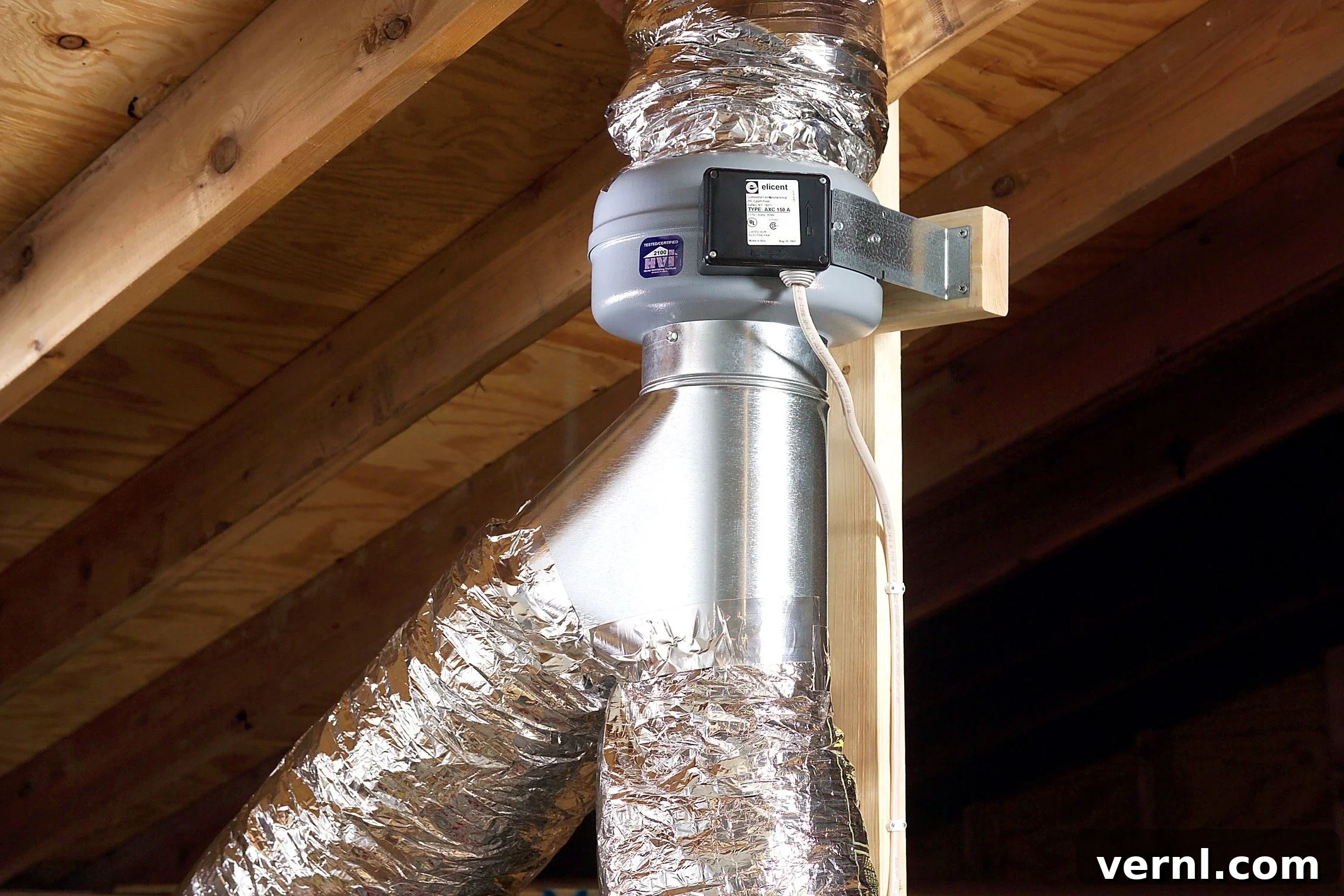
An inline, or remote, exhaust fan is a type of ventilation fan installed within the ductwork of your home. Unlike standard bathroom fans that are mounted directly in the bathroom, inline fans are typically located in the attic or another remote location. This unique positioning offers several advantages, especially when venting multiple bathrooms.
A common application for these fans is to effectively ventilate two bathrooms simultaneously. The system involves installing a plastic exhaust grille in the ceiling of each bathroom. Ducts connect these grilles to a “Y” connector, which then attaches to the inline fan. A single exhaust duct then carries the air out through the roof. Each bathroom retains its own independent switch for operation.
Beyond bathrooms, inline exhaust fans find application in other areas of the home. They can be utilized to move warm air throughout the house, such as from a wood stove to a garage or basement. They can also be used for radon gas removal or for venting a range hood in the kitchen.
Inline Exhaust Fans vs. Standard Bathroom Exhaust Fans
Choosing the right ventilation system for your bathrooms involves comparing the pros and cons of inline exhaust fans and standard bathroom exhaust fans. Both systems effectively remove humidity and odors, but each offers a unique set of advantages and disadvantages.
Inline Exhaust Fan: Pros and Cons
Pros:
- Quiet Operation: Because the fan unit is located in the attic, inline exhaust fans operate with significantly less noise than standard bathroom fans. This can greatly enhance the comfort of your bathrooms.
- Enhanced Performance: Inline fans are typically more powerful and are better suited for longer duct runs, maintaining their CFM (cubic feet per minute) air extraction rating over longer distances.
- Efficient Ductwork: Inline systems often require less ductwork and fewer holes in the roof compared to separate vent hoods for each bathroom.
Cons:
- Installation Requirements: Inline fans require accessible attic space for installation, which might be a limitation for some homes.
- Higher Costs: The material and installation costs associated with an inline exhaust fan system are generally higher than those of a standard bathroom exhaust fan.
- Limited Customization: Unlike standard bathroom fans, inline fans typically lack the added features like room lights, night lights, or humidity sensors.
Standard Bathroom Exhaust Fan: Pros and Cons
Pros:
- Lower Cost: Standard bathroom exhaust fans are typically less expensive to purchase and install.
- Ease of Installation: These fans are easier to install yourself or cost less if you hire a professional.
- Additional Features: They come with a wider array of optional features such as integrated lighting, night lights, and humidity sensors, providing added convenience and functionality.
Cons:
- Noisier Operation: Standard bathroom fans tend to be louder during operation compared to inline fans.
- Potentially Weaker Performance: Standard fans may have weaker motors and less powerful suction.
- Individual Ductwork: Each unit requires its own ductwork and an outside vent hood, which can be challenging in homes with multiple bathrooms.
How to Use an Inline Exhaust Fan to Vent More Than One Bathroom
Installing an inline exhaust fan to vent multiple bathrooms requires a methodical approach. Here’s a step-by-step guide:
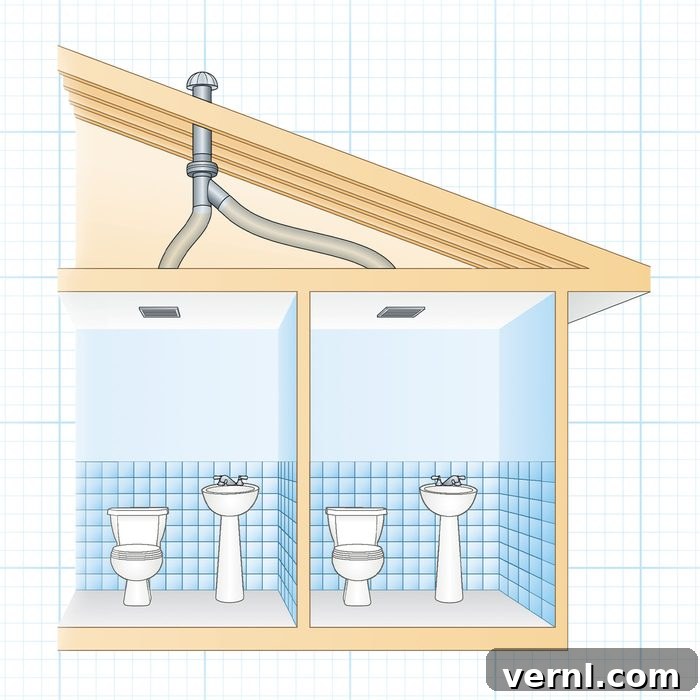
- Install Grilles: Begin by installing plastic exhaust grilles in the ceiling of each bathroom.
- Run Ductwork: Connect 4-inch flexible ductwork from each grille to the inline fan.
- Connect to Y Connector: Attach each duct to a “Y” connector, ensuring a secure fit.
- Secure to Fan: Fasten the “Y” connector to the inline fan.
- Install Exhaust Duct: Run a single 6-inch duct from the fan, through the roof, to the vent hood.
- Wiring: Some inline fans have plugs, while others are hard-wired. Ensure each bathroom is wired to operate independent power switches.
How to Calculate the Size of the Inline Exhaust Fan You Need
Selecting the right size inline exhaust fan is crucial for effective ventilation. Follow these steps to determine the appropriate CFM rating:
- Measure Bathrooms: Measure the square footage (length x width) of each bathroom and add these numbers together for the total square footage.
- Choose Fan: When purchasing an inline fan, look for a model with a CFM rating slightly higher than the total square footage of the bathrooms.
For example, if the combined square footage is 130 sq. ft., select a fan with a CFM rating between 140 and 160. As Jay Ryan points out, the goal is to choose a fan that will effectively keep humidity levels down. He also notes that some models offer adjustable CFM settings to better match the specific ventilation needs of your bathrooms.
FAQs
Can you vent a bathroom and a range hood together?
No, Peter Glover advises against combining these two ventilation systems. Kitchen vents are considered combustible and must have their own separate exhaust system.
How much does it cost to install an inline exhaust fan?
Expect to invest at least $2,500 to $3,000 for the installation of an inline exhaust fan system.
Can inline exhaust fans be too big?
Yes, choosing an oversized fan can lead to higher operational costs and potentially expel warm air from your living space. This could also induce a vacuum effect, drawing in outside air and potentially affecting the home’s comfort and energy efficiency.
About the Experts
- Matthew Labrecque: The owner of All Air HVAC, located in South Hadley, Massachusetts, brings over 18 years of industry experience. His company specializes in HVAC installations, repairs, ductwork, and air purification systems.
- Peter Glover: As the owner of Glover’s Plumbing in Kenner, Louisiana, Peter is a Master Plumber with over 15 years of experience in residential plumbing.
- Jay Ryan: Jay Ryan is an HVAC project manager for Boulanger’s Plumbing and Heating in Easthampton, Massachusetts. He holds a Master Plumber License and has been with Boulanger’s since 2001.