
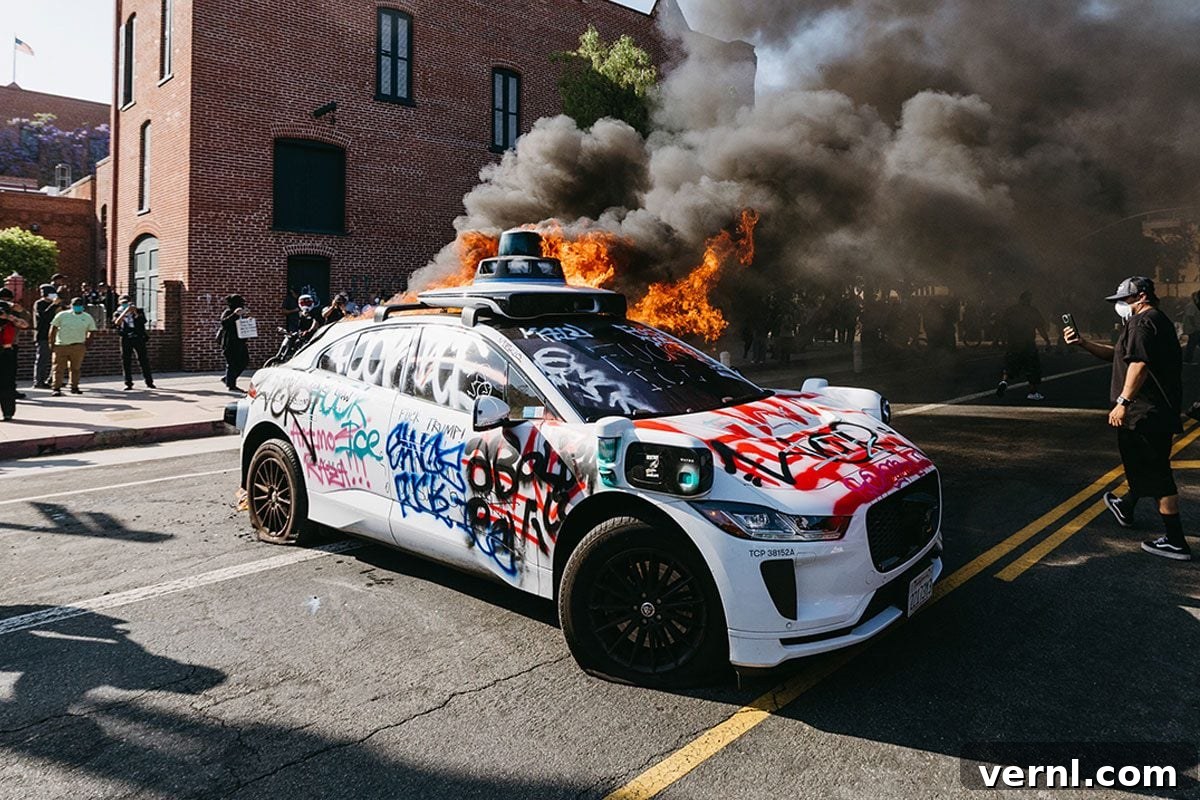
In recent times, news headlines have often highlighted the increasing presence and sometimes contentious reception of self-driving cars in major cities. From promising breakthroughs to public skepticism and even outright protests, autonomous vehicles (AVs) are rapidly reshaping our understanding of urban mobility. If you’ve been following news coverage of recent anti-ICE protests in Los Angeles, for instance, you might have heard about instances where Waymo vehicles became targets of frustration. But for many, especially those outside the select few cities where they’ve been rolled out, the company and its technology remain somewhat of a mystery. This comprehensive guide aims to demystify Waymo, delve into the sophisticated technology powering its driverless vehicles, and critically examine the multifaceted controversies that continue to surround them as they aim to redefine transportation.
What Exactly is Waymo? Pioneering the Future of Autonomous Driving
Waymo stands as the rebranded successor to Google’s ambitious self-driving car project, a venture initiated with the vision of making roads safer and transportation more accessible through cutting-edge artificial intelligence and robotics. The company positions its sophisticated cars and proprietary self-driving software as embodying “The World’s Most Experienced Driver.” This bold claim is rooted in Waymo’s extensive operational history, accumulating millions of real-world miles on public roads and billions more in rigorous simulation, an unparalleled database of driving experience designed to prepare its vehicles for nearly every conceivable road scenario.
According to their official website, Waymo distinguishes itself significantly from other companies in the burgeoning autonomous vehicle sector. While many competitors offer advanced “driver-assist” technologies, such as adaptive cruise control or lane-keeping assist, these systems still fundamentally require a human driver to remain attentive behind the wheel, ready to intervene and take over control at any moment the car encounters a situation it cannot confidently handle. These systems, often categorized as Level 2 or Level 3 autonomy, enhance human driving but do not replace it.
Waymo, on the other hand, operates with a higher level of autonomy, typically classified as Level 4. This means its vehicles are equipped with technology that is designed to be fully autonomous within a defined operational design domain (ODD) – specific geographical areas and environmental conditions. From the moment a passenger is picked up to their final destination, Waymo’s autonomous technology is always in complete control, negating the need for human intervention. The company proudly asserts that its “passengers don’t even need to know how to drive. They can sit in the back seat, relax, and enjoy the ride with the Waymo Driver getting them to their destination safely.” This promise of a truly driverless experience marks a significant departure from traditional vehicle operation and even from many advanced driver-assist systems.
The core of Waymo’s technology lies in its sophisticated sensor suite and AI-powered “Driver.” Each Waymo vehicle is outfitted with an array of Lidar, radar, and camera systems that work in concert to create a comprehensive, 360-degree understanding of its surroundings. Lidar sensors use lasers to build highly detailed 3D maps of the environment, while radar excels at detecting the speed and distance of other objects, particularly in adverse weather conditions. Multiple cameras provide high-resolution visual data, crucial for identifying traffic lights, signs, pedestrians, and cyclists. This fusion of data feeds into Waymo’s proprietary AI software, which then predicts the behavior of other road users, plans optimal routes, and executes driving maneuvers in real-time, effectively simulating and surpassing human driving capabilities within its operational parameters.
Waymo is currently being strategically rolled out across the country as a viable rideshare option in cities like Phoenix, San Francisco, and Los Angeles. As its services expand and become more widespread, the company openly expresses its ambition to directly compete with established rideshare giants such as Uber and Lyft. This expansion represents not just a technological shift but a fundamental challenge to the existing paradigms of personal transportation and urban mobility.
Why Does Waymo Stir Such Controversy? A Look at Key Concerns

The vision of a future dominated by driverless vehicles, while promising increased safety and efficiency, also brings with it a complex array of challenges and widespread concerns. When you order a Waymo, the experience is undeniably futuristic: a driverless vehicle arrives, and you’re instructed not to touch the steering wheel, but rather to sit back and trust the software to perform all the tasks traditionally handled by a human chauffeur, taxi driver, or Uber/Lyft operator. Unsurprisingly, this radical shift has generated considerable public debate and apprehension. Several key concerns stand out as central to the controversy surrounding Waymo and the broader autonomous vehicle industry.
Safety Concerns: Navigating the Uncharted Waters of AI Driving
One of the foremost and most pressing concerns surrounding self-driving cars is undoubtedly safety. Despite billions of miles logged in simulation and millions on public roads, the concept of a vehicle operating without human oversight evokes a primal sense of caution. Indeed, there have already been numerous reports of Waymo vehicles encountering incidents and even crashes. These incidents, though often minor, fuel public skepticism and highlight the complex challenges inherent in deploying fully autonomous systems in unpredictable real-world environments.
A notable example that garnered significant media attention occurred recently: CNN reported that Waymo had to recall nearly 700 of its vehicles just last year. This recall was necessitated by software upgrades designed to prevent the cars from crashing into telephone poles or similar fixed objects. The particular incident that triggered this recall reportedly occurred despite the vehicle being equipped with its full complement of advanced cameras and sensors, underscoring that even the most sophisticated technology can encounter unexpected limitations or programming flaws in novel situations. Critics often point to these events as evidence that the technology, while advanced, may not yet be robust enough for widespread, unmonitored deployment, especially in the chaotic and nuanced environments of urban traffic.
The debate surrounding safety also extends to the complexity of assigning fault in autonomous vehicle accidents. Is the software to blame? Were the sensors obstructed? Was it an unpredictable human driver or pedestrian error that the AI could not anticipate? These questions complicate legal and insurance frameworks, adding another layer of uncertainty. Public trust is paramount for the widespread adoption of AVs, and every incident, regardless of severity, can erode that trust, making transparent reporting and continuous improvement essential.
Privacy Concerns: The All-Seeing Eye of the Autonomous Vehicle
Beyond the immediate physical safety, another significant concern revolves around the extensive array of cameras and sensors with which these vehicles are equipped, leading to substantial privacy implications. While these sensors are crucial for the car’s navigation and decision-making, they are also constantly collecting vast amounts of data about the vehicle’s surroundings. NBC News has reported on the growing backlash surrounding “Waymo’s collection of street data through its cameras and sensors.”
This data collection includes not just road conditions and traffic flow but potentially also images of pedestrians, cyclists, private property, and even identifiable individuals. The sheer volume and granularity of this information raise questions about who owns this data, how it is stored, who can access it, and for what purposes it might eventually be used. Concerns range from the potential for commercial exploitation to surveillance capabilities, and even the risk of data breaches that could expose sensitive personal information or reveal patterns of movement and behavior.
In response to calls from prominent figures, including California lawmakers, requesting more comprehensive data from autonomous vehicle companies—ostensibly to evaluate their safety performance—Waymo has stated that it reports more on-road data than most other vehicles operating today. While this might address transparency in some respects, it simultaneously underscores the enormous scale of data collection by these vehicles and perpetuates the debate over privacy rights in an increasingly connected and automated world. Establishing clear regulations and ethical guidelines for data collection, retention, and usage by autonomous vehicles remains a critical challenge for policymakers globally.
Economic Disruption: The Specter of Job Displacement
The economic ramifications of widespread autonomous vehicle adoption represent another profound area of concern, particularly the potential for significant job displacement. A prevalent fear is that Waymo, alongside other AV companies, will do to the existing rideshare and taxi industries what Uber and Lyft did to traditional taxi services: effectively push them out or dramatically reduce their viability. The rise of app-based rideshares led to immense pressure on the established taxi industry, exemplified by the deep dive conducted by the LAist into the effects of rideshare companies. They cited Yellow Cab’s 2016 bankruptcy in San Francisco, noting that “Yellow Cab had around 500 medallions, which the city sold for $250,000 apiece. The company ended up selling for around $810,000, a little more than the sticker price for just three medallions.” This stark example illustrates how quickly and severely an established industry can be disrupted by new technology and business models.
If this trend of disruption repeats itself with driverless vehicles, many fear a far more drastic wave of job losses. The complete elimination of human drivers from the equation means eliminating millions of jobs currently held by taxi drivers, rideshare operators, and potentially even long-haul truck drivers and delivery personnel in the future. These are jobs that, in many cases, are already precarious and often underpaid, forming a crucial part of the gig economy and broader labor market. The socio-economic impact of such widespread unemployment could be devastating, raising questions about governmental responsibility, social safety nets, and the need for comprehensive reskilling programs.
Proponents of autonomous vehicles argue that while some jobs may be lost, new ones will be created in areas like AV manufacturing, maintenance, fleet management, and software development. However, the scale and nature of these new jobs may not directly compensate for the loss of driving-related employment, particularly for those with limited access to specialized training. The debate over automation’s impact on the workforce is not new, but autonomous vehicles bring it to the forefront with unprecedented clarity, forcing societies to grapple with the ethical and economic responsibilities of technological advancement.
The Broader Impact: Waymo’s Role in a Changing World
While the controversies surrounding Waymo and autonomous vehicles are substantial, it’s also important to acknowledge the potential positive impacts they promise. Advocates point to the potential for significantly reduced traffic accidents, as AI drivers are not subject to fatigue, distraction, or impairment. This could save countless lives and reduce injuries globally. Furthermore, AVs could lead to more efficient traffic flow, reduced congestion, and lower carbon emissions if widely adopted and powered by renewable energy. They also offer increased mobility for individuals who cannot drive due to age, disability, or lack of licensing, thereby enhancing accessibility and independence for underserved populations.
However, the journey to realizing these benefits while mitigating the risks is complex and fraught with challenges. The incidents in Los Angeles, where Waymo vehicles were targeted during protests, underscore a broader public anxiety that extends beyond immediate safety or privacy concerns. It touches upon issues of control, the perceived dehumanization of public services, and the rapid pace of technological change that can leave communities feeling unprepared or disenfranchised.
Ultimately, Waymo represents not just a company or a technology, but a pivotal moment in the evolution of transportation and society itself. It embodies the dual nature of innovation: immense promise intertwined with significant ethical, safety, and socio-economic dilemmas. The widespread acceptance and successful integration of autonomous vehicles will depend not only on technological perfection but also on robust regulatory frameworks, transparent corporate practices, and a societal consensus forged through open dialogue and careful consideration of all potential impacts. The conversation around Waymo is far from over; it is just beginning to shape our collective future on the road.
Sources
- NBC News: Why Waymo cars became sitting ducks during the L.A. protests (2025)
- Waymo: Self Driving Car Technology
- CNN Business: Waymo recalls driverless cars to make them less likely to drive into poles (2024)
- Congressman Kevin Mullin: Bay Area Lawmakers Want Cruise and Waymo To Turn Over Safety Data (2023)
- LAist: The human cost of Uber and Lyft: Life in the dying taxi industry (2018)