
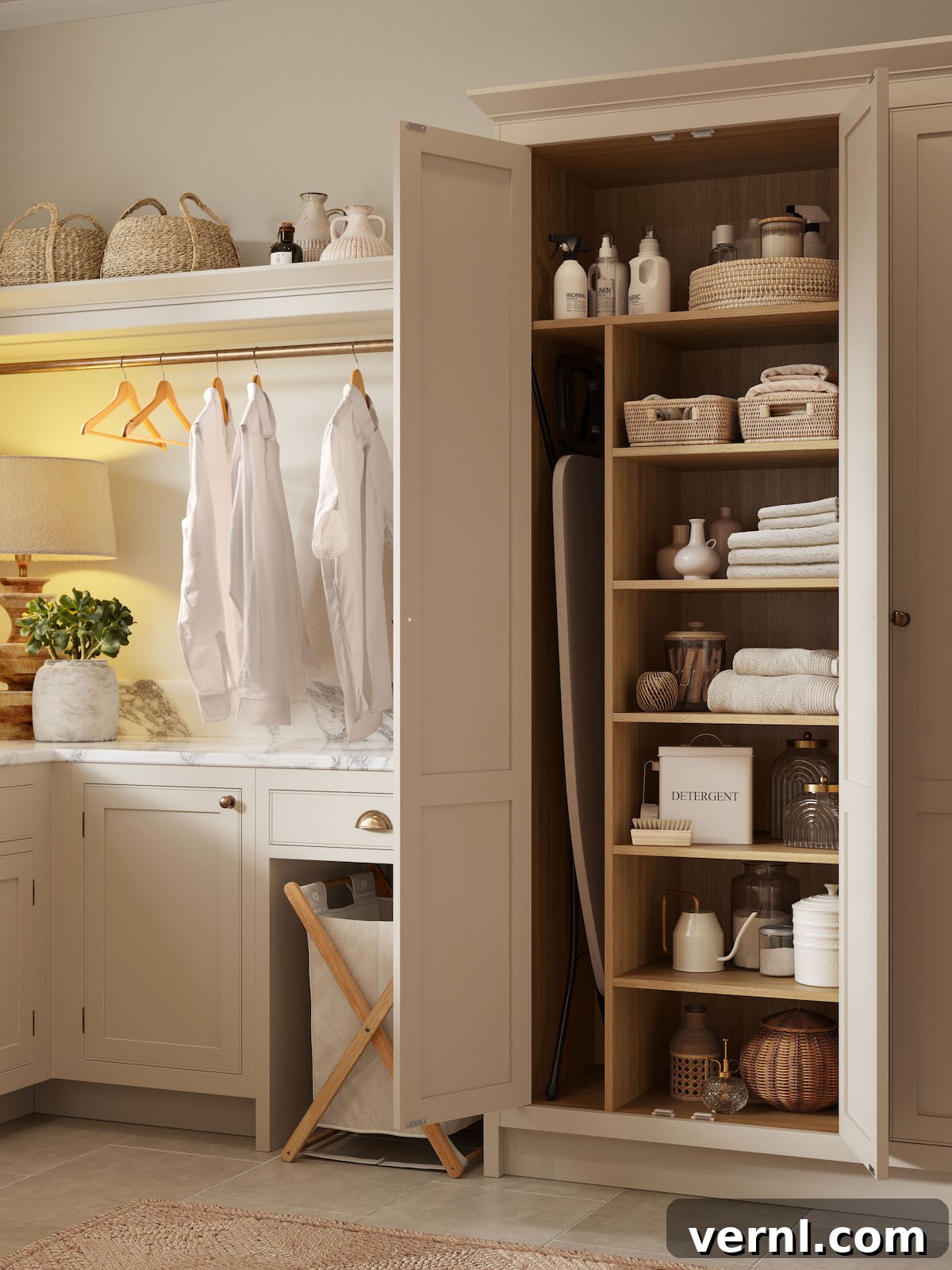
Have you ever wished you didn’t have to carry heavy laundry baskets up and down the stairs? I have. In our previous home we had an upstairs laundry room and it made everyday tasks so much easier — no balancing loads on the stairs and folding and storing clothes right where they’re used. If I had the chance, I’d choose that layout again.
Putting the washing machine and dryer close to the bedrooms where most laundry accumulates is an obvious, practical choice. It’s no surprise this approach is becoming more common. Upstairs laundry rooms are a growing trend in modern homes because they combine convenience with smart use of space.
Below are the main reasons this idea is gaining traction and practical tips on how to make it work in your home.
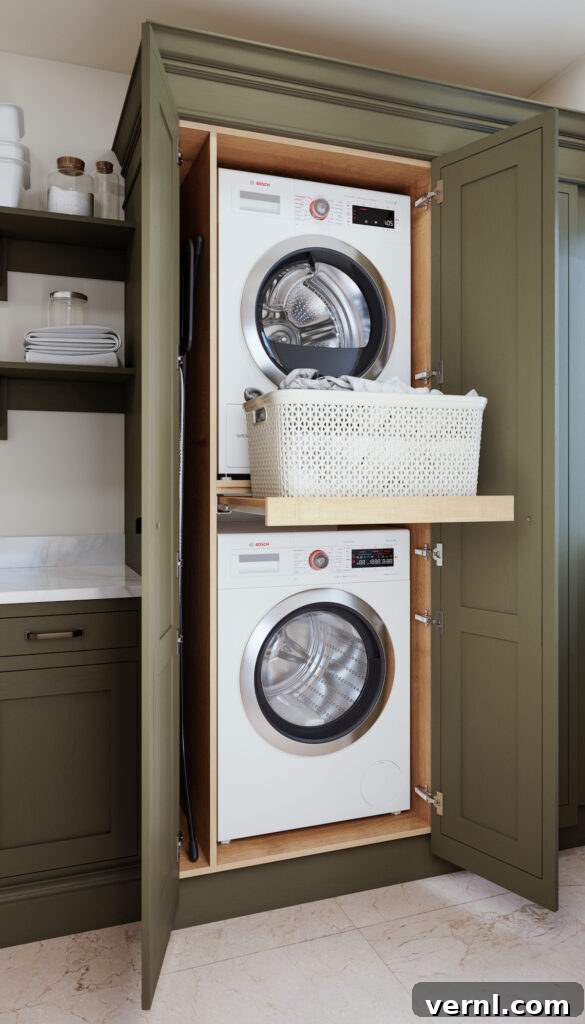
Traditionally, utility rooms have been located downstairs, often near the kitchen or back door and tucked out of sight. Home design is evolving: moving laundry upstairs places machines, storage, and folding areas closer to bedrooms and bathrooms where clothes are generated and stored. This reduces unnecessary carrying and streamlines daily routines.
Sinead Trainor, Kitchen Category Manager at LochAnna Kitchens, sums it up well:
“Relocating the laundry space upstairs can eliminate needless trips with laundry baskets, saving time and effort. It also removes the need for visible bedroom hampers, freeing up floor space and making rooms feel neater.”
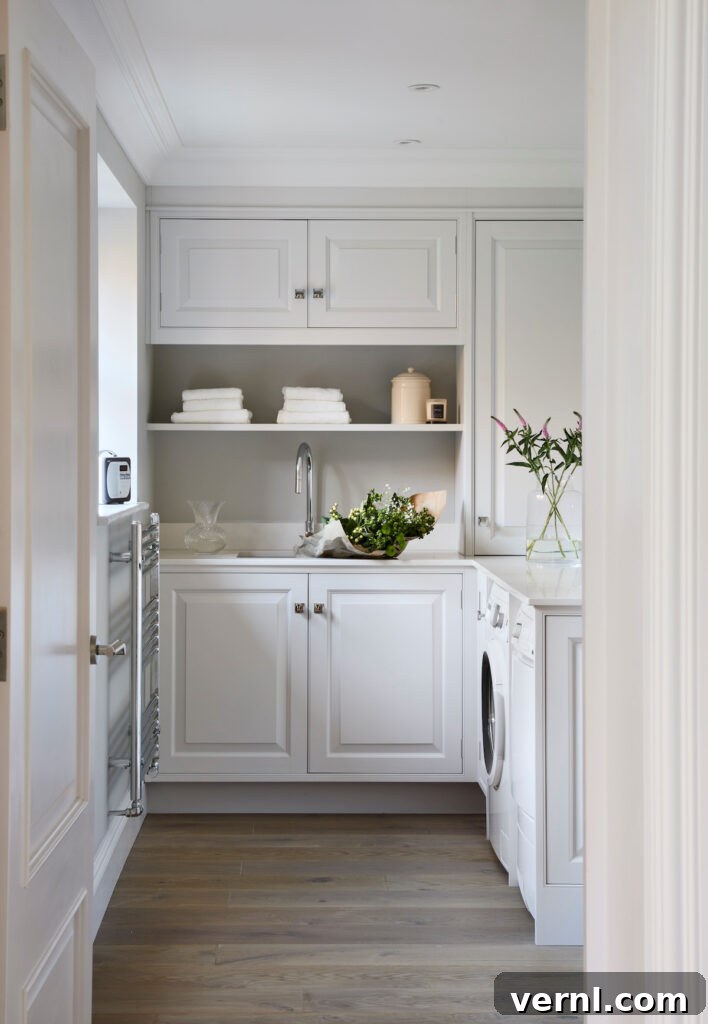
Why Are Upstairs Laundry Rooms Gaining Popularity?
Several practical reasons explain the surge in interest for upstairs laundry rooms:
- Convenience: Locating laundry near bedrooms and bathrooms cuts down on trips and heavy lifting.
- Space optimisation: Underused en-suites, box rooms, or large bathrooms can be repurposed into efficient laundry zones.
- Seamless design: Thoughtful planning allows an upstairs laundry to blend with the home’s interior, and installing it near existing plumbing can simplify construction.
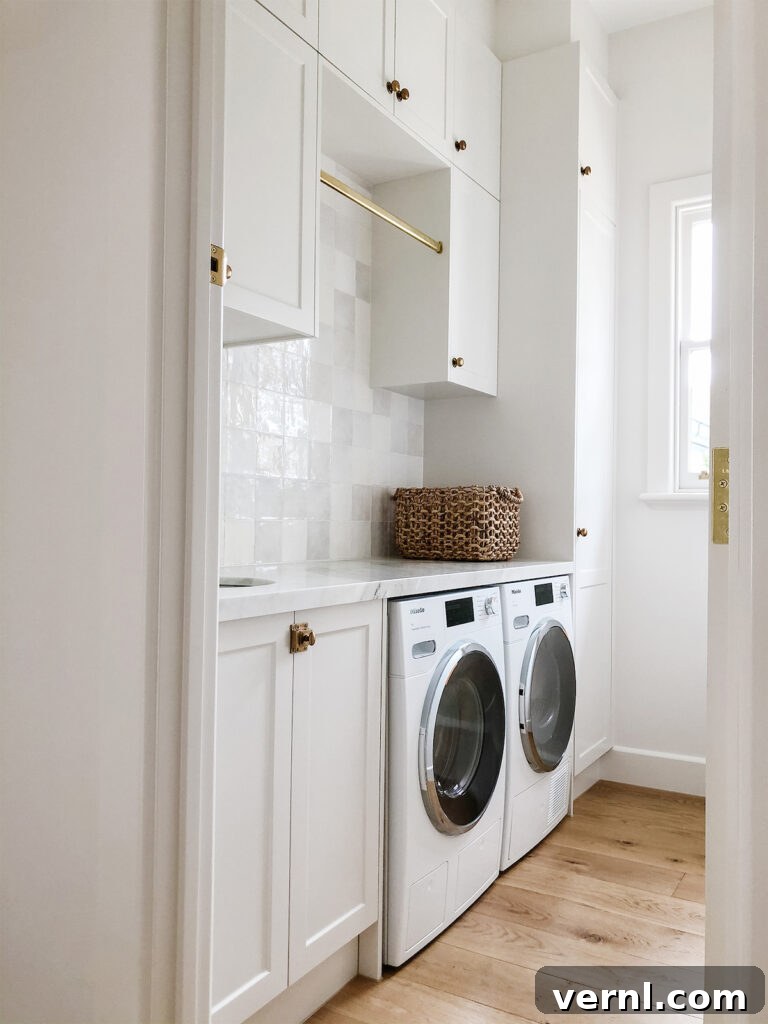
Key Considerations for Installing a Washing Machine Upstairs
If you’re considering an upstairs laundry, pay attention to these practical factors to ensure the space performs well:
- Plumbing: Installing near existing bathroom plumbing reduces the need for extensive pipework and lowers costs.
- Soundproofing: Machines can be loud. Use insulation, soundproofing panels, or select quiet models to minimise disturbance.
- Ventilation: Good ventilation prevents moisture buildup. Consider a vented dryer, an extraction fan, or a dehumidifier.
- Safety: Fit water leak detectors and locate appliances on raised platforms or trays to reduce potential water damage.
- Accessibility: Design with easy-to-reach shelving and storage to keep detergents, ironing equipment, and laundry supplies organised.
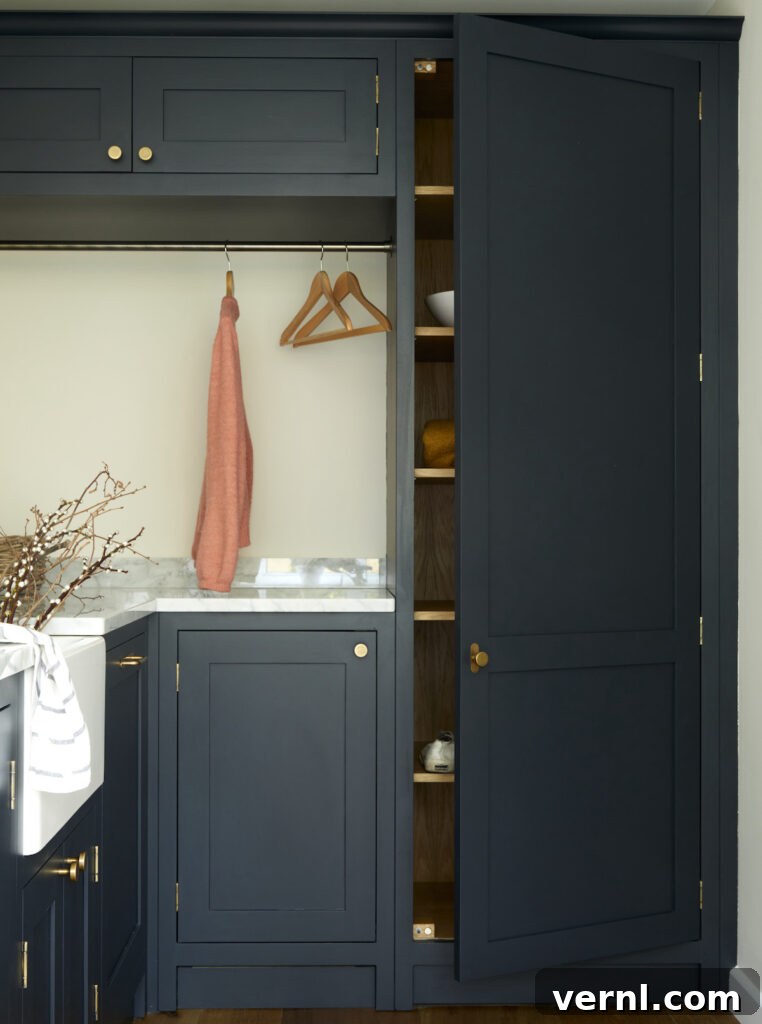
The Pros and Cons of an Upstairs Laundry Room
Pros
- Time-saving: Reduces the effort of moving loads between floors.
- Space efficiency: Turns small or unused rooms into functional areas.
- Aesthetic improvement: Keeps bedrooms free of overflowing hampers and creates a tidier appearance.
- Everyday convenience: Sorting, washing and storing clothes becomes quicker when done near bedrooms.
Cons
- Noise: Machines may be disruptive if the laundry room is adjacent to bedrooms, especially at night.
- Renovation costs: Moving appliances upstairs can require additional plumbing, electrical work and possible structural updates.
- Moisture risk: Without proper ventilation, damp can damage walls and flooring.
- Small footprints: Upper-floor rooms are often compact, so clever storage and layout are essential.
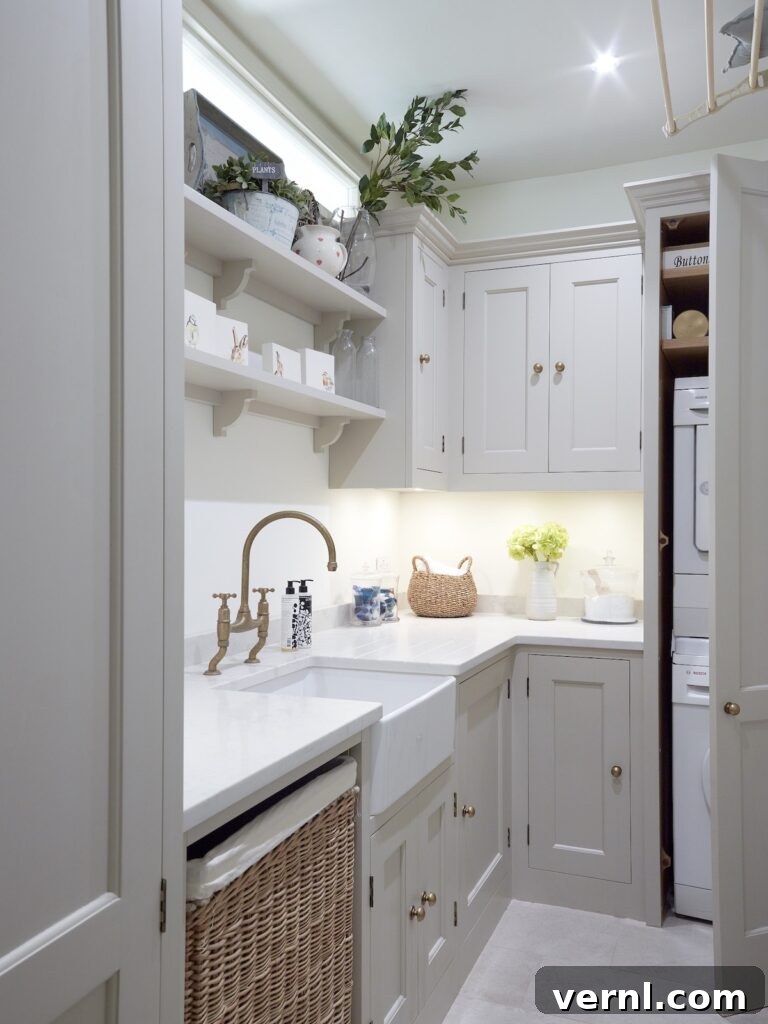
How to Design an Upstairs Laundry Room
Designing an upstairs laundry room successfully comes down to planning and choosing the right components. Consider these practical design tips:
- Stack appliances: Stackable washer-dryer units free up floor space for storage or a folding area.
- Incorporate storage: Cabinets, shelving and pull-out hampers keep supplies organised and out of sight.
- Choose durable flooring: Use water-resistant materials like tile or vinyl to protect against spills and leaks.
- Anti-vibration mats: These reduce noise and movement from machines, protecting floors and reducing disturbance.
- Add a folding station: A small countertop makes folding and sorting easier and faster.
- Prioritise lighting: Bright, task-focused lighting makes the space feel larger and helps with sorting and folding.
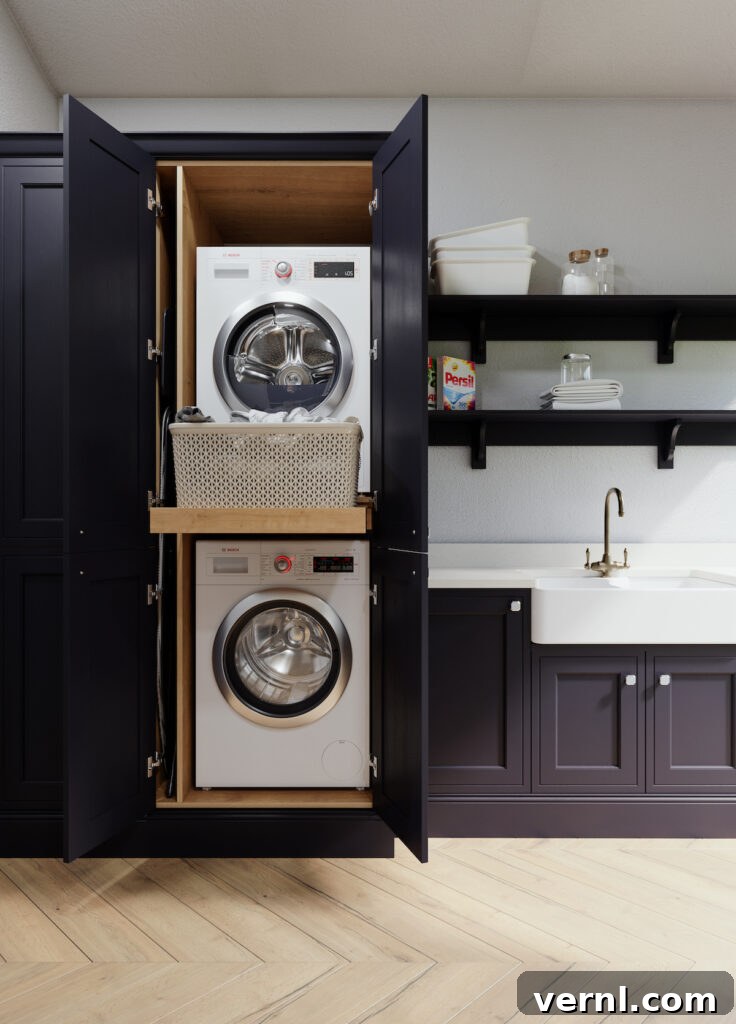
Is an Upstairs Laundry Room Right for You?
If you’re tired of carrying laundry between floors and have an underused room to convert, an upstairs laundry room could be a very practical upgrade. Consider noise and renovation costs before proceeding — for some households, keeping the laundry downstairs remains the better choice. However, for many families, relocating laundry upstairs offers genuine time savings, reduced clutter, and a more efficient daily routine.
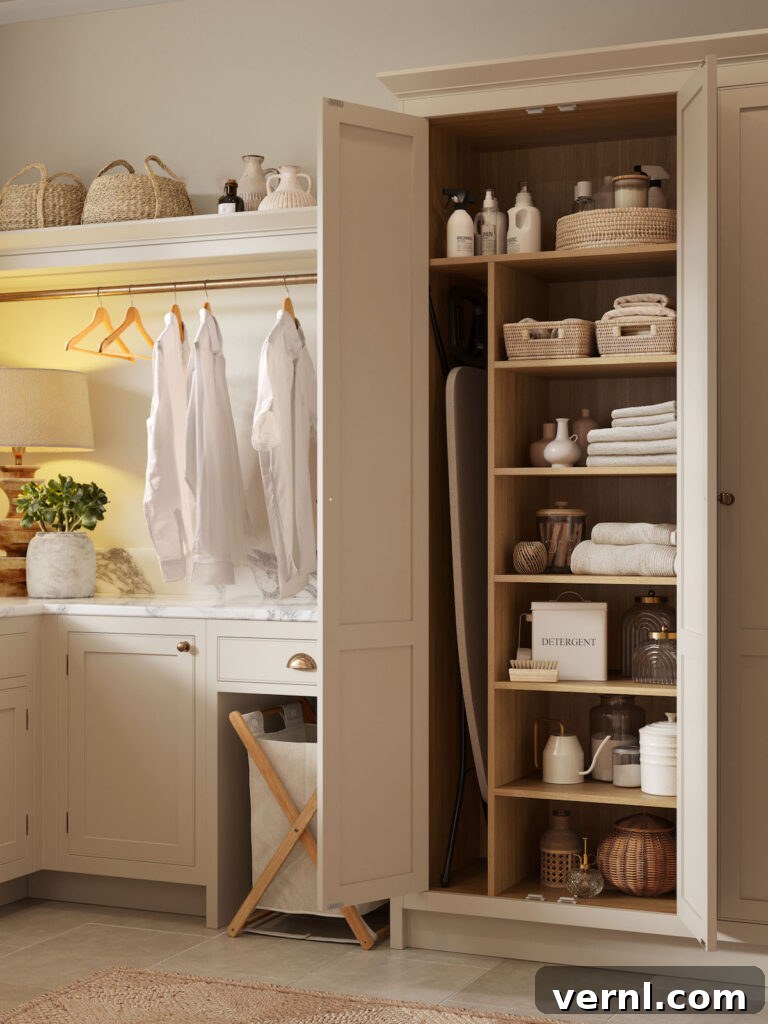
The popularity of upstairs laundry rooms reflects a broader trend in home design: focusing on convenience, efficient use of space, and thoughtful integration with the rest of the house. Whether you rework an unused en-suite or carve out a compact laundry zone next to the bedrooms, the right design can transform daily chores into something much simpler and more efficient.