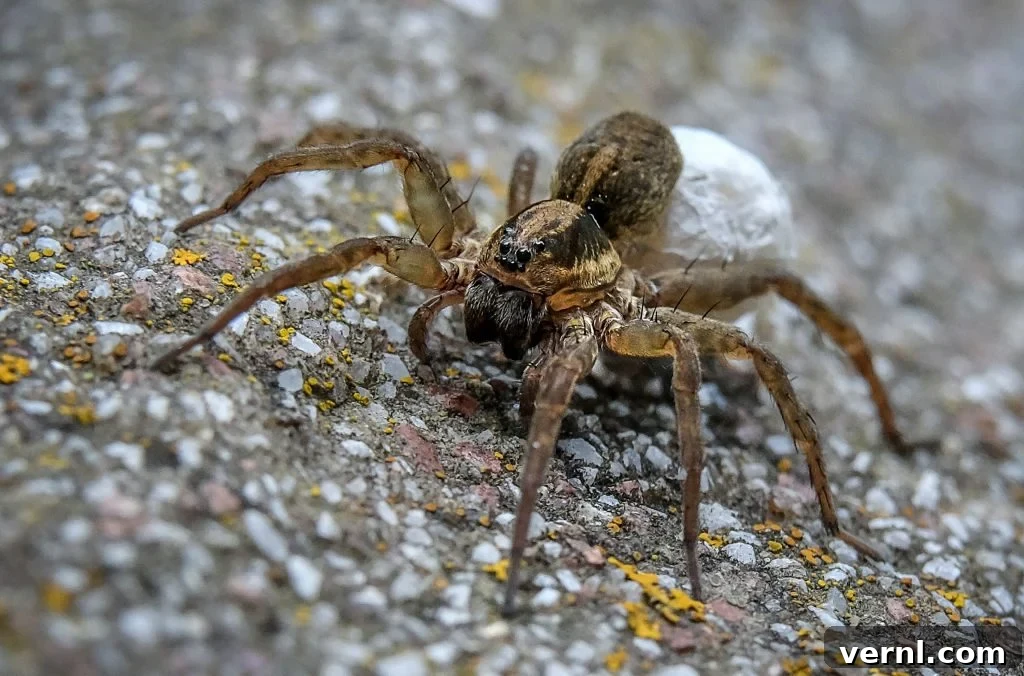
You’re tidying up your basement or cleaning your garage, and suddenly, a large, hairy spider darts out from beneath your broom. A sudden jolt of alarm, perhaps a quick gasp, and you’re left wondering: What was that creature? Is it dangerous? Do I need to be worried?
For many, this scenario conjures up images of venomous arachnids, but in most cases, if it was a wolf spider, there’s actually little cause for concern. According to Michael Thome, an associate certified entomologist with Western Exterminator, these formidable-looking spiders are largely harmless to humans.
“They’re scary looking, with their size and speed, but they truly won’t bother you unless they feel threatened,” Thome explains. Understanding how to identify a wolf spider, and what makes them unique, can transform a moment of panic into one of fascinating observation.
Understanding Wolf Spiders: What Are These Fascinating Arachnids?
Wolf spiders belong to the diverse family Lycosidae, a name derived from the Greek word “Lycos,” meaning “wolf.” This moniker perfectly suits these creatures, as they are renowned for their swiftness and agility, characteristics often associated with their mammalian namesakes. Unlike many other spider species that painstakingly construct intricate webs to ensnare their prey, wolf spiders are active hunters. They prefer to ambush or chase down their meals, relying on their keen eyesight and incredible speed to capture insects and other small creatures.
With over 2,400 identified species, wolf spiders are found across nearly every continent, adapting to a vast array of environments. Despite their “wolf-like” hunting style, it’s important to note a key difference from actual wolves: wolf spiders are solitary creatures. Thome emphasizes that, unlike wolves who hunt in packs, wolf spiders do not hunt together, preferring a lone existence except during mating or early maternal care.
One of the most remarkable aspects of wolf spiders is their exceptional maternal instincts. Female wolf spiders exhibit a unique and highly developed form of parental care. After laying her eggs, the mother constructs a spherical silk sac, which she then diligently attaches to her abdomen. She carries this egg sac with her everywhere, ensuring its protection and proper incubation. This constant portability means the eggs are always with the mother, safe from predators and environmental fluctuations. Once the “spiderlings” hatch, they don’t immediately disperse. Instead, they climb onto their mother’s back, clinging tightly for several days, sometimes even weeks, until they are robust enough to venture out and hunt independently.
This isn’t just a few offspring; Thome notes that a single mother wolf spider can carry more than a hundred spiderlings on her back at once, creating a truly astonishing sight. Furthermore, some studies have even shown that a female wolf spider may adopt an abandoned egg sac, treating it as her own. This level of dedication to their young highlights the complex and often misunderstood behavior of these fascinating arachnids.
Speaking of beneficial spiders, did you know your garden likely hosts a vibrant community of these natural pest controllers? While you might not always spot them, they play a crucial role. Learning about garden spiders and understanding how to encourage their presence can significantly enhance the health and balance of your outdoor spaces.
Wolf Spider Identification: What Do Wolf Spiders Look Like?
Identifying a wolf spider can be relatively straightforward once you know what to look for. They are typically robust, agile spiders, often appearing quite hairy, which can sometimes lead to mistaken identity with tarantulas. However, wolf spiders are generally much smaller than tarantulas. Most wolf spiders range from a quarter-inch to just over one inch in body length, excluding their legs, making them a medium-to-large spider by common household standards. The largest species found in the U.S. is the Carolina wolf spider (Hogna carolinensis), which, despite its regional name, is distributed widely across the country and can reach impressive sizes, though still not comparable to most tarantulas.
Their coloration typically provides excellent camouflage, allowing them to blend seamlessly into their surroundings. They are most commonly observed in shades of brown, black, or gray, often adorned with intricate black or brown stripes and patterns. Depending on their specific habitat, some species can also exhibit hues of orange or tan. Their thick, often shaggy hair further contributes to their earthy appearance.
A distinctive feature that helps in wolf spider identification is their remarkable eye arrangement. Wolf spiders possess exceptional eyesight, a crucial adaptation for their active hunting style. They have eight eyes arranged in three distinct rows: four small eyes situated on the bottom row, two prominent, large eyes positioned in the middle, and two medium-sized eyes located on the top row, slightly set to the sides. This unique ocular configuration gives them a wide field of vision, making them incredibly effective predators.
It’s common for wolf spiders to be confused with other spiders, most notably the brown recluse spider. However, there are clear distinguishing characteristics. The brown recluse, often called the “fiddleback” spider, is famous for a violin-shaped mark on its cephalothorax (the fused head and thorax section of its body). More reliably, the brown recluse is easily differentiated from a wolf spider by its eye count. Unlike the eight eyes of a wolf spider, brown recluse spiders possess only six eyes, arranged in three pairs. Understanding these visual cues is key to accurate identification and alleviating unnecessary fears.
The Diet of a Hunter: What Do Wolf Spiders Eat?
As active predators, wolf spiders have a diverse diet consisting primarily of ground-dwelling insects and other spiders. Their hunting strategy is one of efficiency and precision. They typically hunt during the nighttime hours, using their excellent eyesight and sensitivity to vibrations to detect prey. A wolf spider may either actively stalk and chase its prey, relying on its speed and agility, or it might patiently lie in wait, concealed in its burrow or another hiding spot, ambushing unsuspecting insects that wander too close.
Their menu includes a wide variety of common pests such as crickets, grasshoppers, cockroaches, beetles, and even other spider species. Their powerful jaws and venom allow them to subdue prey often larger than themselves. There have even been documented instances of larger wolf spider species preying on small amphibians, showcasing their predatory prowess. This active carnivorous diet makes them valuable allies in natural pest control within ecosystems, including gardens and agricultural fields.
Wolf Spider Bites: Are They Dangerous to Humans?
The question of whether wolf spiders bite is often a primary concern for those who encounter them. The answer is yes, wolf spiders can bite, but it’s crucial to understand the circumstances and effects of such a bite. Wolf spiders are not inherently aggressive towards humans. Bites typically occur only when the spider feels directly threatened or becomes accidentally trapped against the skin, such as when someone rolls over on one in bed or reaches into a woodpile without looking. Their instinct is usually to flee rather than confront.
When a bite does occur, it can certainly be painful. The initial sensation is often described as similar to a bee sting, accompanied by redness and localized swelling at the bite site. However, the good news, as confirmed by Michael Thome, is that wolf spider venom is not considered poisonous to humans and does not pose a serious medical threat. Unlike the necrotic venom of a brown recluse, wolf spider venom does not typically cause tissue death or severe systemic reactions.
Symptoms usually subside within a few hours to a few days. While discomfort is expected, “no serious medical concerns arise from their bite,” Thome assures. It’s always advisable to clean the bite area with soap and water and apply a cold compress to help reduce swelling and pain. If symptoms worsen, persist, or if an allergic reaction is suspected (though rare), seeking medical attention is recommended, as with any animal bite. The key takeaway is that wolf spiders prefer their solitary existence and are not looking for confrontations with people, making bites infrequent and generally benign.
Habitat and Distribution: Where Do Wolf Spiders Live?
Wolf spiders are truly global citizens, found across almost every continent and in a vast array of habitats, showcasing their incredible adaptability. Their preferred outdoor environments typically include grassy areas such as meadows, fields, forests, gardens, and even along riverbanks and shorelines. They thrive in places where they can find consistent food sources and adequate shelter.
Given the sheer number of species, their specific microhabitats can vary widely. Some wolf spiders are burrowers, excavating or utilizing existing holes in the ground, which they may line with silk. If you’re walking through a grassy field or inspecting your yard, you might spot these spider-sized holes, often with a slight silk rim at the entrance, indicating a wolf spider’s dwelling. Other species are entirely ground-dwellers, living above ground their entire lives, finding refuge under rocks, logs, leaf litter, and in dense vegetation.
Common outdoor hiding spots around homes include sheds, woodpiles, piles of leaves, mulch beds, and cluttered corners of gardens. These areas offer both shelter and ample hunting opportunities. While wolf spiders prefer the great outdoors, Thome notes that it’s not uncommon to encounter them occasionally indoors, particularly in basements, crawl spaces, or garages. They often enter homes by accident, seeking shelter from extreme weather conditions (cold, heat, excessive rain), or simply while exploring. However, they generally do not establish breeding populations indoors and are typically transient visitors.
There are even some highly specialized wolf spider species, such as an eyeless species discovered living in caves in Hawaii, demonstrating the extent of their evolutionary diversification and ability to colonize extreme niches.
Wolf Spiders: Dangerous or Hugely Beneficial?
Despite their often intimidating appearance and rapid movements, wolf spiders are overwhelmingly beneficial creatures, especially in natural and agricultural ecosystems. Far from being dangerous to humans, they play a crucial role as natural pest controllers. By preying on a wide variety of ground-dwelling insects and other spiders, including many common crop pests, they help maintain ecological balance and can reduce the need for chemical pesticides.
Their presence in gardens is a strong indicator of a healthy ecosystem. They tirelessly hunt down insects that could otherwise damage plants and vegetables, acting as an organic line of defense. So, while a sudden encounter might still elicit a startle, remembering their significant contributions to pest control can shift perception from fear to appreciation.
Before you instinctively reach to squash one, especially a large one, remember the unique maternal care of wolf spiders. A female wolf spider might be carrying hundreds of her tiny spiderlings on her back. Crushing her would inadvertently harm all her offspring, creating a much messier and more unsettling situation than simply allowing her to continue on her way. Observing them from a distance is always the best approach.
How To Manage and Get Rid of Wolf Spiders (When Necessary)
For the most part, controlling wolf spiders outside your home is not only unnecessary but also counterproductive, as they are beneficial predators. However, if you find wolf spiders venturing indoors and you’re uncomfortable with their presence, there are humane and effective methods to manage them.
Controlling wolf spiders inside your home typically involves passive measures. Glue traps can be strategically placed along baseboards, near entry points, or in undisturbed areas like basements and garages. These traps effectively capture spiders without the use of harsh chemicals. It’s important to remember that wolf spiders generally do not breed indoors, so encountering one in your basement doesn’t necessarily indicate a full-blown infestation.
For those who prefer a more direct, non-lethal approach, capturing a wolf spider in a jar or cup and releasing it outdoors is an excellent option. Their speed can make this a bit challenging, but with a steady hand, it’s a perfectly viable solution to remove an unwanted indoor visitor without harming it. Always ensure you release them a good distance from your home to prevent immediate re-entry.
Effective Prevention: How To Keep Wolf Spiders Out
The most effective strategy for preventing wolf spiders from entering your home is to implement exclusion techniques, essentially sealing off their potential entry points. Michael Thome recommends meticulously sealing any gaps, cracks, or crevices in your exterior walls, around windows, and under doors. This includes ensuring screens are intact and door sweeps are properly fitted.
Managing the immediate perimeter of your home is also crucial. Wolf spiders seek shelter and food sources. Therefore, keeping leaf litter, woodpiles, and other organic debris swept away and not piled directly against your foundation will significantly reduce attractive habitats near your home. Maintaining a clean and decluttered yard, especially close to the house, removes potential hiding spots and food sources, discouraging wolf spiders from taking up residence there.
Since wolf spiders are primarily driven by the hunt for insects, any outdoor lighting that attracts bugs to your home’s exterior can inadvertently draw in spiders as well. Consider using yellow or amber LED bulbs for outdoor lighting, as these are less attractive to insects. Reducing moisture around your foundation through proper drainage can also make the area less hospitable, as many insects thrive in damp conditions.
Ultimately, if you observe wolf spiders in your outdoor environment, it’s generally best to leave them undisturbed, allowing them to continue their beneficial work. However, if indoor encounters become frequent and you remain uncomfortable, a professional pest control expert can offer assistance. They can inspect your home for likely means of entry and apply targeted exterior treatments to discourage spiders from approaching and entering your living spaces, offering peace of mind while still respecting the natural role of these fascinating arachnids.