Whether you’re a seasoned culinary artist or your cooking repertoire mainly features simple tasks like popping corn, the microwave oven stands as an indispensable kitchen appliance in almost every modern home. Its unparalleled convenience for reheating leftovers, defrosting ingredients, and quickly preparing meals makes it a cornerstone of daily kitchen activity. When the time comes to upgrade or purchase a new microwave, navigating the myriad of options can be daunting. This comprehensive guide will walk you through the core principles of how microwaves operate, delve into the various types available, highlight crucial features to consider, and provide essential maintenance tips to ensure your chosen appliance serves you reliably for years to come.
Understanding the Magic: How a Microwave Oven Works
At its core, a microwave oven is a marvel of modern engineering, transforming electrical energy into electromagnetic waves to heat food. When you activate your microwave, a component called a magnetron generates high-frequency radio waves, specifically in the microwave spectrum. These invisible electromagnetic waves are then channeled into the oven’s chamber. Within this sealed environment, the waves interact primarily with the water molecules present in your food. Water molecules, being dipolar, possess a positive and negative end. As the electromagnetic field oscillates rapidly (billions of times per second), these water molecules attempt to align themselves with the changing field. This rapid rotation and friction between molecules generate heat, effectively cooking the food from the inside out.
This process explains why solid butter melts in mere seconds and why a plate of leftovers can be piping hot in just minutes. Unlike conventional ovens that heat food from the outside in through convection or conduction, microwaves penetrate the food, exciting molecules throughout its volume simultaneously. This unique heating mechanism makes microwaves incredibly efficient for certain tasks, offering speed and convenience unmatched by other cooking methods. Understanding this fundamental principle is key to appreciating both the capabilities and the limitations of your microwave oven.
Exploring the Diverse Types of Microwaves for Every Kitchen
Choosing the right microwave for your home isn’t just about cooking; it’s also about seamlessly integrating the appliance into your lifestyle and kitchen design. Your decision will hinge on several factors: how frequently you plan to use it, the aesthetic appeal you desire, your budget, and the primary types of dishes you intend to prepare. As Jeramy Bagozzi, a senior merchant specializing in cooking and dish products at Lowe’s, emphasizes, “When shopping for a microwave, location and use are critical.” The market offers a range of models, each with distinct advantages and ideal applications, from compact countertop units to sophisticated built-in systems and versatile combination ovens.
Countertop Microwaves: The Versatile Workhorse
Countertop microwaves are arguably the most ubiquitous and budget-friendly option available, making a significant impact on the appliance market due to their accessibility and ease of use. These models range in capacity, typically from .7 cubic feet to 2.2 cubic feet, offering a variety of sizes to fit different kitchen layouts and family needs. Their primary appeal lies in their simplicity: just plug them into an electrical outlet, and they’re ready to go. This plug-and-play convenience also makes them highly portable, allowing you to move them around the kitchen or even to different rooms if needed. While their main drawback is that they occupy valuable counter space, their lower price point, minimal installation requirements, and flexibility make them the go-to choice for many homeowners and renters alike. They are perfect for basic reheating, defrosting, and cooking small to medium-sized dishes, serving as an excellent entry-level or secondary microwave.
Built-In Microwaves: Seamless Integration and Elevated Style
For those prioritizing a sleek, integrated kitchen aesthetic, built-in microwaves are the ultimate choice. These units are designed to blend harmoniously with your existing cabinetry and appliances, creating a streamlined and sophisticated look. Built-in options come in various configurations:
- Over-the-Range (OTR) Microwaves: These models combine the functionality of a microwave with a range hood fan, providing essential cooking ventilation above your stovetop. They are an excellent space-saving solution, particularly in smaller kitchens, as they free up counter space while also managing smoke and odors. Newer slim OTR models are specifically designed to replace existing range hoods without extensive modifications.
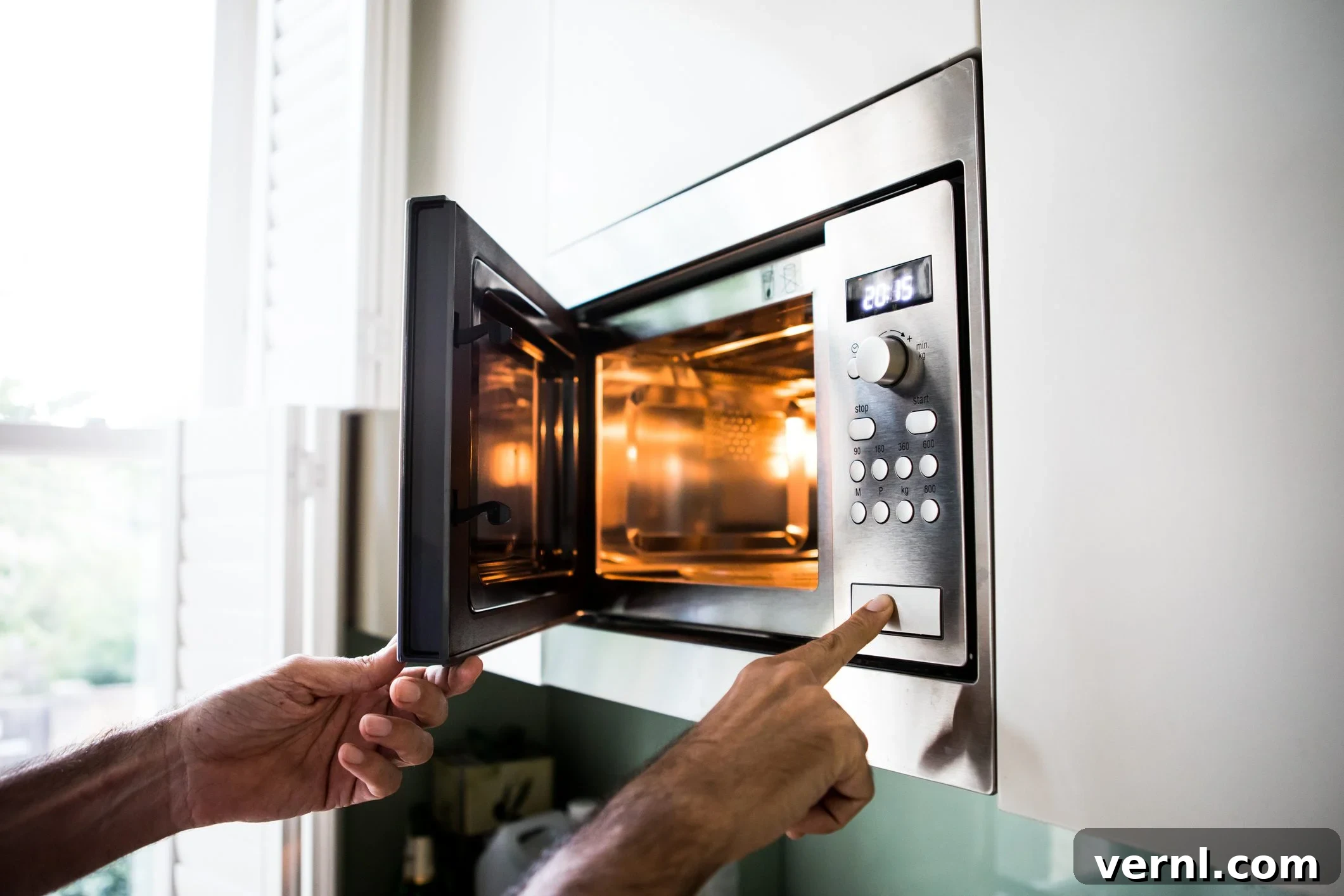
- Wall-Mounted Microwaves: These units are installed directly into your kitchen cabinetry or wall, often above a wall oven, creating a cohesive and high-end appearance. They elevate the microwave to a comfortable eye-level, making it easier to access and monitor food.
- Microwave Drawers: An increasingly popular option, microwave drawers are installed beneath counters or in kitchen islands. They offer discreet placement and easy access, especially for children or individuals with mobility challenges, as food can be placed directly into the drawer from above.
While built-in microwaves excel in aesthetics and space optimization, they generally come with a significantly higher price tag than their countertop counterparts. Installation is also more complex, often requiring professional assistance to ensure proper ventilation and electrical connections. Their premium cost and installation complexity also mean that when issues arise, considering whether to repair a malfunctioning built-in microwave becomes a more pertinent question. Ron Shimek, president of Mr. Appliance, a Neighborly company, advises, “For microwaves, or any appliance for that matter, it’s always a good idea to look at the potential cost, time, and effort savings that come with repairing versus replacing.” He notes that technicians regularly repair microwaves when it proves more cost-effective than ordering, shipping, and installing a new unit. Many appliance repair professionals offer home estimates, adhering to local safety guidelines.
Combination Microwave Ovens: Multifunctionality at its Best
For kitchens with limited space, or for home chefs seeking maximum versatility from a single appliance, combination microwave ovens are an excellent solution. These innovative units go beyond simple microwave heating, often doubling as a convection oven, a grill, or even incorporating air frying capabilities. The most common configuration is a microwave-convection oven combination, allowing you to bake, roast, and brown foods with the same appliance that reheats your coffee. This multi-functional approach can be a game-changer for smaller apartments or kitchens where a full-sized second oven isn’t feasible.
Combination microwaves offer the convenience of rapid microwave cooking alongside the traditional baking and roasting functions of a conventional oven, significantly expanding your culinary options. Like traditional microwaves, they are relatively easy to get up and running if they are countertop models, and replacement can be straightforward. However, their advanced features and higher manufacturing costs translate to a higher purchase price compared to standard microwaves. This increased initial investment reinforces the argument for repairing rather than immediately replacing a malfunctioning unit, especially if the repair cost is reasonable in comparison to a new purchase.
Essential Microwave Features to Consider Before You Buy
Once you’ve narrowed down the type of microwave that best fits your kitchen, the next step is to evaluate the specific features that will enhance your cooking experience. Microwaves today come equipped with a wide array of functionalities designed for convenience, efficiency, and superior results. Before heading to the store, make a detailed list of all the features you consider essential, as well as those that would be a welcome bonus.
Power (Wattage): The Heart of Performance
A microwave’s wattage is a direct indicator of its cooking power and speed. Generally, higher wattage means faster and more even cooking. Unless you plan to use your microwave only occasionally for very light tasks, it’s advisable to choose a model with at least 1,000 watts of power. Standard microwaves typically range from 600 watts (smaller, less powerful models) to 1,200 watts or more (for larger, high-performance units). A 1,000-watt microwave will heat food more thoroughly and quickly than an 800-watt model, reducing cooking times and improving consistency. If you’re concerned about whether your kitchen circuits can handle the load of a higher-wattage appliance, Ron Shimek of Mr. Appliance recommends hiring a qualified electrician to audit your electrical system to ensure adequate capacity and safety.
Size and Capacity: Fitting Your Lifestyle
The physical dimensions and internal capacity of your microwave are crucial considerations, especially if you have limited counter or cabinet space. Microwave capacities are measured in cubic feet, typically ranging from a compact 0.7 cu. ft. to a spacious 2.2 cu. ft. or more. For individuals or small households, a smaller capacity might suffice. However, if you frequently cook large dishes, use oversized dinner plates, or prepare meals for a family, ensure that the larger microwave-safe dishes you own will comfortably fit inside the model you choose. Remember to consider both the internal turntable diameter and the overall interior height and width. For built-in models, the exterior dimensions are equally important for proper fit within cabinetry.
Presets and Smart Sensors: Automated Convenience
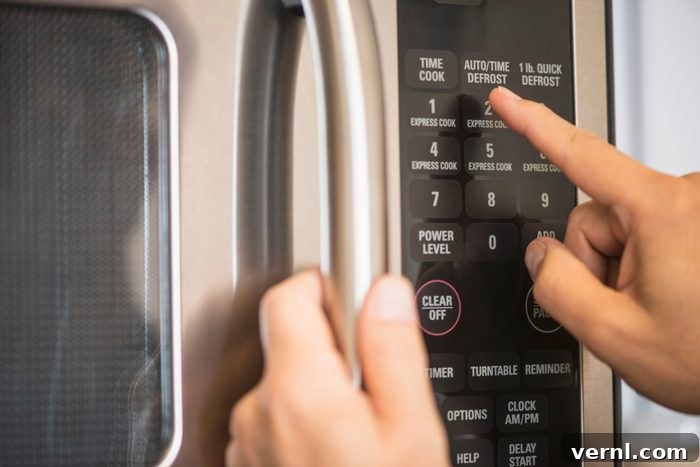
Modern microwaves are equipped with a variety of preset programs designed to take the guesswork out of cooking common items. Standard presets often include options for Popcorn, Fresh Vegetable, Frozen Vegetable, Potato, Beverage, Defrost, Soften/Melt, and Reheat. The specific presets available will vary by brand and model, with some offering specialized settings for items like pizza or casserole. Beyond basic presets, many newer microwaves feature smart sensors. These innovative sensors detect humidity levels within the oven chamber, automatically adjusting cooking time and power to prevent over-cooking or under-cooking. This feature is particularly useful if you’re new to microwaving, experimenting with unfamiliar dishes, or simply desire more consistent results without constant manual adjustment.
Turntable or Flatbed Design: Ensuring Even Heating
For uniform cooking, a turntable is an invaluable feature. This rotating tray ensures that food is evenly exposed to the microwave energy, preventing cold spots and ensuring thorough heating. If you choose a microwave without a turntable, you’ll need to manually stop the cooking process and turn your food periodically, which can be less convenient. However, an emerging alternative is the “flatbed” design, which eliminates the need for a turntable altogether. These models utilize advanced microwave distribution systems to heat food evenly across the entire oven floor, offering a larger usable cooking area and making cleanup easier, as there’s no turntable to remove and wash.
Two-Stage or Multi-Stage Cooking Options: Seamless Meal Prep
This feature is a godsend for anyone cooking food straight from the freezer. A two-stage cooking option allows you to program two different power levels and durations consecutively. For example, the microwave can automatically defrost the food at a lower power setting for a set period, then seamlessly switch to a higher power level for regular cooking, all without requiring manual intervention. More advanced models may even offer multi-stage cooking with three or more stages, providing even greater control over complex recipes and ensuring optimal results for dishes that require varying heating intensities.
Inverter Technology: Precision and Consistency
While not universally available, inverter technology is a premium feature worth considering. Traditional microwaves operate by cycling the magnetron on and off to achieve lower power levels, which can lead to uneven cooking. In contrast, inverter technology allows the microwave to deliver a consistent, continuous stream of power at any desired level. This results in more precise temperature control, more evenly cooked food, better texture preservation, and more efficient defrosting without “cooking” the edges of frozen items. For discerning cooks who demand superior performance and consistency, an inverter microwave can make a significant difference.
Control Panel and Display: User Experience
The control panel and display impact how intuitive and easy your microwave is to use. Options range from simple dial controls to sleek touchpads and digital displays. Look for clear, legible displays and responsive buttons. Some models feature LED lighting for illuminated interiors, making it easier to see your food as it cooks. Consider also features like a kitchen timer, clock, and a child safety lock, which can prevent accidental use, especially important in households with young children.
Microwave Maintenance: Extending the Life of Your Appliance
With proper care, a well-chosen microwave can be a reliable kitchen companion for approximately five to ten years. Adhering to a few simple maintenance practices will not only extend its lifespan but also ensure it operates efficiently and safely. Neglecting maintenance can lead to reduced performance, potential hazards, and a shortened service life. Here are essential tips to keep your microwave in optimal working order:
- Use Only Microwave-Safe Containers: This is a fundamental rule for microwave safety and efficiency. Not all plastic food containers, for instance, are designed for microwave use; some can warp, melt, leach harmful chemicals into your food, or even damage the microwave itself. Always look for a “microwave-safe” symbol (often a wavy line or a microwave icon) on the container’s packaging or bottom. Glass, ceramic, and specific types of plastic are generally safe, but always verify before use.
- Keep All Metallic Items Out of the Microwave: Metallic containers, aluminum foil, and utensils should never be placed inside a microwave. Metal reflects microwave energy, causing sparks (arcing) and potentially leading to a fire. Even decorative metallic trim on plates or cups can cause issues. Always use non-metallic, microwave-safe dishware.
- Cover Food and Beverages: Always cover food and beverages when heating them in the microwave. Using a microwave-safe lid, plastic wrap (vented), or paper towel prevents messy splatters from coating the interior, which can harden and become difficult to clean. Beyond cleanliness, covering also helps to trap steam, promoting more even heating and preventing food from drying out.
- Handle the Microwave Door Gently: The microwave door, particularly its latching mechanism, is a critical safety component. Slamming the door or closing it roughly with an elbow can easily damage the delicate latches and interlock switches. A damaged door can compromise the seal, potentially allowing microwave energy to escape, which is a serious safety hazard, or prevent the microwave from operating at all. Always take the time to set down what you’re holding and gently close the door.
- Regularly Clean Your Microwave: A clean microwave is a happy and efficient microwave. Aim to clean the inside and outside of your unit at least once a week. For spills and splashes, clean them up immediately before they harden and become stains. A simple method involves heating a bowl of water with lemon slices or white vinegar for a few minutes until steam fills the cavity, then wiping down the softened grime with a damp cloth. Regular cleaning not only maintains hygiene but also prevents food particles from absorbing microwave energy, ensuring your appliance heats efficiently.
- Ensure Proper Ventilation: For countertop models, ensure there’s adequate space around the unit for air circulation. For over-the-range or built-in models, regularly clean the grease filters (if applicable) and ensure the exhaust fan is free from obstructions. Proper ventilation is essential to prevent overheating and maintain appliance efficiency.
Making Your Final Microwave Decision
Selecting the ideal microwave oven for your home involves a thoughtful evaluation of your specific needs, kitchen layout, and personal preferences. From the basic convenience of a countertop model to the sophisticated integration of a built-in unit or the versatile functionality of a combination oven, each type offers distinct advantages. By carefully considering factors such as wattage for optimal performance, capacity for your typical usage, and innovative features like sensor cooking or inverter technology, you can find an appliance that perfectly complements your culinary habits. Moreover, by committing to simple yet effective maintenance routines, you can significantly prolong the life of your microwave, ensuring it remains a reliable and indispensable tool in your kitchen for many years to come. Invest wisely, maintain diligently, and enjoy the unparalleled convenience your new microwave brings to your daily cooking endeavors.