
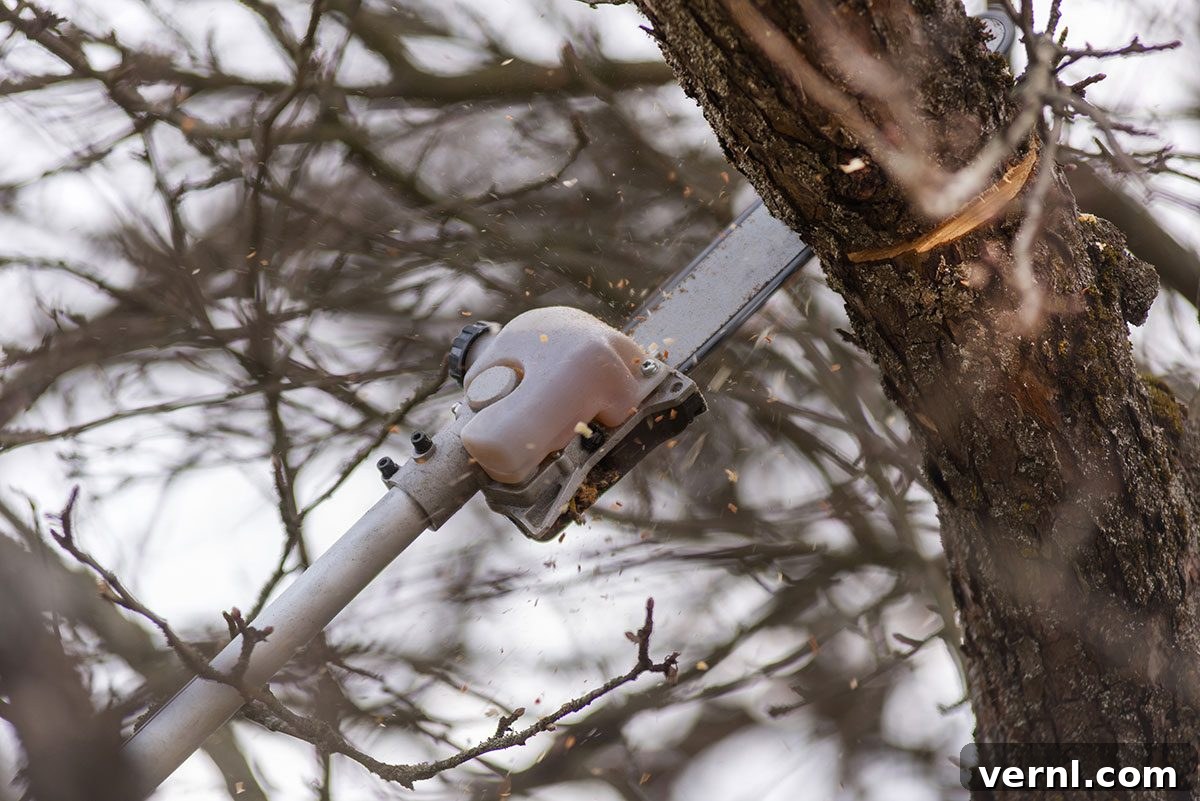
Mastering Tree Pruning: Essential Tools and Techniques for a Healthy Landscape
Maintaining a beautiful and healthy landscape often involves the crucial task of pruning trees. However, attempting to prune without the right tools can quickly turn into a frustrating, inefficient, and even dangerous endeavor. Imagine wrestling with stubborn branches, enduring hand cramps, and repeatedly climbing up and down a ladder with inadequate equipment. This is where a dedicated tree pruner becomes an indispensable asset for any homeowner or gardener. These specialized tools are designed to extend your reach and enhance your cutting power, allowing you to trim branches and foliage with the precision and ease of a seasoned professional.
At its core, a tree pruner is an elevated version of typical pruning shears or saws. What sets them apart is their integration with significantly longer handles or poles, specifically engineered to tackle branches situated high above your normal reach. This comprehensive guide will delve into the various types of tree pruners available, explain how they operate, highlight some of the top models on the market, and provide essential tips for effective and safe tree pruning. By understanding the tools and techniques, you’ll be well-equipped to foster stronger, healthier, and more aesthetically pleasing trees in your yard.
Understanding the Different Types of Tree Pruners
When it comes to selecting the ideal tool for your tree maintenance needs, tree pruners primarily fall into two fundamental categories based on their cutting mechanism: those that snip and those that saw. Each type is designed for specific tasks and branch sizes, making it important to understand their distinctions before making a purchase.
1. Loppers: The Precision Snippers
Tree pruners that operate by snipping are commonly known as “loppers.” These tools are essentially oversized, long-handled shears that provide significant leverage for cutting branches. They are typically constructed with scissor-like blades affixed to the end of an extended, often telescopic, handle. Loppers are ideal for clean cuts on smaller to medium-sized branches, generally up to 2 inches in diameter, though some heavy-duty models can handle slightly more.
- Bypass Loppers: These feature two blades that “bypass” each other, much like a pair of scissors. This design creates a clean, precise cut that is excellent for live branches, minimizing damage to the plant tissue and promoting quicker healing. Bypass loppers are often preferred for their ability to make healthier cuts on actively growing parts of the tree.
- Anvil Loppers: Anvil loppers have a single sharp blade that closes against a flat “anvil” or cutting bar. This design is highly effective for cutting dead, dry, or very tough branches, as it provides a powerful, crushing cut. While incredibly strong, anvil loppers can sometimes cause more damage to live wood due to the crushing action, so they are generally recommended for removing deceased limbs.
The extended reach of loppers allows you to prune branches that are just out of arm’s reach without needing a ladder, or to make precise cuts from a stable position on a ladder. Their mechanical advantage reduces the effort required, making the task less strenuous.
2. Pole Saws: For Higher and Thicker Branches
The second primary type of tree pruner is essentially a saw blade attached to a long pole. These tools are specifically engineered for tackling thicker branches that are beyond the capacity of loppers, or for reaching extreme heights. Pole saws come in both manual and motorized varieties, each offering distinct advantages.
- Manual Pole Saws: These rely on good old manual power. They consist of a curved or straight saw blade mounted on an extendable pole, requiring the user to apply physical effort to cut through branches. Manual pole saws are excellent for branches that are too thick for loppers but not so large that they require heavy machinery. They offer good control and are quiet, making them suitable for residential areas without disturbing neighbors.
- Motorized Pole Saws (Electric or Gas): For the toughest and highest branches, motorized pole saws, often resembling a small chainsaw on a stick, are the go-to option.
- Electric Pole Saws: These are powered by electricity, either corded or battery-operated. They offer consistent power, are relatively quieter than gas models, and produce no emissions. Battery-powered versions provide excellent portability without the hassle of extension cords.
- Gas-Powered Pole Saws: These are the most powerful option, ideal for heavy-duty pruning tasks and very thick branches. They offer maximum mobility as they don’t rely on power outlets or battery life, but they are typically heavier, louder, and require more maintenance due to their combustion engine.
Some versatile tree pruners combine both snipping and sawing capabilities on a single pole, offering a comprehensive solution for various pruning needs. Understanding these types will help you select the most efficient and appropriate tool for maintaining the health and aesthetics of your trees.
Discovering the Best Tree Pruners for Your Garden
Choosing the right tree pruner can significantly impact your efficiency and the health of your trees. Here are some top-rated options, showcasing a range of functionalities and designs, to help you make an informed decision.
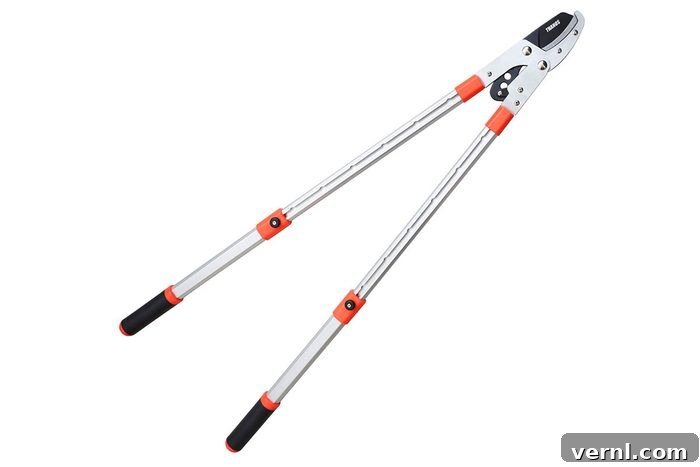
THANOS Extendable Anvil Loppers
The THANOS Extendable Anvil Loppers are an excellent choice for those seeking robust cutting power for thicker, tougher branches. Designed with efficiency and user comfort in mind, these loppers simplify the task of clearing overgrown areas and maintaining tree health.
- Adjustable Reach: Featuring a durable aluminum handle, these loppers can be easily extended from a compact 24 inches to an impressive 40 inches. This telescopic capability provides the flexibility needed to reach moderately high branches without the immediate need for a ladder, enhancing both safety and convenience.
- Superior Cutting Performance: Equipped with a Teflon-coated blade, the THANOS loppers are engineered for smooth and effortless cuts. They can sever branches up to a substantial 2 inches in diameter, making them ideal for a wide range of pruning tasks, especially on dead or particularly stubborn wood. The coating also helps prevent sap and debris build-up, ensuring the blade stays sharp longer.
- Ergonomic Design for Extended Use: Comfort is key during prolonged pruning sessions. These loppers boast ergonomic handles that provide a secure and comfortable grip, reducing hand fatigue. Their lightweight design further contributes to ease of use, allowing you to work for extended periods without excessive strain. The compound action mechanism amplifies cutting force, making quick work of dense branches.
Shop Now: THANOS Extendable Anvil Loppers Tree Trimmer with Compound Action, Chops Thick Branches Ease,28-40” Telescopic Heavy Duty Branch Cutter,2 Inch Clean Cut Capacity.
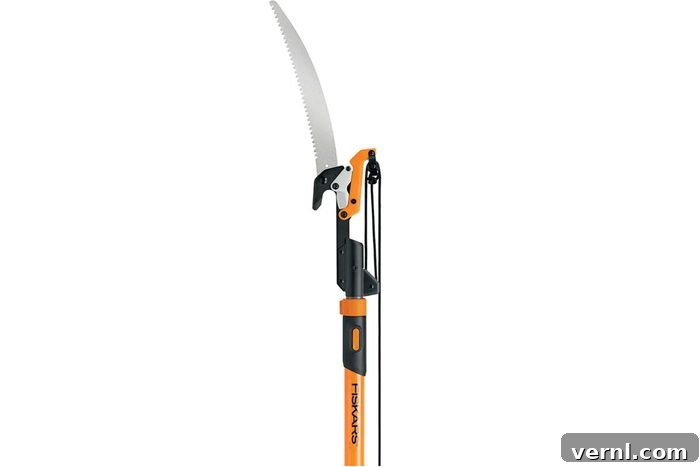
Fiskars 14 Foot Power-Lever Extendable Tree Pruner
The Fiskars 14 Foot Power-Lever Extendable Tree Pruner is a versatile powerhouse, combining both snipping and sawing capabilities to address a wide array of pruning challenges. Its innovative design focuses on maximizing reach and minimizing effort, making it a favorite among professional landscapers and dedicated home gardeners alike.
- Dual Cutting Options for Versatility: This pruner offers unparalleled flexibility with two distinct cutting methods. It features a robust 15-inch zig saw blade, perfect for tackling larger, thicker branches that require a sawing action. Additionally, it includes snips capable of cleanly cutting branches up to 1-1/8 inches in diameter, ideal for precise cuts on live growth. This combination means you can transition seamlessly between different tasks without switching tools.
- Exceptional Extendable Reach: Designed to reach impressive heights, the fiberglass pole extends from a practical 7 feet all the way to a remarkable 14 feet. This extended reach allows you to prune high branches from the safety of the ground, significantly reducing the need for ladders and enhancing user safety during tree maintenance.
- Enhanced Stability and Durability: A unique oval shape is integrated into the pole’s design. This thoughtful feature is crucial for reducing the amount the pole bends and flexes, even when fully extended and under load. This design not only makes the tool feel more stable and robust during use but also ensures more efficient power transfer to the cutting head, resulting in cleaner and easier cuts. The Power-Lever mechanism further multiplies your cutting force, making tough jobs feel lighter.
Shop Now: Fiskars Power-Lever 1-1/8-in Cut Capacity Steel Saw Blade 15-in Fiberglass Pole 14-ft Tree Pruner
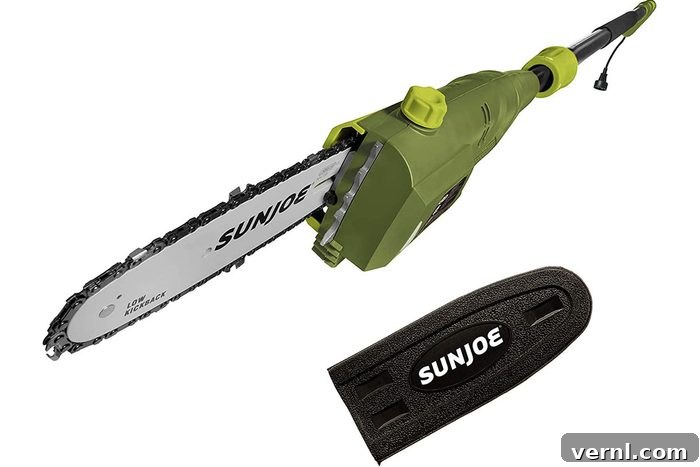
Sun Joe Electric Pole Chain Saw
For more demanding tasks involving thicker branches and higher reaches, the Sun Joe Electric Pole Chain Saw offers a powerful and convenient solution. This motorized pruner takes the strenuous effort out of cutting, allowing you to maintain your trees with speed and efficiency.
- High-Powered Motor for Thick Cuts: Equipped with a robust 6.5-amp motor, this electric pole saw provides ample power to cut through branches up to an impressive 7-1/2 inches thick. This capability makes it suitable for significant pruning jobs, from removing large deadwood to shaping mature trees that other tools might struggle with.
- Extended Reach for Tall Trees: The telescoping pole extends up to nearly 9 feet, providing an excellent reach without the need for a ladder in many situations. This extended reach combined with the motor’s power makes it an ideal tool for safely reaching and cutting high branches from the ground, significantly reducing the risks associated with elevated work.
- Automatic Chain Lubrication for Longevity: A standout feature of the Sun Joe Pole Chain Saw is its “auto-oiler” system. This intelligent mechanism automatically lubricates the chain during use, ensuring smooth operation, reducing wear and tear, and extending the lifespan of both the chain and the saw itself. This prevents overheating and binding, providing a consistent and reliable cutting experience with minimal maintenance from the user.
Shop Now: Sun Joe SWJ800E 8-Inch 6.5-Amp Telescoping Electric Pole Chain Saw with Automatic Chain Lubrication System
How to Effectively Use a Tree Pruner for Optimal Tree Health
Pruning is much more than just cutting off branches; it’s a vital aspect of horticultural care that contributes significantly to a tree’s health, vitality, and aesthetic appeal. Regular and proper pruning encourages stronger growth, enhances fruit and flower production, prevents disease, and improves the overall structure of your trees. A well-pruned tree not only looks better but is also safer, as dead or weak branches can pose a falling hazard.
Step-by-Step Guide to Pruning:
- Assess and Identify Branches: Begin by carefully examining your tree to identify which branches need removal. Look for dead, diseased, or damaged branches; crossing branches that rub against each other; weak limbs; or those growing in undesirable directions. It’s also important to identify any branches that are too close to structures or power lines.
- Clear the Area: Before making any cuts, ensure the ground beneath the pruning area is clear of people, pets, and any valuable items that could be damaged by falling branches. This is a crucial safety step.
- Timing is Key: Experts generally recommend that you prune trees during their dormant season, typically late winter or early spring before new growth appears. Pruning during dormancy minimizes stress on the tree, reduces the risk of disease, and allows the tree to heal more efficiently once active growth begins. However, dead or hazardous branches can and should be removed any time of year.
- Avoid Over-Pruning: A common mistake is removing too much foliage at once. As a general rule, never remove more than one-fourth (25%) of a tree’s total canopy in a single pruning session. Over-pruning can significantly stress a tree by reducing the amount of leaves it has, which are essential for photosynthesis and absorbing nutrients. This can weaken the tree, make it more susceptible to pests and diseases, and hinder its long-term health.
- Master the Three-Cut Method (for Larger Branches): For heavier branches, especially those too large for a single snip, employ the three-cut method to prevent bark tearing.
- First Cut (Undercut): Make a shallow cut on the underside of the branch, about 6-12 inches away from the branch collar (the swollen area where the branch meets the trunk or a larger limb). Cut about one-third of the way through the branch. This prevents the bark from tearing down the trunk when the branch falls.
- Second Cut (Top Cut): Move a few inches further out from your first cut (away from the trunk) and cut completely through the branch from the top. The branch will fall, leaving a short stub.
- Third Cut (Final Cut): Carefully remove the remaining stub by cutting just outside the branch collar, without cutting into it. The branch collar contains special cells that help the tree heal over the wound.
- Smaller Branches: For smaller branches that can be handled by loppers or hand pruners, make a single, clean cut just outside the branch collar.
- Consider Reach and Safety: Always use the appropriate tree pruner for the height and thickness of the branch. For high-flying branches that are still out of reach, or for very thick limbs, consider specialized tools or professional help. Here’s a useful tree-trimming trick to remove a branch that’s out of reach for traditional tools.
Benefits of Proper Tree Pruning
Investing time and effort in proper tree pruning yields a multitude of benefits for your landscape and the environment:
- Enhanced Tree Health: Removing dead, diseased, or weak branches redirects the tree’s energy to healthy growth, strengthens its structure, and prevents the spread of pathogens. Good airflow through the canopy also reduces fungal issues.
- Improved Aesthetics: Pruning helps shape trees, promoting a balanced and attractive appearance. It can enhance the natural form of a tree, making it a focal point in your garden.
- Increased Fruit and Flower Production: For fruit-bearing trees and flowering species, strategic pruning can stimulate more abundant yields and vibrant blooms by encouraging the growth of productive wood.
- Safety Enhancement: Eliminating weak or overhanging branches significantly reduces the risk of falling limbs, which can cause injury or damage to property, especially during storms.
- Disease Prevention: Removing diseased wood isolates infections, preventing them from spreading to healthier parts of the tree or to other plants in your yard. Proper cuts also help the tree heal more quickly, reducing entry points for pests and diseases.
- Sunlight Penetration: Thinning out dense canopies allows more sunlight to reach the inner branches and the plants below, promoting healthier undergrowth.
Essential Safety Tips for Tree Pruning
Safety should always be your top priority when pruning trees, especially when working at height or with powerful tools. Adhering to these guidelines can prevent accidents and ensure a smooth pruning experience:
- Wear Personal Protective Equipment (PPE): Always wear safety glasses or goggles to protect your eyes from falling debris. Gloves are essential to prevent blisters and cuts. A hard hat is highly recommended, especially when working under larger branches or with a pole saw. Long sleeves and pants can protect your skin from scratches and irritants.
- Inspect Your Tools: Before each use, ensure your tree pruner is in good working condition. Check blades for sharpness and tightness, poles for cracks or damage, and any moving parts for proper function. Dull blades require more force, increasing the risk of slippage.
- Maintain a Stable Base: If using a ladder, ensure it is placed on firm, level ground and properly secured. Always maintain three points of contact (two hands and one foot, or two feet and one hand) with the ladder. Never overreach; it’s safer to move the ladder. For pole pruners, stand on stable ground, well clear of the falling branch’s path.
- Be Aware of Your Surroundings: Look up before you cut! Be mindful of power lines, utility cables, structures, and other trees. Never prune near power lines; always contact your local utility company if branches are encroaching.
- Plan Your Cuts: Visualize where the branch will fall before you make a cut. Ensure the area below is clear and that you are standing in a safe zone, away from the potential fall path.
- Handle Power Tools with Care: If using an electric or gas pole saw, read the manual thoroughly. Ensure extension cords are rated for outdoor use and are in good condition. Never operate motorized tools in wet conditions.
- Know Your Limits: For very tall trees, exceptionally thick branches, or trees near power lines, it is always best to call a certified arborist. Professional tree services have the specialized equipment, training, and insurance to handle complex and dangerous jobs safely.
Maintaining Your Tree Pruner for Longevity and Performance
To ensure your tree pruners remain effective and last for many years, proper maintenance is crucial. A well-maintained tool performs better and is safer to use.
- Clean After Each Use: Sap, resin, and plant debris can build up on blades, making them sticky and less effective. After each pruning session, wipe down the blades with a cloth dampened with rubbing alcohol or a specialized cleaner to remove sap and disinfect the tool.
- Sharpen Blades Regularly: Dull blades tear rather than cut, harming the tree and requiring more effort from you. Sharpen lopper blades and saw teeth regularly with a sharpening stone or file specifically designed for pruning tools. Follow the manufacturer’s instructions for proper sharpening angles.
- Lubricate Moving Parts: Apply a light machine oil or silicone spray to hinges, springs, and other moving parts of your loppers or pole pruner. For motorized pole saws, ensure the chain is always well-oiled, as the Sun Joe model’s auto-oiler demonstrates the importance of this feature.
- Inspect for Damage: Periodically check the handles, poles, and blades for any signs of wear, cracks, or damage. Replace worn-out parts or the entire tool if structural integrity is compromised.
- Proper Storage: Store your tree pruners in a dry, covered area to prevent rust and corrosion. Hanging them up can also help prevent damage to blades and handles.
When to Call a Professional Arborist
While many common pruning tasks can be handled by homeowners with the right tools, there are situations where calling a professional arborist is not just recommended, but necessary. Arborists are trained experts in tree care, equipped to handle complex and potentially dangerous scenarios.
- Large or Tall Trees: If a tree is too tall to prune from the ground with an extended pole pruner, or if branches are too thick for your tools, it’s time to call a professional. Working at significant heights without proper training and equipment is extremely dangerous.
- Branches Near Power Lines: Never attempt to prune branches that are close to or touching power lines. This is incredibly hazardous and can lead to severe injury or electrocution. Contact your local utility company immediately.
- Diseased or Damaged Trees: If a tree shows signs of extensive disease, rot, or severe storm damage, a professional arborist can assess the tree’s health and determine the best course of action, which may include specialized treatment or safe removal.
- Structural Pruning of Young Trees: While you can trim minor branches, professional arborists are skilled in structural pruning, which guides the growth of young trees to ensure a strong and healthy future structure.
- Removal of Large Limbs or Entire Trees: Removing large limbs or an entire tree is a complex task that requires specialized equipment, extensive knowledge of felling techniques, and adherence to strict safety protocols. This is definitely a job for certified professionals.
Conclusion: Empowering Your Tree Care Journey
Effective tree pruning is a cornerstone of responsible yard maintenance, contributing to the health, beauty, and safety of your landscape. By arming yourself with the right tree pruner—whether it’s an agile lopper, a versatile pole saw, or a powerful electric chain saw—you gain the ability to tackle various pruning challenges with confidence. Remember to select the tool that best matches the task at hand, prioritize safety at all times, and perform regular maintenance to ensure your tools remain in top condition. With these insights and a commitment to proper pruning techniques, you’ll not only enhance the life of your trees but also elevate the overall appeal of your outdoor space for years to come. Happy pruning!