
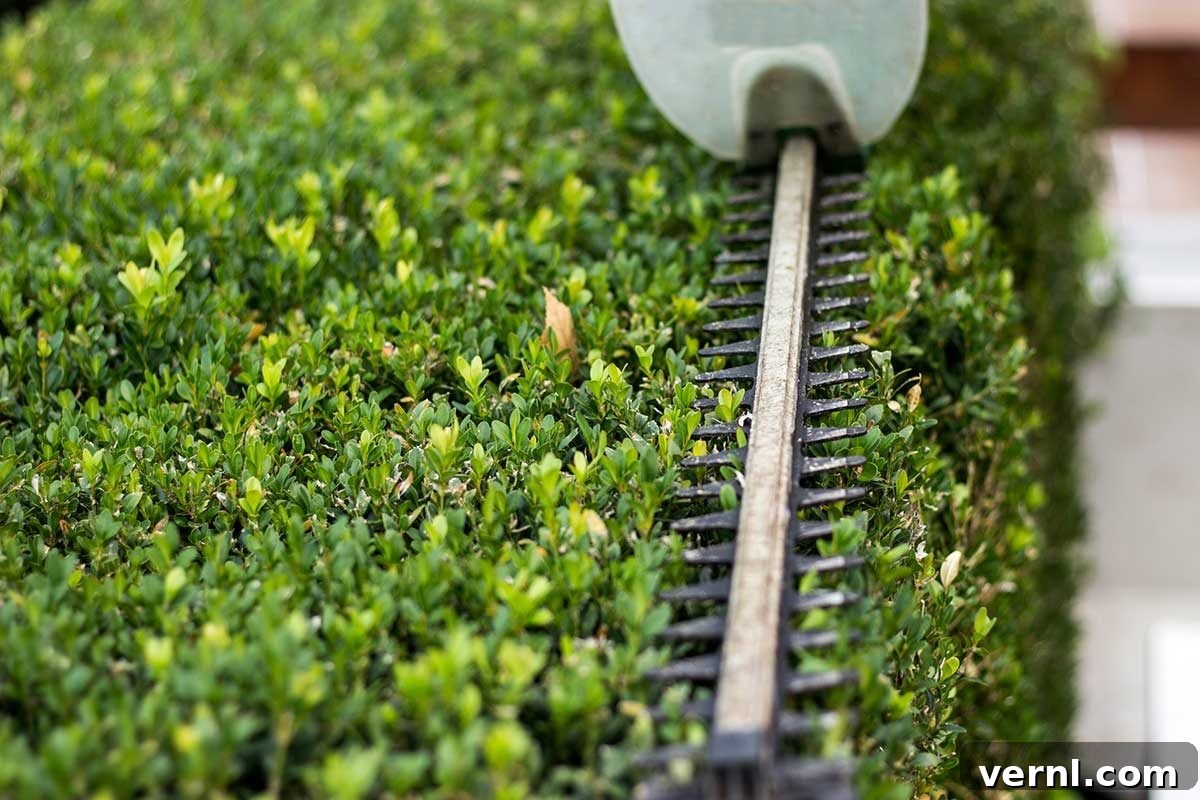
Transforming your outdoor space into a picture of perfection, whether you’re aiming for impressive curb appeal or envisioning a meticulously sculpted garden reminiscent of a grand estate, often involves the strategic use of hedges and large shrubs. These natural elements are ideal for adding structured beauty and defining areas within your home landscape. However, achieving that sleek, manicured aesthetic and maintaining crisp lines requires consistent care and regular maintenance.
Fortunately, there’s a powerful and efficient tool designed specifically to simplify this task: the hedge trimmer. Far superior to traditional manual hedge clippers, a quality hedge trimmer not only delivers a noticeably neater and more precise cut – essential for that pristine, professional look – but also drastically reduces the time and physical effort involved in yard work. Say goodbye to aching wrists and hands, and hello to beautifully shaped foliage with minimal strain.
If you’re contemplating an investment in the right tool to keep your hedges looking immaculate, you’ve come to the right place. This comprehensive guide will navigate you through the world of hedge trimmers, covering everything from the diverse range of power sources—corded electric, cordless battery-powered, and robust gas-powered models—to essential features that align with your specific needs and yard size. We’ll also provide expert advice on crucial maintenance, including how often to sharpen your hedge trimmer’s blades to ensure optimal performance and longevity.
What Is a Hedge Trimmer and How Does It Work?
At its core, a hedge trimmer is a specialized power tool engineered to efficiently cut, shape, and prune hedges and shrubs. It features a long, reciprocating blade or a set of blades that move back and forth, quickly shearing through branches. The typical blade length can vary significantly, ranging from compact five-inch models for intricate work to extensive 26-inch blades designed for larger areas. These blades are generally capable of slicing through branches up to 1/2-inch to 3/4-inch thick. For anything thicker, such as mature woody branches or small tree limbs, you would need a more robust pruning tool like loppers or a pruning saw, as advised by Vince Christofora, owner of Woodstock Hardware, a comprehensive hardware store in Woodstock, New York.
Understanding the mechanism of a hedge trimmer helps appreciate its efficiency. The sharp, hardened steel blades are designed for clean cuts, which are vital for the health of your plants. Ragged cuts can leave plants vulnerable to disease and pests. Modern hedge trimmers prioritize both cutting power and user comfort, incorporating features that make them versatile for various landscaping tasks, from intricate topiary shaping to maintaining long runs of privacy hedges.
Understanding the Types of Hedge Trimmers
Hedge trimmers are broadly categorized by their power source, each offering distinct advantages and considerations. These three primary types—battery-powered, electric-powered, and gas-powered—cater to different user needs, property sizes, and performance expectations. Let’s delve into the specifics of each:
Battery-Powered (Cordless) Hedge Trimmers
The advent of battery-powered tools has revolutionized the power equipment market, and hedge trimmers are no exception. As Vince Christofora notes, “Now the battery ones are just as powerful and provide the same amount of flexibility” as their gas-powered counterparts. This significant improvement is largely due to advancements in lithium-ion battery technology, offering comparable power output with greater convenience.
- Portability and Freedom: Cordless design offers unmatched mobility, allowing you to trim anywhere on your property without being tethered to an outlet or worrying about extension cords.
- Runtime: Depending on the battery capacity (Ah) and the intensity of the trimming task, a fully charged battery-powered hedge trimmer can typically run for up to two hours. Many modern systems allow for quick battery swaps, enabling extended work sessions with spare batteries.
- Weight: These trimmers are generally lightweight, averaging around eight to nine pounds, which significantly reduces user fatigue during prolonged use.
- Maintenance: Battery-powered models require minimal maintenance compared to gas trimmers, primarily involving keeping the blades clean and ensuring the battery is properly charged and stored.
- Noise and Emissions: They are considerably quieter and produce zero emissions during operation, making them more environmentally friendly and pleasant to use in residential areas.
- Cost: Prices typically range from $150 to $400, often varying based on battery voltage, capacity, and included chargers.
- Best for: Small to medium-sized yards, homeowners seeking convenience, quieter operation, and less maintenance.
Electric-Powered (Corded) Hedge Trimmers
Electric hedge trimmers rely on a continuous power supply from an electrical outlet, necessitating the use of an extension cord. While this might seem like a limitation, it also guarantees uninterrupted operation for as long as needed, eliminating concerns about battery life or refueling.
- Continuous Power: The main advantage is consistent power delivery, making them ideal for tasks that require extended trimming sessions without pauses.
- Affordability: With an average cost ranging from $30 to $200, electric models are often the most inexpensive option, especially suitable if your hedges are within 100 to 200 feet of your home and you plan to use the trimmer only a few times a year, as suggested by Christofora.
- Weight: Generally the lightest of the three types, some electric hedge trimmers can weigh as little as five pounds, especially those with shorter blades. This makes them very easy to maneuver and reduces strain.
- Maintenance: Similar to battery models, maintenance is straightforward, focusing on blade care.
- Limitations: The cord length is the primary constraint. If your hedges are more than 200 feet away, the trimmer may start to lose power due to voltage drop, and purchasing a sufficiently long, heavy-duty extension cord (which can cost up to $100) adds to the overall expense and potential for tripping hazards.
- Best for: Smaller yards, homeowners on a budget, those with easy access to power outlets, and tasks requiring prolonged, uninterrupted use.
Gas-Powered Hedge Trimmers
Gas-powered hedge trimmers are the workhorses of the trimming world, offering unparalleled power and mobility for extensive and demanding tasks. Christofora recommends them for homeowners or professionals who trim hedges regularly and tackle dense, mature growth.
- Maximum Power: These trimmers deliver the highest power output, capable of cutting through thicker branches and handling larger, more unruly hedges with ease.
- Mobility: Like battery models, they offer complete freedom of movement without the constraint of a power cord.
- Durability: Built for rugged use, gas trimmers are designed to withstand challenging conditions and frequent operation.
- Maintenance: This is their primary drawback. Gas-powered trimmers require more extensive maintenance due to their internal combustion engines. This includes mixing gasoline with oil, regularly checking spark plugs, cleaning air filters, and occasional carburetor adjustments or repairs, especially after periods of disuse, such as a cold winter in the garage.
- Noise and Emissions: They are significantly louder and produce exhaust emissions, which can be a concern for residential use and environmental impact. Hearing protection is strongly advised.
- Cost: Gas-powered hedge trimmers are typically the most expensive, ranging from $150 to $600.
- Best for: Large properties, professional landscapers, tackling very thick or overgrown hedges, and users who prioritize raw power and unconstrained mobility above all else.
Key Hedge Trimmer Features to Consider
When selecting a hedge trimmer, delving beyond the power source to examine specific features will ensure you make an informed purchase that perfectly matches your trimming needs and enhances your overall experience:
- Weight: This is a crucial ergonomic factor. Battery-operated and electric hedge trimmers are significantly lighter, often weighing half as much as their gas-powered counterparts. A lighter tool means less fatigue, better control, and the ability to work for longer periods without discomfort. For example, a lightweight electric trimmer with a shorter blade can be ideal for intricate shaping without straining your arms.
- Vibration and Noise: Gas-powered hedge trimmers are notorious for their higher vibration levels and significantly louder operation, which can lead to discomfort, hand-arm vibration syndrome over time, and hearing damage. Electric and battery models are much quieter and vibrate less, offering a more comfortable user experience. Regardless of the model, safety should be paramount. Christofora strongly recommends investing in proper personal protective equipment (PPE), including hearing protection (headphones or earplugs), sturdy vision protection (safety glasses or goggles), and work gloves to mitigate risks. It’s important to note that a hedge trimmer can generate noise levels up to 103 decibels (dB); prolonged exposure to anything louder than 80 dB can cause permanent hearing damage or loss.
- Blade Type: Single-Action vs. Double-Action Blades:
- Single-Action Blades: These trimmers feature one moving blade and one static blade. They are generally simpler in design and can be effective for basic trimming tasks.
- Double-Action Blades: These are more common and feature two blades that move in opposite directions. This counter-reciprocating motion significantly reduces vibration, making them more comfortable to use for extended periods. As Christofora points out, double-action trimmers are particularly helpful for shaping hedges and achieving smoother, more precise cuts, due to their reduced vibration and improved cutting efficiency.
- Blade Teeth Spacing (Gap): The distance between the blade teeth determines the maximum branch thickness the trimmer can handle. Teeth spacing typically ranges from 1/2-inch to 1-1/2 inches. If the teeth are too close together, they may struggle with thicker, more unruly hedge growth, potentially jamming or failing to cut cleanly. Therefore, if you anticipate cutting branches between 1/2-inch and 3/4-inch thick, ensure your chosen hedge trimmer has adequate teeth spacing to accommodate this growth without binding. Larger gaps are suitable for more mature or woody growth.
- Blade Length: The length of the cutting blade impacts both reach and maneuverability. Shorter blades (e.g., 16 inches or less) are excellent for detailed shaping, smaller shrubs, and working in confined spaces. Longer blades (e.g., 20-26 inches) cover more area with each pass, making them ideal for extensive hedges and reaching higher sections, but they can be heavier and more challenging to control for intricate work.
- Safety Features: Prioritize models equipped with essential safety mechanisms. Look for:
- Auxiliary Handles: Provide a secure two-hand grip, enhancing control and balance during operation.
- Blade Guards: A protective cover over the blades helps prevent accidental contact when the trimmer is not in use and deflects debris during trimming.
- Lock Buttons (Two-Hand Operation): This critical feature ensures that the tool will not accidentally turn on. It requires the user to press a secondary button or engage a safety switch simultaneously with the main trigger, demanding two hands to operate and significantly reducing the risk of unintended activation.
- Anti-Vibration Systems: Found in higher-end models, these systems further reduce the impact of vibration on the user, enhancing comfort.
- Tip Protectors: A guard at the end of the blade prevents damage if the tip hits a wall or fence.
How to Choose the Perfect Hedge Trimmer for Your Needs
Selecting the right hedge trimmer can seem daunting given the variety, but by considering your specific requirements, the decision becomes much clearer. Chris Ramos, a gardening expert from Blain’s Farm & Fleet, advises DIYers to first assess the power source that best suits their typical tasks. “Gas trimmers offer the most power and mobility for large jobs but are heavier, louder, and require a fuel mix,” Ramos explains. “Electric trimmers—both corded and cordless—are lighter and easier to use for smaller tasks, though they come with limitations like cord length or battery life.”
To guide your decision-making process, Vince Christofora recommends asking yourself these crucial questions:
- How much do you plan to use the trimmer? Frequent, heavy-duty use points towards gas or high-capacity battery models, while occasional light trimming might be fine with a corded electric.
- How far from your home do you plan to trim? This directly impacts the practicality of a corded electric model versus the freedom offered by battery or gas options.
- Are you familiar with small engine repair or willing to learn? If not, the lower maintenance of electric or battery trimmers will be a significant advantage over gas models.
- Do you already own any battery-powered tools? What brand are they? Many manufacturers offer interchangeable battery systems across their tool lines. If you already have batteries and chargers from a particular brand, opting for a hedge trimmer from the same brand can save you money and simplify your charging routine.
- What is the typical thickness of the branches you need to cut? This will dictate the necessary blade teeth spacing and overall power.
- What is your budget? This will often narrow down the options, but remember to consider the long-term value, including maintenance and potential accessory costs (like extra batteries).
For the gardener with just a small amount of light trimming, or those who prefer a more traditional approach, there’s always the low-tech, people-powered option: a reliable pair of hand trimmers or manual hedge shears. These are excellent for precision work on smaller plants or for quick touch-ups without the need for power.
FAQ: Common Questions About Hedge Trimmers
Can I use a hedge trimmer on wet hedges?
No, it is strongly advised to avoid trimming hedges when they are wet or during rainy conditions. Wet weather significantly increases the difficulty in handling your hedge trimmer, which can lead to a higher risk of accidents due to slippage or decreased visibility. Furthermore, wet foliage can result in uneven cuts, potentially damaging the aesthetic of your hedge. For electric trimmers, there’s also a serious risk of electrical hazards, while for all types, moisture can accelerate corrosion and potentially damage the tool’s internal components or dull the blades more quickly. Always wait for hedges to be dry before trimming for safety and best results.
How often should I sharpen the blades of my hedge trimmer?
Maintaining sharp blades is essential for efficient cutting and the overall health of your hedges. Like with all garden tools, a good practice is to plan to sharpen your hedge trimmer blades at least once per season, or more frequently if you use it often. The key is to keep them in top working order. You’ll know it’s time to sharpen your blades if you notice they are getting dull, if cuts appear uneven, ragged, or if the trimmer struggles to slice through branches, tearing them instead of making clean cuts. Regularly sharpened blades also put less strain on the trimmer’s motor or engine, extending its lifespan.
What are some essential maintenance tips for hedge trimmers?
Beyond sharpening, regular maintenance ensures your hedge trimmer remains safe and effective. Always clean the blades thoroughly after each use, removing sap, debris, and plant residue. Lubricate the blades with a light machine oil or specialized spray to prevent rust and ensure smooth operation. For gas trimmers, regularly check and clean the air filter, spark plug, and fuel lines, and use fresh fuel mix. Store your hedge trimmer in a dry, safe place, ideally with a blade cover to protect the blades and prevent accidental injury. For battery models, store batteries in a cool, dry place and follow manufacturer guidelines for charging and storage.
Expert Insights
- Vince Christofora is the owner of Woodstock Hardware in Woodstock, New York. With over two decades of experience, Vince has served as a general contractor for residential and commercial projects, possessing extensive expertise in demolition, foundations, framing, insulating, plumbing, electrical, HVAC, roofing, finish carpentry, painting, and landscaping. His practical knowledge is invaluable for understanding power tools and home maintenance.
- Chris Ramos is a distinguished gardening expert and the public relations and events coordinator for Blain’s Farm & Fleet. This family-owned retail store specializes in a wide array of discounted products for home, landscaping, and outdoor lifestyle, among others. Chris’s insights bridge the gap between product knowledge and practical gardening applications.