
The Hidden Dangers of Heavy Keychains: Protecting Your Car’s Ignition System
For many, a keychain is more than just a functional item; it’s a personal statement, a collection of memories, and a convenient way to keep essential keys organized. Lanyards, charms, mementos, loyalty cards, and an assortment of other keys often adorn our keychains, transforming them into miniature personal galleries. While this personalization offers a sense of identity and convenience for house or office keys, it can introduce unforeseen and potentially costly problems when it comes to your car keys. The seemingly innocuous act of adding extra weight or metallic objects to your car’s key ring could be silently jeopardizing its ignition system, leading to premature wear, inconvenient breakdowns, and expensive repairs.
The cumulative weight of multiple items on a keychain, or the mere presence of certain materials, can exert undue stress on the delicate mechanisms within your vehicle. This often overlooked issue affects both traditional key-in-ignition systems and modern push-button start vehicles, albeit in different ways. To shed light on this critical automotive concern, we consulted with two distinguished experts in the field: Kye Grisham, Vice President of Procurement and Automotive Technology for Christian Brothers Automotive Corporation, and Robert Hunter, an ASE Master Certified Technician and collision repair instructor with North Montco Technical Career Center. Their insights confirm that a heavy or improperly configured keychain can indeed pose a significant threat to your vehicle’s health.
The Unseen Strain: How Heavy Keychains Harm Traditional Ignition Systems
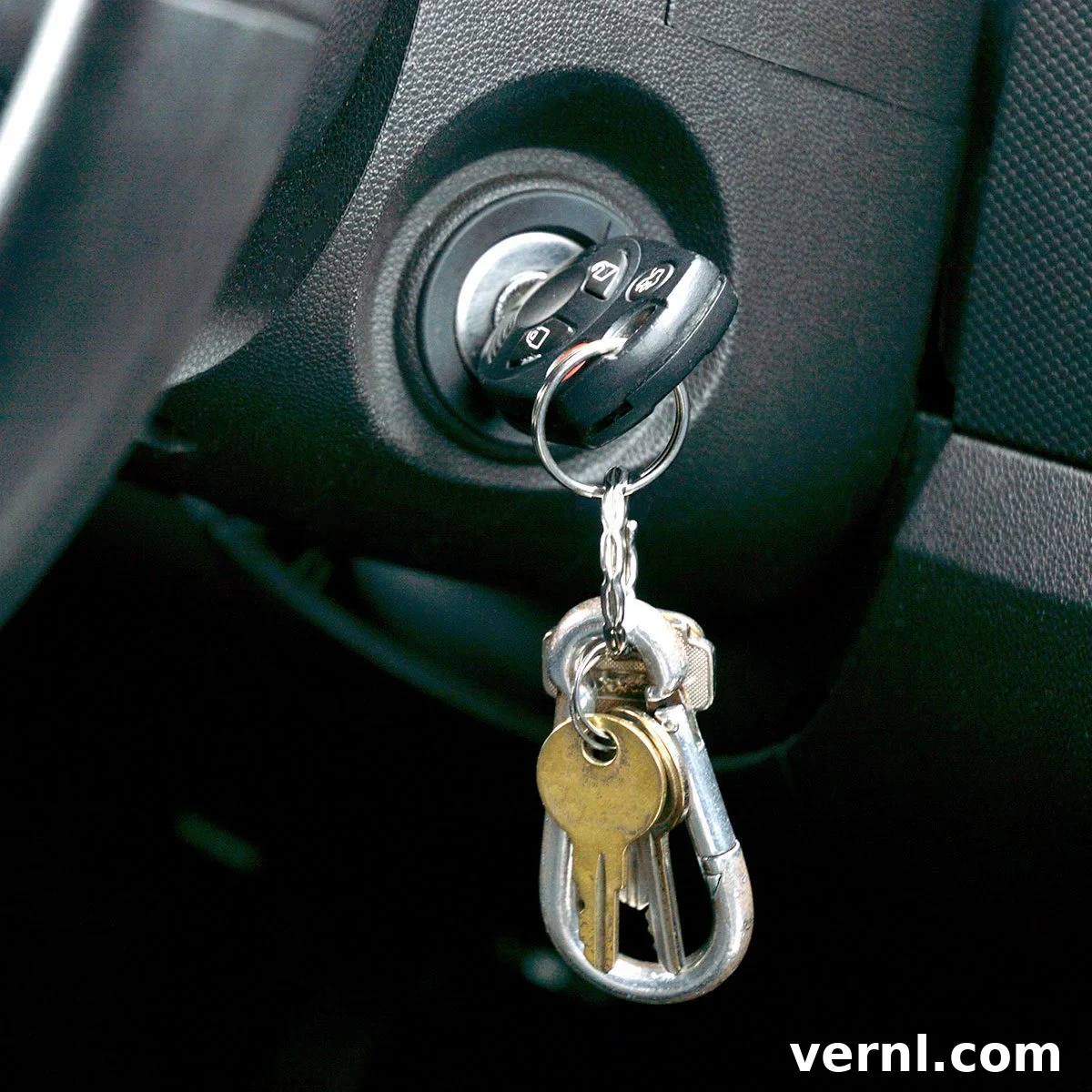
For vehicles equipped with a traditional key-in-ignition system, the physical weight of your keychain is the primary concern. As you drive, the constant movement and vibrations translate the keychain’s mass into a destructive force. Kye Grisham emphatically states that limiting the weight of your key chain is “very important.” He explains that any unnecessary weight can put “undue stress on the ignition lock cylinder and cause premature wear.” This isn’t just a minor cosmetic issue; it’s a mechanical problem that can progressively degrade one of your car’s most vital starting components.
The ignition lock cylinder, where you insert your key, is a precisely engineered assembly of tumblers, springs, and moving parts designed for a specific level of mechanical tolerance. When a heavy keychain is attached, gravity and the vehicle’s motion create a constant tugging and jarring effect on the key. This leverage acts directly on the lock cylinder, forcing its internal components to withstand stresses they were never designed to endure. Over time, this constant friction and lateral pressure cause the tumblers and the cylinder housing to wear down at an accelerated rate. The metal components literally rub against each other, grinding away at their integrity. This wear extends not only to the ignition cylinder itself but also to the key, leading to a vicious cycle of degradation.
The symptoms of a failing ignition cylinder due to excessive keychain weight are often subtle at first but worsen over time. You might begin to experience difficulty inserting or removing your key, or find that the key doesn’t turn as smoothly as it once did. Intermittent starting problems can also arise, where the car sometimes cranks but fails to ignite, or doesn’t respond at all. Eventually, the wear can become so severe that the key no longer properly engages the internal mechanisms, rendering the vehicle impossible to start. A failing starter system is not merely an inconvenience; it can leave you stranded, requiring a tow and costly repairs that could have been easily avoided.
Beyond the functional damage, Robert Hunter points out another significant concern: “having a large heavy key chain can also put unwanted scratches on your car’s steering column while driving.” These scratches might seem superficial, but they detract from your car’s interior aesthetics and can diminish its resale value. The constant swinging and bumping of a heavy keychain against the plastic or leather surfaces of the steering column can cause irreversible damage, serving as a constant reminder of the preventable harm. While all car parts are subject to eventual wear and tear, contributing to the artificially fast aging of these components through avoidable habits is a poor investment in your vehicle’s longevity and value. The frustration and expense associated with ignition cylinder replacement, along with the unsightly damage to your steering column, underscore the importance of mindful keychain management.
Beyond Weight: Key Fobs, Push-Button Starts, and Radio Frequency Interference
In modern automotive technology, many vehicles have transitioned from traditional key-in-ignition systems to keyless entry and push-button start mechanisms. This evolution often leads vehicle owners to believe they are immune to the problems associated with heavy keychains, as there’s no physical ignition cylinder for a heavy key to hang from. However, this assumption is only partially true. While the mechanical stress of weight on an ignition cylinder is eliminated, a new set of vulnerabilities emerges, particularly concerning the functionality of your smart key or key fob.
According to Kye Grisham, even with push-button ignitions, you still need to consider what you put on your key chain – but for entirely different reasons. He advises that it’s still crucial to “limit any large metallic objects” on your key chain. The reason lies in the sophisticated technology embedded within your key fob. Key fobs operate by transmitting low-frequency radio signals to your car’s onboard computer. These signals are critical for multiple functions: unlocking doors remotely, enabling the push-button start system to recognize the key’s presence inside the cabin, and sometimes even for remote engine start features. This seamless communication is fundamental to the convenience of modern keyless systems.
Large metallic objects, when in close proximity to your key fob, can interfere with these sensitive radio frequency (RF) signals. This phenomenon is often likened to a miniature Faraday cage effect, where the metal obstructs or distorts the electromagnetic waves necessary for proper communication between the fob and the car. This interference doesn’t necessarily mean the fob is broken, but rather that its signal is being blocked or weakened, preventing the car from “hearing” it clearly. Consequently, this can lead to frustrating scenarios where your car won’t unlock or, more critically, prevent your car from starting, even when the key fob is inside the vehicle.
Examples of potential metallic culprits extend beyond just decorative charms; they can include multiple heavy keys, large metal carabiners, metal wallet chains, or even other electronic devices (though modern fobs are generally robust against common electronics). The inconvenience of such interference is significant. Imagine being unable to start your car in a parking lot, or struggling to unlock your doors in a storm, all because a seemingly harmless attachment on your keychain is jamming the signal. These situations underscore that while the direct mechanical damage of weight is removed with push-button systems, the principle of a minimalist approach to your car key fob remains paramount for reliable operation.
Smart Solutions for Key Management: Protecting Your Investment
Regardless of whether your vehicle uses a traditional key-in-ignition or a sophisticated push-button start system, the message from our experts is clear: simplification and separation are the keys to protecting your vehicle. The ideal scenario involves a minimalist approach to your car key or fob, ensuring it operates as lightly and unobstructedly as possible. This means keeping decorative charms, loyalty cards, office keys, and other personal items on a separate key ring entirely dedicated to non-automotive keys.
For those who find it cumbersome to carry two separate key rings, Robert Hunter offers a practical and highly recommended solution: “keep your car keys on a quick disconnect style key chain so it can be removed from your main key chain while driving your car.” Quick disconnect keychains are ingenious devices that allow you to easily detach your car key or fob from your main collection of keys with a simple press or pull mechanism. This provides the best of both worlds: all your keys stay together for convenience when you’re not driving, but your car key can be isolated and kept free of excess weight or metallic interference when it matters most.
Implementing a quick disconnect strategy is straightforward. Simply attach your car key or fob to the quick disconnect mechanism. When you enter your vehicle, detach the car key from the bulk of your other keys. This ensures that only the lightweight car key is in the ignition (for traditional systems) or within the vehicle’s detection range (for push-button starts). Once you’ve turned off the engine and removed the key, you can easily reattach it to your main keychain. This simple habit can significantly extend the life of your ignition cylinder, prevent unsightly scratches on your steering column, and ensure reliable radio frequency communication for push-button start systems, thereby reducing the risk of frustrating breakdowns.
Beyond separating your car keys, general care for your key fob is also essential. Protect it from drops, extreme temperatures, and moisture, as these can damage the internal electronics. Regularly check and replace the battery in your key fob, typically every two to four years, or as recommended by your vehicle’s owner’s manual. A weak battery can also contribute to intermittent starting problems or difficulty unlocking doors. Consider a protective silicone cover for your key fob to guard against impacts and daily wear. If you’re already experiencing issues with your ignition – whether it’s difficulty turning the key or inconsistent starting – don’t delay. Consult with a qualified automotive technician. Early diagnosis and repair can prevent minor issues from escalating into far more costly and inconvenient problems, ensuring your vehicle remains reliable for years to come.
Meet Our Automotive Experts
The valuable insights shared in this article are provided by leading professionals dedicated to automotive excellence and vehicle maintenance.
Kye Grisham is the Vice President of Procurement and Automotive Technology for Christian Brothers Automotive Corporation. With extensive experience in the automotive industry, Grisham’s role involves overseeing the procurement of parts and ensuring the integration of cutting-edge automotive technologies. His expertise provides a comprehensive understanding of vehicle components, their vulnerabilities, and the best practices for their longevity and optimal performance across a wide range of vehicle models and systems.
Robert Hunter is an ASE Master Certified Technician and a dedicated collision repair instructor with North Montco Technical Career Center. As an ASE Master Certified Technician, Hunter possesses a deep, hands-on understanding of automotive mechanics, diagnostics, and repair across all major vehicle systems. His experience as an instructor further highlights his ability to convey complex automotive principles clearly and effectively, making his practical advice invaluable for both professionals and everyday drivers.
Conclusion: Prioritize Protection, Drive with Peace of Mind
The journey of personalizing our everyday items, including keychains, often comes with a desire for convenience and self-expression. However, when it comes to your car keys, this desire must be balanced with the practical realities of vehicle mechanics and electronic systems. As our experts, Kye Grisham and Robert Hunter, have illuminated, the seemingly minor act of adding weight or metallic attachments to your car keychain can have significant and detrimental consequences, impacting both traditional ignition cylinders and modern keyless entry systems.
Whether you drive a vehicle with a classic key-in-ignition or a sophisticated push-button start, the principles of minimizing weight and preventing signal interference are paramount. Adopting smart keychain habits, such as separating your car key from your main collection or utilizing a quick disconnect system, is a simple yet highly effective way to safeguard your vehicle’s critical components. These small adjustments can prevent premature wear, costly repairs, and the frustration of unexpected breakdowns.
By prioritizing the health of your car’s ignition system, you are not only extending the lifespan of vital parts but also ensuring your safety and peace of mind on the road. Drive smarter, protect your investment, and enjoy the reliability that comes from understanding and mitigating the hidden dangers of heavy keychains. A light keychain translates to a lighter burden on your vehicle, allowing you to focus on the journey ahead without unnecessary automotive concerns.