The Evolution of Automotive Safety: Advancements Protecting Drivers and Passengers
In an era defined by rapid technological advancement, the automotive industry stands at the forefront of innovation, continuously striving to enhance vehicle safety. Modern cars and trucks are no longer just modes of transportation; they are sophisticated machines equipped with an intricate network of up to 20 on-board computers. These powerful systems meticulously monitor and analyze real-time data, working tirelessly to prevent accidents before they even occur. Should an unforeseen collision take place, these technologies are engineered to mitigate impact forces, providing crucial protection for drivers and passengers alike.
The journey towards safer driving experiences has seen remarkable progress, transitioning from rudimentary safety measures to highly intelligent, predictive, and proactive systems. This comprehensive overview delves into the diverse array of vehicle technologies that are fundamentally transforming how we perceive and experience safety on the road.
Brake and Stability Systems: The Foundation of Vehicle Control
The cornerstone of vehicle safety often begins with effective braking and stability control. Anti-lock Braking Systems (ABS) have been a standard feature for decades, revolutionizing emergency stops by preventing wheel lock-up and allowing drivers to maintain steering control during panic braking situations. This foundational technology has paved the way for more sophisticated systems.
Today, computer-activated anti-lock braking systems are seamlessly integrated with an ecosystem of modern safety features. These include Electronic Stability Control (ESC), advanced anti-skid assistance, and Traction Control (TC). These interconnected systems work in harmony to prevent loss of control, especially under challenging driving conditions such as slippery roads or sudden maneuvers. The impact of these technologies is undeniable: a report by the National Highway Traffic Safety Administration (NHTSA) highlighted the significant benefits of anti-lock brakes in preventing pedestrian crashes, rollovers, run-off-road incidents, and frontal collisions.
Electronic Stability Control, in particular, has proven to be a monumental leap forward in automotive safety. Another pivotal NHTSA report revealed that ESC was responsible for saving an estimated 2,000 lives annually between 2011 and 2015, underscoring its critical role in accident prevention. Even simpler, low-tech solutions like the center high-mount stop light (the third brake light) contribute significantly, preventing an estimated 200,000 crashes each year by providing an additional, highly visible warning to trailing drivers. These collective advancements in braking and stability continue to form the bedrock of a safe driving experience.
Driver Assistance Safety Technologies (DAST): Proactive Warning Systems
Driver Assistance Safety Technologies (DAST) represent a crucial category of innovation designed to actively reduce traffic accidents primarily caused by human error. According to the NHTSA, these systems serve as vigilant co-pilots, constantly monitoring the vehicle’s surroundings and the driver’s actions. Utilizing an array of sophisticated hardware—including cameras, radar sensors, and lasers strategically placed throughout the vehicle—DAST systems feed data into complex computer processors. This enables them to provide timely alerts if a driver is at risk of a collision, giving precious seconds to react.
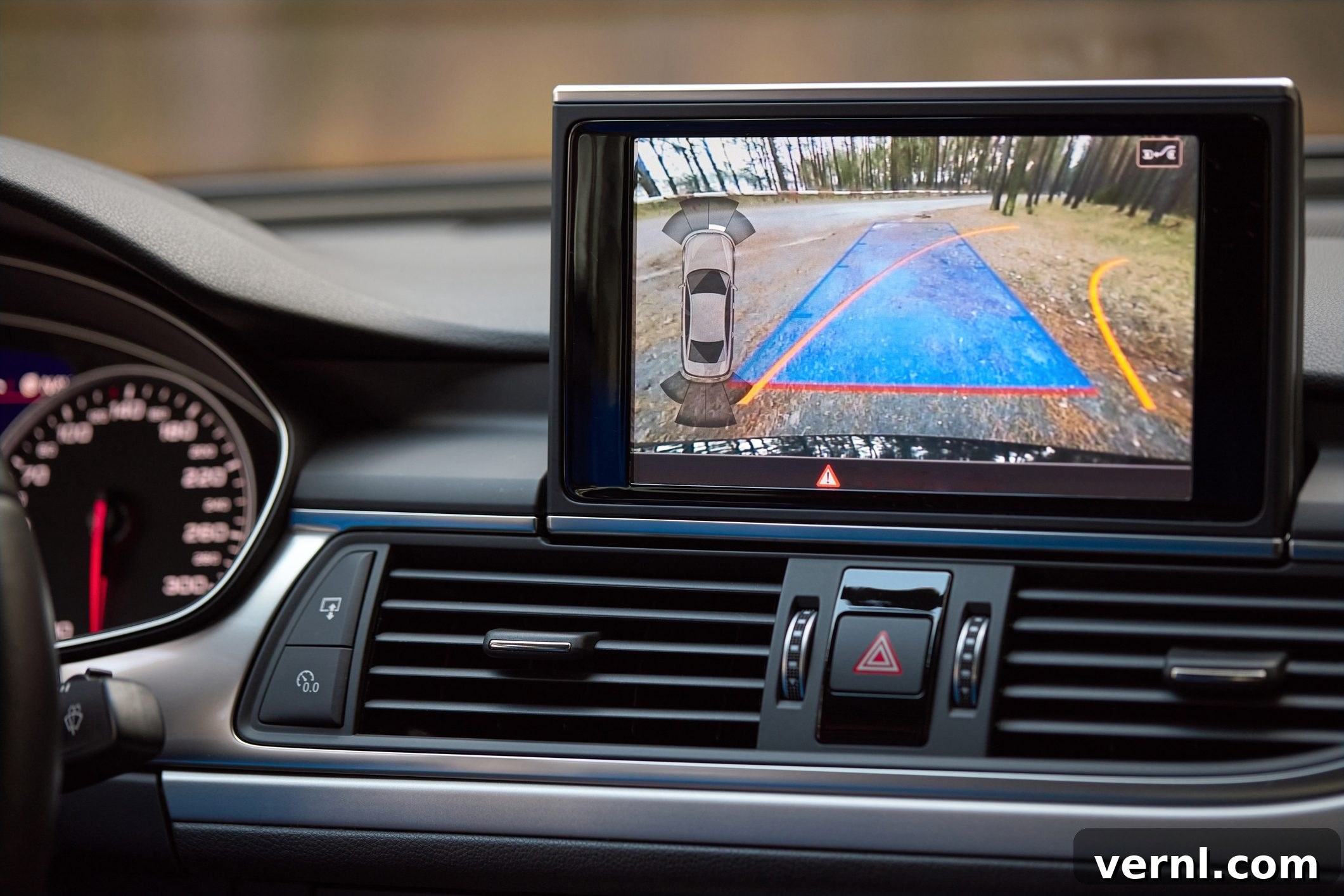
Many modern vehicles offer advanced features such as surround vision systems. These systems employ multiple high-resolution cameras and sophisticated algorithms to create a seamless, overhead digital image of your vehicle and its immediate surroundings. This bird’s-eye view is invaluable for maneuvering in tight spaces, parking, and avoiding low-speed collisions. While some DAST systems focus solely on providing warnings, others are designed to take proactive measures, stepping in to prevent an accident and thereby safeguarding you, your passengers, pedestrians, and other road users.
Collision Warning: Alerting Drivers to Potential Dangers
The cornerstone of DAST is its suite of collision warning features, each tailored to address specific driving hazards:
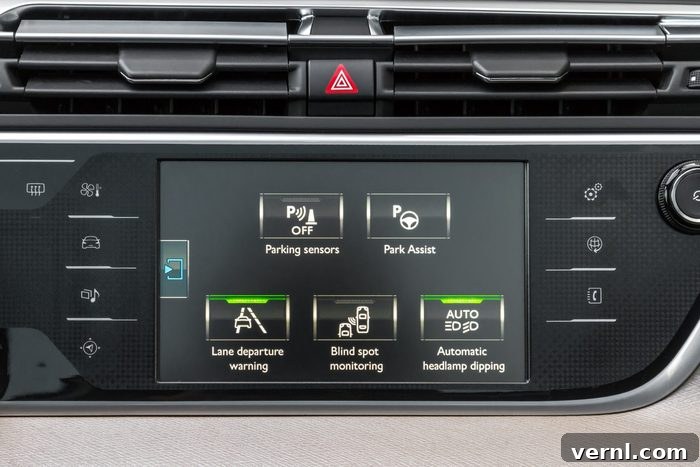
- Lane Assist/Departure Control System: This vital system is engineered to minimize accidents caused by unintentional lane drifting. It constantly monitors lane markings and, if the vehicle begins to veer out of its lane without an activated turn signal, it triggers a dashboard warning lamp and often provides haptic feedback, such as vibrating the seat or steering wheel. A compelling study published by the Insurance Institute for Highway Safety (IIHS) demonstrated that lane departure prevention systems significantly reduce the incidence of sideswipe and head-on crashes, highlighting their effectiveness in maintaining lane discipline.
- Rear Cross-Traffic and Forward Collision Warning Systems: These systems are indispensable for maneuvers where visibility might be compromised. The rear cross-traffic alert actively monitors for approaching vehicles when you are backing out of a parking space or driveway, issuing warnings if a collision risk is detected outside the driver’s camera view. Forward collision warning systems, conversely, use sensors to detect rapidly approaching vehicles or obstacles ahead, alerting the driver to an imminent front-end collision. Both systems provide critical warnings when operating in reverse or drive, significantly enhancing situational awareness.
- Blind Spot Monitoring: A common cause of accidents involves vehicles in the driver’s blind spot during lane changes. Blind spot monitoring systems alleviate this risk by employing sensors to detect vehicles or obstacles in these hard-to-see areas. When a hazard is detected, the system delivers clear audio and/or visual alerts, typically via an indicator light on the side mirrors or a chime. A 2018 IIHS study provided strong evidence of its efficacy, reporting that “lane-change crashes were 23 percent lower among vehicles with blind spot monitoring than those without,” showcasing its vital role in preventing common highway incidents.
While these technologies are designed to make driving safer, remember they are aids, not replacements for attentive driving. Always stay aware of your surroundings.
Advanced Driver Control Assistance (ADAS): Active Intervention for Enhanced Safety
Advanced Driver Control Assistance Systems (ADAS) elevate vehicle safety beyond mere warnings by actively taking control of the vehicle when necessary to prevent or mitigate collisions. These sophisticated systems represent a significant leap towards semi-autonomous driving, working to correct potential hazards even if the driver’s reaction is delayed or insufficient. The tangible benefits of ADAS are well-documented: an IIHS report from March 2022 highlighted a significant decrease in police-reported crashes and insurance claims for vehicles equipped with ADAS technologies, underscoring their effectiveness in real-world scenarios.
Collision Intervention: Automatic Actions to Avoid Crashes
A core component of ADAS is its collision intervention capabilities, which empower vehicles to automatically react to imminent dangers:
- Automatic Emergency Braking (AEB): This life-saving technology is activated when specific parameters—such as vehicle speed, proximity to another vehicle or object, and detection of an imminent crash—are met. The system utilizes an array of sensors to continuously scan the road ahead. If it senses an unavoidable collision and the driver does not react adequately, the AEB system automatically triggers the brakes, often with maximum force, to either prevent the crash entirely or significantly reduce its severity. A compelling 2022 study by Consumer Reports projected that if AEB were standard equipment on all cars in the U.S., it could lead to an astounding 11,000 fewer traffic deaths annually.
- Blind Spot Intervention/Lane Keeping Assist: Building upon basic warning systems, these advanced features offer active control. If you attempt to change lanes while another vehicle is in your blind spot, or if your car unintentionally drifts out of its driving lane, the system can autonomously apply the brakes on one side of the vehicle or gently limit electronic steering to guide the vehicle back into its lane. A 2022 study by the National Library of Medicine specifically showed that blind spot intervention systems resulted in a significant 27 percent reduction in crash risk, demonstrating their powerful preventative capabilities.
- Automatic Pedestrian, Reverse, and Emergency Braking: These finely tuned systems go beyond vehicle-to-vehicle collision avoidance. They incorporate advanced sensor arrays capable of distinguishing between inanimate objects and vulnerable road users like pedestrians. If a person is detected in the vehicle’s path, or if you are too close to a vehicle in front or behind, the system will spontaneously apply the brakes. Furthermore, depending on the specific year, make, and model, advanced AEB software can boost brake system pressure if the driver has already applied the brakes but the system detects an insufficient braking force for a potential crash. NOTE: Always consult your owner’s manual, as not all cars with AEB are equipped to brake for pedestrians, especially older models or specific trims.
- Adaptive Cruise Control (ACC): More than just a convenience feature, Adaptive Cruise Control is a blend of several DAST systems, designed to enhance both safety and driving comfort. ACC continuously monitors and adapts to surrounding traffic conditions. Unlike traditional cruise control, AAC will automatically reduce your vehicle’s speed to match that of the vehicle ahead of you, maintaining a safe following distance. It can also slow your vehicle down or even bring it to a complete stop in stop-and-go traffic, resuming speed when the path clears. State-of-the-art ACC systems can even integrate with your vehicle’s GPS to automatically reduce speed when approaching a sharp curve or an upcoming highway exit, providing a more intuitive and safer driving experience.
Other ADAS Systems Enhancing Driver Experience and Safety
Beyond collision intervention, ADAS encompasses a range of technologies designed to support drivers in various scenarios, further reducing stress and increasing safety:
- Automatic Crash Notification (ACN): In the unfortunate event of a collision, ACN systems are designed to act swiftly and autonomously. Utilizing the vehicle’s GPS system, ACN automatically notifies emergency responders and provides them with the precise location of the incident. This critical alert is typically triggered when an airbag deploys or an inertia sensor detects a significant impact consistent with a crash. The NHTSA estimates that ACN could save approximately 300 lives each year by ensuring faster emergency response times, which are crucial in minimizing injuries and fatalities.
- Parking Assist Systems (PAS): Parking, particularly parallel parking in urban environments, can be a source of stress for many drivers. Parking Assist Systems are designed to alleviate this by searching for and identifying viable parking spots. Once a suitable space is found, the system can then actively help guide the vehicle into the space, often controlling the steering wheel automatically. While PAS significantly simplifies parking, it’s important to remember that the driver remains responsible for shifting between drive and reverse, as well as applying the brakes and accelerator. These systems provide assistance but still require driver engagement.
- Headlight Safety Measures: Visibility is paramount for safe driving, especially at night. Modern headlight technologies offer significant advancements. Automatic high beams sense oncoming traffic or ambient light conditions and toggle between high and low beams independently, ensuring optimal illumination without dazzling other drivers. Adaptive headlights take this a step further; these intelligent systems swivel approximately 15 degrees in the direction the steering wheel turns. This allows drivers to see around corners and objects outside the normal headlamp illumination distance, illuminating potential hazards earlier and allowing for quicker response times, thus greatly enhancing safety during night driving.
Passive Safety Systems: Protection During the Impact
While ADAS and DAST focus on preventing accidents, Passive Safety Systems are engineered to protect occupants and minimize damage *during* an accident. These features activate immediately upon impact, absorbing forces and creating a protective cocoon around the vehicle’s occupants. This category includes fundamental components of vehicle construction and design, which work in concert to safeguard passengers.
- Crumple Zones: A revolutionary concept in vehicle engineering, crumple zones are specifically designed areas within the vehicle’s body structure that deform and collapse in a controlled manner during an impact. This strategic deformation absorbs the kinetic energy of a collision, dissipating it away from the passenger compartment. By sacrificing parts of the vehicle, crumple zones effectively reduce the forces exerted on the occupants, dramatically lowering the risk of severe injury. These zones are a critical component of modern vehicle construction, working alongside other safety features to create a robust protection system for passengers during a crash.
- Airbags and Side-Impact Airbags: Airbags are undoubtedly one of the most significant passive safety innovations. Mandated in all new passenger vehicles starting with the 1999 model year, front airbags deploy rapidly upon impact, cushioning occupants from hitting hard interior surfaces. They work in tandem with other essential safety features, most notably three-point seat belts (which became mandatory in 1968), collapsible steering columns, and padded dashboards, to provide comprehensive protection. According to the NHTSA, airbags have been remarkably effective, saving more than 50,000 lives between 1987 and 2017 alone. Beyond front airbags, side-impact airbags, though not legally required, are now standard equipment in nearly all major manufacturers’ vehicles. The IIHS highlights their profound impact, stating that curtain airbags can reduce life-threatening injuries by 52% in side impacts. The NHTSA further estimates that if side airbags were mandatory, an additional 2,000 lives could be saved every year, underscoring their critical contribution to occupant protection.
Other Essential Safety Technologies: Beyond Collision and Control
Beyond the core categories of active and passive safety systems, a host of other technologies, some of which we once didn’t know we needed, have become indispensable in enhancing overall vehicle safety and driver awareness:
- Tire Pressure Monitoring Systems (TPMS): This crucial technology, now mandated by law in many regions, continuously monitors the air pressure in your vehicle’s tires. If pressure drops below a safe threshold, the system immediately warns you, often with a dashboard indicator light. Maintaining proper tire pressure is vital for vehicle handling, fuel efficiency, and preventing blowouts. The NHTSA attributes TPMS to saving an estimated 120 lives and preventing 8,400 injuries annually, underscoring its profound impact on everyday driving safety.
- Run-Flat Tires: These innovative tires are engineered with reinforced sidewalls that allow them to maintain their shape and support the vehicle’s weight even after a puncture or significant loss of air pressure. This means that if you get a flat, you can safely continue driving for a limited distance (typically 50 miles at 50 mph) to reach a repair shop or a safe, level area, rather than being stranded on the side of the road. Run-flat tires enhance safety by eliminating the need for roadside tire changes in potentially dangerous situations.
- Driver-Attention Monitor: Driver fatigue and distraction are significant contributors to accidents. Driver-attention monitors utilize cameras and sensors to track various indicators of driver alertness, such as eye movements, head position, and steering behaviors. If the system detects signs of waning attention or drowsiness, it issues visual or audible warnings to prompt the driver to take a break or refocus on the road, thereby preventing potentially catastrophic incidents.
- Head-Up Displays (HUD): A Head-Up Display projects crucial driving information, such as speed, navigation directions, and warning alerts, directly onto the windshield within the driver’s line of sight. This innovative technology allows drivers to access vital data without needing to look down at the instrument cluster, keeping their eyes focused on the road ahead. By minimizing visual distraction and reducing the time spent shifting focus, HUDs contribute to a safer and more engaged driving experience.
- Rear Occupant Alert: This simple yet incredibly important system is designed to prevent tragic incidents involving children or pets being inadvertently left in the rear seat, especially during hot weather. Rear occupant alert systems detect if a rear door was opened before a trip and will issue an alert (audio, visual, or even a smartphone notification) to the driver after the engine is turned off, reminding them to check the back seat. This technology serves as a vital safeguard against heatstroke and other dangers.
NOTE: It’s important to understand that while Tire Pressure Monitoring Systems are legally required in many modern vehicles, most of the other items listed above are currently offered as optional equipment by manufacturers or are available as aftermarket add-ons. The availability can vary significantly by vehicle make, model, and trim level.
The landscape of automotive safety is continuously evolving, driven by the relentless pursuit of accident prevention and occupant protection. From sophisticated braking and stability systems that lay the groundwork for vehicle control, to advanced driver assistance technologies that provide proactive warnings and active interventions, and robust passive safety features designed to withstand impact, every innovation contributes to a safer journey for everyone on the road. As technology advances, we can anticipate even more integrated and intuitive systems that will continue to push the boundaries of vehicle safety, moving us closer to a future with fewer accidents and greater peace of mind for drivers and passengers worldwide.