
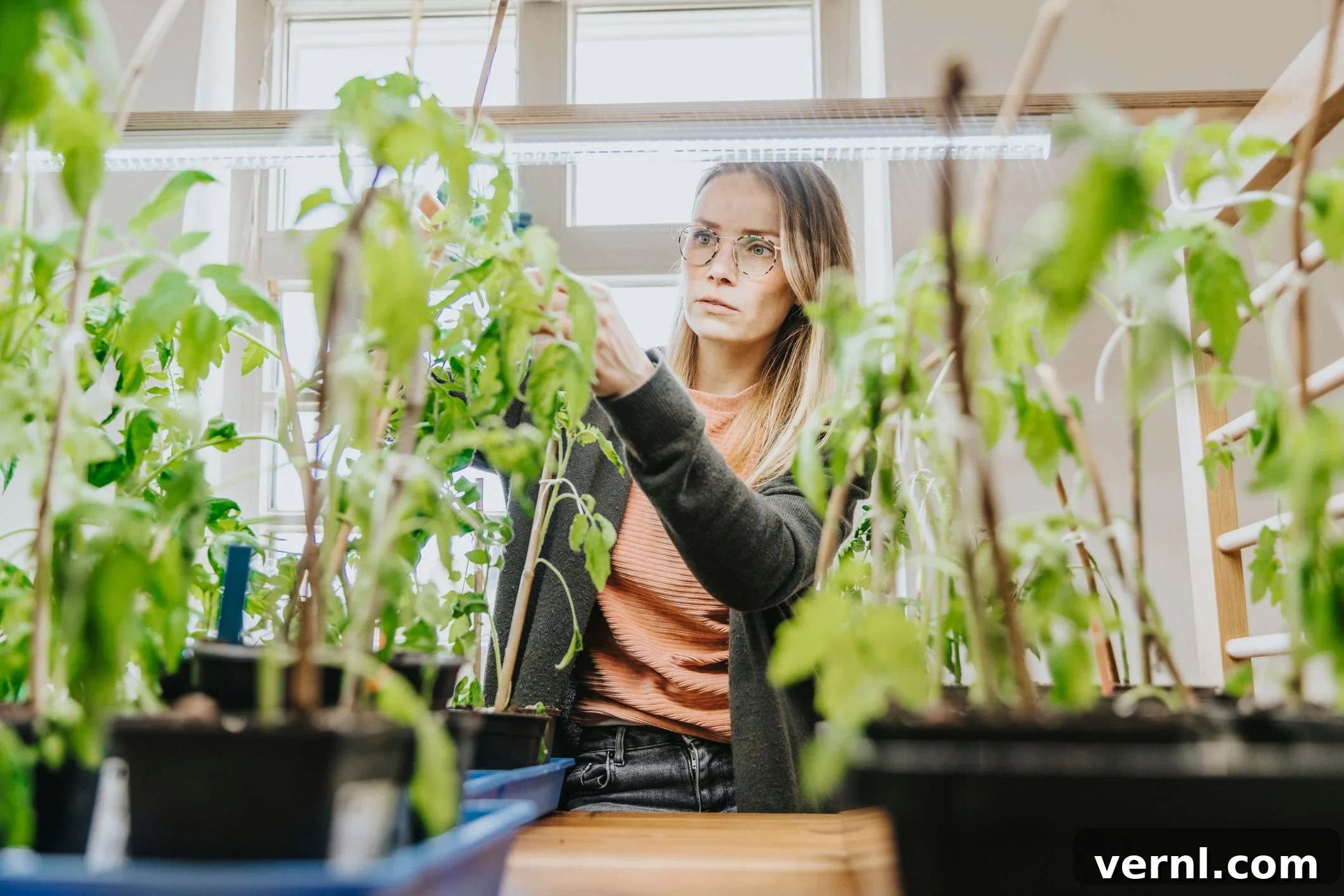
Ultimate Guide to Grow Lights: Nurturing Thriving Indoor Plants Year-Round
The allure of bringing nature indoors has captivated homeowners and horticulturists alike. From minimalist succulents gracing modern shelves to vibrant herb gardens flourishing in urban kitchens, indoor plants have become an integral part of contemporary living. This fascination has fueled a booming industry, with grow lights at its core, empowering everyone from casual enthusiasts to large-scale commercial growers to cultivate lush greenery, regardless of climate or season. The global grow light market, spanning Arctic greenhouses, bustling urban farms, and specialized cultivation facilities, is experiencing unprecedented growth, transforming how we interact with and grow plants indoors.
Beyond their aesthetic appeal, keeping indoor plants offers a wealth of documented benefits for human well-being. As Leslie F. Halleck, a distinguished author and certified professional horticulturist, points out, “We know from research that keeping indoor plants has many benefits, such as reduced anxiety and stress, improved productivity and focus, and even improved healing. So in terms of wellness, bringing some nature indoors can have a very positive impact on our lives. Beyond the mental benefits, plants bring so much dimension, aesthetically, to our homes and offices. Plants literally bring our indoor spaces to life.” To truly unlock these benefits and ensure our leafy companions flourish, many of these plants would greatly appreciate the consistent, tailored light provided by a quality grow light, at least for a portion of the year.
What Is a Grow Light and Why Is It Essential for Indoor Plants?
At its core, a grow light is an artificial light source designed to simulate natural sunlight, providing the specific spectrums and intensity of light necessary for plant photosynthesis and growth. Unlike standard household lighting, grow lights are engineered to emit wavelengths predominantly in the red and blue spectrums, which are most efficiently absorbed by chlorophyll and vital for various stages of plant development, from germination to flowering and fruiting. This capability allows indoor gardeners to cultivate a vast array of plants throughout the year, unconstrained by external weather conditions, limited sunlight, or seasonal changes.
The effectiveness of a grow light system hinges on several critical factors, requiring a thoughtful approach to maximize your plants’ potential:
- Light Intensity (Photosynthetic Photon Flux Density or PPFD): This crucial metric measures the number of photosynthetically active photons that hit a specific surface area per second. Higher PPFD values generally indicate greater light intensity, which is vital for plants with high light demands, such as fruiting vegetables.
- Light Spectrum (Photosynthetically Active Radiation or PAR): This refers to the range of light wavelengths (typically 400-700 nanometers) that plants use for photosynthesis. Grow lights are designed to optimize this spectrum, often emphasizing red and blue light, but full-spectrum lights increasingly offer a more balanced profile akin to natural sunlight.
- Proximity of the Lamp to the Plants: Light intensity diminishes rapidly with distance. Positioning your grow light at the correct height is paramount to ensure your plants receive adequate light without experiencing heat stress. Too far, and plants will stretch; too close, and leaves may burn.
- Supplementing Natural Sunlight: The overall light environment for a plant is a combination of natural sunlight and supplemental artificial light. A plant placed on a windowsill, receiving some natural light, will have different supplemental light needs compared to one in a dark corner. Understanding this balance is key to avoiding over or under-lighting.
- Photoperiod (Simulated Day Length): Plants interpret the time of year and trigger various growth stages (vegetative growth, flowering, dormancy) based on the duration of light and dark periods. Grow lights allow you to manipulate this “day length” to optimize growth, induce flowering, or extend the growing season.
Types of Grow Lights: Choosing the Right Solution for Your Greenery
Selecting the appropriate grow light depends heavily on the specific plants you aim to cultivate and your overall gardening goals. While the world of commercial horticulture can involve highly specialized and complex lighting solutions, home growers generally choose from three primary types for indoor use: fluorescent, low-power LEDs, and high-power LEDs. Each offers distinct advantages and considerations.
Fluorescent Lights: The Dependable Veterans
For many years, fluorescent lights were the undisputed champions of the grow light arena, a role they held until the advent of more energy-efficient LED technology. While they may be considered “old-school” by some, fluorescent lights remain a viable and often cost-effective option for many home growing applications. They are generally easy to find and can be a great entry point for beginners.
However, they do come with certain drawbacks. Fluorescent bulbs typically have a shorter lifespan compared to LEDs, are bulkier, and less sustainable due to their construction and potential mercury content. Despite these points, their affordability and accessibility make them a worthy choice for specific needs.
Leslie F. Halleck specifically recommends HO T5 fluorescent lamps. These “High Output” T5 bulbs are a significant improvement over older fluorescent models, producing less heat and offering greater energy efficiency. When handling fluorescent lamps, especially older types, care must be taken as some ballasts contain mercury. For those who already own fluorescent fixtures but wish to upgrade, many modern LED replacements are designed in the familiar tube shape, allowing for a seamless transition.
Expert Tip: Fluorescent fixtures often house a ballast internally, which generates heat. This means that plants positioned directly beneath the ballast section of the light fixture might exhibit signs of heat stress, such as scorched or yellowing leaves. Monitoring your plants closely and adjusting their position or providing additional ventilation can mitigate this issue.
LED Lights: The Modern, Energy-Efficient Choice
Light Emitting Diode (LED) technology has revolutionized the grow light industry, quickly becoming the preferred option for many growers due to their superior energy efficiency, longer lifespan, and customizable light spectrums. While the initial investment for quality LED grow lights can be higher than fluorescents, their reduced operating costs (lower electric bills) and extended durability often result in significant long-term savings.
One of the primary challenges for consumers when evaluating LED grow lights is understanding their true intensity and output. Unlike older lighting technologies where wattage served as a rough indicator of brightness, wattage in LEDs is not an accurate measure of photosynthetic potential. As Jonathan Ebba, a greenhouse and hydroponics specialist, explains, “We can measure how many photons of photosynthetically active radiation (PAR) are being given off by a light, and that’s linked to wattage, but using wattage is really not a useful spec.”
Instead, reputable LED manufacturers provide intensity information in terms of Photosynthetic Photon Flux Density (PPFD), often expressed in micromoles (µmol) of useful photons delivered per square meter per second. “A mole is a number, a six with 23 zeroes. It’s a way we count photons,” Ebba clarifies. Understanding these metrics is crucial for selecting an LED light that truly meets your plants’ specific demands.
Low-Power LEDs: Ideal for General Houseplants and Small Scale Growth
These are the ubiquitous, often inexpensive LED grow lights that frequently appear first in online searches. While they might be dismissed by some, low-power LEDs are perfectly adequate and highly effective for certain applications. They are an excellent choice for general foliage houseplants, small succulents, and supplementary lighting in areas that receive some natural light. Their modest intensity makes them suitable for plants with lower light requirements, helping them maintain lush growth and vibrant color.
Many low-power LEDs emit a distinctive pink or purple glow, a result of focusing predominantly on red and blue wavelengths. If this aesthetic isn’t desirable for your living space, Halleck advises seeking out models that offer a “full” or “broad spectrum” white-colored light. These lights combine various wavelengths to produce a more visually pleasing white light while still delivering the necessary spectrum for plant growth.
High-Power LEDs: The Solution for Demanding Plants and Significant Yields
When it comes to cultivating edible plants, larger floor-standing houseplants, or virtually any plant requiring intense light for robust growth and productivity, high-power LEDs are the gold standard. These lights deliver significantly higher PPFD values, making them suitable for vegetables like tomatoes, peppers, and leafy greens, as well as citrus plants and a wide variety of herbs that thrive under strong illumination.
With high-power LEDs, the adage “you get what you pay for” holds particularly true. The market is flooded with cheaply made grow lights that often underperform or fail prematurely. To ensure quality, longevity, and reliable performance, Halleck recommends investing in lamps from reputable manufacturers. “There are a lot of cheaply made grow lights on the market these days, so I typically recommend buying lamps made in the U.S.,” she states. “I find quality and longevity is better, as well as care of shipping and customer service.”
Lights to Avoid for Plant Cultivation
It’s important to distinguish between general household lighting and dedicated grow lights. Most standard bulbs are ill-suited for plant growth:
- Incandescent Lights: These bulbs generate excessive heat and their light spectrum is heavily weighted towards yellows and greens, which are largely reflected by plant leaves and do not effectively promote photosynthesis.
- Halogen Lights: Similar to incandescents, halogen lights emit significant amounts of heat and are notoriously poor in energy efficiency for plant growth, making them impractical and expensive to operate as grow lights.
Expert Tip: Understanding Light Spectrum: Beyond intensity, the specific light spectrum (often measured in Kelvin, K) plays a role in influencing plant morphology. Lights are generally categorized into cooler and warmer spectrums. Cooler lights (typically >5,000K, appearing blueish-white) are excellent for supporting lush, leafy growth during the vegetative stage. Warmer lights (typically <5,000K, appearing yellowish-white) tend to encourage flowering and fruiting. However, for most home growers, a well-balanced broad-spectrum grow light provides all the necessary wavelengths for healthy growth throughout all life stages. “Most plants will grow just fine under a balanced broad spectrum grow light,” notes Halleck, simplifying the choice for many enthusiasts.
How to Effectively Use Grow Lights for Optimal Plant Health
Integrating grow lights into your indoor gardening routine is an exciting journey of discovery. Success often comes through a process of trial, error, and attentive observation. Embrace the experimentation, have fun, and don’t be discouraged by initial challenges. Here are practical steps and expert advice to guide you:
- Choose Your Bulb Wisely Based on Plant Needs: Before purchasing, clearly define your goals. Are you starting delicate seedlings for transplant, nurturing a collection of low-light houseplants, or aiming for a bountiful harvest of herbs and vegetables? As Ebba advises, “If it’s a matter of growing seedlings for transplant, you should get some really bright lights, say a good bank of two or four T5 fluorescents.” For general houseplants, “getting one of those little $30 grow lamps and putting it in the window to supplement light might be completely adequate.” Remember, more expensive, higher-quality lights often achieve desired results in less time or with fewer units than their cheaper counterparts.
- Position Lights for Optimal Proximity: The inverse square law dictates that light intensity drops off dramatically with distance. Therefore, placing your grow lights close to your plants is paramount for maximizing light absorption. While the ideal distance varies by lamp type and intensity, a general rule of thumb is to start at about six inches for many LED and fluorescent setups. “The closer to the crop, the more of that light is going to be used by the plant,” Ebba emphasizes. Moving a light from six inches to a foot or two away can decrease effective intensity by as much as 75 percent. For strip or shop lights, utilizing adjustable chains allows you to easily raise or lower the fixtures as your plants grow, ensuring they always receive optimal light.
- Implement a Consistent Light Schedule with a Timer: Plants thrive on consistency, and irregular light exposure can cause stress and hinder growth. Using a simple timer is an indispensable tool for maintaining a stable photoperiod. “If you have a plant that is day-length sensitive, giving it eight hours one day and then 22 hours the next might be confusing,” says Ebba. Most plants benefit from 12-16 hours of light per day, followed by a consistent dark period crucial for metabolic processes. Researching your specific plant’s ideal photoperiod will yield the best results.
- Research the Amount of Light Each Plant Needs (Daily Light Integral – DLI): Think of a plant’s daily light requirement as “filling a bucket,” an analogy Ebba uses effectively. This “bucket” fills with photons throughout the day, and the speed at which it fills depends on the intensity of your grow light combined with any natural light the plant receives. Most common houseplants have relatively “small buckets,” requiring less intense light. Lettuce, for example, has a slightly larger bucket, while fruiting plants like tomatoes and peppers have “really big buckets,” demanding high light intensity for prolonged periods. For high-light-loving herbs, Ebba suggests, “For my herbs, I’ll put them on a bright windowsill and hang the shop lights above them for 14 hours a day in addition to the sunlight, or 22 to 23 hours if no sun.” Understanding your plant’s DLI ensures you provide precisely what it needs to thrive.
- Mimic the Day Length Your Plants Are Adapted To (Photoperiodism): While not critical for all plants, photoperiodism—a plant’s physiological response to changes in day length—is vital for many species, particularly those that flower or fruit. Plants that evolved in temperate zones, like basil, often use night length as an internal clock, triggering specific growth phases based on perceived light duration. “Plants that evolved in temperate zones know what month it is based on the length of the night, so some of them do different things such as flower, or stop flowering based on how many hours they perceive light,” Ebba explains. Conversely, plants originating near the equator experience consistently 12-hour days year-round and thus do not exhibit the same strong photoperiodic responses. Adjusting your light timer to simulate these natural day lengths can significantly impact growth and flowering.
- Don’t Forget the Water (and Other Environmental Factors): Optimal lighting and proper watering go hand-in-hand. It’s a common misconception that succulents like aloe thrive on minimal water; often, they simply aren’t receiving enough sunlight to efficiently utilize ample water. When provided with sufficient light, succulents can indeed handle more generous watering. For seedlings, maintaining consistently moist (but not waterlogged) soil is crucial. Observe your plants for signs of insufficient light: if they appear “leggy” or “stretched” with significant space between their leaves, they are likely reaching for more light. Providing additional light often necessitates increased watering and careful attention to other environmental factors like humidity and air circulation to prevent issues like fungal growth. For comprehensive technical information on growing seedlings, Ebba has authored a detailed paper worth consulting.
- Prioritize Maintenance and Safety: Regularly clean your lighting apparatus to ensure maximum light output and efficiency. Dust and debris can block light, reducing effectiveness. However, exercise extreme caution when performing maintenance, especially when dealing with the combination of water and electricity in indoor gardens. “People’s windowsill gardens are a delightful mixture of water and electricity,” Ebba warns. “Be careful. Don’t get these things wet.” Always unplug lights before cleaning, and ensure all electrical components are kept away from moisture.
Frequently Asked Questions About Grow Lights
Do I need to use reflectors with grow lights?
While not strictly mandatory, the use of reflectors with grow lights is highly recommended and can significantly enhance the efficiency of your setup. Reflectors are designed to capture and redirect light that would otherwise escape into the surrounding environment, focusing it back down onto your plants. This ensures that your plants can absorb as much of the lamp’s output as possible, maximizing the return on your investment in lighting. Without reflectors, a substantial portion of the light energy you pay for is wasted, reducing the overall effectiveness of your grow light system.
How do I prevent overheating from grow lights?
Although modern LED grow lights are renowned for their energy efficiency and typically generate less heat than older technologies, they do still produce some thermal energy. Maintaining optimal light absorption for your plants requires keeping the lights at an appropriate distance. However, positioning them too close can lead to heat stress. If you observe signs of heat stress in your plants (such as wilting, burnt leaf tips, or bleached patches), consider these remedies:
- Increase Distance: The simplest solution is to gradually move the grow lights farther away from the plant canopy until signs of stress subside.
- Improve Ventilation: Enhance air circulation around your plants and lights. This can be achieved by opening windows, using small oscillating fans, or installing exhaust fans to dissipate warm air.
- Consider Lower Wattage: If persistent heat remains an issue, particularly in enclosed spaces, switching to lights with a lower wattage rating or reduced intensity may be necessary.
- Employ a Hydro Cooling System: For more advanced setups, solutions like a hydro cooling system (often described by manufacturers like Spider Farmer) can be implemented. This works similarly to an evaporative cooler, using water to draw heat away from the light source and maintain a stable temperature.
About the Experts
- Leslie F. Halleck is a degreed & certified professional horticulturist with 32 years of horticulture industry experience and a lifetime of hands-on gardening and indoor growing. She maintains the insightful website Halleck Horticultural.
- Jonathan Ebba is a dedicated field specialist with the University of New Hampshire Cooperative Extension, offering invaluable expertise in greenhouse and hydroponics.
Sources
- What Can I Do If My LED Grow Lights Get Too Hot?, Spider Farmer, 2025.