Embarking on a home improvement project can be both rewarding and challenging. When it comes to roofing, choosing a durable, long-lasting, and aesthetically pleasing option is paramount. Metal roofing systems have emerged as a top contender, offering an impressive blend of longevity, resilience, and style. While the upfront investment for materials can be higher compared to traditional options, the substantial long-term savings and myriad benefits make it a remarkably sound decision for any homeowner looking to enhance their property.
Unlocking the Potential of DIY Metal Roofing: A Comprehensive Guide
For the ambitious do-it-yourself enthusiast, installing a metal roof is a viable project that can lead to significant cost savings on labor. Modern metal roofing panels are designed for ease of installation, often featuring interlocking systems that simplify the process. While you’ll need to feel comfortable working with metal and investing more upfront for the specialized materials, the payoff in the form of a robust, enduring roof is substantial. Over its extensive lifespan, a metal roof will invariably balance out its initial cost, thanks to its superior durability and minimal maintenance requirements. One key specialty tool that will prove invaluable for precise installation is a locking sheet metal tool, readily available from most roofing suppliers or through online retailers, ensuring professional-grade results for your DIY endeavor.
Why Choose Metal Roofing? Unmatched Durability and Performance
The benefits of installing a metal roof extend far beyond its appealing aesthetic. One of its most compelling advantages is its inherent fire resistance. Unlike combustible materials such as asphalt shingles, metal roofs offer superior protection against fire hazards, potentially qualifying you for a discount on your homeowner’s insurance premiums. This added layer of safety provides invaluable peace of mind for you and your family.
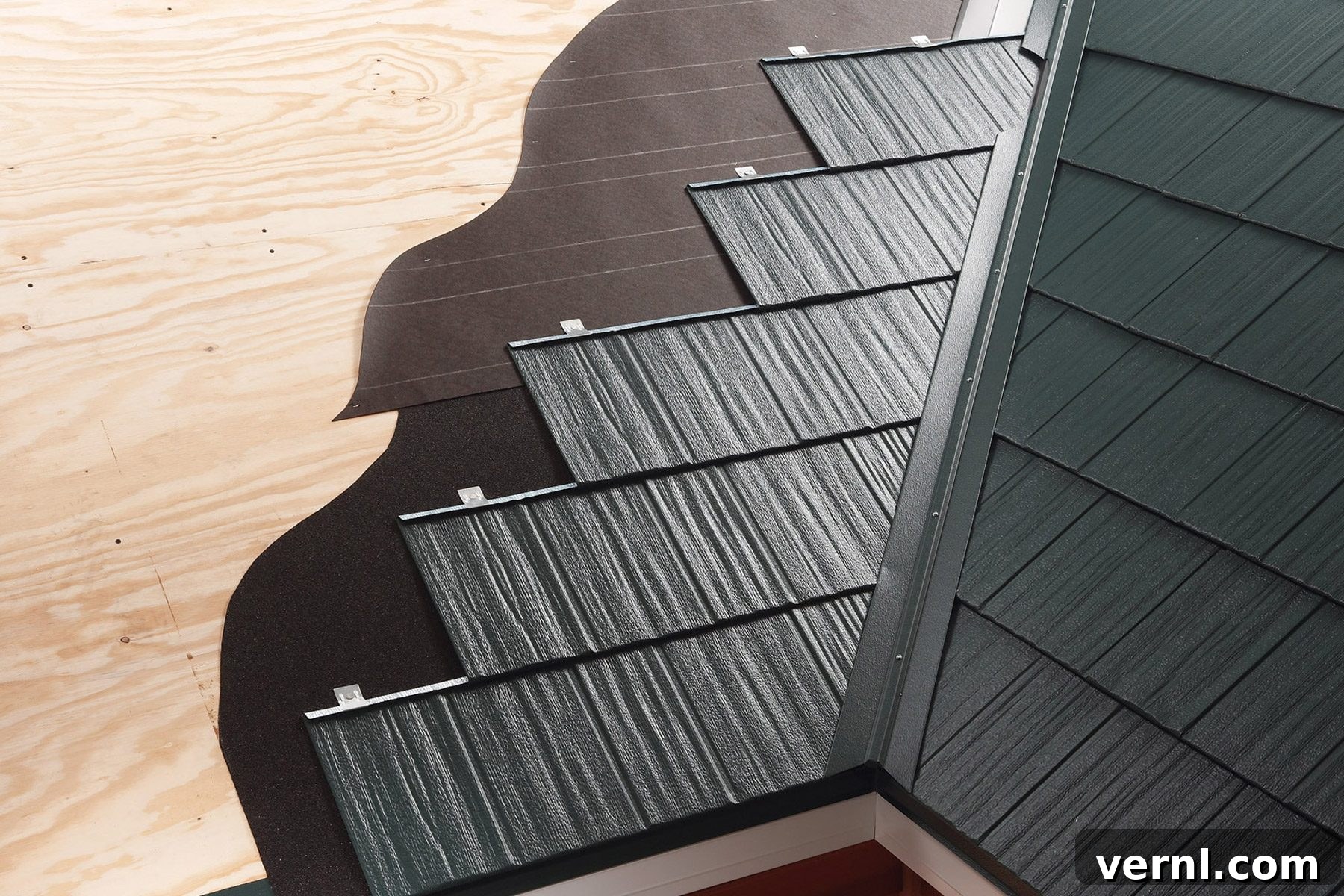
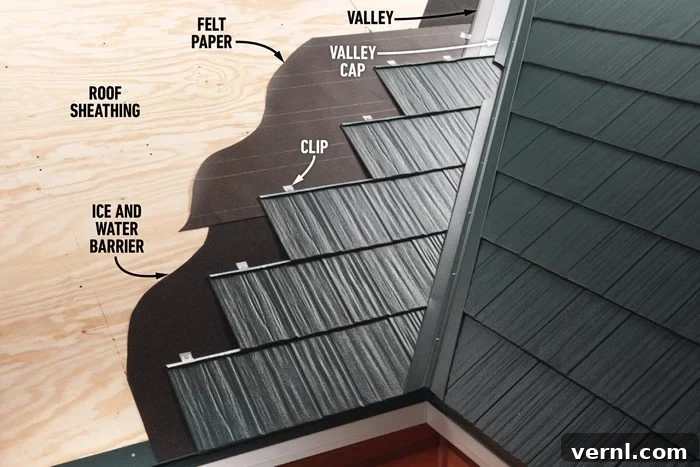
Beyond safety, metal roofs significantly enhance your home’s curb appeal. Available in a vast array of colors, finishes, and profiles, they can be customized to complement any architectural style, from classic to contemporary. Manufacturers like Edco (whose product is shown in the accompanying photo) and Tamko offer innovative interlocking metal roofing panels that can be installed with clips and roofing nails, providing a clean, streamlined look. The reflective properties of many metal finishes can also contribute to energy efficiency, reducing cooling costs in warmer climates by reflecting solar heat away from your home.
In colder regions, metal roofs excel at shedding snow and ice. Their smooth, slick surface allows snow to easily slide off, preventing heavy snow loads from accumulating and putting undue stress on your roof structure. This natural snow removal can prevent ice dam formation and significantly reduce the risk of structural damage, a common concern with other roofing materials. Furthermore, metal roofs are exceptionally resistant to high winds, hail, and extreme weather conditions, making them a wise investment for long-term protection.
Understanding Metal Roof Panel Options and Customization
The versatility of metal roofing is truly remarkable, with a wide variety of panel types and materials to suit diverse needs and preferences. You can special-order metal roofs in an extensive palette of colors at lumberyards and specialized roof supply companies, ensuring a perfect match for your home’s exterior. Common panel types include standing seam, which features raised interlocked seams for a distinctive look and superior watertightness; metal shingles or shakes, designed to mimic the appearance of traditional shingles while offering the benefits of metal; and corrugated panels, often favored for their industrial aesthetic and robust performance.
Manufacturers like Edco and Tamko have developed sophisticated systems that go beyond basic panels. These systems include specially designed starter strips for a secure edge, precision-engineered valleys for effective water diversion, durable gable trim flashing for a finished look, and specific flashing solutions for complex areas like dormers, chimneys, and skylights. Each panel is meticulously designed to interlock seamlessly with underlying and adjacent panels or with these specialized flashing components, creating a monolithic, weather-tight barrier that protects your home from the elements.
Addressing Common Concerns: The Truth About Metal Roof Noise
One of the most common questions homeowners have about metal roofs concerns potential noise, particularly during rainstorms. It’s a natural assumption that rain hitting a metal surface would be louder than on a traditional asphalt roof. However, manufacturers and experienced installers consistently debunk this myth. Modern metal roofing systems, when installed correctly over solid decking and with proper insulation, are no more noticeably louder than asphalt shingles. The underlying roof deck, combined with insulation in the attic space, effectively dampens any sound. You can rest assured that stormy nights won’t turn into a nuisance due to excessive roof noise.
Concerns about expansion and contraction “creaking” and hail noise are also often overstated. Advanced fastening systems for metal roofs are designed to accommodate thermal expansion and contraction, minimizing any audible sounds. While exceptionally large hail might produce some noise, the impact on metal roofs is often less damaging than on other materials, which can sustain significant granular loss or cracking from hail strikes.
Metal Roofing Cost: An Investment That Pays Off
Understanding the financial aspect of metal roofing is crucial for making an informed decision. While the initial outlay can be significant, the long-term value proposition is undeniable.
DIY Metal Roof Material Costs vs. Professional Installation
The cost of metal roofing materials averages around $250 per square (with one square equaling 100 square feet). If you plan to tackle the installation of the metal roofing yourself, the material cost for an average-sized roof might be approximately $4,000. This figure represents a substantial saving compared to hiring a professional contractor to install even basic three-tab asphalt shingles, where labor costs can significantly increase the total project price. It’s true that the price of metal roofing materials can be six times as much as low-end three-tab asphalt shingles, which typically start at $35 to $40 per square. However, this comparison often overlooks the critical factor of longevity.
Long-Term Value and ROI of Metal Roofing
The enduring appeal of metal roofs lies in their exceptional lifespan. While asphalt shingles typically last 15-30 years, metal roofs are engineered to last 50 years or more, and often come with warranties reflecting this incredible durability. This means that with a metal roof, you effectively eliminate the need for costly re-roofing projects for half a century or longer, saving you tens of thousands of dollars over the lifetime of your home. This unparalleled longevity represents a significant return on investment (ROI).
Beyond avoiding future re-roofing expenses, metal roofs offer several other financial advantages. Their energy-efficient properties can lead to lower utility bills, especially in warmer climates, by reflecting solar radiation. The potential for insurance discounts due to their fire resistance further adds to the savings. Moreover, the distinctive appearance and superior performance of a metal roof can significantly increase your home’s resale value, making it an attractive feature for potential buyers. With minimal maintenance requirements—typically just occasional cleaning—metal roofs free you from the ongoing costs and hassle associated with repairing or maintaining less durable roofing materials.
Essential Considerations Before Starting Your Metal Roof Project
Before embarking on your DIY metal roofing project, a few critical considerations will ensure a successful outcome. Firstly, assess your roof’s slope; while most metal roofs are suitable for various pitches, some systems are designed for specific gradients. Secondly, thoroughly research local building codes and obtain any necessary permits. Adherence to these regulations is crucial for safety and compliance. Thirdly, consider the weight of the metal roofing system, although most are surprisingly lightweight, posing no structural concerns for typical homes. Proper ventilation of your attic space is also vital to prevent moisture buildup and optimize energy performance, and should be carefully planned during installation. Lastly, familiarizing yourself with the correct fasteners and techniques is paramount for a secure, weather-tight installation that will stand the test of time, ensuring your investment truly pays off for decades to come.