The Truth About Your Mattress Tag: Unraveling the “Do Not Remove” Mystery
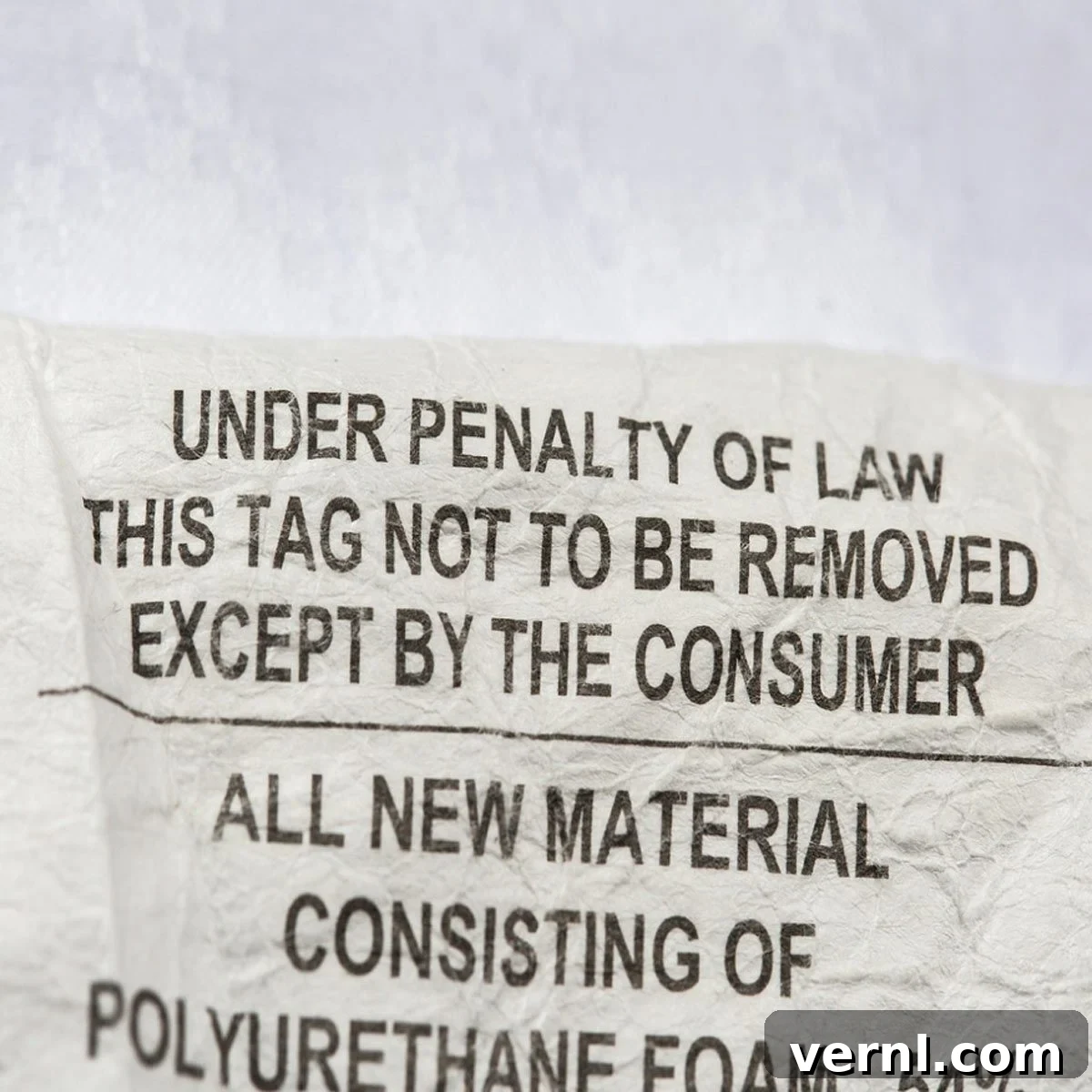
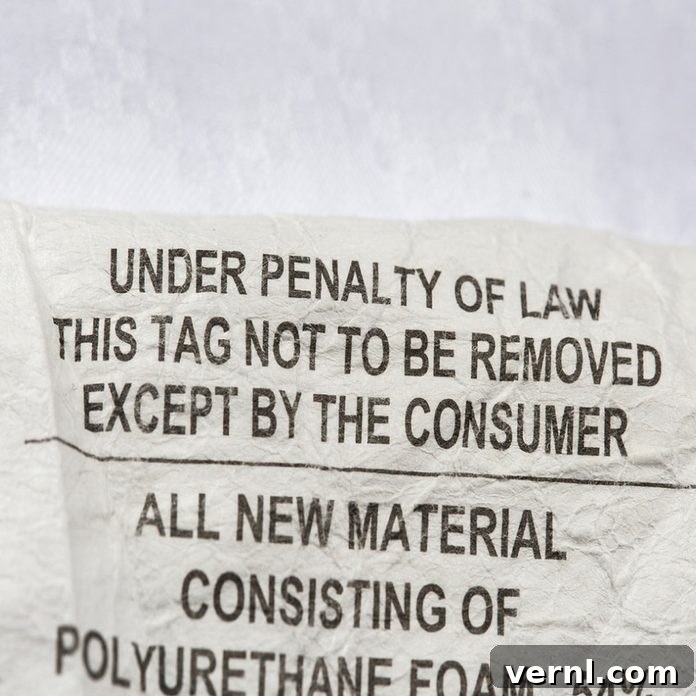
For decades, a pervasive fear has gripped the hearts of countless consumers across the nation: the ominous warning emblazoned on mattress tags, threatening “Under penalty of law, this tag not to be removed!” This stern declaration has instilled a widespread belief that daring to snip off this seemingly innocuous label could lead to dire legal consequences, perhaps even a knock on the door from an overzealous “mattress police” force.
The image of committing a grave federal offense by simply removing a piece of fabric from your own bedding is, for many, a deeply ingrained misconception. It’s a classic urban legend, passed down through generations, making people hesitate before tidying up their sleep space. But is there any real weight to this long-standing warning? Does a casual snip truly invite legal repercussions? A closer look at the actual wording on most mattress tags reveals a crucial, often overlooked, phrase that definitively debunks this myth: “except by consumer.”
Who Does the Warning Actually Apply To? Debunking the Myth
The infamous “Do Not Remove Under Penalty of Law” warning isn’t directed at you, the end-user who has purchased the mattress for personal use. This vital piece of information, “except by consumer,” is the key to understanding the true intent of the regulation. This warning applies specifically to the entities involved in the commercial supply chain—manufacturers, distributors, and retailers. These are the parties legally bound to keep the tag intact until the mattress is sold and delivered to its ultimate consumer.
The purpose of this regulation is not to inconvenience or intimidate the mattress owner, but rather to ensure transparency and prevent fraudulent practices within the bedding industry. Imagine a world where unscrupulous businesses could easily misrepresent the contents of a mattress. The tag acts as a crucial identifier and assurance of what’s inside, providing a safeguard against deceit. Therefore, once a mattress is legally purchased and becomes your property, you are no longer bound by the “penalty of law” clause regarding tag removal. You are the “consumer” exempted from the rule, free to remove the tag without fear of legal reprisal.
The federal regulation that underpins these requirements is clear about its scope. The Textile Products Identification Act, enforced by the Federal Trade Commission (FTC), explicitly targets commercial misconduct. It states that it is unlawful to:
“…remove or mutilate, or cause or participate in the removal or mutilation of, prior to the time any textile fiber product is sold and delivered to the ultimate consumer, any stamp, tag, label, or other identification required by this subchapter to be affixed to such textile fiber product, and any person violating this section shall be guilty of an unfair method of competition, and an unfair or deceptive act or practice, under the Federal Trade Commission Act.”
This legal text confirms that the prohibition is aimed squarely at preventing businesses from tampering with product information before the sale to the final customer. It’s a consumer protection measure designed to ensure that what you see advertised is what you truly get, free from any misleading alterations by sellers looking to cut corners or deceive buyers. For you, the individual consumer, the tag holds no such legal threat once the mattress is in your home.
Why Are There Mattress Tags? A Fascinating Historical Journey
The existence of mattress tags, with their stern warnings, isn’t a modern quirk; it’s a direct result of a fascinating and somewhat revolting chapter in early 20th-century consumer history. Before these regulations were put into place, the mattress manufacturing industry was largely unregulated, leading to some truly appalling practices that posed significant public health risks and defrauded unsuspecting buyers.
The Era of Unsanitary Stuffing
In the early 1900s, it was not uncommon for mattress makers to engage in highly unsanitary and deceptive business practices. To minimize costs and maximize profits, some manufacturers would stuff mattresses with practically anything they could get their hands on, regardless of hygiene or quality. This often included repulsive and dangerous materials such as discarded food waste, used rags, old newspapers, general refuse, and even horsehair that hadn’t been properly cleaned or treated. Imagine the shock and disgust! These unsavory fillings were not only uncomfortable but also harbored a host of unwelcome guests, including lice, bedbugs, fleas, and other parasites. These pest infestations led to widespread discomfort, skin irritations, and the potential spread of diseases, turning what should have been a restful night’s sleep into a nightmare.
Consumers had no way of knowing what horrors lurked inside their new mattresses. Once the product was encased in fabric, its true contents were hidden, allowing unscrupulous sellers to peddle their bacteria-filled, pest-ridden products to an unsuspecting public. The lack of transparency was a breeding ground for fraud and a serious public health concern, especially in an era without widespread modern sanitation practices or consumer protection agencies.
The Government’s Intervention and the Birth of Labeling Laws
Public outcry and growing awareness of these unsanitary conditions eventually prompted government intervention. Legislators realized that a system was needed to protect consumers from these fraudulent and dangerous practices. The solution was remarkably simple yet effective: mandate that manufacturers attach labels to all new mattresses, clearly stating the materials used to make them. This requirement was a game-changer, forcing transparency and accountability within the industry. It was one of the earliest forms of consumer protection legislation in the United States, designed to inform buyers and ensure a minimum standard of hygiene and quality.
However, resourceful (and still unscrupulous) mattress salespeople quickly found a loophole. They began simply ripping off the newly mandated material tags before selling the mattresses, thereby continuing their deceptive practices. The government, recognizing this new wave of evasion, responded with a further amendment to the law. To counter this blatant circumvention, they required the addition of the now-famous “Do Not Remove” message, making it explicitly unlawful for anyone in the commercial chain to tamper with or remove the tag before the product reached the final consumer. This addition solidified the legal protection, ensuring that the critical information stayed with the product until it was in the buyer’s hands. And thus, the mattress tag, with its imposing warning, became a permanent fixture, an enduring legacy of a battle fought for consumer health and honesty in commerce.
Beyond the Myth: The Modern Relevance of Mattress Tags
While the initial purpose of mattress tags was rooted in hygiene and preventing fraud, their role has evolved to encompass a broader range of vital information for consumers today. These seemingly small labels provide crucial details that extend far beyond simply listing the filling materials, offering insights into safety, sustainability, and product specifics.
What Modern Mattress Tags Tell You:
- Material Composition: Beyond just knowing if your mattress is stuffed with clean materials, modern tags detail specific percentages of different foams (memory foam, latex, polyfoam), natural fibers (cotton, wool), and coil types. This is essential for individuals with allergies or those seeking specific comfort and support profiles.
- Flammability Standards Compliance: A critically important safety aspect, modern mattress tags often indicate compliance with federal flammability standards, such as those set by the Consumer Product Safety Commission (CPSC). These standards are designed to prevent mattresses from igniting easily or burning rapidly, offering vital fire safety protection for your home.
- Country of Origin: For consumers concerned about global trade practices, labor standards, or simply wishing to support domestic industries, the country of manufacture information is a valuable detail.
- Manufacturer Information & Model Details: Tags typically include the brand name, model number, and often a unique serial number. This information is indispensable for various post-purchase scenarios.
- Care Instructions: While less common for mattresses themselves (which are rarely washable), some tags might offer general care guidelines or indicate if specific components are removable and washable.
- Recycling Information: With a growing emphasis on environmental responsibility, some progressive manufacturers include details on how to properly dispose of or recycle the mattress at the end of its life cycle.
Practical Reasons to Keep Your Mattress Tag (Even If You Can Remove It)
Given that you, the consumer, are legally permitted to remove your mattress tag, you might wonder if there’s any reason to keep it attached. The answer is a resounding “yes!” While not a legal requirement for you, keeping the tag can be incredibly beneficial for several practical reasons, primarily related to protecting your investment and ensuring you have access to important product information.
Crucial for Warranty Claims
This is arguably the most important reason to keep your mattress tag. Mattresses are significant investments, and most come with a warranty that covers manufacturing defects for many years, sometimes even a lifetime. When you need to make a warranty claim, manufacturers almost always require specific information found on the tag, such as the model number, serial number, and manufacturing date. Without this tag, proving the age of your mattress or identifying the exact model can be incredibly difficult, potentially voiding your warranty and leaving you responsible for replacement costs if a defect arises. Even if a tag isn’t explicitly required for a warranty, it greatly expedites the process and removes any doubt about the product’s identity.
Facilitating Returns and Exchanges
Similar to warranty claims, if you need to return or exchange a mattress within a retailer’s specified period, the tag provides essential identification. Retailers use the information on the tag to verify the product, ensuring it matches their records and was purchased from their store. Without it, you might face complications or even be denied a return.
Allergy Information at Your Fingertips
For individuals with specific allergies or sensitivities, the tag’s detailed material composition can be a quick and convenient reference. If you suspect a new allergy or need to confirm certain materials, having the tag readily accessible prevents the need for extensive research or contact with the manufacturer.
Aids in Resale or Donation
Should you decide to sell or donate your mattress in the future (where permitted by local health regulations), having the original tag can add credibility. It allows prospective buyers or charities to verify the mattress’s specifications, material content, and age, increasing its appeal and value.
Supporting Responsible Disposal
As mentioned, some tags now include information or guidance on how to properly dispose of or recycle your mattress. Keeping this information handy can help you make environmentally conscious decisions at the end of your mattress’s life, preventing it from ending up in a landfill when recycling options might be available.
Empowering the Informed Consumer
The myth of the forbidden mattress tag is a testament to how legal jargon and ambiguous warnings can create widespread confusion. While the intimidating “Under penalty of law, this tag not to be removed!” command still appears on bedding across the country, the critical “except by consumer” clause liberates you from any imagined legal peril. Your fears of mattress police or federal infractions over a cut label can finally be laid to rest.
The true purpose of this historical regulation was and remains consumer protection, ensuring transparency and honesty from manufacturers and retailers. It’s a safeguard against deceptive commercial practices, not a trap for the individual mattress owner. Knowing this empowers you to make informed decisions about your bedding. While you are free to remove the tag, understanding its importance for warranty purposes, material verification, and even future resale might lead you to keep it discreetly tucked away. So, sleep soundly, knowing you are in control of your mattress tag, armed with the knowledge to navigate the nuances of bedding regulations with confidence.