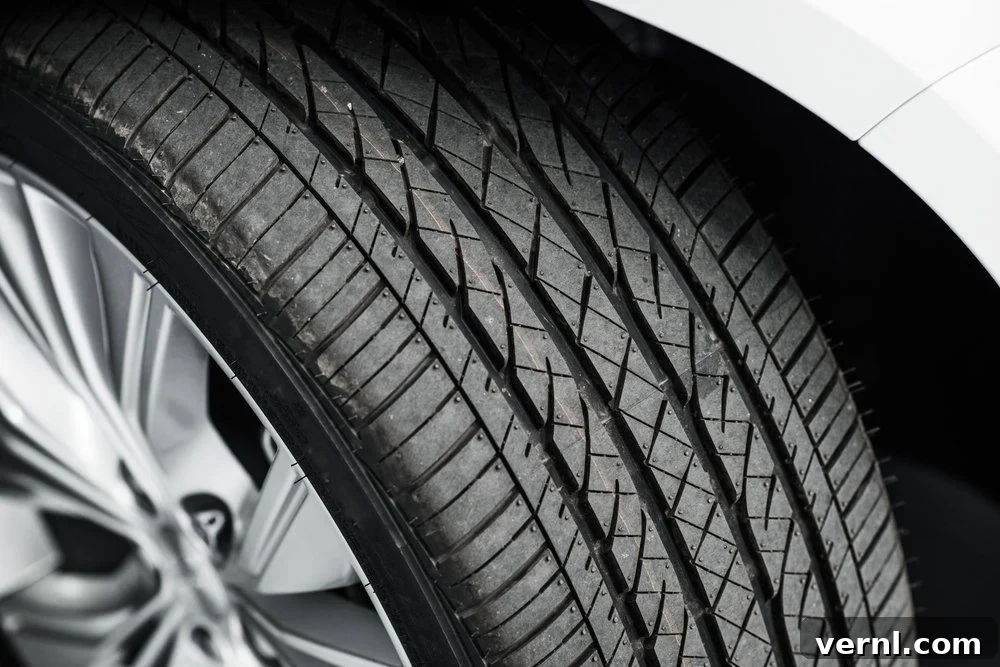
Understanding Tire Vibrations: Common Causes and Solutions
Modern vehicles are engineered to deliver a remarkably smooth and stable driving experience, even when navigating less-than-perfect road surfaces. While a faint, almost imperceptible vibration might occasionally be felt, especially at certain speeds or on particular terrains, any significant or persistent shaking is a clear indicator that something is amiss. Such vibrations don’t merely affect your comfort; they can point to underlying issues that compromise your vehicle’s safety, performance, and longevity.
A car is a complex machine, filled with countless spinning and moving parts. This intricate dance of components means that a wide array of factors can trigger unwanted vibrations. These subtle movements can then resonate through the entire vehicle, manifesting as a noticeable shake in the steering wheel, floorboard, or even the seats. Fortunately, in a vast majority of cases, the root cause of these unsettling vibrations can be traced back to the tires or wheels. This is good news, as tire and wheel-related issues are typically among the easiest and most straightforward problems for a qualified repair shop to diagnose and resolve through repair or replacement.
The Critical Role of Proper Tire Inflation: Over- or Under-Inflated Tires
Tire pressure is arguably the most fundamental aspect of tire maintenance, yet it’s frequently overlooked. Incorrect tire inflation, whether over- or under-inflation, can dramatically impact your vehicle’s performance and is a primary culprit behind uncomfortable vibrations. Each scenario presents its own set of problems:
Over-Inflated Tires
When tires are over-inflated, they become excessively rigid and stiff, behaving much like a bouncing ball. This increased rigidity reduces the tire’s ability to flex and absorb road imperfections, leading to a harsher ride and noticeable vibrations. The sidewall stiffness and tread rigidity may trigger erratic bouncing and shaking, particularly on uneven surfaces. Furthermore, an over-inflated tire makes less contact with the road surface, primarily making contact in the center of the tread. This concentrated wear leads to premature and uneven tread wear, significantly shortening the tire’s lifespan. More critically, over-inflated tires are more susceptible to damage from impacts and are at an increased risk of sudden blowouts due to excessive internal pressure and reduced flexibility.
Under-Inflated Tires
Conversely, under-inflated tires present a different but equally dangerous set of problems. A tire that lacks sufficient air pressure will flex excessively, especially at its sidewalls. This constant, exaggerated flexing generates an enormous amount of heat, causing the tire to quickly overheat. The increased friction and heat lead to abnormal wear patterns, particularly along the outer edges of the tread. This uneven wear can trigger vibrations that are noticeable at both low and high speeds. Moreover, under-inflated tires significantly increase rolling resistance, meaning your engine has to work harder to keep the car moving (think about pedaling a bicycle with a flat tire). This not only wastes fuel, negatively impacting your fuel economy, but also causes tire temperatures to rise even further. In severe cases, this excessive heat can lead to a catastrophic separation of the tire tread from the tire body, almost inevitably resulting in a dangerous blowout.
It’s crucial to understand that ambient temperature profoundly affects tire pressure. Tires naturally heat up and expand under normal driving conditions, increasing internal pressure. However, prolonged, aggressive, or excessive stop-and-go driving, particularly on scorching hot days, can push an already over-inflated tire into dangerously high-pressure zones. Simultaneously, these conditions will exacerbate the overheating of an already under-inflated tire – creating a perfect storm for a blowout. Maintaining proper tire inflation, as specified by your vehicle’s manufacturer, is paramount not only for driving safety but also for maximizing the life of your tires and optimizing fuel efficiency. Incorporating regular tire pressure checks into your monthly DIY car maintenance routine is a simple yet incredibly impactful habit.
When Your Tires Are Past Their Prime: Worn Down Tires
Beyond inflation, the physical condition and tread depth of your tires are critical factors in maintaining a smooth, vibration-free ride. Regularly examining your tires for abnormal wear is just as important as checking their pressure. Tires that are bald, severely worn, or exhibit uneven wear patterns are a highly probable source of vibrations, which can manifest at both low and high speeds. More concerning than the vibrations themselves, compromised tires severely negatively impact your vehicle’s braking capability, steering responsiveness, and overall control, making driving hazardous.
Beyond simple tread wear, a thorough inspection should include checking the tire sidewalls for any signs of dry-rot cracking, which indicates aging and material degradation. Look for bubbles or bulges on the sidewall, as these usually signify an internal structural failure, often caused by a broken tire belt. A tire with a broken belt will typically produce a rhythmic thumping sound, accompanied by a low-speed vibration and/or a noticeable wobble. The tread area also requires scrutiny for flat spots or signs of tread separation. Under no circumstances should you ever drive on a tire that displays a bulge, shows signs of the tread separating from the tire body, has exposed metal or fiber cords, or has separated from the wheel. Such conditions are extremely dangerous and risk immediate tire failure. Even if a tire appears to be seated correctly after separation, water can enter the gap between the tire and wheel, leading to severe and diverse vibrations once the tire is re-inflated and driven.
Flat spots on tires are another common cause of vibration. These typically occur due to extreme braking events, where the vehicle skids to a stop, or when a vehicle is parked for an extended period, especially if the tires are under-inflated. When a tire with a flat spot rotates and the flat area makes contact with the road, it creates a distinct thumping sound and a noticeable vibration. Fortunately, flat-spotting is often temporary; as the tire warms up during driving, it usually rounds out, and the vibration disappears. However, in more severe or prolonged cases, the flat spot can become permanent, indicating it’s time for new tires.
To prevent uneven tire wear and extend the life of your tires, it is absolutely critical to rotate your vehicle’s tires regularly, adhering to the manufacturer’s recommended service intervals. Proper rotation ensures that all four tires wear more uniformly, which not only helps to prevent vibrations but also significantly increases their lifespan.
The Integrity of Your Wheels: Bent, Cracked, or Damaged Wheels
While tires often bear the brunt of road hazards, the wheels themselves are not immune to damage, and a compromised wheel can be a significant source of vehicle vibrations. A bent, cracked, or otherwise damaged wheel can cause your vehicle to shake, and this issue is surprisingly more common than many drivers realize. The forces exerted on wheels are immense, and even seemingly minor incidents can lead to structural damage. Hitting a deep pothole at speed, inadvertently bouncing into a curb, or being involved in even a minor accident can all inflict damage upon a wheel’s integrity.
Such damage can distort the wheel’s shape, leading to it being out-of-round or having an uneven weight distribution. Customarily, wheel balancing is performed to correct minor weight discrepancies and ensure smooth rotation. However, if the wheel itself is structurally compromised, no amount of balancing will fully compensate. If a wheel is suspected as the cause of a persistent vibration, a professional mechanic will need to perform precise measurements, checking for wheel run-out (a measure of its roundness and concentricity) and inspecting for any other deformities, such as bends, cracks, or warps. Severely bent or significantly out-of-round wheels often require specialized attention. Depending on the extent and type of damage, they may be repaired by a highly specialized wheel repair service, or, more often, they will need to be replaced entirely. Wheel diagnostics and structural repairs are intricate procedures that demand specialized equipment and expertise, making them tasks that are best left to automotive professionals.
Maintaining Balance: The Importance of Wheel Balancing
Even perfectly round and undamaged wheels, fitted with new, properly inflated tires, can cause vibrations if they are not correctly balanced. Wheel balancing is a crucial process that ensures the weight is evenly distributed around the entire circumference of the tire and wheel assembly. When tires and wheels are out of balance, they develop heavy spots that, as they rotate, create an uneven centrifugal force. This force causes the wheel to vibrate up and down (static imbalance) or side to side (dynamic imbalance) at specific speeds, often becoming most noticeable between 45 and 70 mph. Addressing this issue by having your tires and wheels professionally balanced (a service that typically costs between $50 to $100 for all four wheels) almost always resolves this type of vibration problem.
It’s important to remember that wheel balance isn’t a one-time fix for the life of the tire. As a tire’s tread wears down, its weight distribution subtly changes, making it lighter and potentially causing it to become unbalanced again over time. Therefore, rebalancing is often necessary, especially when new tires are installed, after a tire repair, or when unusual vibrations reappear. The balancing process involves attaching small, precisely weighed counterweights to the edges of the wheel rim to counteract any heavy spots and achieve a perfectly even distribution of mass. While rare, if you detect a slight vibration and notice a one- to three-inch rectangular discoloration or stain on the wheel, it’s a strong indication that a wheel weight may have fallen off, and the tire will need to be rebalanced. Understanding the distinction between tire alignment and balance is key for effective vehicle maintenance.
The Foundation of Stability: Wheel Alignment and Abnormal Tire Wear
Beyond balance, the alignment of your vehicle’s wheels plays a fundamental role in how your tires wear and how smoothly your car drives. Wheel alignment refers to the precise angles at which your vehicle’s tires and wheels are set in relation to each other and to the road. These angles (camber, caster, and toe) are critical for proper tire contact, steering stability, and even wear. When a vehicle’s wheels are out of alignment, due to impacts (like hitting a pothole) or worn or bent suspension components, it can lead to a host of problems, including noticeable vibrations and distinctive patterns of abnormal tire wear.
Abnormal tire wear patterns such as cupping (scooped-out areas around the tread), scalloping (uneven wear resembling waves), or feathering (tread ribs that are smooth on one side and sharp on the other) are clear indicators of an underlying alignment problem or a damaged suspension system. These irregular wear patterns make tires noisy and generate vibrations as they roll unevenly against the road surface. During a wheel alignment service or when diagnosing abnormal tire wear, a competent repair shop will thoroughly inspect for worn or bent suspension parts, such as ball joints, tie rods, control arm bushings, or shock absorbers. Any compromised suspension component can throw off the alignment, leading to the aforementioned tire wear and subsequent vibrations. Correcting the alignment and replacing any faulty suspension parts are essential steps to eliminate these vibrations, restore proper handling, and extend the lifespan of your tires.
Your driving safety is directly dependent on performing basic, yet crucial, tire maintenance. Invest in a reliable tread depth gauge and an accurate air pressure gauge, readily available online or at your local auto parts store, and make their regular use a habit. Any tire with a tread depth measuring 4/32-inch or less should be replaced promptly, as its ability to grip the road, especially in wet conditions, is significantly compromised. Consistently inflating your tires to the manufacturer’s recommended pressure, performing routine visual inspections for damage, adhering to tire rotation schedules, and ensuring regular wheel balancing are all proactive measures. These not only extend the operational life of your tires but are also incredibly effective in preventing those annoying, and potentially dangerous, vibrations that can disrupt your smooth ride. Prioritizing these simple maintenance steps ensures a safer, more comfortable, and economically efficient driving experience for years to come.