Sponsored by Sakrete
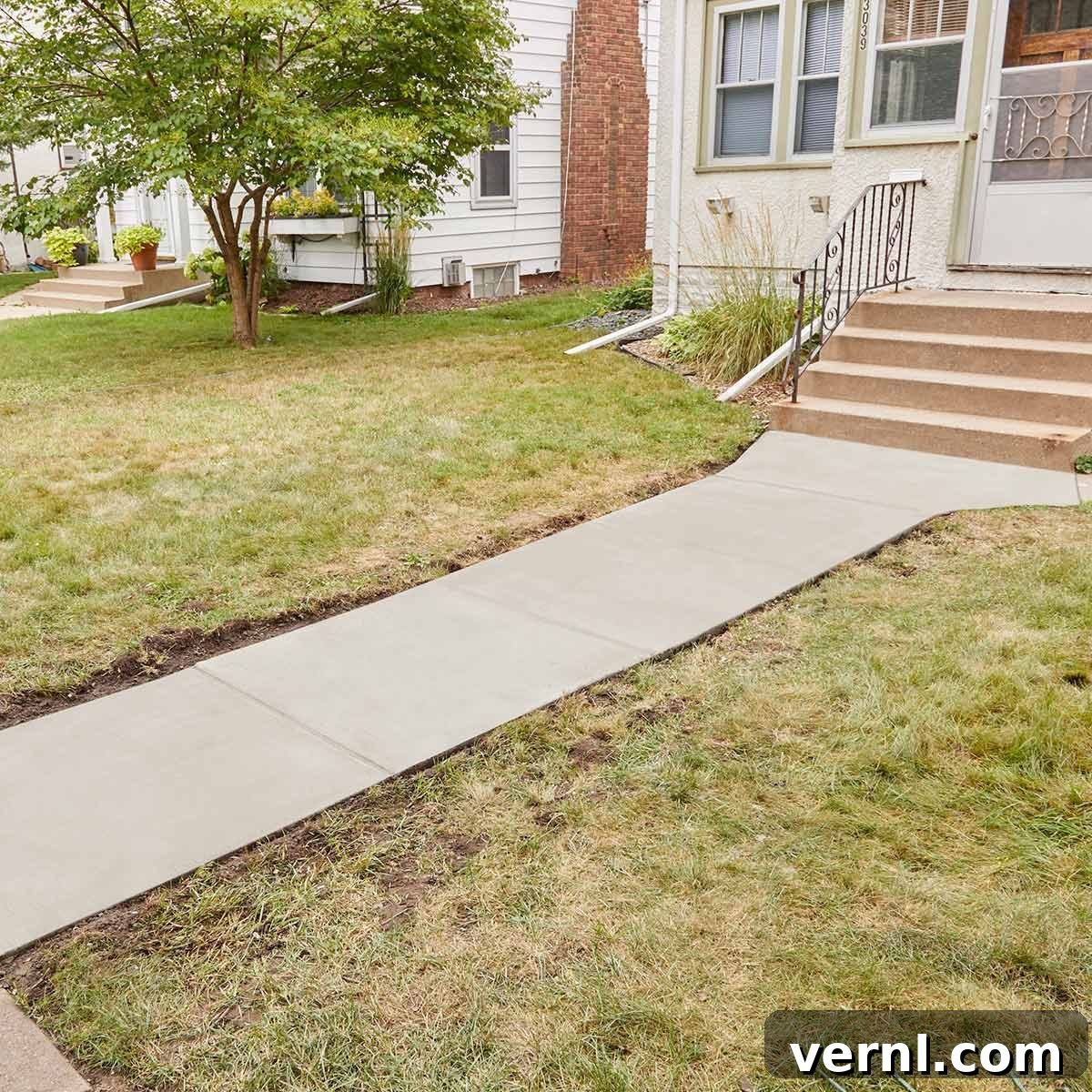
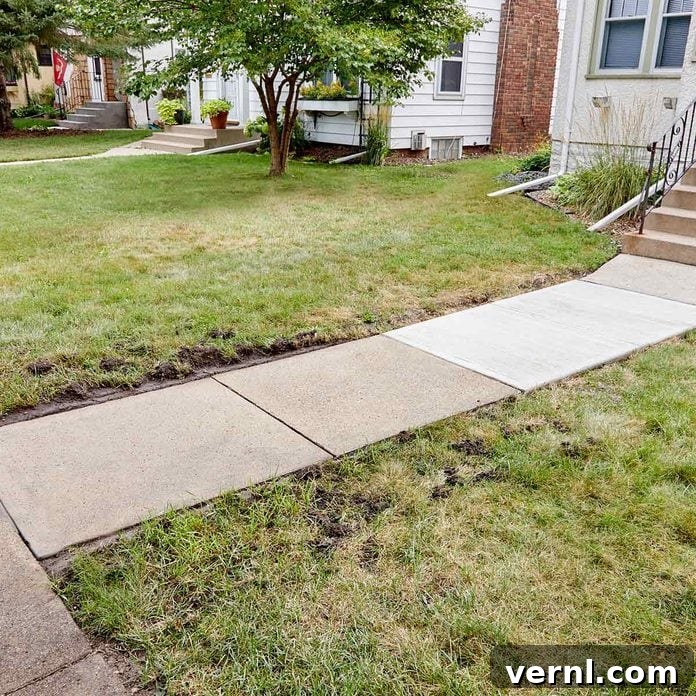
There comes a time in every homeowner’s journey when the once-pristine surfaces around their property begin to show their age. For many, this includes the sidewalks, driveways, and patios that greet visitors and endure the elements year after year. I recently tackled such a project, replacing a severely damaged section of my sidewalk with fresh, new concrete. While this was a vast improvement, it also highlighted a stark contrast: the adjacent older sections of the sidewalk now looked particularly shabby, marred by pitting, flaking, and general wear. Their darker, duller gray tone stood out awkwardly against the bright, new slab.
Instead of embarking on another costly and labor-intensive full replacement, which wasn’t necessary for the minor deterioration of the older sections, I sought a more efficient and aesthetically pleasing solution. My goal was to achieve a uniform, refreshed appearance that would seamlessly blend the old with the new, while also adding a layer of durable protection. This led me to explore concrete repair options, specifically concrete resurfacing.
Revitalize Your Sidewalk: A Step-by-Step Guide to Concrete Resurfacing with Sakrete Flo-Coat
Achieving a cohesive and refreshed look for your exterior concrete surfaces doesn’t always require tearing out and replacing entire sections. Often, a high-quality concrete resurfacer can breathe new life into worn, discolored, or slightly damaged concrete, transforming its appearance and extending its lifespan. This guide details my personal experience using Sakrete Flo-Coat Concrete Resurfacer to restore my sidewalk, providing a smooth, durable, and perfectly matched surface. While there was a slight learning curve involved, the results were exceptionally rewarding, and I’m eager to share the crucial insights I gained.
Before & After: Witnessing the Transformation
The difference before and after resurfacing was dramatic, proving that even heavily worn concrete can be restored to a near-new condition with the right product and technique.
Before:
After:
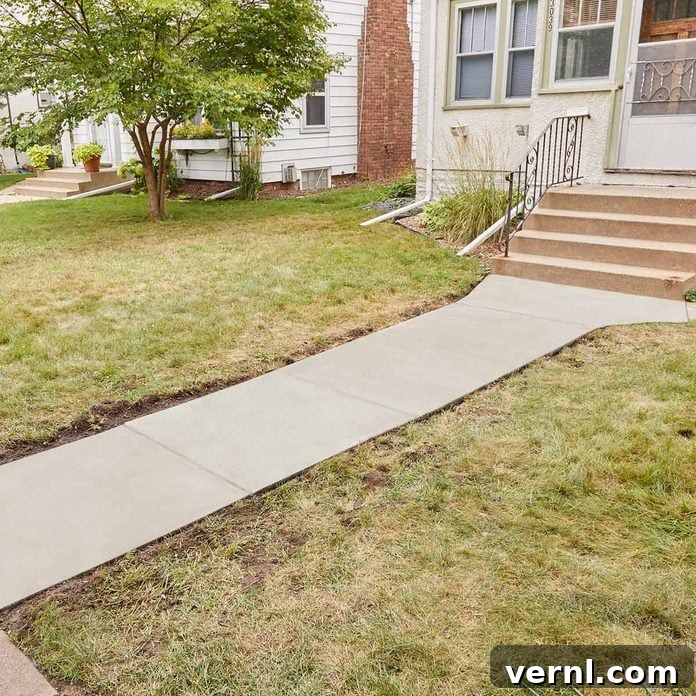
My aim was not just to repair the imperfections but also to create a unified aesthetic across the entire sidewalk, making the old sections indistinguishable from the newly poured concrete. Sakrete Flo-Coat Concrete Resurfacer proved to be the ideal solution, providing a perfect surface that was both durable and visually appealing. Its ability to create a consistent finish allowed me to achieve that seamless transition I desired, enhancing the overall curb appeal of my home.
Essential Steps for a Flawless Concrete Resurfacing Project
Successfully applying a concrete resurfacer hinges on meticulous preparation and precise execution. Skipping steps or rushing the process can lead to compromised adhesion, an uneven finish, or a short-lived repair. Here’s a detailed breakdown of how I prepared my sidewalk and applied the Sakrete Flo-Coat, incorporating critical lessons learned.
1. Thorough Surface Preparation: The Foundation of Success
Proper preparation is paramount for any concrete resurfacing project. The resurfacer needs a clean, stable surface to bond effectively. I began by power washing both the old concrete and the newly poured section, which had already cured for a full month. This step is crucial for removing all loose dirt, grime, moss, efflorescence, and any other contaminants that could inhibit proper adhesion. A clean surface ensures a strong, lasting bond between the existing concrete and the new resurfacer.
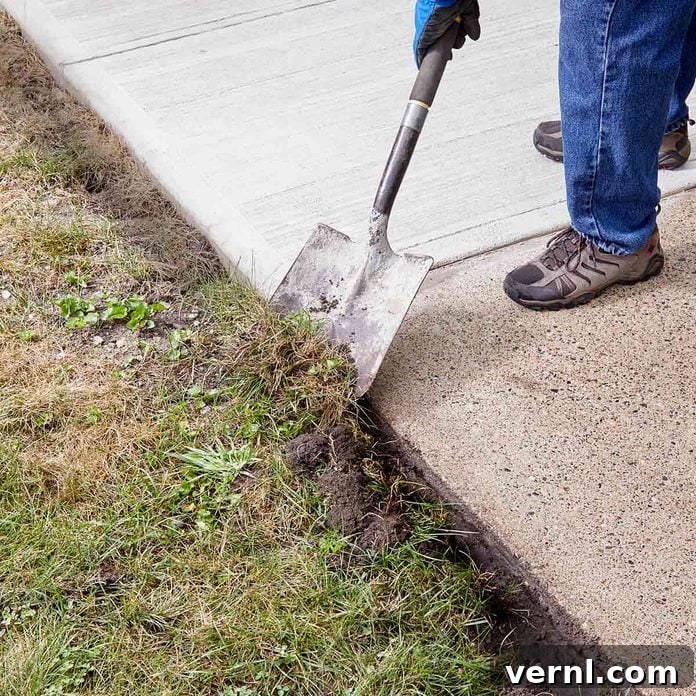
The following day, after the sidewalk had completely dried, I turned my attention to the edges. Using a shovel, I carefully edged along the perimeter of the sidewalk, clearing away any overhanging grass and creating a small trench. While my initial trench was somewhat narrow, I quickly learned that a deeper and wider trench is significantly more beneficial for ensuring a clean, well-defined edge for the resurfacer. This foresight helps prevent dirt and debris from being dragged into the wet mix during application and allows for a more robust edge finish.
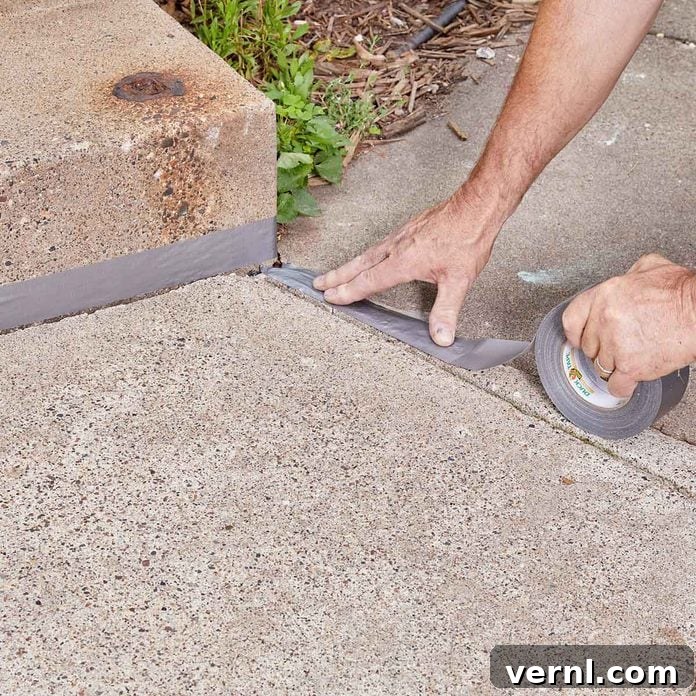
2. Protecting Adjacent Surfaces: Masking for Precision
To ensure a neat application and protect areas I didn’t want coated, such as adjacent concrete or expansion joints, I meticulously masked the adjoining surfaces. It’s vital to use the right type of tape for this job. I found that duct tape adheres exceptionally well to concrete, forming a strong barrier against the resurfacer. Standard masking tape, on the other hand, often struggles to stick effectively to rough concrete surfaces and can peel off, leading to messy edges. This small detail makes a significant difference in the final appearance of your project.
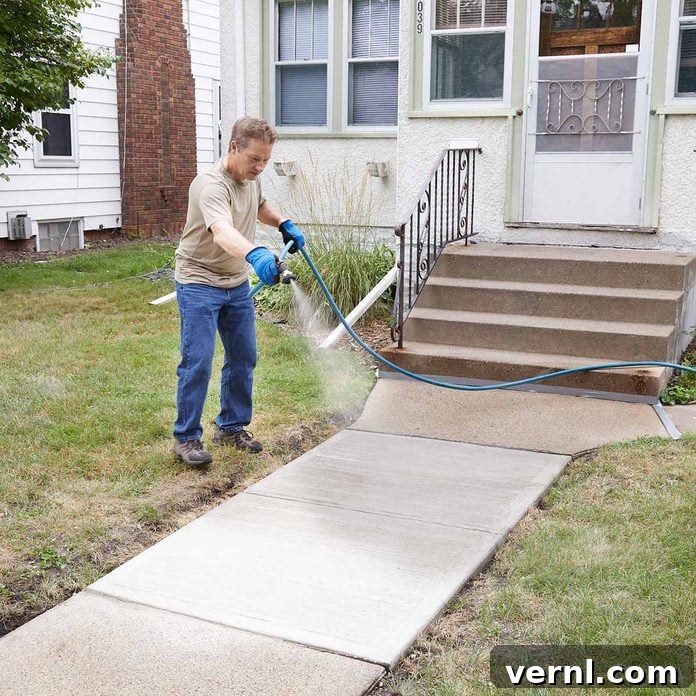
3. Pre-Wetting the Surface: A Critical Step for Optimal Bonding
Before applying any concrete resurfacer, it’s absolutely critical to dampen the existing concrete surface. Dry surfaces can rapidly absorb water from the resurfacer mix, preventing it from spreading easily and compromising its bonding strength. I thoroughly misted the entire sidewalk, ensuring it was uniformly damp but without any standing puddles. The goal is to hydrate the concrete without saturating it. This pre-wetting process allows the Sakrete Flo-Coat to properly adhere and achieve its full strength, facilitating a smoother and more workable application.
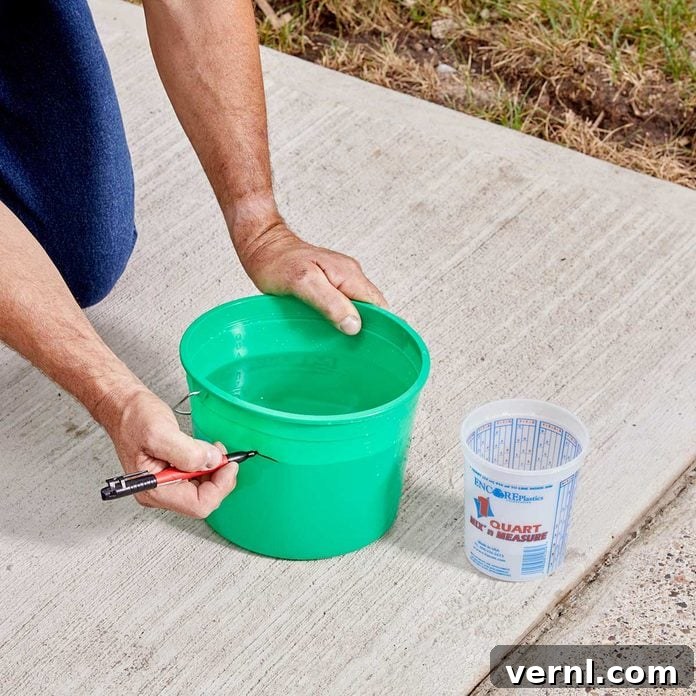
4. Precise Mixing: Achieving the Perfect Consistency
Consistency in your mix is key to a uniform finish and optimal performance. To ensure each batch was identical, I marked a container with a black line to precisely indicate the 3-1/2 quarts of cool water required for each 40-pound bag of Sakrete Flo-Coat. Using cool water helps to extend the working time of the mix, especially in warmer conditions.
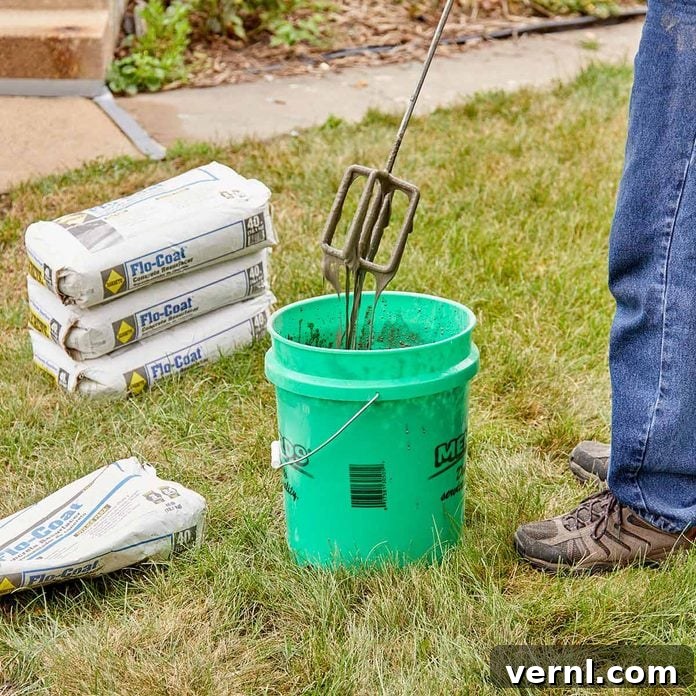
To mix, I poured approximately 3 quarts of water into a clean bucket, then slowly introduced the Sakrete Flo-Coat Concrete Resurfacer powder while continuously mixing with a heavy-duty drill equipped with a mixing paddle. This gradual addition helps prevent lumps. After most of the powder was incorporated, I added the remaining water and blended the mix thoroughly until it achieved a smooth, lump-free consistency, similar to a thick pancake batter. I made a conscious effort to minimize air bubbles during mixing, as they can lead to surface imperfections. After an initial mix, I let the contents “slake” for a couple of minutes – a resting period that allows the water to fully penetrate the cement particles – before giving it one final thorough mix. This ensures maximum workability and a consistent product.
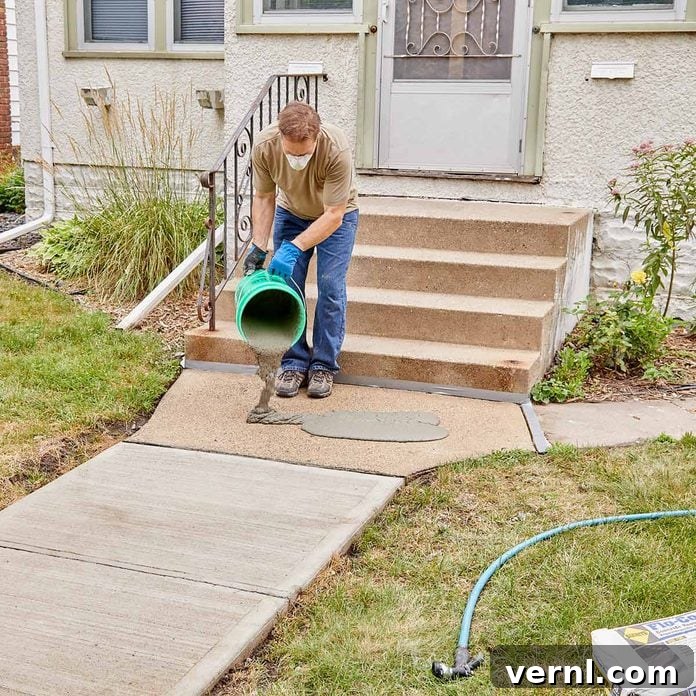
5. Application: Spreading the Resurfacer Evenly
With the mix ready, I began pouring the resurfacer across the first section of the sidewalk. I aimed to distribute it as evenly as possible over the designated area, which helps in achieving a consistent thickness later.
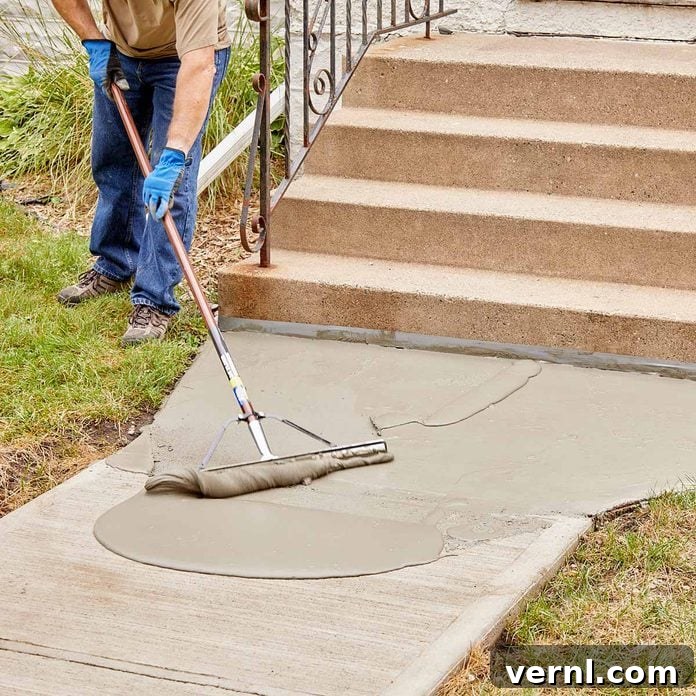
Immediately after pouring, I used a squeegee to spread the mix across the entire surface. My goal was a uniform depth of just over 1/8 inch. While I used the squeegee to push and pull the material to cover the section, I always made sure my final pass was a consistent pull in a single direction across the slab. This technique helps to eliminate inconsistencies and achieve a smoother finish.
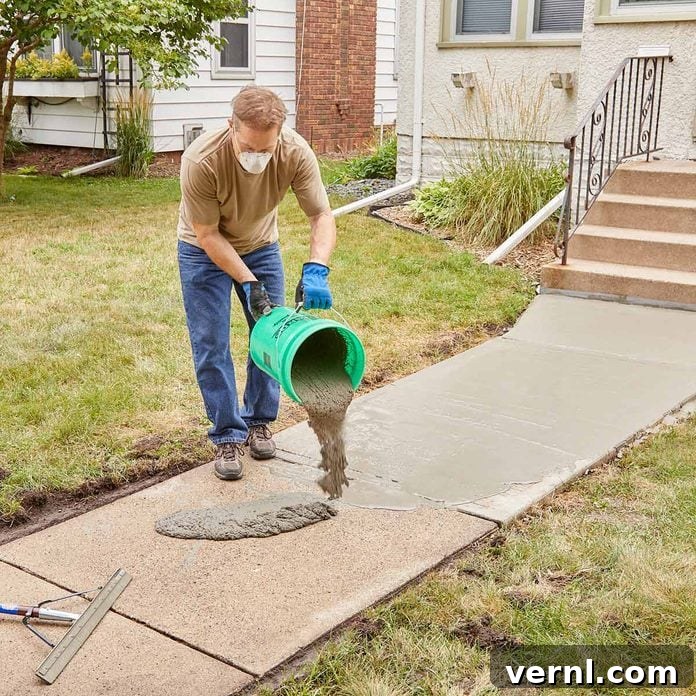
I continued this systematic process, working section by section, until the entire walk was coated. It’s important to remember that, like any cement-based product, Sakrete Flo-Coat has a limited working time – typically around 10-15 minutes, depending on temperature and humidity. To avoid interruptions and ensure continuous application, I had a helper dedicated to mixing additional buckets of resurfacer while I focused on pouring and spreading. This synchronized effort was crucial for completing the project before the material began to harden.
6. Finishing Touches: Joints, Texture, and Edges
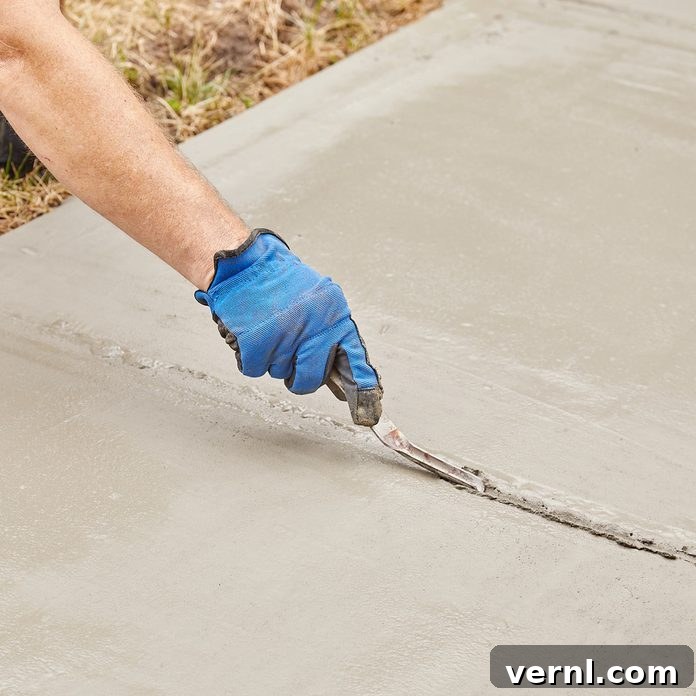
As the coating began its initial hardening phase, I used a mortar rake to carefully re-form the existing control joints in the sidewalk. These joints are purposefully designed to manage stress and control where cracks form. If you allow them to be filled with resurfacer, you risk future uncontrolled cracking across your newly finished surface. This step is vital for the long-term integrity and appearance of your sidewalk.
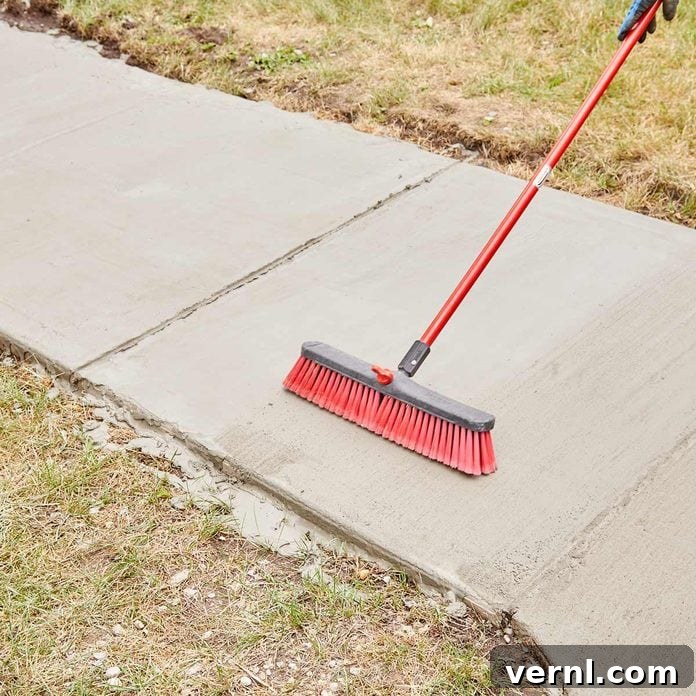
For enhanced traction and a classic aesthetic, I applied a broom finish. Using a soft-bristle push broom, I dragged it across the surface in one continuous direction. The timing for this step is critical: I found that brooming within 15 minutes of the initial pour yielded the best results. However, this window can vary significantly based on ambient temperature and humidity. The key is to watch the surface carefully; when the initial sheen of wetness evaporates, indicating the material is beginning to set but is still workable, that’s the ideal time to broom. I had to maintain a steady pace, as Sakrete Flo-Coat Concrete Resurfacer becomes increasingly difficult to texture once it starts to harden.
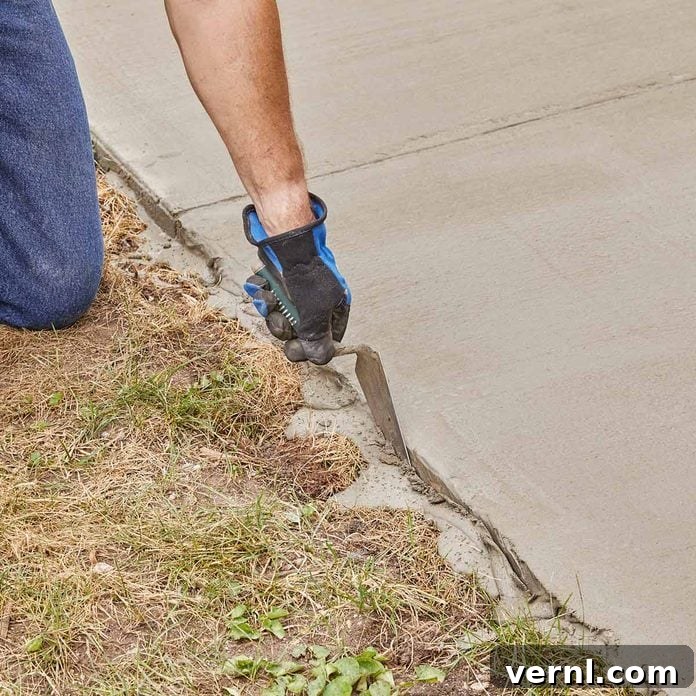
Once the mix was firm but not yet fully hard, I used a trowel to scrape away any excess material along the edges of the concrete. This step is much easier to perform while the resurfacer is still pliable. Attempting to remove hardened excess material later would be a tedious and challenging task, potentially damaging the fresh edges.
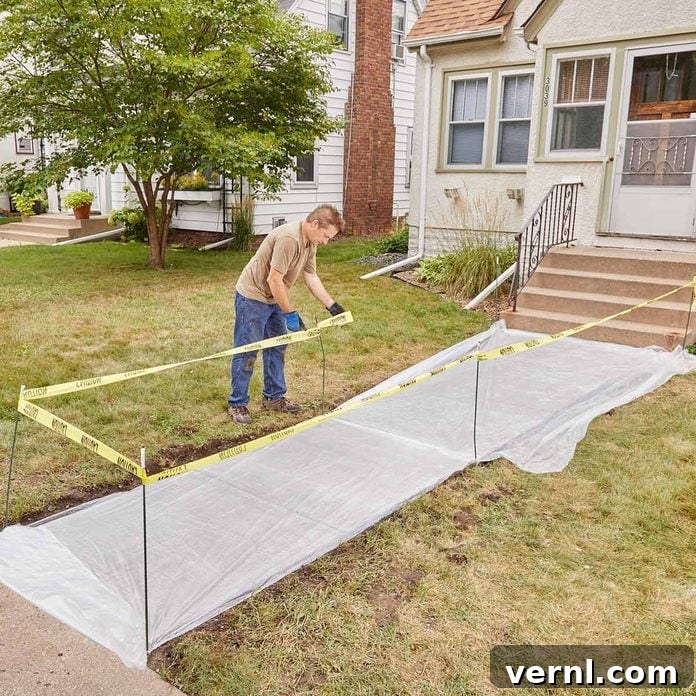
7. Proper Curing: Ensuring Strength and Durability
Finally, to ensure maximum strength and durability, I covered the entire sidewalk with plastic sheeting. This step is essential for proper curing. By keeping the Sakrete Flo-Coat Concrete Resurfacer damp, the plastic sheeting helps to slow down the evaporation of water, allowing the cement to fully hydrate and achieve its designed strength. This controlled curing environment prevents premature drying, which can lead to cracking and a weaker surface. Proper curing ensures excellent bonding and a long-lasting, robust finish.
Lessons Learned from My Concrete Resurfacing Project
Even with thorough planning, real-world application often reveals valuable insights. Here are a few crucial lessons I learned during my first-time experience with Sakrete Flo-Coat Concrete Resurfacer:
- Good Preparation is Non-Negotiable: Sakrete Flo-Coat sets quickly, with a typical working time of about 10-15 minutes. Being well-prepared, with all tools readily accessible and a helper for continuous mixing, prevented any major issues. An unexpected snag, like a misplaced tool or a sudden need for more water, could have easily led to big headaches and compromised sections. Ensure everything is staged and ready before you start mixing.
- Wider Trenches are Your Friend: My initial narrow trenches around the sidewalk edges were not ideal. I had to be excessively careful when spreading near the edges to avoid dragging dirt particles into the wet resurfacer with the squeegee. This sometimes resulted in missed spots or thin coating along the very perimeter, requiring touch-ups with a trowel. For best results and a clean, defined edge, make your trenches at least 4 inches wide and a couple of inches deep. This provides ample space to work and prevents contamination.
- A Redo is Surprisingly Easy: My first coat, as anticipated for a first-timer, wasn’t absolutely perfect. The areas where I had done more troweling were somewhat evident, and my broom finish was inconsistent in places. This is where Sakrete Flo-Coat truly shines for DIYers: it can be applied in multiple coats to achieve a finished thickness of up to 1/2 inch. Instead of despairing, I simply applied a second 1/8-inch coat. With the experience from the first application, the second coat took just over an hour – roughly half the time of the first – and the result was absolute perfection. This forgiving nature makes it an excellent product for homeowners learning as they go.
Concrete resurfacing with Sakrete Flo-Coat Concrete Resurfacer is a highly effective way to restore the beauty and extend the life of your existing concrete surfaces without the expense and hassle of full replacement. By following these detailed steps and heeding the lessons learned, you can achieve professional-quality results and enjoy a beautifully revitalized sidewalk, driveway, or patio for years to come.
Learn more about Sakrete Flo-Coat Concrete Resurfacer and how it can transform your concrete projects.
— Tom Dvorak, Contributing Editor