Identifying and Repairing Holes in Your Yard: Moles vs. Other Pests
Discovering unexpected holes in your yard can be alarming. One day your lawn looks pristine, the next it’s riddled with mysterious depressions, mounds, or tunnels. The immediate thought for many homeowners often points to moles. However, it’s a common misconception that moles are responsible for actual open holes in the ground. Understanding the true culprits behind lawn damage is the first step toward effective identification, prevention, and repair, ensuring your lawn returns to its lush, undisturbed state.
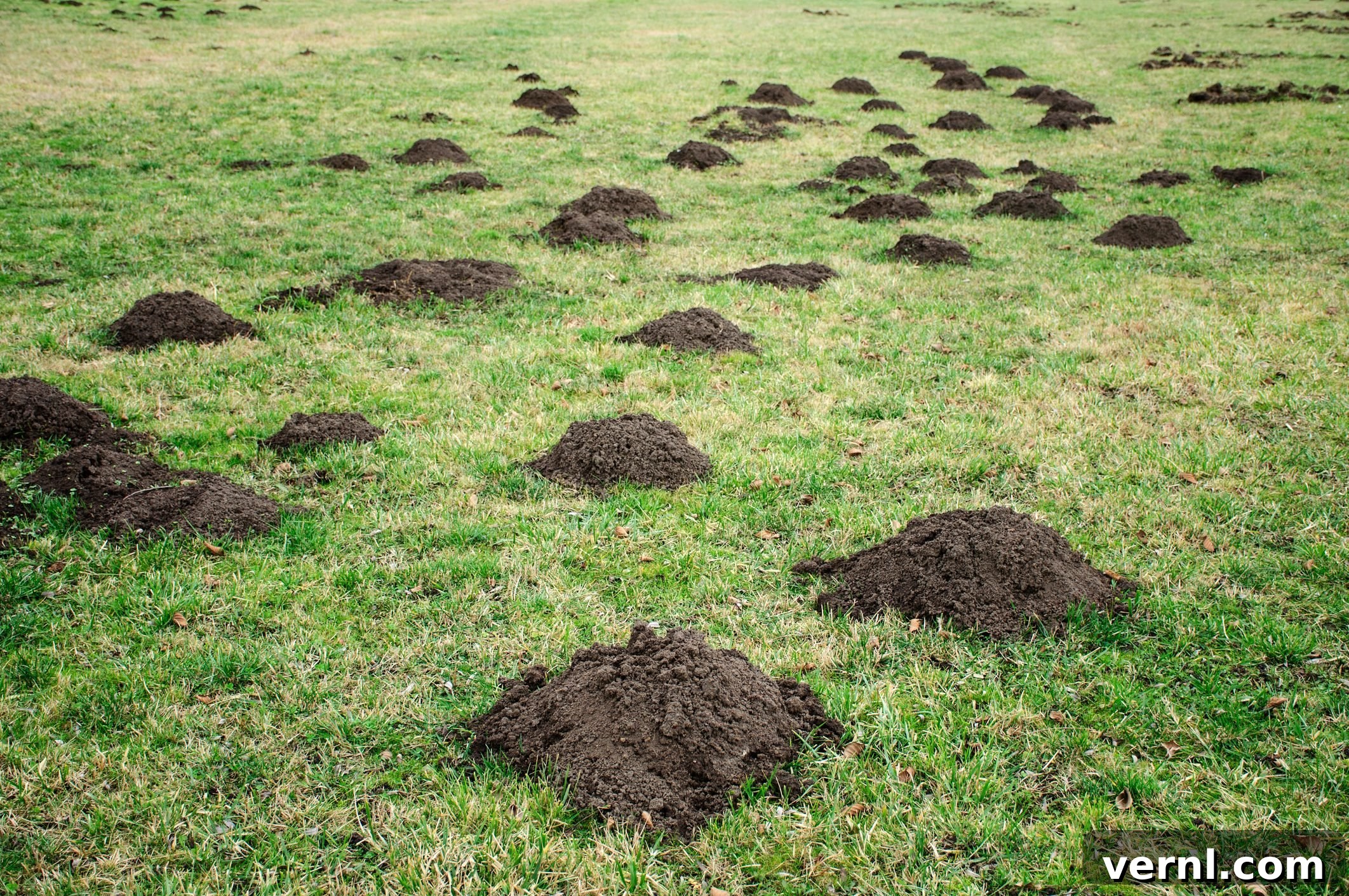
Roger Dickens, a wildlife technical services manager with Ehrlich Pest Control, clarifies this pervasive misunderstanding: “Moles do not make holes in the ground. They simply tunnel through the soil.” This crucial distinction is key to accurately diagnosing your lawn’s problem. Moles spend the vast majority—around 99%—of their lives beneath the surface, meticulously excavating a complex network of tunnels in their relentless search for food. They are true subterranean architects, and their activity manifests as distinctive hills, not open holes, formed by pushing up displaced soil. These molehills are typically volcano-shaped and conspicuously lack any visible opening because the soil is pushed up from below. Dickens notes, “Typically they only emerge above ground by accident when a tunnel is too shallow.” So, if you’re seeing open holes, it’s time to broaden your investigation beyond moles.
Who Is Making Holes in My Yard? Unmasking the Real Culprits
Once you’ve ruled out moles as the makers of open holes, a new list of suspects emerges. According to insights from the University of Iowa, common culprits include gophers, groundhogs, and even Norway rats. Each of these animals leaves behind distinct signs, and knowing what to look for can save you time and effort in remediation and help you choose the most effective pest control strategy.
Gophers: The Master Excavators with a Plug
Dickens explains that “mole activity can be confused with gopher activity and vice versa,” particularly prevalent in the southeastern U.S. However, a key differentiator lies in the appearance of their mounds. Gopher mounds are typically fan-shaped or crescent-shaped and, most importantly, feature a distinct plug of soil. This plug is where the gopher has sealed the entrance to its burrow from the inside, often flush with the surrounding ground. This contrasts sharply with molehills, which are more circular or volcano-shaped and conspicuously lack such a plug because the soil is pushed up from underground, not dug out from an opening.
Gophers are primarily herbivorous, feeding on roots, bulbs, and other underground plant parts. Their tunneling can severely damage garden plants, crops, and even young trees. Their holes are often larger and more destructive than mole tunnels, directly impacting plant health by severing critical root systems. Identifying gopher holes quickly is crucial for protecting your landscape and preventing extensive agricultural or garden loss.
Groundhogs (Woodchucks): Large Burrows, Significant Impact
Groundhogs, also known as woodchucks, create much larger and more extensive burrow systems than gophers or moles. Their main entrances are typically 8-12 inches in diameter and often have a visible mound of excavated soil around them, clearly indicating recent activity. These burrows can be quite deep and complex, extending several feet underground with multiple entrances, and are frequently found near building foundations, sheds, fences, stone walls, or dense vegetation. Groundhogs are vegetarians and can decimate vegetable gardens, flower beds, and ornamental plants with their voracious appetites. Their large burrows not only pose a tripping hazard for people and pets but can also undermine structures if located too close, potentially causing costly damage to property.
Voles (Meadow Mice): Surface Runners and Plant Nibblers
“Moles are often confused with voles or meadow mice,” Dickens states. While both are small, burrowing animals, their preferred methods of travel and the damage they cause are quite different. Voles create above-ground tunnels, often called runways, that weave through dense grass or shallow beneath snow cover. These runways are typically 1-2 inches wide and are easily visible once the grass is parted or when snow melts. Voles feed on grasses, seeds, bark, and plant roots, and their presence can lead to significant lawn damage, girdling of young trees and shrubs, and destruction of garden crops. Unlike moles, voles do not create prominent hills but rather network of surface trails and sometimes small, inconspicuous burrow entrances, often hidden by vegetation.
Norway Rats: Unwanted Guests and Disease Carriers
Norway rats, also known as brown rats, can also create burrows in yards, particularly in areas with dense vegetation, under sheds, or near compost piles. Their burrows are typically 2-4 inches in diameter and may have smooth edges from frequent use. Unlike many other burrowing animals, rats are often associated with unsanitary conditions and can carry diseases, making their presence a serious concern for homeowners. If you suspect rat activity, professional pest control is essential to manage the infestation and protect public health.
Insects and Arachnids: Tiny Tunnels, Varied Impacts
Don’t underestimate the power of tiny creatures! Various insects and even spiders also create holes in the soil, ranging widely in size and impact. Common culprits include:
- Ants: While usually small, ant colonies can create numerous tiny holes, often with a small mound of finely sifted soil around them. These are generally harmless to the lawn itself, though some species (like fire ants) can become a nuisance or pose a sting risk.
- Yellow Jackets: These aggressive wasps often build nests underground, utilizing existing holes or digging their own. Their entrance holes are typically around an inch in diameter and are characterized by a constant stream of wasps entering and exiting. Approach with extreme caution, as they can sting repeatedly!
- Cicada Killer Wasps: These solitary wasps create much larger holes, sometimes up to two inches across, usually with a small, crescent-shaped pile of soil next to them. They paralyze cicadas and drag them into their burrows as food for their larvae. While intimidating in size and appearance, they are generally not aggressive towards humans unless directly provoked or threatened.
- Wolf Spiders: These beneficial arachnids are ambush predators that dig burrows, often lined with silk, in lawns and grassy areas. Their holes are usually about half an inch to an inch in diameter. Wolf spiders are not pests; in fact, they help control insect populations in your yard, making them a valuable part of your lawn’s ecosystem.
Understanding which insect is responsible for the holes is crucial for determining if any action is needed. Most insect holes are benign or even beneficial, but some, like yellow jacket nests, require careful and professional handling due to their potential danger.
How To Fix Holes and Tunnels in the Yard
Addressing damage to your lawn starts with proper identification. Once you know who the culprit is, you can decide on the best course of action for remediation and repair. Effective repair not only restores your lawn’s appearance but also prevents further erosion or safety hazards.
Repairing Mole Tunnels and Hills
If you’re dealing with molehills and tunnels, Roger Dickens offers reassuring advice: “Mole tunnels and hills will collapse on their own over time.” Moles do not routinely use the same shallow tunnels for travel; instead, they often create new ones as they forage. Therefore, there’s no urgent need to fix them for structural integrity. However, if the aesthetics bother you, or if you want to prevent potential damage to your lawnmower or other lawn equipment, fixing them is straightforward and relatively easy.
To repair molehills, simply grab a shovel or rake and redistribute the displaced dirt evenly across the lawn. Doing this promptly can often save the grass underneath, which may only be temporarily dislodged. For any bare spots that remain, lightly distribute appropriate grass seed for your climate and soil type, then water regularly to encourage new growth. Mole tunnels can be flattened easily with your foot or a lawn roller. Dickens confirms, “There is no concern about an actual mole being in the tunnel if someone chooses to flatten them,” as moles are constantly on the move through their extensive underground network, rarely staying in one shallow tunnel for long.
Repairing Holes Made by Other Animals
For holes created by other animals, or general depressions in your lawn, the repair process is similar but requires an important preliminary step: ensure the hole is no longer active. Dealing with an active burrow without addressing the animal can be a wasted effort, as they will simply reopen or create new holes shortly after you fill them. Different animals will require different removal or deterrence strategies, which might involve trapping, repellents, habitat modification, or professional intervention. If you suspect a persistent or large pest issue, such as gophers, groundhogs, or rats, consulting a pest control professional is highly recommended to safely and effectively remove the animal and prevent future recurrence.
Once you are certain the burrow is inactive and the pest has been removed or deterred, you can proceed with filling the hole. Follow these steps for effective and lasting repair:
- Prepare the Hole: Begin by clearing any loose debris, rocks, or dead vegetation from within and around the hole. This ensures a clean base for the new soil.
- Add Filler Material: Fill the hole gradually with high-quality topsoil or a balanced mix of soil and compost. This provides essential nutrients and a good foundation for new grass growth. Avoid using sand alone, as it lacks nutrients.
- Compact and Settle: Water the newly added dirt thoroughly and gently. This helps to compact the soil, settle it into place, and eliminate any hidden air pockets that could lead to future depressions or uneven surfaces. Add more soil if needed after watering, leaving enough room for sod if you plan to install it.
- Seed or Sod:
- For Seeding: Sprinkle an appropriate amount of grass seed for your lawn type and local climate over the filled area. Gently rake it in to ensure good soil contact (approximately 1/8 to 1/4 inch deep) and protect the seeds from birds and wind.
- For Sod: Cut a piece of sod to precisely fit the filled hole, matching the surrounding lawn height. Place it carefully and tamp it down firmly to ensure good contact with the underlying soil. This is often the quickest way to achieve an invisible repair.
- Regular Watering: Water the repaired area regularly, keeping the soil consistently moist but not waterlogged, especially if you’ve seeded or laid sod. Consistent moisture is vital for germination, root establishment, and healthy growth of new grass.
What To Do if the Hole or Tunnel Is Still Active?
Identifying whether a burrow is still active is a critical step before attempting any permanent repairs or implementing control measures. For mole tunnels, Dickens suggests a simple test: make a quarter-sized hole in the tunnel with a screwdriver or poke a small section down with your finger. Check back in a day or two. If the mole is still using that section of the tunnel, it will have moved the soil to close your disturbance, indicating active use.
This method is invaluable if you decide to undertake mole removal. Knowing which tunnels are currently in use will help you strategically place traps for maximum effectiveness, guiding you on where to trap and remove them. Similarly, for other animal burrows, observing fresh tracks, recent excavations, or consistent activity at the entrance confirms ongoing use. If you’re dealing with an active pest problem that you’re unsure how to handle, or if the infestation is extensive, it’s always best to consult a pest control professional. They possess the expertise, experience, and specialized tools to safely and humanely address the issue, preventing further damage to your cherished lawn and property.
Preventative Measures for a Hole-Free Yard
Beyond repair, prevention is key to maintaining a beautiful, undisturbed lawn. By implementing proactive strategies, you can deter pests before they even start digging. Here are some effective preventative measures:
- Control Food Sources: Moles primarily feed on grubs and earthworms. Reducing grub populations through appropriate biological or chemical lawn treatments can make your yard less attractive to moles. Voles are attracted to thick vegetation, fallen seeds, and tender plant roots; keeping your lawn mowed short, clearing debris, and harvesting garden produce promptly can deter them.
- Install Barriers: For gophers and voles, consider installing underground fencing or hardware cloth (1/2-inch mesh buried at least 18-24 inches deep) around valuable garden beds, trees, or shrubs. This can physically block their access to plant roots. Above-ground wire mesh can protect young plants from vole damage.
- Modify Habitat: Groundhogs prefer areas with cover and easy access to food. Trimming dense shrubbery, clearing overgrown areas, and keeping spaces around sheds or foundations clear can make your yard less appealing for them to establish burrows. Eliminate brush piles or woodpiles which offer shelter to various pests.
- Natural Deterrents: Some gardeners report success with castor oil-based repellents for moles, which irritate their skin and deter them from tunneling in treated areas. Planting certain strong-smelling plants (like gopher purge, castor bean, or marigolds) may deter gophers, though their effectiveness can vary and may require consistent application. Always research the safety of plants if you have pets or children.
- Regular Lawn Maintenance: A healthy, well-maintained lawn is generally more resilient and less prone to severe pest damage. Regular mowing at the correct height, proper watering techniques, aeration, and fertilization contribute to overall lawn health, making it less inviting for burrowing pests and more capable of recovering from minor disturbances.
- Secure Your Property: Ensure crawl spaces, foundations, and sheds are sealed to prevent larger animals like groundhogs and rats from establishing burrows that could undermine structures.
By accurately identifying the cause of holes in your yard and implementing targeted solutions—both for pest removal and lawn repair—you can restore your lawn to its former glory and keep it looking its best for years to come. Remember, patience and persistence are key in the ongoing battle against yard invaders, ensuring your outdoor space remains a beautiful, functional, and hazard-free environment.