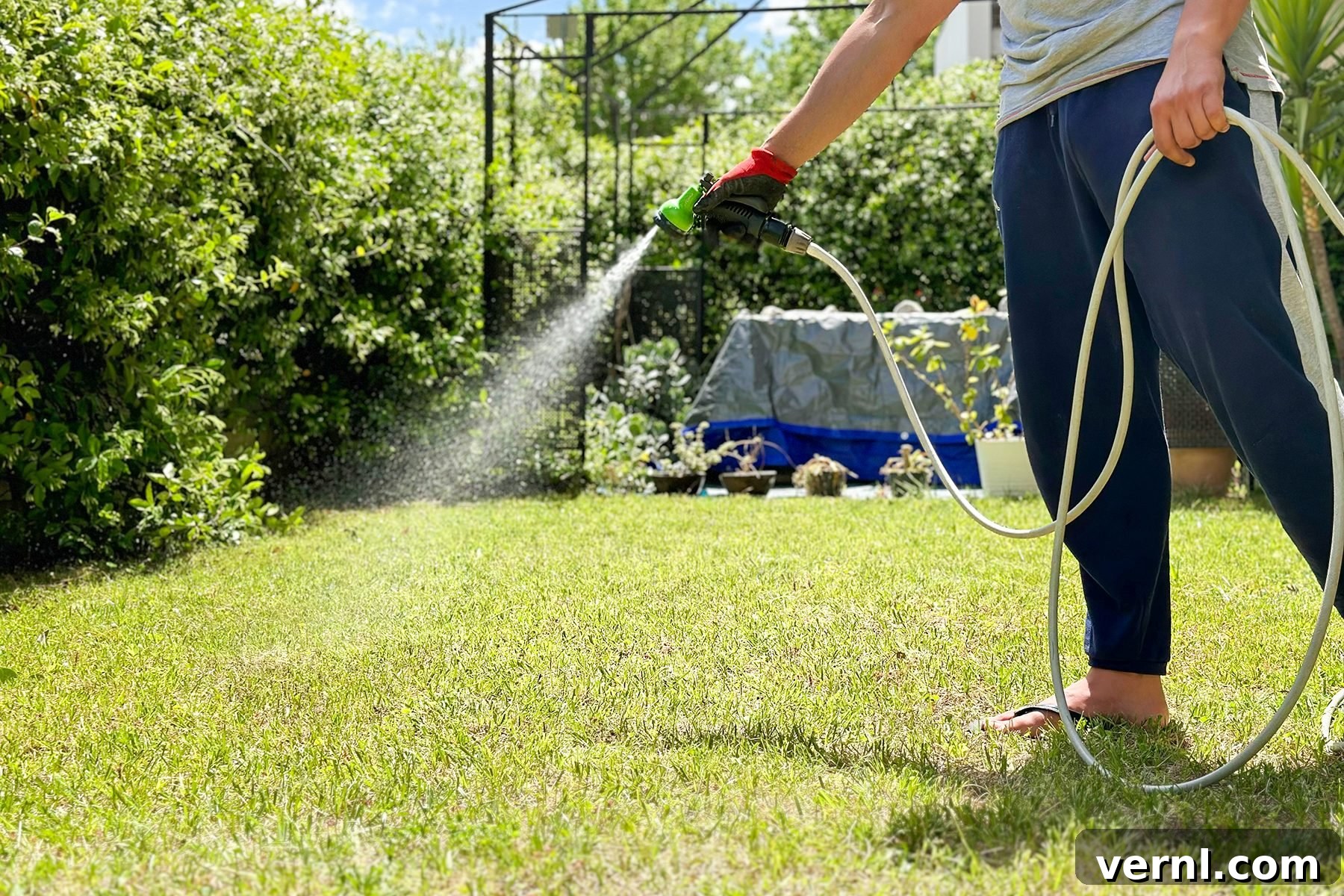
Embarking on the journey of cultivating a lush, green lawn from scratch can be an incredibly rewarding experience. While often overlooked, growing grass seed is fundamentally a form of gardening, sharing many of the same core principles. The triumvirate of soil, sunlight, and water forms the bedrock of horticultural success, yet understanding the precise application of each element is paramount, especially when it comes to hydration. If you’ve ever pondered the critical question of how much water new grass seed truly needs, you’ve arrived at the ultimate guide to nurturing a vibrant lawn.
To provide you with the most accurate and practical advice, we’ve consulted leading gardening professionals, gathering their invaluable insights on the nuances of watering new grass seeds. Our aim is to streamline your learning process, allowing you to dedicate less time to research and more time to cultivating a truly beautiful lawn. Ahead, horticulture extension specialists will demystify the ideal watering regimen – covering how much, how often, and best practices – ensuring your new grass has the best possible start.
The Art of Hydration: How Much Water to Give New Grass Seed
Determining the precise amount of water for your new grass seed is not a one-size-fits-all answer; it critically depends on its current growth stage. During the initial germination period, maintaining consistent moisture in the seedbed is absolutely essential. Aaron Steil, a consumer horticulture extension specialist at Iowa State University, emphasizes the importance of preventing the top inch of the soil from drying out. This delicate phase requires constant, albeit gentle, hydration to encourage the tiny seeds to sprout. A dry seedbed at this crucial juncture can halt germination and ultimately lead to failure, wasting your efforts and investment.
As your new grass seed transitions from dormant seed to tender seedling and begins to establish, its watering needs evolve. You’ll gradually need to provide more water during each irrigation session. Gauging when to initiate another watering cycle involves a keen observation of several factors: the current moisture level of the soil, the duration since the last watering, the visible length of the grass blades, and how often the area has been mowed. To streamline this process, keeping a simple record – perhaps on a calendar or a note-taking app – of your watering times and the seeding date can prove incredibly beneficial as you track its progress.
A fundamental principle for promoting robust root development, shared by experts like Linda Langelo, a horticulture area extension specialist at Colorado State University, is to “water deeply and not frequently.” This approach encourages the nascent roots to delve deeper into the soil in search of moisture, rather than remaining near the surface. Shallow, frequent watering trains roots to stay shallow, making the grass more susceptible to drought and heat stress. Conversely, insufficient water during these formative stages poses a significant risk of seedling mortality. Deeper roots translate to a more resilient, drought-tolerant lawn in the long run.
The choice of watering tool also plays a role in how effectively you hydrate your new grass seed. For broader newly seeded areas, Steil recommends the use of an overhead sprinkler, which provides even coverage. For smaller, more precise seeding jobs, spot sprinklers can be effective, while impact sprinklers are better suited for extensive areas. Langelo adds a practical tip for the initial stages: setting an automatic sprinkler for approximately five minutes should be adequate to properly moisten the seedbed without causing runoff or pooling. This measured approach ensures the seeds receive necessary hydration without being dislodged or drowned.
Establishing a Routine: How Often to Water New Grass Seed?
The frequency of watering new grass seed is perhaps the most dynamic aspect of its care, undergoing significant changes as the lawn matures. According to Langelo, during the critical initial stages, you should generally plan to water your new grass seed two to three times daily. This high frequency is vital for keeping the top layer of soil consistently moist, which is essential for successful germination and the initial delicate growth of the seedlings. Think of it as providing a constantly hospitable environment for life to spring forth from each tiny seed.
As your new grass seed germinates – a process that typically spans two to three weeks, depending on the grass type and environmental conditions – the watering frequency will gradually decrease. Steil explains this transition: initially multiple times per day, then progressing to every two or three days, then twice a week, and ultimately stabilizing at once per week for a well-established lawn. He advises maintaining multiple daily waterings for the first couple of weeks until the grass blades have reached a height of about two inches. This milestone indicates sufficient root establishment to begin transitioning to a less frequent schedule. After your new grass has undergone its first couple of mowings, the roots should be deep enough to support a weekly deep watering session.
However, no watering schedule is rigid; it must always be adaptable to prevailing weather conditions. Warmer temperatures and strong winds accelerate the rate at which the seedbed dries out, necessitating more frequent watering. Langelo clarifies, “The warmer the weather, the quicker the grass seed will dry out and the more often you may need to water before the seed sends roots into the soil.” For instance, if temperatures soar into the 80s Fahrenheit, you might need to increase your watering frequency to four times a day, as opposed to the typical two or three, to ensure the seeds don’t desiccate. Monitoring local weather forecasts and observing the soil surface are key to making these crucial adjustments.
Recognizing Saturation: When to Stop Watering New Grass Seed
While consistent moisture is paramount for newly planted grass seed, there comes a point where continued watering becomes counterproductive. You’ll know it’s time to ease back on the frequency and duration of watering if you observe water runoff from the seeded area. Runoff indicates that the soil has reached its saturation point and cannot absorb any more moisture, meaning additional water is simply being wasted and could potentially carry away seeds or nutrients. Although a healthy lawn will always require some level of moisture to thrive, the intense watering schedule of the initial establishment phase can be progressively reduced as your grass matures and its root system strengthens. The goal transitions from keeping the surface constantly wet to encouraging deeper root growth through less frequent, but more substantial, watering sessions.
Optimizing Your Effort: Best Practices for Watering New Grass Seed
Beyond quantity and frequency, several best practices can significantly enhance the success of your new lawn. The timing of your watering sessions is crucial. Always aim to water in the early morning, ideally between 4 AM and 8 AM. Watering at this time allows the water to penetrate the soil deeply before the heat of the day causes significant evaporation. This also gives the grass blades time to dry before nightfall, which is vital in preventing the development of fungal diseases. Avoid watering in the middle of a hot, sunny day, as much of the water will evaporate before reaching the roots. Similarly, watering late in the evening can leave the grass wet overnight, creating a perfect breeding ground for diseases. Regularly check the moisture level of the seedbed by gently pressing your finger into the soil. If it feels dry to the touch, it’s time to water.
For sloped areas, apply water in shorter bursts to allow it to soak in rather than run off. This might mean dividing a 5-minute watering session into two 2.5-minute sessions with a brief pause in between. Addressing any bare patches or areas where germination is sparse might require targeted, manual watering to give those specific spots an extra boost without overwatering the surrounding established seedlings. Lastly, always be mindful of local water restrictions or conservation guidelines, adapting your watering plan accordingly while still prioritizing the health of your nascent lawn.
Frequently Asked Questions (FAQ)
Will fertilizer negatively or positively affect new grass seed?
Fertilizer can indeed have a positive impact on new grass seed, but timing is everything. It should generally be applied (if needed) only after germination has successfully occurred. Linda Langelo recommends waiting between six to eight weeks post-seeding before considering fertilizer application. She emphasizes, “Remember, all the nutrients start out in the embryo of the grass seed. More fertilizer does not mean better growth; rather, proper sun exposure and watering benefit the seed initially.” For the first few weeks, the seed itself provides all the necessary nutrients for initial growth. Introducing fertilizer too early can actually burn delicate seedlings. Furthermore, fertilizer may not even be necessary. The most accurate way to determine if your soil requires additional nutrients is by completing a comprehensive soil test. This analysis will reveal any deficiencies and guide you toward selecting the appropriate type and amount of starter fertilizer, if any.
When should you first mow new grass seed?
Both Langelo and Steil concur that the ideal time for the first mowing of new grass seed is when it has reached a height of approximately three inches. Allowing the grass to grow too long before its first cut can cause issues during mowing, potentially damaging the roots or tearing out the young blades. Langelo further advises that it’s generally best practice to wait about four weeks after seeding for the inaugural mow, and then to trim the grass down to around two inches. Precision and care are paramount during this first cut. Amanda Folck, an assistant extension educator of turfgrass management at the University of Nebraska-Lincoln, recommends, “Use a walk-behind push mower for the first mow, if possible.” She adds, “Be steady on the first mow to prevent any immediate turns on the new grass area.” Sharp mower blades are also crucial to ensure a clean cut, which promotes healing and healthy growth, rather than tearing the tender new grass.
What if it rains heavily after seeding?
Natural rainfall can be a blessing for new grass seed, but heavy downpours can also pose challenges. Light, consistent rain is ideal, as it provides gentle moisture. However, heavy rainfall can lead to several problems. Intense rain can wash away seeds, particularly on sloped areas, resulting in bare patches. It can also cause soil compaction, making it harder for delicate roots to penetrate. If heavy rain occurs, closely monitor the seeded area. You might need to gently rake the surface to loosen any compacted soil once it has dried slightly, and re-seed any areas where seeds appear to have been washed away. Adjust your subsequent watering schedule, as heavy rain will likely mean you can skip an irrigation session or two, but ensure the top inch of soil doesn’t dry out completely as seeds can be very resilient.
About the Experts
- Amanda Folck has served as the assistant extension educator of turfgrass management at the University of Nebraska-Lincoln since 2023. She is also a university faculty member within the Department of Agronomy and Horticulture, focusing on research and education related to sustainable turfgrass practices.
- Aaron Steil is a consumer horticulture extension specialist at Iowa State University, bringing over 15 years of extensive industry experience to his role. Prior to his current position, he held significant roles as an assistant teaching professor and assistant director of the distinguished on-campus Reiman Gardens, showcasing his deep practical and academic knowledge in horticulture.
- Linda Langelo is a highly respected horticulture area extension specialist at Colorado State University. Her impressive career includes serving as the grounds supervisor at Turning Stone Casino and Resort, where she was directly responsible for meticulously overseeing reseeding processes, including ensuring proper seed coverage within 30 days of watering. With more than three decades of industry experience, she is a long-standing and active member of both Garden Communicators International and the American Public Garden Association, contributing significantly to horticultural education and outreach.
Sources
-
Iastate.edu: “Watering Home Lawns”