Walking is undeniably one of the simplest yet most profound activities for human health. Whether it’s a leisurely afternoon stroll around your neighborhood, a brisk walk to kickstart your day, or serving as your primary mode of transportation, incorporating regular movement into your routine offers a wealth of physical and mental benefits. From improving cardiovascular health and boosting mood to aiding digestion and strengthening muscles, the advantages of walking are well-documented and widely celebrated. However, the serene act of walking can quickly turn perilous when it brings you into close proximity with vehicular traffic. In such scenarios, understanding and strictly adhering to crucial traffic safety rules becomes paramount for your well-being.
The safest environment for pedestrians, without question, is a designated sidewalk, pathway, or pedestrian zone, separated from the flow of cars, trucks, and motorcycles. Sticking to sidewalks is not merely a suggestion; it is the most effective and recommended way to maintain your safety while navigating urban and suburban landscapes. These dedicated paths are specifically designed to protect walkers from the inherent dangers of motorized traffic. Yet, there are countless instances where sidewalks are simply nonexistent, poorly maintained, or temporarily obstructed, forcing pedestrians to share the road with vehicles. When faced with such an unavoidable situation, knowing the correct protocol isn’t just helpful; it’s a matter of life and death. This guide will walk you through the essential safety measures and legal requirements you need to understand before proceeding along a road without the luxury of a sidewalk.
What Do I Do if There Are No Sidewalks?
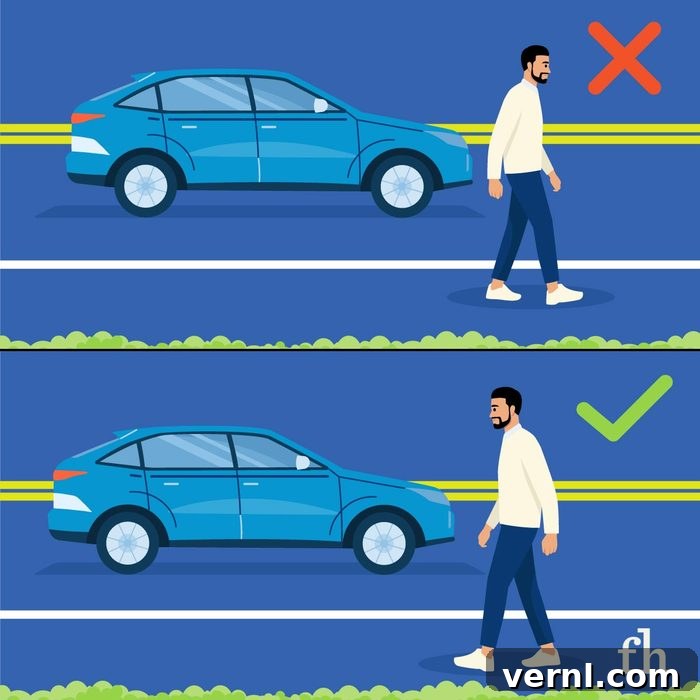
The vast majority of states across the United States have laws explicitly stating that pedestrians, whenever feasible, must utilize available sidewalks. This legal directive underscores the priority placed on pedestrian safety and the recognition of sidewalks as the safest havens for foot traffic. However, the reality of many rural roads, some suburban areas, and even parts of older cities is a stark absence of these vital pedestrian infrastructures. When sidewalks are not an option, the law, and common sense safety practices, dictate a specific course of action.
According to authoritative bodies like the New York’s Governor’s Traffic Safety Committee (GTSC), pedestrians “must walk facing traffic as far to the left as possible.” This guidance is not unique to New York; it is a widely adopted standard across the nation. For instance, Wisconsin’s Department of Transportation (DOT) echoes this sentiment precisely: “If there is no sidewalk, walk facing traffic and as far from traffic as possible.” This principle is a cornerstone of pedestrian safety, universally recognized and legislated in almost every jurisdiction. Regardless of where you reside or find yourself walking, a quick review of local traffic laws concerning pedestrian behavior on roads without sidewalks will invariably yield the same crucial advice: walk on the left side of the road, directly facing oncoming traffic, and maintain as much distance from the travel lane as conditions permit.
This rule serves as a critical directive for several reasons, primarily centered around maximizing awareness and minimizing risk. When you are forced to share the road with vehicles, positioning yourself to see what is coming allows you to react proactively rather than reactively. It shifts a portion of the responsibility for your safety from solely relying on a driver’s vigilance to empowering you with the ability to take evasive action if necessary. This universal guideline reflects a deep understanding of road dynamics and human perception, aiming to provide pedestrians with the best possible chance of avoiding accidents in less-than-ideal walking environments.
Why Does This Rule Exist?
The logic underpinning the “walk facing traffic” rule is fundamentally rooted in the principles of visibility and reaction time, critical components of road safety. For your own self-preservation, two primary objectives must be met when walking on a road without sidewalks: you need to be as far removed from the active flow of traffic as possible, and equally important, you need to maximize your ability to perceive and respond to approaching vehicles. By positioning yourself on the left side of the road, facing oncoming traffic, you achieve both. You are able to visually identify potential hazards well in advance, giving you precious seconds to move further off the road, step into a ditch, or otherwise react to an approaching vehicle that may not have seen you or is veering too close. This proactive visual engagement is a layer of defense that simply does not exist when walking with traffic.
This rule might initially feel counterintuitive, especially when compared to the rules governing other road users like cyclists. Bicycles, for instance, are generally expected to ride in the same direction as vehicular traffic, typically on the right side of the road, and often in designated bike lanes. The key differentiator here is infrastructure and operational speed. Many roads are equipped with specific bike lanes, designed to provide a separated space for cyclists. Furthermore, cyclists typically move at higher speeds than pedestrians, making it more practical for them to integrate with the flow of traffic, even if they are still more vulnerable than cars. Pedestrians, however, move much slower and are significantly more exposed. The “walk facing traffic” rule specifically addresses these vulnerabilities in situations where standard road infrastructure (like sidewalks) is absent, prioritizing the pedestrian’s awareness as the primary safety mechanism.
Relying solely on hearing approaching vehicles is an insufficient safety strategy for pedestrians. While most larger vehicles produce discernible noise, many modern cars, particularly electric and hybrid models, can be incredibly quiet, especially at lower speeds. This silence can render them almost imperceptible until they are dangerously close. Moreover, environmental factors such as wind, rain, surrounding urban noise, or even personal distractions like headphones can easily obscure the sound of an oncoming vehicle. Even the sound of a roaring engine can be misleading; it only tells you a vehicle is approaching, not necessarily how close it is or how it’s behaving. By walking towards oncoming traffic, you are not merely listening; you are actively observing. You can see the driver’s intentions, anticipate turns, judge speed, and recognize erratic driving behavior long before a vehicle is upon you. This visual awareness empowers you to make informed decisions and take immediate evasive action, providing a critical extra layer of protection that passive listening cannot offer. It is a fundamental principle that puts the pedestrian in a position of maximum situational awareness, minimizing the element of surprise and enhancing the chances of avoiding a collision.
Essential Pedestrian Safety Tips Beyond Facing Traffic
While walking against traffic is a cornerstone of pedestrian safety on roads without sidewalks, it’s just one piece of a broader safety puzzle. To truly minimize risks, pedestrians should adopt a comprehensive approach to road safety. This includes making yourself as visible as possible, especially during low-light conditions. Wearing bright, neon-colored clothing during the day and reflective materials at dusk, dawn, or night dramatically increases your visibility to drivers. Carrying a flashlight, even in seemingly well-lit areas, can also help illuminate your path and make you stand out. Avoid distractions at all costs; putting away your phone, taking off headphones, and staying present and aware of your surroundings are non-negotiable safety practices. Crossing the road should always be done at designated crosswalks when available, or at intersections, and always after making eye contact with drivers. Be predictable in your movements, allowing drivers to anticipate your actions. If walking in a group, walk single file to avoid taking up too much road space. Educating children about these rules from a young age is also crucial for their safety. Always consider road conditions; uneven surfaces, potholes, or poor weather can make walking more hazardous and require extra caution.
Understanding Driver Behavior and Responsibility
Pedestrian safety is a shared responsibility. While pedestrians must take proactive measures, drivers also bear significant responsibility for the safety of those on foot. Drivers are often not expecting pedestrians to be walking along the side of the road, especially outside of urban areas or designated sidewalks. This lack of expectation can lead to delayed reactions or a failure to see pedestrians until it’s too late. Therefore, drivers have a legal and ethical obligation to be constantly vigilant, especially when driving on roads known to lack pedestrian infrastructure or in areas where pedestrians might reasonably be present. This means reducing speed, scanning the sides of the road, and being prepared to stop or swerve. The “share the road” mentality extends beyond cyclists to pedestrians as well, demanding heightened awareness and a commitment to safe driving practices in all environments. Drivers must understand that vulnerable road users, like pedestrians, require extra space and consideration.
The Role of Infrastructure and Urban Planning
The persistent issue of pedestrians sharing roads with vehicles highlights a critical need for improved infrastructure and thoughtful urban planning. Sidewalks are not merely conveniences; they are essential safety features. Advocates for pedestrian safety continuously push for the expansion and maintenance of dedicated pedestrian pathways. In areas where permanent sidewalks are not feasible, temporary solutions, such as clear signage indicating pedestrian presence or temporary barriers in construction zones, become vital. Investment in infrastructure that separates pedestrians from vehicular traffic is an investment in community safety and public health. Urban planners and local governments play a crucial role in creating environments where walking is not only enjoyable but also inherently safe, reducing the reliance on individual vigilance in high-risk situations.
Legal Ramifications and Personal Responsibility
Understanding the legal framework surrounding pedestrian and driver responsibilities is also important. In the unfortunate event of an accident, liability can be complex, often depending on who failed to follow established traffic laws. While drivers are generally held to a high standard of care, pedestrians are also expected to adhere to rules, such as walking against traffic when no sidewalks exist. Failing to follow these rules can have significant legal consequences for both parties, potentially affecting insurance claims, civil lawsuits, and even criminal charges. Ultimately, personal safety is a paramount concern. While authorities strive to create safer environments, and drivers are expected to be cautious, the individual pedestrian holds the primary responsibility for their own safety when navigating challenging road conditions. By understanding and consistently applying these safety guidelines, pedestrians empower themselves to navigate roads without sidewalks more securely, reducing the risk of preventable accidents and fostering a culture of mutual respect and awareness among all road users.
Sources
Rules and reminders for pedestrians and drivers, State of Wisconsin Department of Transportation.
Pedestrian Safety Overview, New York State Governor’s Traffic Safety Committee.