Understanding Electrical Transformer Boxes: Your Essential Guide to Home Power and Safety
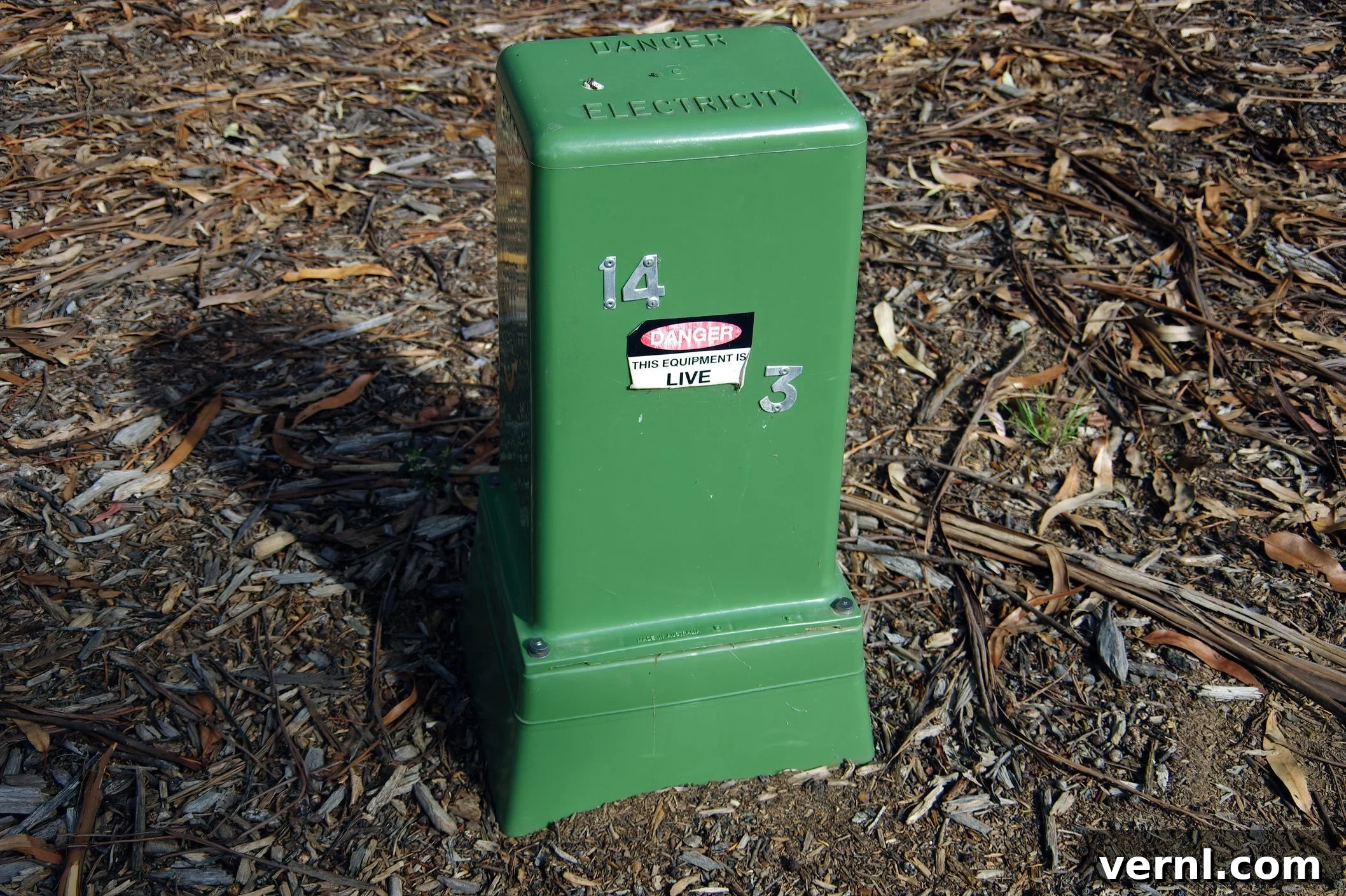
They are everywhere, yet often go unnoticed: those green, square metal boxes quietly positioned in neighborhoods, often near driveways or property lines. You likely pass several of them daily, perhaps without giving them a second thought. But these unassuming structures, known as electrical transformer boxes, play a monumental role in powering your modern life. While you might have a vague understanding that they are involved in bringing electricity to your house, the specifics of their function, their importance, and the crucial safety measures surrounding them often remain a mystery.
This comprehensive guide aims to demystify these vital components of our electrical infrastructure. We will delve into what an electrical transformer box is, how it functions within the larger power grid, why it’s strategically placed in residential areas, and critically, how to interact with them safely. Understanding these structures is not just about curiosity; it’s about appreciating the intricate system that powers our homes and ensuring the safety of our communities.
What Is an Electrical Transformer Box? Unveiling the Heart of Local Power
As the name suggests, an electrical transformer box is essentially a protective metal enclosure that houses an electrical device called a transformer. These robust units are designed to safeguard the transformer from environmental elements, vandalism, and accidental contact, while also allowing utility personnel access for maintenance.
The Critical Role of Voltage Transformation
The journey of electricity from its generation point to your wall outlets is a complex one, involving multiple stages of voltage alteration. Electricity is produced at power plants at very high voltages and then “stepped up” even further (to hundreds of thousands of volts) for efficient long-distance transmission across vast power lines. This high voltage minimizes energy loss over long distances, making the electrical grid economically viable.
However, this ultra-high voltage is far too dangerous and powerful for direct use in homes and businesses. It must be converted into a usable voltage before it can power your computer, television, or kitchen appliances. This is precisely where the transformer within the green box performs its essential duty. It acts as a “step-down” transformer, reducing the higher-voltage power from the distribution grid to a lower, safe, and usable voltage for residential consumption, typically 120/240 volts in North America.
How a Transformer Works: The Principle of Induction
The magic inside the transformer box lies in the principle of electromagnetic induction. A transformer consists of two separate coils of wire, known as the primary and secondary coils, wrapped around a common laminated iron core. When the high-voltage alternating current (AC) from the utility lines flows through the primary coil, it creates a fluctuating magnetic field in the iron core. This changing magnetic field then induces an alternating current and voltage in the secondary coil.
The key to stepping voltage up or down lies in the ratio of the number of turns in the primary coil versus the secondary coil. For a step-down transformer, the secondary coil has fewer turns than the primary coil, resulting in a reduced voltage output. This elegant and highly efficient process allows for the precise control of voltage levels necessary for different stages of electricity distribution.
Pad-Mounted vs. Pole-Mounted Transformers
The common green boxes you see are specifically known as “pad-mounted transformers.” This term refers to their installation on a concrete pad, which provides stability, keeps the unit slightly above ground level to protect against moisture, and offers a secure foundation. Electricity reaches these boxes via underground conductors (wires) and, after being transformed, is then routed through other underground conductors to your home’s electrical service panel.
It’s important to note that not all residential transformers are pad-mounted. If your neighborhood features overhead power lines, the transformer serving your area will typically be mounted high up on an electrical pole. Functionally, pole-mounted transformers perform the exact same step-down process, but their placement differs due to the design of the local distribution network.
Why Are Transformer Boxes Located in Residential Yards? The Logic of Local Power Distribution
The seemingly random placement of electrical transformer boxes in our residential landscapes is, in fact, the result of meticulous planning by utility companies. This strategic positioning is crucial for ensuring efficient, reliable, and safe electricity delivery, making it the second-to-last step in a complex network that spans from distant power plants to your light switch.
The Multi-Stage Electrical Grid
To understand why these boxes are in our yards, it’s essential to grasp the multi-stage structure of the electrical grid:
- Generation: Electricity is produced at power plants (using fossil fuels, nuclear, renewables, etc.) at relatively high voltages.
- Transmission (Step-Up): Transformers at the power plant step up this voltage to extremely high levels (e.g., 100,000 to 765,000 volts) for efficient long-distance transmission across vast networks of steel lattice towers and thick overhead lines to regional substations. Transmitting power at higher voltages minimizes current, which in turn reduces energy loss due to resistance in the wires.
- Primary Substation (First Step-Down): At large substations located near population centers, giant transformers “step down” the ultra-high transmission voltage to a lower, but still high, distribution voltage (e.g., 4,000 to 33,000 volts). This power is then sent out on smaller distribution lines, often along main roads.
- Secondary Distribution (Local Step-Down): This is where the pad-mounted transformer boxes come into play. As the electricity approaches residential areas, it is fed into these local transformers. Here, the final “step-down” occurs, reducing the voltage from several thousand volts to the household-safe 120/240 volts.
- Final Delivery: From the transformer box, individual service lines carry this usable voltage directly to your home’s electrical meter and then to your main electrical panel.
Efficiency and Economics of Local Placement
The primary reason for placing these final step-down transformers so close to homes is efficiency and cost-effectiveness. While high voltages are ideal for long-distance transmission, transmitting lower voltages over significant distances is inefficient due to increased energy loss and the need for much thicker, more expensive cabling. By performing the last voltage reduction as close to the point of consumption as possible, utilities can:
- Minimize Energy Loss: Less energy is wasted as heat in the distribution wires.
- Reduce Infrastructure Costs: Shorter runs of lower-voltage wiring are less expensive to install and maintain.
- Enhance Reliability: Local transformers allow for more localized power distribution, meaning problems in one area are less likely to impact a wider region.
- Ensure Safety: Delivering power to homes at safe, usable voltages is paramount for public safety.
While the aesthetic presence of these boxes might sometimes be a concern for property owners, their strategic placement is a non-negotiable aspect of modern electrical infrastructure, ensuring that every connected home receives a consistent and safe supply of electricity.
Essential Safety Tips for Electrical Transformer Boxes: Protecting Your Family and Community
Despite their common presence, it’s crucial to remember that electrical transformer boxes contain extremely high and dangerous voltage levels. While they are designed with multiple safety features to protect the public, complacency or negligence can lead to severe injury or even death. Adhering to specific safety guidelines is paramount for anyone living near these vital electrical components.
Maintain a Strict Safe Distance – Never Touch or Tamper
- Hands Off, Stay Away: The most fundamental rule is to never touch, climb on, or attempt to open an electrical transformer box. The metal casing is robust, but it’s a protective barrier for lethal electrical components. Tampering with the box or its locks can expose live parts, leading to immediate electrocution.
- Educate Children About Dangers: Children are naturally curious and may not comprehend the severe risks associated with these boxes. Teach them explicitly that these are not play structures and should be avoided at all times. Explain that touching them can cause serious harm.
- Keep Pets Away: Pets can also be curious or attracted to the warmth or hum of a transformer. Ensure they do not have access to the box to prevent accidental electrocution or injury.
Critical Clearance for Safety and Maintenance Access
- Do Not Obscure: It is strongly advised against planting trees, shrubs, or building structures that obscure or block access to a transformer box. While some homeowners might find the green box unsightly, utility technicians require clear, unhindered access for routine maintenance, inspections, and emergency repairs. Blocked access can significantly delay critical work, prolonging power outages and creating hazardous working conditions for utility personnel.
- Adhere to Clearance Guidelines: Always maintain a minimum 10-foot clear zone in front of the transformer box (the side with the utility locks or latch) and a 3-foot perimeter on all other sides. This space is not arbitrary; it’s essential for technicians to safely open the cabinet doors, operate the internal equipment, and perform their duties without impediment or risk.
- Avoid Planting Over Underground Lines: Remember that underground power cables feed into and out of these boxes. Planting deep-rooted trees or engaging in extensive landscaping directly above these lines can lead to root entanglement, potentially damaging the cables and causing dangerous faults or outages.
Digging Safety: Always Call 811 Before You Dig!
- Protect Buried Utilities: Before undertaking any excavation project near a transformer box, no matter how minor (e.g., planting a new bush, installing a fence, building a deck), it is legally and practically imperative to call 811. This national “Call Before You Dig” service will arrange for local utility companies to mark the precise locations of all underground utility lines (including electric, gas, water, sewer, and communication cables) on your property.
- Prevent Catastrophic Accidents: Striking an underground electrical line can lead to severe injury, electrocution, widespread power outages, and substantial repair costs for which you could be held liable. Always plan ahead and make the call to 811 at least a few business days before your scheduled digging begins.
Recognizing and Reporting Potential Problems
- Vigilance is Key: Be aware of your surroundings and report any unusual observations regarding a transformer box. This includes seeing a box that is visibly open, damaged (e.g., dents, rust, missing panels), emitting smoke or sparks, appears to be on fire, humming unusually loudly, or leaking any liquid (which could be dielectric cooling oil).
- Downed Power Lines: If you ever encounter a downed power line near a transformer box or anywhere else, immediately assume it is live and extremely dangerous. Stay at least 30 feet away and call 911 without delay. Never attempt to move or touch a downed line or anything in contact with it.
- Act Swiftly: Your prompt action in reporting a potential problem can prevent serious injury, widespread power outages, and further damage to vital infrastructure.
Who To Contact About Electrical Transformer Box Problems: Your Utility and Emergency Services
Knowing the correct channels for reporting an issue with an electrical transformer box is just as critical as understanding the safety precautions. Prompt and accurate reporting ensures that problems are addressed efficiently by qualified professionals, minimizing risks to public safety and ensuring continuity of power supply.
Contacting Your Local Electrical Utility Company for Non-Emergencies
For any observations or concerns that do not pose an immediate life-threatening danger, your local electrical utility company is the primary point of contact. They are solely responsible for the installation, maintenance, and repair of these crucial grid components.
- How to Find Contact Information:
- On the Transformer Box: Many transformer boxes have a visible sticker or plaque displaying the utility company’s name and an emergency contact number. This is often the quickest way to identify the responsible party.
- Your Utility Bill: Your monthly electricity bill will always include customer service and emergency contact numbers for your specific provider.
- Online Search: A quick search on the internet for your utility company’s name along with “outage report” or “customer service” will reliably provide the necessary contact details.
- What Information to Provide When Reporting:
- Precise Location: Clearly state the exact street address where the transformer box is located, along with any nearest cross-streets or specific landmarks (e.g., “in front of the house at 456 Elm Street,” “at the corner of Birch and Maple Avenues, adjacent to the green mailbox”).
- Transformer Identification Number: If it is absolutely safe to do so, locate and provide any identification numbers or codes printed on a sticker on the box. This helps the utility company quickly identify the specific unit. However, do not compromise your safety to obtain this information.
- Detailed Problem Description: Explain clearly and concisely what you have observed. Is the box open? Is there visible damage? Are you hearing strange buzzing or humming noises? Is there an unusual smell (like burning insulation)? Is any liquid leaking? The more precise details you can offer, the more effectively the utility can assess and address the situation.
- Personal Experience: If you are experiencing related issues, such as flickering lights, partial power outages affecting only certain circuits, or reduced voltage, report these symptoms as they can indicate a problem with the transformer or its associated connections.
When to Call 911: Immediate Emergency Situations
Certain situations demand an immediate response from emergency services. In these cases, bypass the utility company’s non-emergency line and call 911 without hesitation. These are situations that present an immediate and severe threat to life, property, or public safety:
- Visible Sparks or Flames: Any instance of fire, smoke, or continuous sparking emanating from or around the transformer box.
- Explosions: If you hear or witness an explosion related to the transformer box or nearby electrical equipment.
- Significant Oil Leaks: While minor seepage might be a utility issue, a substantial or continuous leak of cooling oil (which can be flammable and environmentally hazardous) warrants an emergency call.
- Downed Power Lines: Any power lines that are on the ground, dangling precariously low, or in contact with vehicles, water, or structures. Always assume downed lines are live and lethal.
- Physical Damage Exposing Live Components: If the transformer box is severely damaged, compromising its integrity and exposing live electrical parts, especially if there is standing water in the vicinity.
- Injured Person: If someone has come into contact with the transformer box or associated electrical equipment and is injured, call 911 immediately. Under no circumstances should you attempt to assist the person directly unless you are absolutely certain the power has been de-energized, as you could become a victim yourself.
In emergency scenarios, 911 operators are equipped to dispatch appropriate first responders (such as the fire department or police) and will also notify the relevant utility company on your behalf. Always prioritize your safety and the safety of others by calling 911 for any immediate threats.
By understanding the vital function of electrical transformer boxes, respecting the inherent dangers they present, and knowing the appropriate steps to take in various situations, we can all contribute to a safer and more reliably powered community. These often-overlooked green boxes are indeed silent guardians, working tirelessly to convert and deliver the energy that lights up our lives and fuels our modern world.