Upgrading your garage door stands out as one of the most impactful and cost-effective ways to significantly boost your home’s curb appeal and overall value. This is largely because garage doors are prominent architectural features, often occupying a large portion of a home’s façade at eye level. For many residences, it’s the very first element visitors notice upon arrival, making a fresh, appealing garage door an instant indicator of a well-maintained home.
However, the prospect of fully replacing a garage door can be daunting due to the substantial financial investment involved. For homeowners seeking a more budget-friendly yet transformative option, painting their existing garage door offers an excellent alternative to a complete replacement. The good news is that if you possess the basic skills to paint a wall, you’re well-equipped to tackle a garage door painting project. The key to achieving a long-lasting, attractive finish lies not just in the act of painting itself, but in diligent preparation and the careful selection of the right paint products tailored to your door’s specific material.
To demystify this often-misunderstood home improvement task and guide you toward selecting the ideal paint for your garage door, we sought insights from a pair of seasoned painting professionals. Ryan Parr, the owner and president of Nashville Painting Professionals, provided invaluable advice on the overarching steps and considerations for painting any garage door. Complementing his expertise, Anthony Kulikowski, owner of Five Star Painting of South Bend, offered detailed, material-specific guidance, breaking down the essential steps for the most common types of garage doors found today.
Essential General Advice for Painting Your Garage Door
At its core, painting a garage door shares many similarities with any other successful painting endeavor. The process can be distilled into three critical phases: meticulous preparation, informed product selection, and precise application technique. Among these, product selection is paramount, given that your garage door will be continuously exposed to the full spectrum of outdoor elements year-round, from relentless sun and heavy rain to freezing snow and intense heat.
Ryan Parr strongly advocates for the use of high-quality, exterior-grade paint specifically formulated to endure these harsh conditions. “Always start with a clean, properly primed surface,” he advises. “And for garage doors that receive direct sunlight for significant portions of the day, consider investing in a paint product that is explicitly formulated with UV blockers. These additives are crucial for preventing premature fading and degradation caused by sun exposure.” It’s important to note that if you are simply recoating a garage door that is already in excellent condition with no peeling or bare spots, a primer may not always be a strict necessity, though it often enhances adhesion and durability.
Beyond the type of paint, color choice plays a significant role in the longevity and performance of your painted garage door. “Color selection also directly impacts durability,” Parr emphasizes. “Generally, lighter colors tend to reflect more sunlight and therefore withstand sun exposure more effectively, retaining their vibrancy longer. Conversely, darker shades, while aesthetically appealing, may absorb more heat, which can lead to faster fading and potentially more wear over time, especially on certain materials like vinyl.” Understanding the Light Reflective Value (LRV) of a paint color can be particularly beneficial, especially when painting heat-sensitive materials.
The Benefits of Painting Your Garage Door
Deciding to paint your garage door offers a multitude of advantages that extend far beyond a simple aesthetic update. Firstly, it provides an immediate and noticeable boost to your home’s curb appeal, making it more inviting and well-cared for. This visual enhancement is often the first step in creating a lasting positive impression. Secondly, it serves as a protective barrier, shielding the underlying material of your garage door from the elements, thus extending its lifespan and preventing premature wear and tear. A fresh coat of paint can help ward off moisture, UV damage, and even minor impacts. Thirdly, it’s a highly cost-effective home improvement project when compared to the expense of a full replacement, offering significant value for a relatively modest investment. Lastly, painting allows for extensive personalization, enabling you to harmonize your garage door with your home’s overall architectural style and color scheme, creating a cohesive and polished look that truly reflects your taste.
Painting Wood Garage Doors
When approaching the task of painting a wooden garage door, it’s best to treat it with the same care and consideration you would any other exterior wooden surface on your home. The preparation stage is foundational for a lasting finish. Begin by thoroughly cleaning the entire door to remove all dirt, grime, mildew, and loose debris. A mild detergent and water, followed by a good rinse, usually suffices. Next, meticulously inspect the wood for any imperfections. Fill in cracks, nail holes, or minor damage with a high-quality exterior wood filler, ensuring it’s fully cured according to manufacturer instructions. Once dry, sand down any rough areas, splintered wood, or feathered edges from the filler, as well as any existing loose or peeling paint, to create a smooth, uniform surface for adhesion. Finish the prep by wiping down the door again to remove all sanding dust.
Once the door is perfectly prepped, Anthony Kulikowski strongly recommends moving on to the priming stage. “A quality exterior wood primer is essential here, ideally an oil-based variety,” he advises. “This type of primer excels at sealing the wood, which is critical for preventing moisture penetration that could lead to cracking, warping, or peeling of the topcoat. Oil-based primers also offer superior adhesion, especially on older, weathered wood.” The benefit of using an oil-based primer is its versatility, allowing virtually any type of exterior paint to be used as the topcoat. However, if you prefer to avoid the specific cleanup requirements associated with oil paints, a high-quality latex/acrylic primer can certainly be used. Just be aware that opting for a latex/acrylic primer will typically limit your topcoat choices to exterior latex/acrylic paints, as different paint bases may not adhere properly to each other.
For the primary base coat of your wooden garage door, Kulikowski recommends using an exterior-grade acrylic latex paint. “The inherent flexibility of latex paint is a significant advantage for wooden surfaces,” he explains. “Wood naturally expands and contracts with temperature and humidity fluctuations. The flexibility of acrylic latex allows the paint film to move with the wood, significantly reducing the likelihood of cracking and peeling over time.”
To complete the project and enhance both durability and aesthetic appeal, he suggests selecting a semi-gloss or satin exterior paint for the final top coat. “These sheens not only provide a more refined, finished look but also offer increased durability and are more effective at repelling dirt and moisture than flatter finishes, making cleaning easier,” Kulikowski adds. Aim for at least two thin, even topcoats for optimal protection and color saturation.
Painting Wood Composite Garage Doors
While wood composite materials are engineered to emulate the appearance of natural wood, their surface properties are distinctly different, often behaving more like plastic than solid hardwood. This necessitates a slightly altered approach to preparation and product selection. Begin with a thorough cleaning of the surface, paying particular attention to removing any oils, residues, or accumulated grime that may have leached out or settled on the composite material. A degreasing cleaner can be particularly effective here. Kulikowski also recommends a light sanding of the entire surface using fine-grit sandpaper (around 180-220 grit). “A gentle scuff sanding is crucial for composite doors,” he notes, “as it creates a microscopic profile that significantly aids in paint adhesion, ensuring your primer and topcoats bond securely to the smooth, often slick surface.”
Regarding primer selection for composite doors, Kulikowski advises against cutting corners. “Spending a little more on a specialized primer is a wise investment when painting composites,” he states. “A high-quality bonding primer is absolutely essential here, especially if the composite material has a smooth or shiny finish. Bonding primers are designed to create an incredibly strong adhesive layer that traditional primers might struggle to achieve on these challenging surfaces.” This specialized primer will prevent the paint from peeling or flaking prematurely.
For the body coat, or the main color layer, he recommends an exterior acrylic latex paint that incorporates UV protection. Acrylic latex offers excellent flexibility to handle thermal expansion and contraction, while integrated UV inhibitors will help maintain color vibrancy and prevent the material from breaking down under sun exposure. But for the ultimate finish and maximum protection, Kulikowski offers an additional crucial step: “After applying your acrylic latex color coats, add a clear layer of UV-resistant sealant or polyurethane. This final protective barrier provides an extra level of durability against the sun’s harsh rays and adverse weather conditions, significantly extending the life and look of your painted composite door.” This step is particularly important for darker colors, which can absorb more heat.
Painting Steel or Aluminum Garage Doors
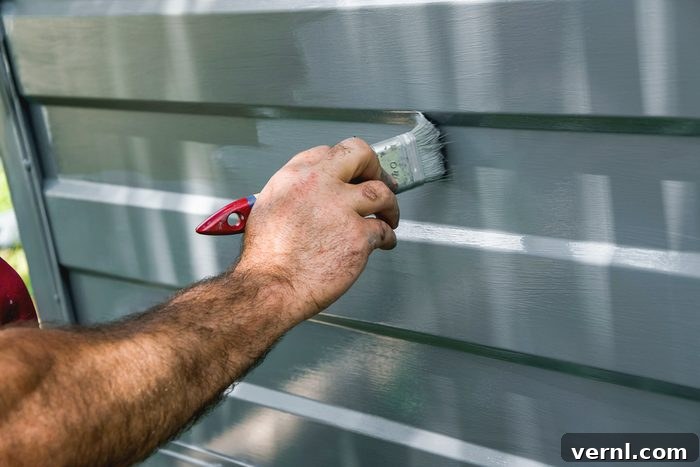
Painting metal garage doors, whether steel or aluminum, begins with an honest and thorough appraisal of their current condition. If the door exhibits widespread, deep rust or structural damage, replacement might be the more practical and safer long-term solution. However, if the rust is confined to surface areas and is not extensive, it can often be effectively addressed. Begin by meticulously cleaning the entire metal surface to remove all dirt, grease, and loose paint. For surface rust, use a wire brush and sandpaper (starting with a coarser grit like 80-120, then moving to a finer grit like 180-220) to completely remove all traces of rust. Ensure the surface is smooth and free of flaky particles. For any dents or dings, an automotive body filler can be used, sanded smooth once cured. Finally, wipe down the entire door with a degreaser or mineral spirits to ensure perfect adhesion, followed by a clean water rinse.
Once the metal surface is meticulously prepped and dry, Kulikowski stresses the importance of specialized products. “For metal doors, it’s non-negotiable to select a primer and paint specifically engineered for use on metal surfaces,” he states. “Start with a high-quality, rust-inhibitive metal primer. This type of primer not only promotes excellent adhesion but also forms a crucial barrier that actively prevents future rust formation, especially important for steel doors. Ensure full coverage, paying extra attention to any areas where rust was removed.”
For the primary color coat, he recommends an exterior acrylic latex paint explicitly designed for metal surfaces. “These paints are formulated to handle the temperature fluctuations that metal doors undergo, expanding and contracting without cracking or peeling,” Kulikowski explains. “Their flexibility and adhesion properties are superior for metal substrates.” To provide enhanced protection and achieve a more uniform, professional-grade appearance, he advises a final topcoat. “Finish with another coat of exterior latex paint or, for an even more robust and durable finish, consider an exterior enamel paint. This final layer adds an extra shield against the elements and significantly contributes to the longevity and aesthetic appeal of your garage door.” Always allow adequate drying time between coats according to the manufacturer’s instructions.
Painting Vinyl Garage Doors
Preparing a vinyl garage door for painting involves a process quite similar to that used for composite materials, with particular emphasis on cleanliness and specific product selection to manage heat absorption. Kulikowski recommends a thorough cleaning with a mild detergent and water, particularly if the door is older and has accumulated years of grime or mildew. After scrubbing, rinse the door completely to remove all soap residue and allow it to dry fully. Interestingly, Kulikowski notes a distinction between older and newer vinyl: “Most newer vinyl formulations are designed with improved paint adhesion in mind and typically do not require a primer. However, for older vinyl doors or those with exceptionally smooth or glossy surfaces, applying a high-quality bonding primer can significantly improve adhesion and prevent potential issues down the line.” It’s always a good idea to perform a small adhesion test in an inconspicuous area if you’re unsure about priming.
For both the base and top coats of vinyl garage doors, he strongly recommends using 100% acrylic latex paint. “Acrylic latex paints are ideal for vinyl due to their excellent flexibility, which allows them to move with the vinyl as it expands and contracts with temperature changes, minimizing cracking and peeling,” Kulikowski explains. However, the most critical factor when painting vinyl doors, even more so than for other materials, is color selection. “It is absolutely paramount to choose lighter colors—specifically, those with a Light Reflective Value (LRV) over 55—when painting vinyl,” says Kulikowski. “Darker colors absorb significantly more heat from the sun, which can cause the vinyl material to warp, buckle, or even distort irreversibly.” This is a crucial warning that can save homeowners from costly damage.
I can personally confirm the profound importance of this selection, as I have witnessed firsthand how quickly dark colors can cause vinyl siding to warp and distort under intense sunlight. While some vinyl surfaces, particularly those with darker factory-applied colors, are often manufactured with slightly thicker gauges or specialized formulations to better resist the extremes of warping, this inherent vulnerability to heat absorption remains a primary concern for homeowners painting vinyl. Fortunately, many paint manufacturers have recognized this challenge and offer specialized lines of paint specifically marketed as vinyl-friendly, formulated to reflect heat and minimize warping risks. A notable example is this selection from Benjamin Moore, which provides options suitable for vinyl surfaces, often with specific LRV recommendations.
Tools and Materials Checklist
To ensure a smooth and successful garage door painting project, gather the following essential tools and materials before you begin:
- Drop cloths or plastic sheeting to protect surrounding areas.
- Painter’s tape for masking off windows, trim, and hardware.
- Cleaning supplies: mild detergent, scrubbing brushes, buckets, clean rags.
- For wood doors: Wood filler, sandpaper (various grits), sanding block.
- For metal doors: Wire brush, sandpaper (various grits), rust inhibitor (if needed), degreaser.
- For composite/vinyl doors: Mild degreaser, fine-grit sandpaper (for composites, if needed).
- High-quality exterior primer (oil-based for wood, bonding for composites/older vinyl, rust-inhibitive for metal).
- High-quality exterior acrylic latex paint (chosen based on door material and color preference, with UV protection if desired).
- Paintbrushes (angled brushes for cutting in and detailed work).
- Paint rollers (small foam rollers for smooth surfaces, larger nap rollers for textured surfaces).
- Paint trays.
- Extension pole for rollers (to reach higher sections).
- Safety gear: gloves, safety glasses, mask (especially during sanding or when using oil-based products).
- Step ladder or sturdy stool.
Common Mistakes to Avoid
While painting a garage door is a rewarding DIY project, certain missteps can compromise the final outcome. Here are some common mistakes to avoid:
- Skipping or Rushing Prep Work: Inadequate cleaning, sanding, or failure to repair imperfections will lead to poor adhesion and a short-lived finish. This is perhaps the most critical stage.
- Using the Wrong Paint or Primer: Applying interior paint, non-exterior primer, or a type of paint incompatible with your garage door material (e.g., non-vinyl-safe paint on vinyl) will result in peeling, fading, and damage.
- Painting in Unfavorable Weather: Extreme temperatures (too hot or too cold), high humidity, or direct intense sunlight can cause paint to dry too quickly, not cure properly, or blister. Always check the paint manufacturer’s recommended temperature and humidity ranges.
- Applying Too-Thick Coats: Thick coats lead to drips, uneven finishes, and can hinder proper curing, making the paint more prone to cracking and peeling. Multiple thin coats are always better.
- Ignoring Manufacturer Instructions: Every paint and primer product has specific guidelines for application, drying times, and recoating. Adhering to these instructions is vital for optimal performance and durability.
- Neglecting UV Protection for Dark Colors: Especially on vinyl and composite doors, choosing dark colors without proper heat-reflecting or UV-resistant properties can lead to warping and premature fading.
About the Experts
- Anthony Kulikowski has been immersed in the painting industry since his high school years, honing his skills as a contractor before proudly opening Five Star Painting, a Neighborly company, in 2017. He finds immense satisfaction in witnessing his team’s achievements, actively contributing to the community, and continuously learning from his mentors, accumulating invaluable knowledge he eagerly shares with future franchise owners.
- Ryan Parr, the accomplished owner and president of Nashville Painting Professionals, launched his company in July 2020. His vision was clear: to deliver unparalleled painting services to both residential and commercial clients across the vibrant Nashville area. Building on this success, Ryan strategically expanded his enterprise to Charlotte in January 2022, establishing Charlotte Painting Professionals. Through leveraging his extensive skills and deep industry experience, Ryan has adeptly spearheaded the growth of both companies, thriving in two highly competitive markets while consistently offering high-quality painting and remodeling services.