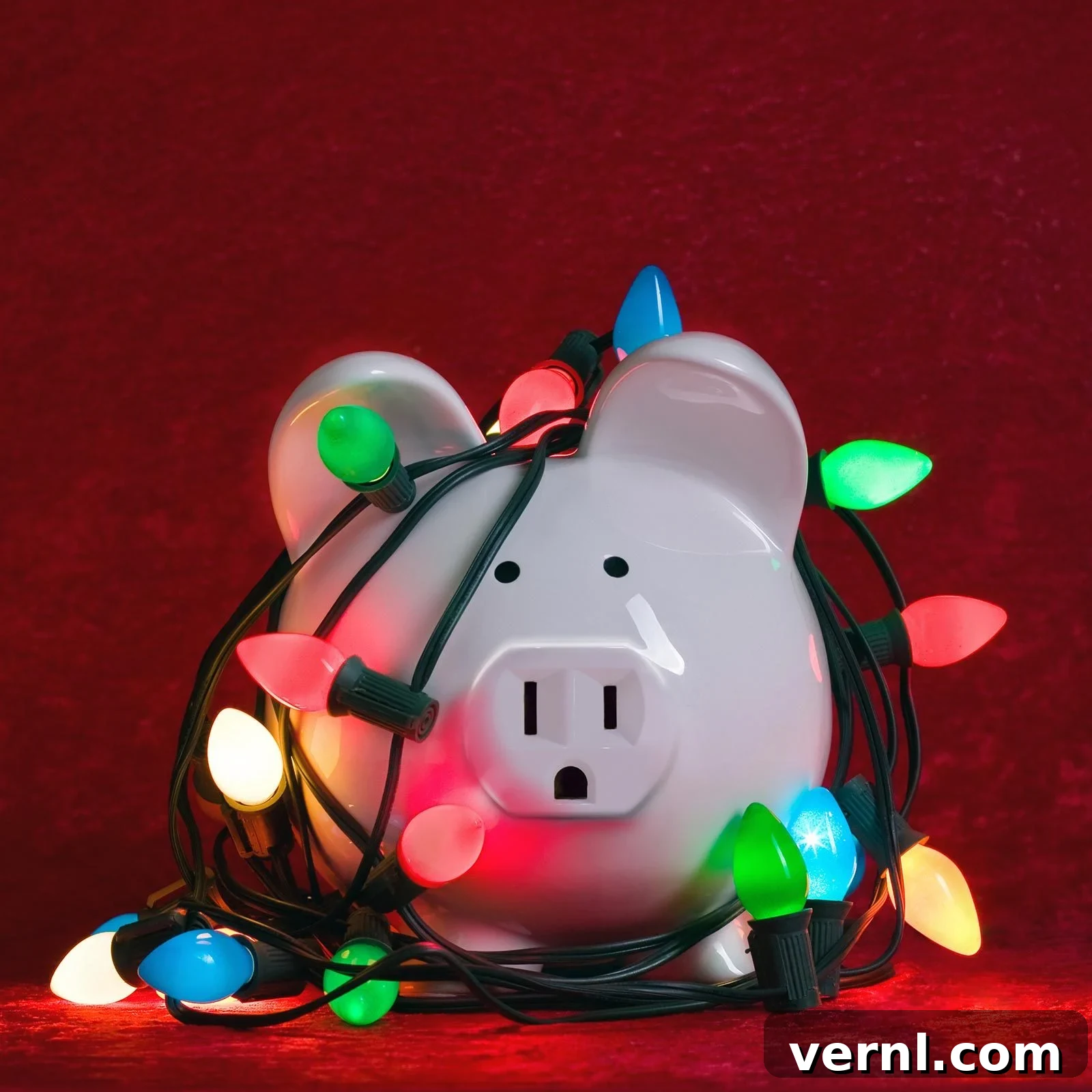
The holiday season in America is synonymous with dazzling Christmas light displays, transforming homes and neighborhoods into enchanting winter wonderlands. It’s a beloved tradition, with a significant portion of the population participating in this festive ritual. According to a 2020 poll by Yahoo, a remarkable 42% of Americans enthusiastically decorate their home exteriors each year. Among the myriad of outdoor Christmas decorations, light displays undeniably reign supreme, ranging from a simple string of lights outlining a porch to an elaborate kaleidoscope of vibrant bulbs.
While these twinkling spectacles bring immense joy and festive cheer, they also come with a tangible cost: an increase in your electricity bill. Many holiday enthusiasts may find themselves bracing for the January utility statement, wondering just how much their beloved decorations will impact their finances. Understanding the energy consumption of your festive setup is the first step towards a merrier and more budget-friendly holiday season. This guide will delve into the average cost of running Christmas lights and, crucially, provide actionable strategies to help you illuminate your home without breaking the bank.
The Energy Footprint of Holiday Lights: A Closer Look at Electricity Usage
The sheer scale of holiday light displays across the nation translates into significant electricity consumption. A fascinating and often-cited 2008 study conducted by the United States Energy Information Administration (EIA) shed light on this very topic. Their findings revealed that seasonal light displays collectively account for an astounding 6.6 billion kilowatt-hours (kWh) of electricity consumption each year. To put this into a relatable perspective, this figure is more than 1 billion kWh higher than the total annual electricity usage of the entire country of El Salvador. Alternatively, it’s enough energy to power approximately 14 million refrigerators for a full year.
While this study is over a decade old, it vividly illustrates the substantial energy demand generated by our collective holiday spirit. The environmental implications of such widespread energy use, particularly from older, less efficient lighting technologies like incandescent bulbs, are considerable. It underscores the importance of adopting more sustainable decorating practices. As technology advances, particularly with the widespread availability of LED lighting, the potential for reducing this energy footprint becomes ever greater, allowing us to maintain our festive traditions while being more mindful of our energy consumption and its impact.
Decoding the Dollars: Average Cost of Running Christmas Lights
The financial impact of lighting your home for the holidays is not a one-size-fits-all scenario. Predictably, the cost of Christmas lights per household will fluctuate based on a variety of crucial factors. These include the geographical location of the family, the specific type of lights they choose to use, and, significantly, the duration for which the lights remain illuminated each day. Understanding these variables is key to estimating your potential expense, as highlighted by analyses from experts like HouseMethod.
HouseMethod undertook a comprehensive study to provide a clearer picture of these costs. Their methodology began with gathering critical data: each state’s average home square footage and its corresponding electricity rate. To establish a median sample of common holiday decorations, they identified popular items purchased from The Home Depot. This representative sample included four sets of 13.25-foot-long icicle lights, two sets of 28.8-foot string lights, and two 6-foot-tall inflatable yard decorations. Using this sample, HouseMethod meticulously calculated the total cost to power these lights for six hours a day, spanning the entire holiday season from Thanksgiving through New Year’s Day, for each of the 50 states.
The results showcased a considerable range in expenses, reflecting the diverse electricity markets across the nation. Costs for this standard setup ranged from an economical $10.51 in Washington state to a much higher $38.46 in Hawaii, which typically has some of the highest electricity rates in the country. The expected national average for this specific display configuration was calculated to be $16.48. For a detailed breakdown specific to your state and to explore how your location might influence your holiday lighting budget, you can consult the interactive map available here. This resource can be invaluable in helping you anticipate and plan for your holiday electricity expenses.
Smart Strategies for Saving Money on Your Christmas Light Display
Now that you have a clearer understanding of the potential costs associated with your Christmas lights, it’s time to equip yourself with practical strategies to mitigate those expenses. Implementing even a few of these tips can lead to significant savings, ensuring your holidays remain bright without a looming bill. Pay close attention to these four key approaches, alongside a few bonus thrifty suggestions, to enjoy a more energy-efficient and budget-friendly festive season for years to come.
Embrace the Efficiency of LED Lights
It’s no secret in the realm of energy efficiency: LED (Light Emitting Diode) lights are unequivocally the most cost-effective choice for holiday decorating. Their superiority over traditional incandescent bulbs is well-documented. In 2017, the Washington Post highlighted this stark difference, determining that running a single strand of LED lights costs a mere 1.4% of the price to operate a comparable string of incandescent bulbs. This staggering difference in energy consumption translates directly into substantial savings on your electricity bill.
While LED Christmas lights typically have a higher initial purchase price than their incandescent counterparts, this upfront investment is quickly recouped through drastically reduced energy costs. Beyond energy savings, LEDs offer several other advantages: they last significantly longer (often tens of thousands of hours), are more durable, produce less heat (reducing fire risk), and come in a wider array of vibrant colors and styles. Investing in LED technology for your holiday decor is a smart decision that pays dividends year after year, making them an essential component of any energy-conscious festive display.
Master the Art of Proper Light Storage
Extending the lifespan of your Christmas lights is a simple yet effective way to save money, as it reduces the need to purchase new strands annually. The key to longevity lies in safe and clean storage. Tangled wires, crushed bulbs, and exposure to moisture are the primary culprits behind malfunctioning light strands. When lights are stored haphazardly, delicate wires can break, connections can loosen, and bulbs can shatter, rendering an entire string unusable.
To prevent this, dedicate time to properly store your lights after the season. Consider wrapping each strand individually around cardboard spools, plastic reels, or even sturdy hangers to prevent tangling. Store them in airtight containers to protect against dust, dirt, and moisture. Labeling your containers by light type or location (e.g., “roofline,” “tree lights”) can also streamline the decorating process next year. By investing a little effort in organized storage, you’ll ensure fewer broken bulbs and damaged wires, allowing you to reuse your lights for many seasons to come and bypass the recurring expense of buying replacements.
Harness the Power of Timers and Smart Lights
One of the most common ways to incur unnecessary electricity charges is simply forgetting to turn off your Christmas lights. This oversight can lead to hours of wasted energy, especially if lights are left on overnight or during daylight hours. This is where smart lights and simple timers become invaluable tools for energy management.
Smart light systems and traditional plug-in timers conveniently allow you to automate your display. You can program them to switch on precisely at dusk and turn off after a set number of hours, or at dawn. This handy feature eliminates human error, ensuring your lights are only on when they can be most appreciated. Beyond basic timers, smart plugs can integrate with your home’s Wi-Fi network, allowing you to control your lights remotely via a smartphone app or integrate them into broader smart home routines with voice assistants. This level of control not only optimizes energy usage but also offers unparalleled convenience, preventing costly energy waste and enhancing the security of your home by creating the illusion of occupancy even when you’re away.
Repair, Don’t Replace: Fixing Fuses and Bulbs
Before you toss those tangled light strands that refuse to illuminate, consider that they might still have plenty of life left in them. Often, a string of lights stops working due to a minor issue, such as a blown fuse or a single faulty bulb, rather than a complete system failure. Learning how to perform simple repairs can save you the cost and hassle of replacing entire strands each year.
Most modern Christmas light strands are equipped with small fuses, typically located in the plug, designed to blow when there’s an electrical surge, protecting the rest of the string. Replacing a fuse is often a straightforward process; many light sets even come with spare fuses. Additionally, a single non-working bulb can sometimes cause an entire section or strand to go out. Investing in a simple Christmas light tester can help you quickly identify which bulb is the culprit, allowing you to replace just the faulty bulb instead of discarding the whole strand. By taking a few moments to repair the fuses or identify and replace dead bulbs, you can extend the life of your decorations, reduce waste, and keep more money in your pocket.
Additional Thrifty Tips for a Budget-Friendly Holiday
Saving money on holiday decorations extends beyond just managing your light display. A thoughtful approach to your overall holiday decorating budget can further alleviate financial stress during the season. Consider these additional thrifty ideas:
- Explore Local Discount Stores: Don’t underestimate the potential of dollar stores or discount retailers. You can often find charming decorations, ribbons, ornaments, and craft supplies at significantly lower prices. With a bit of creativity, these inexpensive finds can be transformed into stunning, personalized decor that looks far more expensive than it actually was.
- Embrace DIY Decor: The holiday season is a perfect time to unleash your inner handyman or crafter. DIY decorations are not only cost-effective but also add a unique, personal touch to your home. Ideas range from crafting your own wreaths and garlands using natural elements like pinecones and branches, to creating handmade ornaments, or even simple paper snowflakes. There are countless online tutorials for creative and budget-friendly holiday crafts.
- Incorporate Natural Elements: Reduce your reliance on solely purchased decorations by integrating natural elements. Fresh greenery, pinecones, berries, and even firewood can create a beautiful, rustic, and incredibly festive ambiance without costing a fortune. Many of these items can be gathered from your own yard or local parks (with permission, of course).
- Consider Solar-Powered Lights: For outdoor areas that receive ample sunlight, solar-powered Christmas lights offer a fantastic, electricity-free alternative. While they might not be as bright or reliable as electric lights in all conditions, they can effectively illuminate pathways, garden features, or smaller trees at zero operating cost.
- Focus on “Less is More”: Instead of covering every inch of your home with lights, consider a more strategic and elegant approach. Focus on key focal points, such as the front door, prominent windows, or a single tree. A well-designed, less dense display can often be more impactful and sophisticated than an overwhelming one, while naturally reducing your energy consumption.
No matter where or how you’re celebrating Christmas this year, we hope these comprehensive tips help you illuminate your home beautifully while keeping your budget in check. A festive holiday doesn’t have to equate to a hefty electricity bill. By making informed choices and adopting a few smart habits, you can enjoy all the magic of the season without the financial worry. After all, a truly joyful holiday is one where you can celebrate stress-free, perhaps with a charming DIY decoration or two that adds that perfect handyman touch!