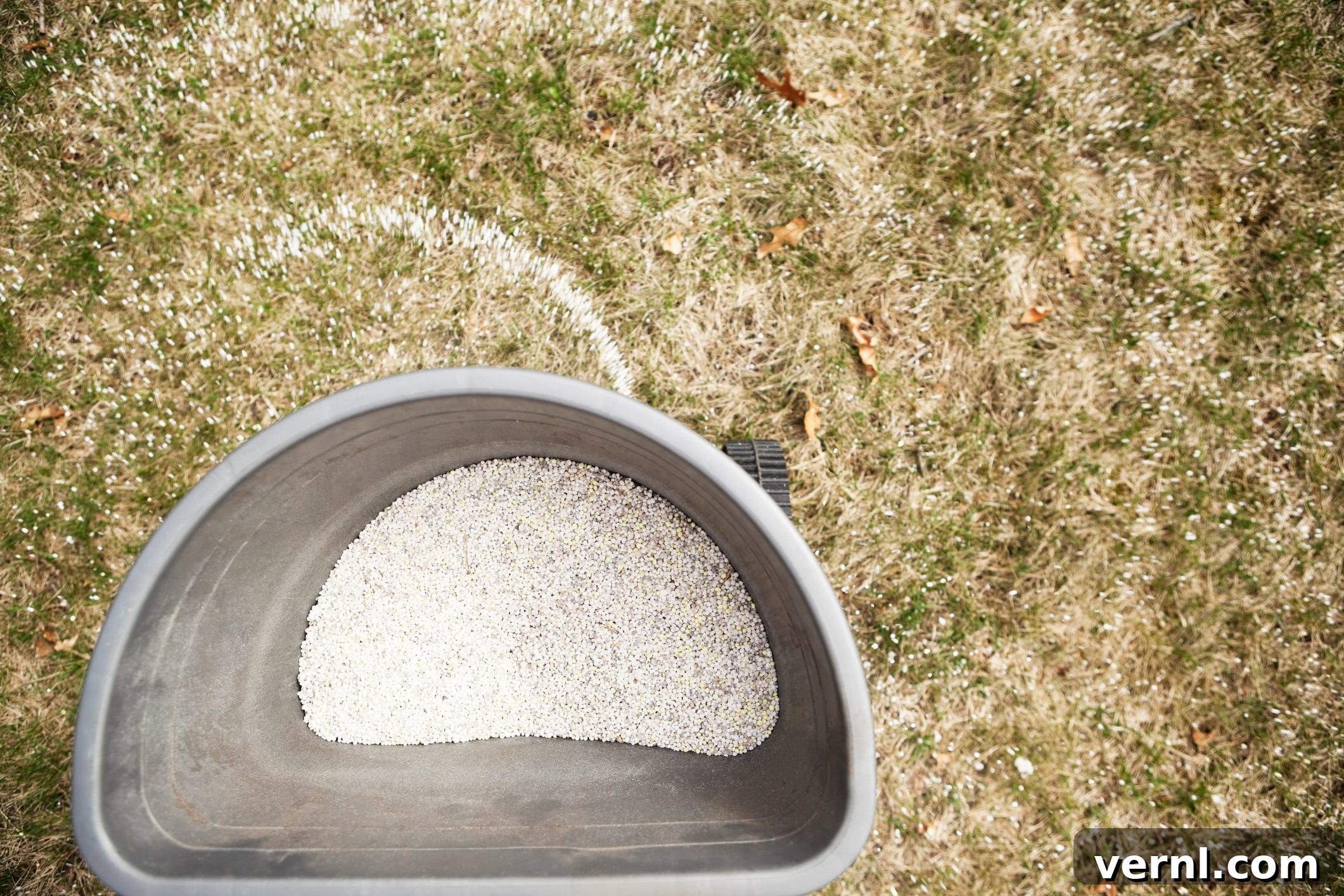
The arrival of autumn brings a delightful array of seasonal joys: the crisp scent of pumpkin spice, festive Halloween decorations, and the annual ritual of leaf clean up. With cooler temperatures signaling the end of summer’s relentless heat, it’s tempting to think that your lawn care duties are complete for the year. Many homeowners mistakenly believe that once the growing season winds down, fertilizing the grass becomes unnecessary. However, this couldn’t be further from the truth.
“You should feed your lawn between September and November to help it recover from any heat stress it experienced during the summer and to prepare it robustly for the impending winter,” advises lawn care expert Angelika Zaber. In fact, your final fertilizer application of the year is arguably the most important one. This crucial feeding provides your lawn with the vital nutrients it needs to thrive through the colder months and burst forth with renewed vigor come spring. Let’s delve deeper into why this late-season feeding is absolutely essential for a healthy, resilient lawn.
Why Fall Fertilization is Critical for Your Lawn’s Health
Just like us, your lawn experiences significant fatigue by the time summer draws to a close. It has heroically battled through a long, hot, and often relentless summer season, enduring a barrage of challenges including excessive heat, stifling humidity, and periods of drought. Furthermore, the constant foot traffic from kids and pets, coupled with general overuse, takes a considerable toll. Weeds, insects, and various diseases also contribute to its stress, leaving your lawn depleted and hungry. Before it settles into its well-deserved winter dormancy, your grass desperately needs a good, fortifying meal.
So, what specific benefits does fall fertilization offer?
- Restores and Thickens Turf Density: Fall is your lawn’s last prime opportunity to recover and thicken up. The nutrients encourage lateral growth, helping to repair thin or bare spots, and restoring turf density to its lush, early summer form. A dense lawn is also more effective at crowding out winter annual weeds that might otherwise take hold.
- Regenerates and Strengthens Roots: The intense conditions of summer—be it scorching heat, high humidity, or prolonged dry spells—can severely damage or diminish your lawn’s root system. Fall fertilizer, particularly those formulations with a balanced phosphorus content (where permitted), helps regenerate these lost roots and promotes the development of a deeper, more robust root network. Strong roots are crucial for nutrient uptake and moisture retention, preparing the grass for eventual spring growth.
- Fortifies Against Winter Stress: A well-fed lawn in autumn is far better equipped to combat the severe conditions that winter inevitably brings. This includes resistance to cold temperatures, frost, ice, snow cover, and various winter diseases such as snow mold. Potassium, a key nutrient in fall fertilizers, significantly enhances the grass’s cellular strength and its ability to withstand environmental stressors.
- Builds Essential Energy Reserves: Applying fertilizer in the fall is like filling up your lawn’s gas tank before a long journey. The grass uses the absorbed nutrients to store energy in its root system and crowns. These stored carbohydrates are vital, as they provide the fuel necessary for rapid green-up and vigorous growth the moment spring arrives, ensuring a healthy, energetic start to the next growing season. Without this stored energy, your lawn would emerge weaker and slower to recover.
Whether you have cool-season grasses (like fescue, ryegrass, or bluegrass) that actively grow in cooler temperatures, or warm-season grasses (like Bermuda, Zoysia, or St. Augustine) that are preparing for full dormancy, fall fertilization provides critical support. For cool-season varieties, it fuels active growth and recovery. For warm-season grasses, it helps with recovery from summer stress and provides nutrients for a stronger emergence in spring.
When To Fertilize Your Lawn in the Fall
Timing is paramount when it comes to fall fertilization. The ideal window for your final fertilizer application of the year typically falls between August 15 and October 1. The key principle to remember is that your last lawn feeding should occur approximately six to eight weeks before the average first hard frost date in your specific area. This crucial timeframe allows the grass ample time to absorb and store the nutrients before it enters its dormant stage.
To illustrate this, consider a region like Minneapolis/St. Paul, where the average first hard frost date is around October 10th. Counting back six to eight weeks would place your target application window between August 15th and September 1st. Similarly, if you reside in Des Moines, where the average first hard frost is closer to October 27th, you’d aim for your last fertilizer application between September 1st and September 15th. It’s important to consult local agricultural extension offices or reliable weather resources for your precise average frost dates to pinpoint the optimal timing.
Strategically planning your fall fertilizer applications around these average frost dates ensures that your lawn has sufficient time to fully utilize the applied nutrients. There is no benefit, and indeed potential harm, in applying fertilizer so late that the nutrients cannot be properly absorbed and stored before winter dormancy. The goal is to provide a boost that fuels root growth and energy storage, not top growth that will be damaged by cold.
Applying fertilizer too late in the season can be detrimental. For cool-season lawn grasses, late fertilization can force the grass to continue actively growing when frigid weather, snow, and ice are ushering in winter. This can make the grass more susceptible to winter kill, where the tender new growth succumbs to cold temperatures, or increase the risk of various diseases like snow mold come next spring. Essentially, you’d be making your lawn stay active past its natural bedtime, when all it wants to do is power down for the year. Furthermore, nutrients applied too late may not be fully absorbed and could simply wash away, becoming ineffective and potentially contributing to environmental runoff.
What Fertilizer To Use in the Fall
Choosing the right fertilizer for fall largely depends on local environmental ordinances and state laws concerning nutrient application, particularly phosphorus. Many states and municipalities have implemented regulations that restrict or even prohibit the use of lawn fertilizers containing phosphorus (represented by the middle number in the NPK ratio). While phosphorus is undeniably critical for robust root growth during seed and sod establishment, and highly beneficial in the fall for root redevelopment, many soils naturally contain adequate levels of phosphorus, making additional applications unnecessary and potentially harmful to water systems through runoff.
It is always recommended to perform a soil test to understand the exact nutrient profile of your lawn. This will eliminate guesswork and ensure you’re only applying what your lawn truly needs.
If You Live in a Phosphorus-Restricted Community:
If you are in an area where fertilizers containing phosphorus are not allowed, focus on products with readily available nitrogen sources (the first number in the NPK ratio) and a higher potassium content (the third number). This formulation will properly feed your lawn as it transitions into winter.
- Nitrogen (N): In the fall, nitrogen is crucial for supporting turf recovery from summer stress and maintaining a healthy green color. It promotes strong leaf blade development and helps the grass store energy.
- Potassium (K): Potassium is often considered the “stress reliever” for plants. In the fall, high potassium levels significantly enhance your lawn’s resilience against cold temperatures, drought, disease, and general winter stress. It strengthens cell walls, improves water regulation, and boosts overall plant vigor.
Good NPK ratios to look for in phosphorus-free fertilizers would typically be formulations like 24-0-12 or 21-0-21. These provide a strong nitrogen boost for recovery and a significant amount of potassium for winter hardiness.
If Phosphorus is Permitted in Your Area:
If you live in a municipality or state where fertilizers containing phosphorus are allowed, incorporating this nutrient can add another layer of plant health protection, further preparing your lawn for a harsh winter. Phosphorus directly contributes to root growth and development, which is exceptionally beneficial in the fall as the grass is working to rebuild its root system after summer and store energy.
Excellent examples of NPK ratios that include phosphorus for fall application would be 24-5-10 or 20-5-20. These formulations offer a balanced approach, supporting both top growth recovery and essential root strengthening.
Additionally, a lawn starter fertilizer, which is inherently designed for root establishment, can also be an effective choice for fall feeding. Products with ratios such as 14-14-14 or 12-24-12 (higher in phosphorus) would work well, especially if your lawn shows signs of poor root development or you’re overseeding in the fall.
Granular vs. Liquid Fertilizers:
Both liquid or soluble fertilizers and granular products containing similar NPK ratios can be used effectively in the fall. Each has its advantages:
- Granular Fertilizers: These are typically slow-release, providing a sustained feeding over several weeks. This consistent nutrient supply is ideal for fall, allowing the grass to gradually absorb and store energy. They are generally easier to apply evenly with a broadcast or drop spreader.
- Liquid Fertilizers: These offer quick nutrient uptake, as they are absorbed directly through the leaves and roots. However, recommended application rates of sprayable lawn fertilizers usually deliver fewer nutrients per application compared to granular products. This means you may need to apply two applications a couple of weeks apart to realize the full benefit. Using a hose-end sprayer for liquid fall fertilizer is an acceptable and convenient method for many homeowners.
Regardless of the type, always ensure you select a product specifically labeled for fall application, as these are formulated with the appropriate nutrient balance for the season.
*Understanding NPK Numbers: Fertilizers are labeled with an NPK ratio, representing the percentage by weight of Nitrogen (N), Phosphorus (P), and Potassium (K).
- Nitrogen (N): Promotes lush, green, leafy growth.
- Phosphorus (P): Crucial for root development, flowering, and fruit production.
- Potassium (K): Enhances overall plant vigor, disease resistance, and helps maintain water balance within the plant.
How to Fertilize Your Lawn in the Fall
Applying your fall fertilizer should be approached with the same precision and care as any other seasonal application. Proper technique ensures even distribution, maximizes nutrient absorption, and prevents potential damage to your lawn.
Preparation and Application:
- Clear Debris: Before applying fertilizer, ensure your lawn is free of fallen leaves, sticks, and other debris. This allows the fertilizer granules to reach the soil surface and prevents them from being trapped or washed away.
- Mow Your Lawn: Mow your lawn to its regular height a day or two before fertilizing. This exposes the soil and helps with even distribution.
- Read the Label Carefully: Always, without exception, follow the coverage recommendations provided on the fertilizer product bag. Over-application can lead to chemical burns, while under-application reduces effectiveness.
- Calibrate Your Spreader: If using a granular fertilizer, ensure your spreader (either a broadcast or drop spreader) is properly calibrated for the specific product you’re using. The bag will usually provide a setting guide for common spreader brands.
- Split the Application: A highly recommended technique for ensuring even coverage is to split the recommended application rate in half and then make two passes over your lawn in different directions. For instance, if your fall fertilizer bag states it will cover 5,000 square feet, adjust your spreader setting to cover 10,000 square feet (5,000 sq ft x 2). This will close the spreader gate slightly, allowing only one-half of the recommended rate to flow through. Make your first pass over the entire lawn (e.g., east to west), and then make a second pass perpendicular to the first (e.g., north to south) using the same setting. This cross-hatch pattern eliminates missed spots and prevents stripes or uneven growth, ensuring a uniform distribution of nutrients.
- Walk Consistently: Maintain a consistent walking speed during application. Changes in speed can lead to uneven distribution. Overlap your passes slightly to ensure complete coverage.
- Water Thoroughly: After applying granular fertilizer, it is crucial to water your lawn thoroughly. This helps dissolve the fertilizer granules and washes the nutrients down into the soil where they can be absorbed by the roots. Check the product label for specific watering recommendations.
Post-Application Care and Maintenance:
- Clean Your Spreader: Immediately after you’ve finished your fall fertilizer application, make sure to thoroughly wash and rinse your spreader. Residual fertilizer can be corrosive and will quickly degrade metal components, leading to premature failure. Refer to your owner’s manual for additional recommended maintenance procedures before winter storage, such as lubricating moving parts.
- Store Properly: Store any leftover fertilizer in a cool, dry place, sealed tightly in its original packaging.
- Safety First: Always wear appropriate protective gear, such as gloves and eye protection, when handling fertilizers. Keep children and pets off the treated area until the fertilizer has been watered in and the lawn is dry.
Frequently Asked Questions About Fall Lawn Fertilization
How often should I fertilize my lawn for optimal health?
For a consistently beautiful and healthy lawn, fertilizing two to three times a year is generally recommended, aligning with the grass’s active growth cycles. Angelika Zaber explains, “The first fertilization is ideally done from March to April, to help your grass recover and ‘wake up’ after winter dormancy, promoting vigorous spring growth and green-up. It is then beneficial to fertilize again just before the peak of summer, typically in late spring or early summer, to prepare your grass for the challenging, hot, and often dry weather conditions ahead, boosting its resilience. Lastly, and most critically, you should feed your lawn between September and November. This final application helps it recover from any heat stress endured during summer, builds up essential energy reserves, and fortifies it for the harsh winter months, ensuring a strong start next spring.”
Do I need to fertilize my lawn if it appears healthy already?
While a healthy-looking lawn may not exhibit immediate signs of distress, it can still significantly benefit from regular fertilization. “While it is not technically needed for survival if visibly healthy, fertilizing proactively greatly increases its resistance to common lawn issues like weeds and pests,” says Zaber. “It also substantially improves its density, promoting a thicker turf that naturally chokes out weeds, and enhances its color, giving it that vibrant, lush green appearance. Think of it as preventative maintenance and a performance boost for an already good athlete.” Regular feeding helps maintain this health, rather than waiting for problems to emerge.
What if I missed my fall fertilization window? Is it too late?
If you’ve missed the ideal 6-8 week window before the first hard frost, it’s generally better to err on the side of caution. Applying fertilizer too late, especially nitrogen-heavy formulas, can stimulate tender new growth that will be vulnerable to winter damage. If you’re only a week or two past the optimal timing, you might still consider a low-nitrogen, high-potassium formula designed for winter protection. However, if it’s well into freezing temperatures or heavy snow is expected, it’s usually best to wait until spring. The benefits will be minimal, and the risks of winter damage or nutrient runoff increase. Consider focusing on leaf cleanup and other winterization tasks instead.
Should I water my lawn immediately after applying granular fall fertilizer?
Yes, absolutely. It is highly recommended to water your lawn thoroughly after applying granular fertilizer. Watering helps to dissolve the fertilizer pellets and wash the nutrients down into the soil, allowing them to reach the root zone where they can be absorbed by the grass. This also helps to prevent any potential burning of the grass blades that can occur if fertilizer granules remain on the surface, especially in sunny conditions. Always check the specific product instructions, as some formulations may have unique watering guidelines, but generally, a good watering immediately after application is beneficial.
About the Expert
- Angelika Zaber is a highly respected lawn care specialist and gardening expert at Online Turf. Her exceptional expertise and practical advice empower both novice and experienced gardeners to cultivate healthy, vibrant outdoor spaces throughout the entire year.