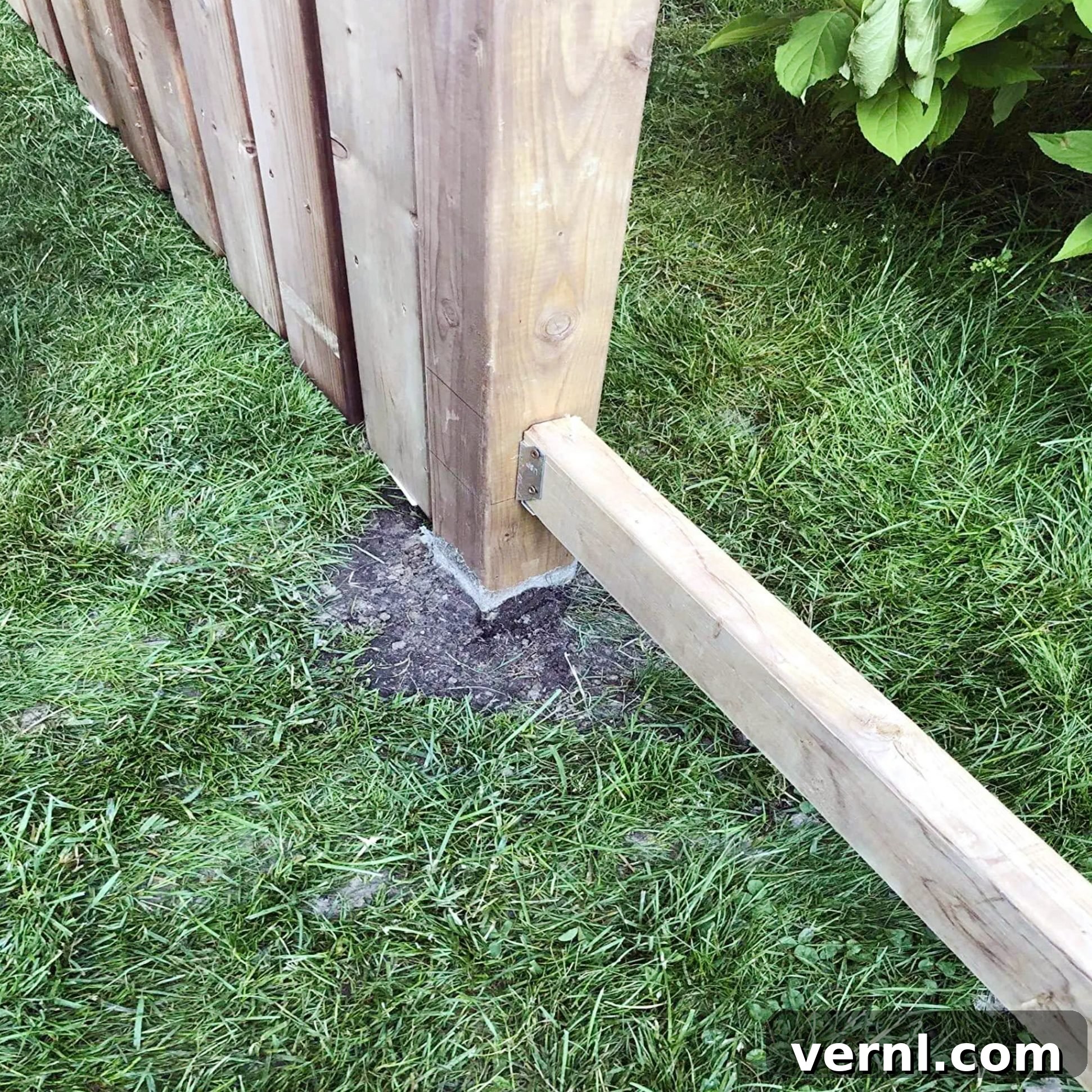
Any experienced fence builder understands that the longevity and stability of a fence depend heavily on the strength of its posts. A robust fence begins with solid post foundations, which typically means backfilling post holes with a dense, hard material rather than just loose dirt. While well-draining gravel offers certain advantages, the go-to material for decades has been concrete mix.
Traditionally, concrete has been the undisputed champion for setting strong fence posts. Available in convenient 50-pound bags at any home improvement center, concrete mix offers a time-tested solution for creating durable foundations. However, the sheer volume and weight involved in a typical fence project can be daunting. For instance, constructing a 100-foot fence with ten posts often requires upwards of twenty bags of concrete mix, totaling half a ton or more. This means significant manual labor – lugging heavy bags to the site, meticulously mixing them with water, and then shoveling the wet concrete into each post hole. It’s a demanding task that can take a toll on even the most seasoned DIYer or professional.
This physical toll has naturally led many to seek out lighter, more convenient alternatives. Could there be a material that performs just as well as concrete but without the back-breaking effort? Fence post-setting foam has emerged as a promising contender, offering a lightweight and potentially less laborious method for securing fence posts. But the crucial question remains: is this modern innovation truly as effective and reliable as the tried-and-true concrete?
To get a clear perspective on the efficacy of post-setting foam, we consulted two seasoned experts who have extensive experience with both traditional and contemporary fence installation methods: Alex Capozzolo, co-founder of Brotherly Love Real Estate in Philadelphia, and Forrest McCall, co-owner of the popular home improvement blog Mama Needs a Project. Their collective wisdom sheds light on this debate, culminating in a nuanced and perhaps expected answer: “it depends.” Understanding these dependencies is key to making the best choice for your fence project.
Expanding Foam vs. Concrete for Setting Fence Posts: A Detailed Comparison
When it comes to securing fence posts, both expanding foam and concrete aim to achieve the same goal: a stable, long-lasting foundation. However, their characteristics, application methods, and performance vary significantly, making each suitable for different scenarios. Let’s delve into a comprehensive comparison of these two popular post-setting materials.
Understanding Post-Setting Foam
Post-setting foam is a two-part polyurethane product designed to expand and harden rapidly, creating a strong bond around a fence post. The two components are typically mixed directly within the bag before application. One of its most appealing features is its incredibly light weight. A single bag of foam, often weighing only two or three pounds, contains enough material to secure one post, making it a stark contrast to the heavy concrete bags.
It’s important to differentiate post-setting foam from standard aerosol spray foam. Post-setting foam is formulated as a closed-cell product, meaning it contains individual, sealed pockets of gas. This structure makes it highly resistant to moisture absorption and provides greater structural integrity compared to most insulating foams, which are typically open-cell and have interconnected air bubbles. This closed-cell composition is critical for its performance in outdoor, ground-contact applications.
Bracing is Crucial for Foam, Less So for Concrete
Regardless of whether you choose concrete or foam, the initial step of digging post holes remains the same. For optimal stability, post holes should be dug to a depth of approximately one-third the total length of the post, ensuring a solid anchor in the ground. The diameter of the hole should also be consistent for proper material application.
However, the backfilling process introduces a significant difference in technique. Forrest McCall highlights that because post-setting foam expands as it cures, posts have a tendency to shift if not properly braced. This means securing the post in its exact desired position and level before applying the foam is absolutely essential. Alex Capozzolo adds that foam’s rapid setting time leaves little to no room for error or last-minute adjustments to leveling. Once the foam begins to expand and harden, repositioning the post becomes nearly impossible without potentially compromising the foundation.
While bracing is also a recommended practice with concrete, it’s far less critical in terms of immediate post movement. Concrete sets much more slowly, often taking several hours to reach an initial set and days to fully cure. This extended working time allows for ample opportunity to check and correct the post’s plumb and level, making the installation process more forgiving for minor misalignments.
Foam Offers Significant Time Savings
One of the most compelling advantages of post-setting foam is its remarkably fast curing time. According to Capozzolo, the foam hardens in a matter of minutes—often as little as 15 minutes—and achieves full cure within approximately two hours. This rapid solidification dramatically accelerates the fence installation timeline.
With foam, you could conceivably backfill all your fence posts in the morning and then proceed with attaching rails and pickets or panels in the afternoon. This stands in stark contrast to concrete, which typically requires an overnight wait—or even longer in some conditions—before the posts are stable enough to bear the weight and stress of the fence structure. The ability to complete a project in a single day, rather than spreading it across two or more, can be a major benefit for both professional builders and DIY enthusiasts looking to maximize efficiency.
Temperature and Moisture Independence with Foam
Another notable benefit of post-setting foam is its resilience to varying environmental conditions. Unlike concrete, which can be sensitive to extreme temperatures, post-setting foam sets quickly and effectively in both cold and warm conditions. This makes it a versatile option for projects throughout the year, extending the building season.
Forrest McCall also points out that foam can be used successfully in wet weather. While concrete can set in damp conditions, excess rainwater mixing into the concrete can dilute the mixture, potentially weakening its final structural integrity. Foam, however, is not water-soluble. This means that rain or moisture in the post hole will not compromise its setting properties or final strength, offering greater flexibility and peace of mind when working in unpredictable climates.
Cost Comparison: Foam vs. Concrete
While foam offers convenience, this often comes at a higher price point. A single bag of a product like Sika foam costs approximately $16, with one bag typically sufficient for one post hole. In contrast, a bag of concrete mix is generally around $6, but usually requires two bags per post hole for adequate support.
Therefore, the material cost per post for foam is roughly $16, while for concrete it’s around $12. When scaling this up for a larger fence project, the cost difference can become substantial. For example, a 10-post fence would cost approximately $160 in foam and $120 in concrete for materials alone. While foam saves on labor, the initial material outlay is higher, which is a critical factor for budget-conscious projects.
Concrete Reigns Supreme in Strength and Durability
Despite foam’s advantages in convenience and speed, both Capozzolo and McCall unequivocally agree that concrete generally offers superior strength and long-term durability compared to expanding foam. Capozzolo advises, “For lightweight fences or locations that aren’t subject to high winds, the expanded foam would be the ideal choice. But if structural strength is a concern, then I’d recommend concrete.”
This distinction is crucial. For fences that will experience significant stress—such as those supporting heavy gates, located in high-wind areas, or acting as a primary structural element—concrete’s proven compressive strength and rigidity provide a more robust and reliable foundation. The dense, non-contracting nature of concrete ensures a completely solid and immovable base for the post.
A contributing factor to foam’s relative weakness, as demonstrated by Joe Everest in a YouTube video, is its tendency to contract slightly during the curing process. This minor contraction can create small gaps between the foam and the post, as well as between the foam and the sides of the post hole. These gaps, however minute, can compromise the overall stability and allow for some degree of movement over time, especially under load or environmental stress.
While it’s possible to attempt to strengthen loose posts by adding more foam and compacting dirt around it to force the foam into these gaps as it expands, this is often a remedial measure rather than a proactive solution for maximum strength. Ultimately, if the primary concern is uncompromising structural integrity and maximum resistance to forces like wind and impact, concrete remains the preferred choice for setting fence posts.
Expanding Foam for Setting Fence Posts: Common Mistakes to Avoid
As post-setting foam is a relatively newer product compared to concrete, many users are unfamiliar with its specific requirements and potential pitfalls. To ensure a successful installation and avoid costly mistakes, it is paramount to meticulously follow the instructions provided on the product packaging. These instructions often specify critical details such as precise mixing times, which are typically very short—ranging from 15 to 30 seconds—and the necessary preparation for immediate use once mixed. Being prepared is key, as the working window for foam is extremely brief.
Under-Sizing the Post Hole
A common mistake is failing to dig a post hole of adequate size. A standard bag of post-setting foam is usually designed to fill a hole with dimensions such as eight inches in diameter by 36 inches deep. If the hole is too small for the amount of foam being used, the excess foam will expand above ground level, creating an unsightly and potentially cumbersome hardened mound. While this isn’t a catastrophic problem—you can easily trim the excess foam to ground level with a reciprocating saw or a utility knife—it indicates inefficient material use and an extra step in your process.
Furthermore, resist the temptation to pour only a portion of a mixed bag into an undersized hole unless you have a clear plan for disposing of the remainder. Once the two parts are mixed, the chemical reaction begins, and the entire contents of the bag will expand. If you simply allow the unused portion to flow onto the ground, you’ll be left with a messy and difficult cleanup of sticky, hardened foam. A better approach for excess mixed foam is to let it expand and cure inside a disposable bucket or another container, which can then be easily discarded.
Failing to Cut the Bag Open After Mixing
Every package of two-part post-setting foam comes with a prominent warning: do not fail to cut the bag open after mixing and pour the contents into the post hole. This warning is not to be ignored. Once the components are thoroughly mixed, the chemical reaction generates gas and rapid expansion. If the foam has no escape route, the bag will rapidly inflate and eventually explode. This explosion can shower everyone and everything in the vicinity with extremely sticky, rapidly curing foam, creating a significant mess and potential safety hazard. Always be ready to pour immediately after the recommended mixing time.
Touching Liquid Foam with Bare Hands
Similar to aerosol spray foam, liquid post-setting foam is notoriously difficult to remove from skin. It adheres tenaciously and cures quickly, often requiring harsh solvents or prolonged scrubbing to get off, and even then, it can leave a residue that takes days to wear off. To protect your skin from this stubborn substance, always wear appropriate personal protective equipment. This includes durable gloves (nitrile or chemical-resistant gloves are recommended), long-sleeved shirts, and eye protection. Taking these simple precautions will save you a lot of discomfort and cleanup time should accidental contact occur.
Choosing the Best Expanding Foam for Setting Fence Posts
The market for post-setting foam is evolving, with various manufacturers offering their own formulations. Some products may be branded as “expanding concrete” or “expanding composite” to emphasize their strength and durability. It’s important to note that not all expanding foams are created equal; some formulations are engineered to provide greater strength and resistance to forces than others. As is often the case with specialized building materials, the stronger and more robust foam products typically come with a higher price tag. When selecting a product, consider the specific requirements of your fence project, the type of soil, and the environmental conditions it will face. Always consult the product’s technical data sheet for detailed strength ratings and application guidelines.
Sika PostFix
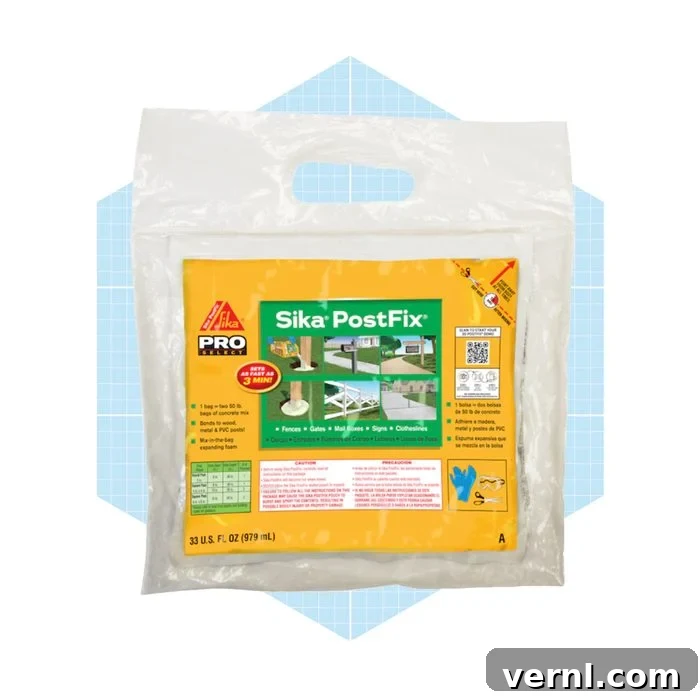
Sika PostFix is a widely recognized and popular choice for fence post installation. Renowned for its rapid action, it sets impressively fast—often within just three minutes—and reaches full cure in approximately two hours. This efficiency makes it ideal for projects where time is of the essence. Sika PostFix is a versatile solution, compatible with all common types of fence posts, including traditional wood, modern metal, and low-maintenance vinyl, making it a flexible option for a wide range of fencing projects. Its reliability and ease of use have made it a go-to for many DIYers and contractors seeking a fast-setting alternative to concrete.
Fast 2K Concrete Alternative
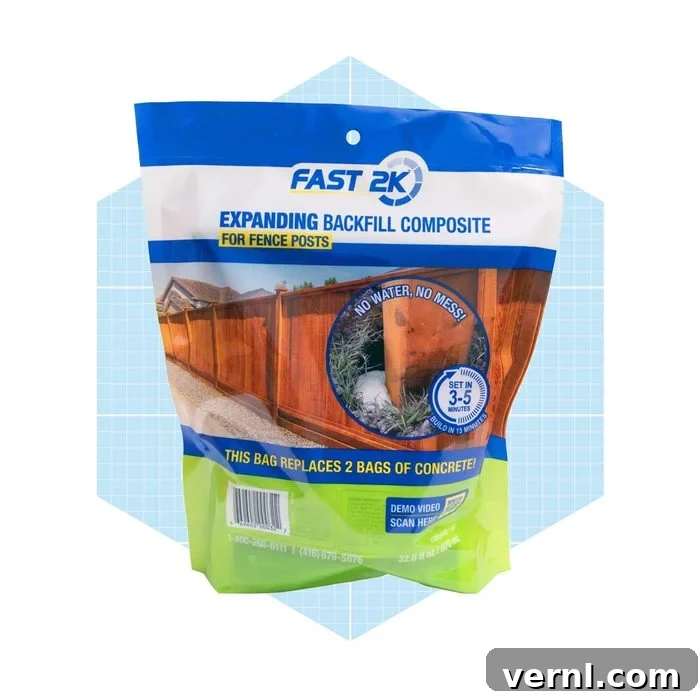
Positioned as a premium option, Fast 2K Concrete Alternative typically comes at a higher price point than Sika PostFix, reflecting its robust formulation. A single 2.5-pound bag of Fast 2K boasts the impressive capacity to replace an equivalent of 80 to 100 pounds of traditional concrete mix, highlighting its significant weight-saving benefits. This product offers a slightly longer working time, setting in about 15 minutes, which can be beneficial for those who prefer a little more flexibility before full cure. Notably, Fast 2K is engineered for extreme temperature resilience, performing effectively in conditions as low as minus-20 degrees Fahrenheit. The company also offers a specialized version of this product tailored for deck posts, indicating its suitability for structural applications.
Secure Set 10-Post Kit
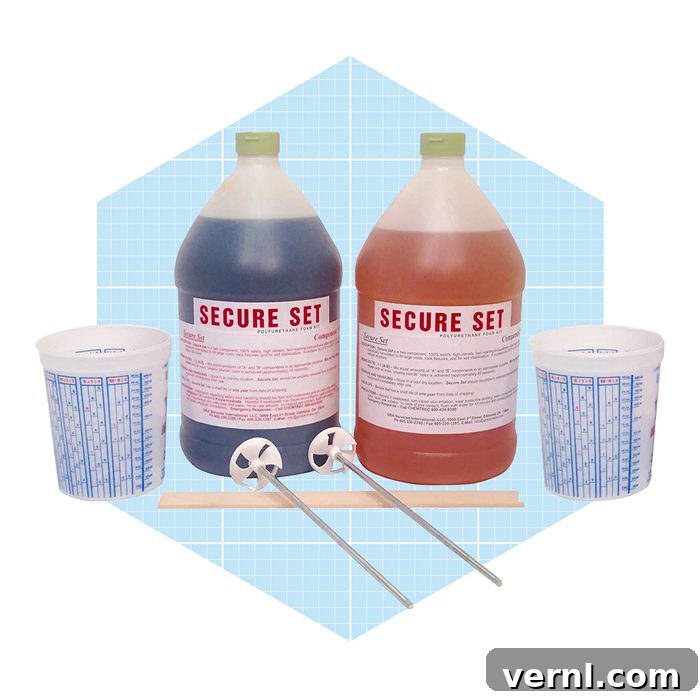
The Secure Set 10-Post Kit offers a unique advantage for specific project needs. Unlike other single-use bag systems, its two components are supplied in separate containers. This allows users the flexibility to mix smaller quantities as needed, which is particularly useful for tasks such as reinforcing an existing foam post footing or for smaller, repair-oriented jobs. This feature minimizes waste and offers greater control over material usage. Furthermore, the Secure Set kit is often presented as a more economical choice, with the cost per post typically being about $6 cheaper than purchasing individual Sika bags, making it an attractive option for budget-conscious projects requiring multiple post installations.
Conclusion: Making the Right Choice for Your Fence
Ultimately, the decision between expanding foam and concrete for setting fence posts boils down to a careful evaluation of your specific project requirements, budget, timeline, and desired level of structural integrity. Both methods offer distinct advantages and disadvantages.
Concrete stands as the venerable, robust champion, providing unparalleled strength and proven durability for heavy-duty fences, large gates, and installations in high-wind zones or challenging soil conditions. Its lower material cost per post makes it appealing for larger projects where labor is either abundant or less of a concern. However, its significant weight, labor-intensive mixing, slow curing time, and sensitivity to weather conditions can make it a more arduous choice.
Expanding foam, on the other hand, represents a modern, convenient alternative. Its lightweight nature, rapid setting, and independence from temperature and moisture offer considerable time and effort savings. This makes it an excellent choice for lighter fence types, projects with tight deadlines, or situations where ease of transport and application are paramount. However, its higher material cost and slightly lesser structural strength compared to concrete mean it might not be suitable for every application. Precision in bracing and installation is also critical due to its fast cure time.
Before committing to either method, consider the type of fence you are building, the local climate, the soil conditions, the intended lifespan of the fence, and your own comfort level with each installation process. By understanding the nuances of both concrete and post-setting foam, you can make an informed decision that ensures your fence stands strong and stable for years to come.