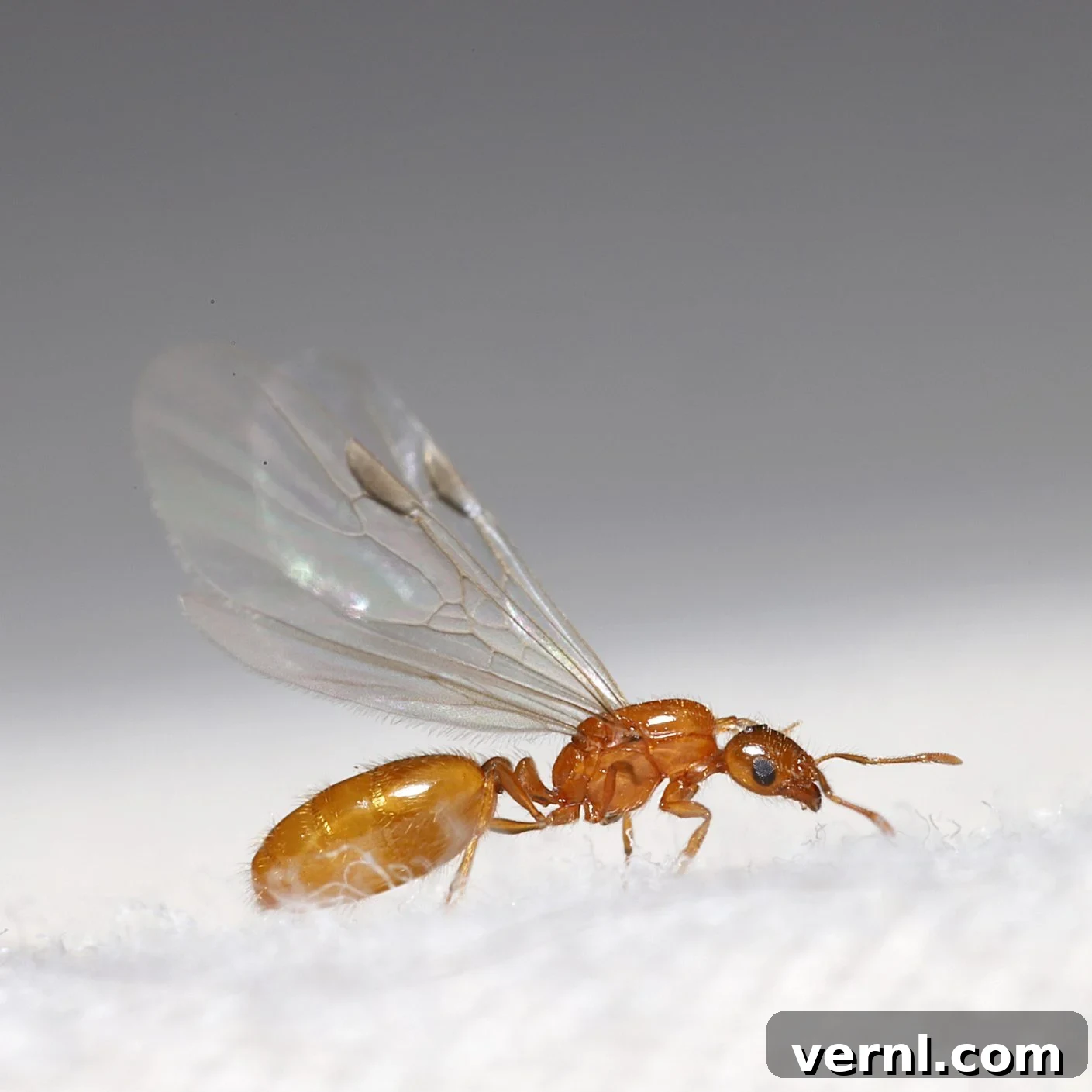
Often a spectacle of nature, a flying ant, also known as a winged ant or swarming ant, embarks on what entomologists refer to as a “nuptial flight.” This captivating event marks a critical reproductive phase for these insects, transforming ordinary ants into alates – winged members of the species dedicated solely to the perpetuation of their colony. Understanding these fascinating creatures is key to appreciating their role in the ecosystem and, when necessary, managing their presence around your home.
Understanding the Enigma: What Exactly Is a Flying Ant?
At its core, a flying ant is simply a mature ant that has developed wings for a specific, temporary purpose: reproduction. This isn’t a separate species but rather a life stage for many common ant species. During particular seasons, typically warm, humid periods following rain, vast numbers of ants across most of the 1,000 known species of ants in the U.S. develop wings. Their sole mission during this brief winged phase is to leave their parent colony and engage in a mass breeding event known as the nuptial flight.
This airborne rendezvous is a dramatic and vital part of the ant life cycle. For the males, their existence is intensely focused on this single, crucial task. Once they have successfully performed their duty and fertilized a female, their purpose is fulfilled, and their life often ends shortly thereafter, sometimes even becoming a meal for the newly impregnated queen. The newly fertilized queen, now carrying the genetic blueprint for a new generation, will flutter off in search of a suitable location to establish her own colony. Upon finding a promising site, she will chew off her own wings – a signal that her flying days are over and her monumental work of populating and nurturing a new ant empire has begun. This process, while seemingly brutal, is a testament to the efficient and relentless drive of nature.
Distinguishing Features: What Do Flying Ants Look Like?
One of the most common challenges homeowners face is differentiating between winged ants and the far more destructive termites. To the untrained eye, especially winged carpenter ants, the two can appear remarkably similar, leading to understandable panic. However, distinct physical characteristics can help you tell them apart, a crucial step in determining the appropriate course of action.
It’s important to recognize that “flying ant” isn’t a single type of ant, but rather a temporary form taken by many different species. As Ed Spicer, General Manager of Pest Strategies, explains, virtually any ant species you can name – from fire ants to carpenter ants, sugar ants, protein ants, and many others – has the capability to produce winged reproductive members at some stage of their life cycle. This means identifying the specific ant species can sometimes be as important as identifying that it’s a flying ant.
Here are the key identifying characteristics to help you confidently distinguish a flying ant from a termite, which is vital for proper pest management:
Termites: Key Identifying Marks
- Uniform Body Width: Termites have thick, segmented bodies that appear to have a relatively uniform width from head to abdomen, lacking the distinct pinched waist characteristic of ants.
- Straight Antennae: Their antennae are straight and bead-like, without any elbow or bend.
- Wings of Equal Length: Termites possess four delicate, translucent wings of roughly equal size and length. These wings are often twice as long as their body.
Flying Ants: Key Identifying Marks
- Distinct Narrow Waist: Flying ants exhibit the classic “pinched waist” or narrow constriction between their thorax and abdomen, a defining feature of all ants.
- Elbowed Antennae: Their antennae are distinctly “elbowed” or bent, rather than straight.
- Unequal Wing Lengths: Flying ants have four wings, but their front wings are noticeably longer than their back wings. The wings also tend to be more veiny and opaque than those of termites.
Taking the time to observe these physical traits can save you from unnecessary worry and help you address the correct pest issue, whether it’s a transient ant swarm or a potentially damaging termite infestation.
Assessing the Risk: Are Flying Ants Dangerous?
The danger posed by flying ants is highly dependent on the specific species involved. Generally, swarming ants are no more dangerous during their nuptial flight than they are when crawling on the ground. This means that if a particular species of ant is known to bite or sting when encountered on foot, the winged versions of that species will retain the same defensive capabilities.
For instance, while common pavement ants might be little more than a nuisance, a swarming cloud of fire ants can deliver painful, itchy stings that can cause localized reactions and, in rare cases, more severe allergic responses. Similarly, carpenter ants, even in their winged form, can still bite, though their primary threat comes from their wood-boring activities within structures. The presence of flying carpenter ants indoors, therefore, is a significant indicator of a potential infestation and structural damage.
Important Safety Tip: Exercise extreme caution when encountering a dense swarming cloud of flying ants. It’s best to avoid walking directly into them. While they might be a harmless collection of non-combative species, there’s always the possibility they could be an agitated mob of aggressive red fire ants or another stinging variety. Observing from a distance and identifying the characteristics of the ants, if possible, is the safest approach.
Understanding Their Presence: How Do You Get Flying Ants?
The primary reason for any ant species, including their winged counterparts, to take up residence on or near your property is the availability of essential resources: food, water, and shelter. However, flying ants appear for a very specific, biological reason tied to their life cycle.
The appearance of flying ants is a clear sign that a mature ant colony, whether in your yard or a neighboring property, has reached a stage where it’s ready to expand and reproduce. This annual phenomenon, the nuptial flight, is a once-a-year mating ritual triggered by specific environmental conditions, typically warm and humid weather following rainfall. These conditions are ideal for swarming, allowing the winged males and queens to take to the air in large numbers to find mates.
Should you discover a cluster of flying ants outdoors in your yard, there’s often little immediate cause for alarm. This is a natural, albeit sometimes unsettling, event. Remember that roughly half of these winged individuals are males, whose lives are destined to end shortly after mating. The swarming period itself is relatively brief, usually lasting only a few days to a week. After their mission is accomplished, the remaining flying ants (the newly fertilized queens) will come in for a landing, shed their wings, and will not take off again for another 365 days, if at all. Patience and observation are key in outdoor scenarios, unless the species is known to be particularly destructive or aggressive.
Detecting an Invasion: What Are the Signs of Flying Ants?
Identifying the presence of flying ants goes beyond just seeing them in flight. Various indicators can signal their activity or the proximity of a colony. Understanding these signs can help you gauge the severity of the situation and determine if intervention is needed.
- Swarming Ant Sightings: The most obvious sign is directly observing large numbers of winged ants. These swarms are often seen around outdoor lights during dusk or dawn, and near bodies of water like pools, ponds, bird baths, or even puddles, as ants are attracted to light and moisture.
- Ant Trails (Scouts): While flying ants are focused on reproduction, the worker ants from the same colony will still be active. Seeing established ant trails around your property can indicate a nearby colony that will eventually produce alates.
- Piles of Soil or Dirt: For many ant species, especially those nesting in soil, new colonies or expanding existing ones can create small mounds of excavated dirt or soil near their entry points. While not exclusive to flying ants, it can be a sign of a robust colony.
- The Actual Nest: Locating the nest itself, whether it’s an anthill in the lawn, a hidden cavity in wood, or an crevice in your foundation, is a definitive sign of ant activity.
As mentioned previously, if you discover flying ants outdoors in your yard, there is generally little reason for concern regarding immediate damage to your home. With the notable exceptions of destructive, burrowing carpenter ants or aggressive, stinging fire ants, most ant species are an integral and beneficial part of your garden’s ecosystem. They play several crucial roles that contribute to a healthy environment:
Beneficial Backyard Ants: Ecological Contributions
- Soil Aeration and Tillage: Ants constantly dig tunnels, which helps to aerate and till the soil, improving water penetration and root growth for plants.
- Waste Decomposition: They act as natural clean-up crews, feeding on and decomposing organic waste, dead insects, and small dead animals, returning nutrients to the soil.
- Pest Control: Many ant species prey on or compete with other undesirable insects that attack garden plants and lawns, naturally keeping their populations in check.
- Pollination and Seed Distribution: Some ants contribute to the pollination of flowers, and many species play a vital role in distributing plant seeds, helping flora spread and thrive.
- Food Source: Ants themselves are a valuable food source for a variety of other wildlife, including birds, frogs, lizards, and beetles, forming an important link in the food chain.
The situation changes dramatically if you see a flying ant inside your home. Before you panic, it’s critical to perform two checks: first, carefully determine if it’s indeed an ant and not a termite, using the identification tips provided above. Second, assess the numbers – are there just a few solitary swarmers, here and there? It’s possible you’ve simply encountered a couple of rogue individuals that accidentally zoomed inside when a door or window was left open, or hitched a ride on something brought indoors.
However, if you do notice a large number of flying ants indoors, this is a significant cause for concern. A persistent indoor swarm indicates one of two scenarios: either you are unknowingly harboring an established ant colony within your walls, foundation, or other structural elements, or a substantial colony very close to your home is actively preparing to breed and its alates are seeking an exit or entrance point within your living space. In either case, it’s a strong signal that professional intervention may be required to prevent or address an active infestation.
Effective Management: How To Get Rid of Flying Ants
Once you’ve confidently determined that you have a flying ant infestation, particularly indoors, there are several do-it-yourself strategies you can employ to mitigate or eliminate the problem. The approach you choose will depend on the scale of the infestation, your comfort with chemical solutions, and the specific location of the ants.
Chemical Solutions for Ant Control
For more aggressive or persistent infestations, targeted chemical solutions can be very effective:
- Setting Out Baits and Traps: Ant baits are highly effective as they work by luring foraging ants to a food source laced with a slow-acting insecticide. The worker ants carry this poisoned bait back to the colony, including to the queen and larvae, eventually eradicating the entire nest. Place baits/traps along ant trails, near suspected entry points, or wherever you’ve observed ant activity. Ensure they are placed safely away from pets and children.
- Insecticide Sprays: For direct contact killing, an insecticide spray can be used. However, it’s crucial to use these sprays judiciously and primarily outdoors only. Sprays offer immediate knockdown but do not address the colony directly, making them a temporary solution for visible swarms rather than a long-term colony eradication strategy. Always follow product instructions carefully regarding safety and application.
Non-Toxic and Home Remedies
If you prefer to avoid harsh chemicals, several non-toxic home remedies can be surprisingly effective:
- Vacuuming Up Swarms: For indoor swarms, a quick and effective method is to use a handheld or stick vacuum. This immediately removes large numbers of flying ants without chemicals. After vacuuming, immediately dispose of the vacuum bag or empty the canister contents into a sealed plastic bag and place it in an outdoor trash bin to prevent ants from escaping.
- Sticky Duct Tape Strips: Strips of sticky duct tape or dedicated insect glue traps can be hung or placed in areas of high flying ant activity. The ants will get stuck, allowing for easy disposal. This is a passive and non-toxic method, good for monitoring and reducing numbers.
- Borax Along Ant Trails: Sprinkle borax, a natural mineral, along visible ant trails and around nests. Borax acts as a desiccant and stomach poison when ingested by ants, disrupting their digestive systems. Ensure it’s placed in areas inaccessible to pets and young children, as it can be toxic if consumed in large quantities.
- Vinegar and Essential Oils Spray: A simple homemade spray solution can repel or kill ants on contact. Mix equal parts white vinegar and water, and add a few drops of ant-repelling essential oils such as peppermint, tea tree, or citrus oils. Spray this mixture directly on ants or along entry points to deter them. While it kills on contact, its primary benefit is as a deterrent.
- Safe Indoor Contact Sprays: Several commercially available sprays are formulated with natural ingredients (like essential oils) that are safe for use indoors and around pets and kids. These typically kill ants on contact and can be a good option for addressing indoor swarms without harsh chemicals.
Ed Spicer also offers an ingenious, low-tech method for dealing with indoor swarms: using a basin of water. “You can easily eliminate these annoying insects by holding a vase, bowl or any other sort of basin (half-filled with water and a splash of dish soap) directly underneath the hovering swarm. Hold it for at least two to three minutes…or until your arms get tired.” The principle here is simple yet effective: ants are naturally attracted to light. By providing a reflective, light-attracting surface directly beneath them, they will fly lower, eventually crashing into the basin. The dish soap breaks the surface tension of the water, preventing them from escaping and causing their wings to get stuck, leading to them eventually drowning.
After diligently trying the above methods, if you find that the swarm persists, recurs frequently, or if you suspect a large, established colony within your home’s structure, it may be time to call in a professional exterminator. An ant expert possesses the tools and knowledge to accurately locate the nest, which is often hidden deep within walls, foundations, or inaccessible areas. They can then eliminate it effectively by injecting powerful commercial-grade pesticides directly into the colony, ensuring a comprehensive and lasting solution.
Long-Term Solutions: How To Prevent Flying Ants
Prevention is always the best strategy when it comes to pest control. By taking these year-round preventative steps, you can significantly mitigate or even completely prevent ants—flying or otherwise—from invading your home and garden, securing hidden places and maintaining a pest-free environment:
- Seal Entry Points: Regularly inspect your home’s exterior for any potential entry points. Seal any cracks in the foundation, walls, or gaps around utility pipes and wires with caulk or appropriate sealants. Even tiny openings can provide an invitation for ants.
- Caulk Windows and Doors: Ensure that all windows and doors are properly sealed. Caulk around windows and doors to close off any gaps where ants might enter, especially during their swarming periods when they are actively seeking new nesting sites.
- Create an Insecticide Barrier: Consider applying a perimeter insecticide barrier around the exterior of your home and yard. These products typically create an invisible line of defense that deters ants from crossing into your living space. Always follow product instructions carefully and apply sparingly.
- Manage Outdoor Food Sources: Ants are constantly foraging for food. Do not leave pet food bowls in the yard overnight, and clean up any spilled food promptly. Store pet food in sealed, airtight containers to eliminate an easy food source that could attract ants.
- Maintain Kitchen Cleanliness: A clean kitchen is an ant-free kitchen. Keep your kitchen clean and free of food morsels, crumbs, and spills. Wipe down counters, sweep floors regularly, and store all food in sealed containers. Promptly address any leaks or moisture issues, as ants are also attracted to water sources.
- Trim Vegetation: Keep trees, shrubs, and other vegetation trimmed back from your home’s exterior walls. Overhanging branches or dense shrubs can provide direct bridges for ants to access your house, bypassing ground-level barriers.
- Address Moisture Issues: Repair leaky pipes, faucets, or drains promptly, both indoors and outdoors. Ants, especially carpenter ants, are attracted to moist or water-damaged wood, which can serve as an ideal nesting site for their colonies.