
For many homeowners, the sight of a lawn blanketed in autumn leaves brings a familiar sense of dread and the prospect of endless raking. Yet, for a growing number of ecologically-minded individuals, these fallen leaves represent a natural treasure trove – a source of free, organic mulch and nutrient-rich fertilizer. Regardless of whether you view them as a chore or a blessing, the truth is that fallen leaves play an indispensable role in the intricate life cycle of your yard and the broader ecosystem.
As these leaves embark on their journey of gradual decomposition, they embark on a vital mission: returning essential nutrients to the soil. Over time, they transform into rich, organic matter, effectively becoming part of the soil itself. While an excessively thick layer of leaves can indeed pose a threat to your meticulously manicured lawn, removing every single leaf from your property can disrupt crucial ecological processes, inadvertently harming the very environment you seek to maintain. This article aims to guide you in striking the perfect balance, helping you reduce your annual leaf-clearing workload while harnessing the myriad natural benefits that fallen foliage provides as autumn gracefully transitions into winter.
Rethinking Autumn Leaves: How Perspectives on Raking Have Evolved
“It truly depends on whose perspective you consider,” explains David Mizejewski, a respected naturalist affiliated with the National Wildlife Federation (NWF). He points out that the conventional wisdom surrounding raking leaves has historically been driven by a singular focus: lawn aesthetics. The primary concern has always been to prevent leaves from smothering grass, ensuring a pristine green carpet. “For companies invested in grass seed, fertilizers, and lawn care machinery, this traditional thinking largely remains unchanged,” Mizejewski notes.
However, an significant shift in perspective is underway, particularly within ecological circles and among environmentally conscious homeowners. More and more people are recognizing the profound and multifaceted role that leaves play in fostering healthy soil, supporting biodiversity, and maintaining resilient ecosystems. Embracing a more natural approach, by allowing a thin layer of leaves to remain on your lawn or in garden beds as winter approaches, offers tangible benefits beyond ecological preservation. It translates into real savings, reducing your dependence on costly chemical fertilizers and store-bought mulch.
“The primary advantage of leaving leaves where they fall is their function as a natural, slow-release fertilizer for your lawn and garden,” says Tammy Sons, owner of Tennessee Wholesale Nursery. “As they break down over the colder months, their concentrated nutrients are steadily returned to the soil, enriching it naturally. An added bonus, of course, is that you avoid the labor of raking them!”
Mizejewski, who is also deeply involved with NWF’s influential Garden For Wildlife program, passionately advocates for this shift. “We actively encourage individuals to retain as many fallen leaves on their property as feasible,” he emphasizes. “This practice offers a genuine opportunity for everyday citizens to actively participate in wildlife conservation efforts, quite literally, right outside their front door. It’s a simple yet powerful act with far-reaching environmental implications.” Leaving leaves provides crucial shelter and food sources for a vast array of invertebrates, which in turn support the local food web.
The Science Behind the Spectacle: Why Leaves Change Colors in Autumn
The breathtaking display of fall foliage is a natural phenomenon rooted in precise biological processes. As the days shorten and temperatures cool, trees begin to prepare for winter dormancy. The most significant change occurs with the gradual cessation of chlorophyll production. Chlorophyll, the green pigment responsible for absorbing energy from sunlight, is vital for photosynthesis – the process by which plants convert carbon dioxide and water into essential sugars and starches. As chlorophyll breaks down, it fades away, revealing other chemical pigments that have been present in the leaf all along but were previously masked by the dominant green.
Among these newly visible pigments are carotenoids, which are responsible for the vibrant yellows, oranges, and browns we associate with autumn leaves. Carotenoids are the same pigments that give carrots their distinctive orange hue and corn its yellow color. Another group of pigments, anthocyanins, are often produced in the fall, creating the brilliant reds, purples, and crimsons. Unlike carotenoids, anthocyanins are not present throughout the growing season but are synthesized in the leaf’s sap in late summer and autumn, often in response to bright sunlight and cool, but not freezing, temperatures. This chemical symphony creates the stunning palette of autumn.
The intensity, duration, and specific hues of fall colors are heavily influenced by a combination of environmental factors: temperature, light, and moisture. An ideal scenario for spectacular color typically involves a warm, wet summer that promotes healthy leaf growth, followed by a cool, sunny autumn with moderate moisture and nights that are chilly but remain above freezing. This combination encourages sugar production in the leaves (which fuels anthocyanin synthesis) while preventing the rapid breakdown of chlorophyll. Conversely, an early and severe frost can prematurely kill the leaf cells, turning leaves brown almost immediately and dulling the seasonal display.
The Great Release: Understanding Why Trees Shed Their Leaves
The act of shedding leaves is a crucial survival strategy for many trees, allowing them to conserve precious moisture and other vital resources during the challenging winter months. “Essentially, leaves serve as solar panels, capturing sunlight for the plant to utilize in photosynthesis to create its own food,” Mizejewski explains. However, as the days progressively shorten and sunlight becomes less intense in autumn, the efficiency of photosynthesis diminishes significantly. At this point, the metabolic cost of maintaining leaves, which require a constant supply of water and nutrients, outweighs the benefits they provide.
Trees, in an impressive display of resource management, “cut their losses and effectively decide that they no longer need the leaves to be consuming their resources,” Mizejewski articulates. This strategic detachment is a defense mechanism against dehydration and nutrient depletion. In winter, when the ground freezes, trees struggle to absorb water from the soil. By shedding their leaves, which have a large surface area for water evaporation, deciduous trees drastically reduce their water loss, preventing desiccation during periods of limited water availability.
The mechanism by which trees shed their leaves is a fascinating biological process. They form a specialized layer of cells, known as the abscission layer, at the base of the leaf stem (petiole) where it connects to the branch. This layer gradually weakens and severs the vascular connections that supply water and nutrients to the leaf, while also sealing off the wound on the branch to prevent pathogen entry and further moisture loss. Once the connection is fully severed, the leaf, now devoid of life-sustaining support, detaches and falls to the ground, completing its cycle.
Geographical Nuances: Do All Trees Shed Leaves Similarly?
While general rules often apply, the question of whether trees shed their leaves uniformly across different regions is nuanced. Generally, a tree species classified as deciduous will lose its leaves annually, regardless of its geographical location, assuming it experiences a distinct cold or dry season. However, within broader classifications and even within specific genera, variations exist, often adapting to regional climate differences. For instance, the northern red oak (Quercus rubra), a classic deciduous tree, sheds its leaves in temperate climates, preparing for winter. In contrast, live oaks (Quercus virginiana), common in the warmer, humid climates of the southern United States, are evergreen. These majestic trees retain their leaves throughout the winter, only shedding them in the spring as new foliage emerges, a process known as leaf senescence, where old leaves are replaced by new ones rather than a complete, seasonal drop.
This difference highlights evolutionary adaptations. Deciduous trees thrive where winters are harsh, making leaf retention too costly in terms of water loss and potential frost damage. Evergreen trees, on the other hand, flourish in milder climates where continuous photosynthesis is possible year-round, or where nutrient-poor soils make nutrient retention in leaves advantageous. Even in tropical regions, some deciduous trees exist, typically shedding leaves during pronounced dry seasons to conserve water, demonstrating that leaf shedding is not solely a response to cold.
Year-Round Green: Trees That Retain Their Leaves Through Winter
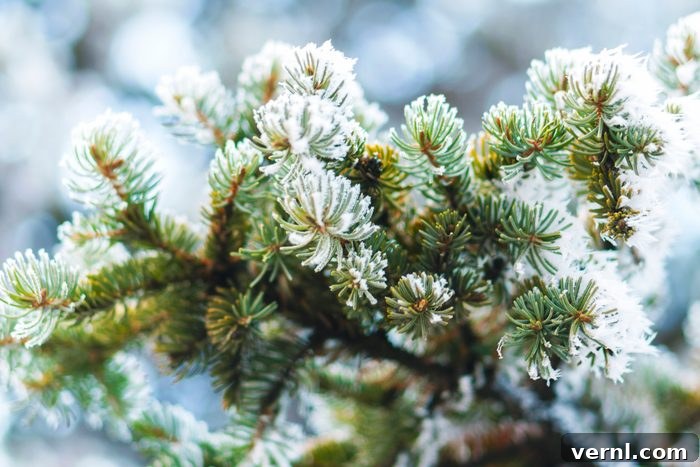
The plant kingdom is broadly divided into two categories based on leaf retention: deciduous and evergreen. Deciduous trees, typically characterized by their broad, flat leaves, are the ones we most commonly associate with shedding all their foliage in winter. Evergreens, as their name suggests, maintain their green appearance throughout the year. However, it’s a common misconception that evergreens never lose their leaves. In reality, most evergreens do shed their leaves, but they do so gradually and continuously over several years, or they replace old leaves with new ones as they fall, making the process far less noticeable than the dramatic, synchronized drop of deciduous trees. This continuous replacement strategy allows them to photosynthesize whenever conditions are favorable.
Some prominent examples of broad-leaved evergreens, often found in milder climates or as understory plants, include:
- Magnolia, with its large, leathery leaves;
- Rhododendron, prized for its vibrant flowers and sturdy foliage;
- Camphor, an aromatic tree with glossy leaves;
- Citrus trees (like oranges and lemons), common in warmer regions;
- Certain oaks, such as the aforementioned live oak.
On the other hand, the more familiar needle-leaved evergreens, often associated with conifer forests, are well-adapted to colder climates due to their specialized leaf structure that minimizes water loss and resists freezing. These include:
- Pines, with their distinct needle clusters;
- Spruces, known for their stiff, sharp needles;
- Firs, often recognized by their soft, flat needles;
- Hemlocks, which have short, flat needles with white bands underneath;
- Cedars, prized for their fragrant wood and scale-like or needle-like leaves.
Interestingly, a third category exists known as marcescent trees. These are trees that, even after their leaves die in autumn, continue to cling to them throughout the winter months, only dropping them when new buds begin to swell in the spring. “This phenomenon is observed in some oaks, beeches, willows, and hornbeams,” notes Mizejewski. There isn’t a single, universally accepted explanation for marcescence. Several theories propose that it could be a protective mechanism, shielding delicate buds from browsing animals like deer, or that the dead leaves act as insulation against extreme cold. Another hypothesis suggests that by holding onto leaves until spring, the tree retains their accumulated nutrients, which can then be reabsorbed more efficiently by the roots when they are most active during the spring thaw, effectively delaying nutrient cycling to maximize benefit.
The Post-Fall Transformation: What Happens to Leaves in Winter?
Once they’ve completed their aerial descent, fallen leaves embark on their next vital role in the ecosystem. They settle on the ground, often forming a natural, protective blanket over the root zone of trees and other plants. This layer acts as an effective, organic mulch, offering numerous benefits. Over the winter months, aided by moisture, temperature fluctuations, and the tireless work of countless microorganisms, fungi, and invertebrates (such as earthworms and springtails), these leaves gradually begin to break down, embarking on the decomposition process. “They essentially become the soil itself,” Mizejewski states. This slow but steady process transforms the dense layer of leaves into a rich, dark substance – nature’s very own compost. As decomposition progresses, the nutrients locked within the leaves – carbon, nitrogen, phosphorus, potassium, and trace minerals – are released back into the soil, replenishing its fertility. “Then those vital nutrients become readily available for the tree to reabsorb, fueling its growth in the upcoming spring,” he adds. Beyond nutrient cycling, this natural mulch also insulates the soil, protecting roots from extreme temperature fluctuations, retaining essential moisture, and suppressing weed growth, thereby creating a healthier and more resilient garden environment.
Striking the Balance: Is Leaving Leaves on the Ground Problematic?
The answer to whether leaving leaves on the ground is problematic is often “no,” with a few important caveats. Predominantly, leaving leaves is immensely beneficial, representing a wealth of free, organic mulch and a slow-release natural fertilizer. They are also instrumental in fostering a healthy and vibrant wildlife habitat. Fallen leaves create crucial microhabitats for a diverse array of organisms, attracting birds and butterflies by supporting their food sources. Many species of butterflies and the vast majority of moths depend entirely on leaf litter layers for at least one critical stage of their life cycles, often overwintering as eggs, larvae, or pupae beneath this protective cover. Moreover, almost all backyard birds rely heavily on the insects, spiders, and other invertebrates that shelter and feed within these leaf layers to nourish their young during nesting season.
“It truly takes an incredible number of these insects to sustain bird populations,” Mizejewski emphasizes. “For instance, a single nesting pair of chickadees can forage and catch between six thousand and nine thousand invertebrates just to successfully raise a single brood of their babies. This means that your decisions regarding fallen leaves in your yard can literally make the critical difference for the survival of a nest of baby birds.” By leaving leaves, you are contributing directly to the biodiversity and ecological resilience of your local environment.
However, there is a “yes” component to the question, particularly concerning turf grass. The primary downside to simply abandoning a very thick, unshredded layer of leaves on your lawn for the entire winter is the high likelihood that it will smother the grass, preventing sunlight and air from reaching the blades. This can lead to weakened, yellowed, or even dead patches of grass come spring, as it won’t be able to grow well. To maintain a healthy and vigorous lawn while still leveraging the benefits of leaves, a simple solution is to shred leaves. Once they have dried out, use a mulching mower to finely chop them. This reduces their volume significantly and creates smaller pieces that break down much faster, returning nutrients to the soil without suffocating the grass. It’s perfectly acceptable to leave these finely shredded leaves in place on your lawn, as long as they form a light, permeable layer that still allows some sunlight and air to reach the turf underneath. This practice simultaneously nourishes your lawn and provides valuable organic matter. Beyond the lawn, shredded leaves are excellent for use as mulch in garden beds, around trees and shrubs, or added to a compost pile, further enhancing soil health and reducing waste.