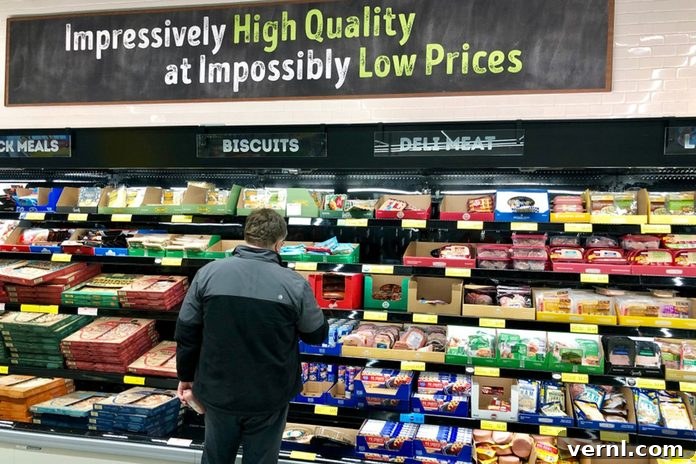
For most households, grocery shopping is a regular, essential task that profoundly impacts both daily life and long-term financial health. The decision of where to buy groceries is often a deeply personal one, influenced by a multitude of factors. Some shoppers prioritize sheer convenience, choosing a store based on its proximity to home or work. Others might seek out the freshest organic produce, an unparalleled selection of gourmet items, or the comforting familiarity of friendly staff and a pleasant shopping atmosphere. However, as economic pressures mount and household budgets tighten, one factor increasingly dominates the decision-making process for a vast number of consumers: price.
The relentless pursuit of the lowest possible prices has become a strategic imperative for many families. Smart shoppers are continually seeking ways to stretch their dollar further, ensuring they can put nutritious and delicious food on the table without overspending. This shift in consumer behavior isn’t merely about frugality; it’s about intelligent resource management, maximizing value, and making informed choices that contribute to overall financial well-being. Identifying the truly cheapest grocery store can translate into significant annual savings, freeing up funds for other critical expenses or even allowing for a few well-deserved treats.
Beyond finding the best deals at the checkout, extending the life of your purchases once they’re home is another powerful way to save. Proper food storage can dramatically reduce waste and preserve the freshness of your groceries, effectively making your money go further. Before we delve into the top budget-friendly retailers, consider refining your home storage habits. Did you know you’re storing these common foods all wrong at home? Mastering these simple techniques ensures that the savings you diligently achieve at the store aren’t undone by premature spoilage.
Unlocking the Savings: America’s Most Budget-Friendly Grocery Stores
While word-of-mouth and personal experience offer valuable insights into affordable grocery shopping, concrete data provides a clearer picture. To definitively determine which grocery chains offer the best value, dunnhumby, a recognized authority in customer data science, conducted an extensive and illuminating study. Their research employed a robust methodology, combining publicly available financial performance data with comprehensive survey responses from approximately 7,000 U.S. households. This multifaceted approach allowed dunnhumby’s Retailer Preference Index (RPI) for the grocery sector to rigorously assess retailers not only on price but also on their overall customer satisfaction and loyalty drivers.
The dunnhumby study’s primary objective was to identify “Winners in Price”—those retailers consistently delivering the most competitive pricing across a broad spectrum of products. This category highlights stores that have mastered the art of offering exceptional value, making them indispensable resources for budget-conscious shoppers nationwide. After meticulous analysis and comparison, the study proudly unveiled a list of 13 grocery chains that excel in affordability. For many savvy shoppers, the top contender came as no surprise: Aldi, the German-owned discount powerhouse, secured the leading position as the cheapest grocery store in the U.S.
Aldi’s consistent dominance in the budget-friendly arena is no accident; it is the direct result of a highly refined, fiercely efficient, and customer-centric business model. Since its inception in Germany, Aldi has steadfastly adhered to a philosophy of simplicity and cost-effectiveness, a strategy that directly translates into significantly lower prices for its customers. In stark contrast to sprawling traditional supermarkets, Aldi stores are typically smaller, feature a more streamlined layout, and offer a meticulously curated selection of products. This reduced footprint dramatically lowers operational overheads—including rent, utilities, and staffing requirements—all of which are pivotal factors contributing to their ability to offer remarkably low prices.
A fundamental pillar of Aldi’s unique strategy is its overwhelming reliance on private label products. Unlike conventional grocers that stock a wide array of national brands, Aldi dedicates approximately 90% of its shelf space to its own exclusive brands. This approach effectively eliminates the substantial marketing, advertising, and complex distribution costs associated with national brands, granting Aldi unparalleled control over its entire supply chain and, crucially, its pricing structure. Far from being inferior, many of Aldi’s private label items consistently receive high accolades for their quality and taste, frequently rivaling—or even surpassing—their more expensive national brand counterparts. From everyday pantry essentials to specialty gourmet items, Aldi’s private labels deliver exceptional value and quality.
Aldi’s operational efficiencies extend well beyond product sourcing, permeating every aspect of the store’s functioning. Customers are actively encouraged to bring their own reusable shopping bags, or they can purchase highly affordable ones at checkout. This seemingly minor detail significantly reduces the company’s costs for packaging and eliminates the labor associated with bagging groceries. Furthermore, Aldi’s ingenious cart rental system—where a quarter unlocks a shopping cart, returned upon the cart’s return—incentivizes customers to self-manage carts, minimizing the need for dedicated staff for retrieval. Employees are typically cross-trained to perform a variety of tasks, from stocking shelves with palletized displays to operating cash registers with lightning speed, further optimizing labor costs. These efficiencies are not about compromising service; they are about intelligently eliminating superfluous expenses and channeling those savings directly back to the consumer. For a deeper dive into their cost-saving mechanisms, see all the reasons why Aldi’s groceries are so cheap.
Despite its focused, no-frills approach, Aldi remarkably manages to offer a surprisingly diverse and high-quality range of products. Shoppers can consistently find all their essential staples, including fresh, seasonal produce, high-quality dairy products, a variety of meats, and freshly baked goods. Beyond these everyday necessities, Aldi also excels in providing a constantly rotating selection of exciting snacks, unique seasonal items, and distinctive home goods often referred to as “Aldi Finds.” Responding to evolving consumer preferences, the store has also significantly expanded its offerings to include a growing variety of specialty products, such as certified organic options, gluten-free, vegan, and dairy-free alternatives, making healthy and specialized diets far more accessible and affordable. This powerful combination of consistently low prices and an expanding, quality selection solidifies Aldi’s position as a compelling and increasingly popular choice for a wide demographic of shoppers.
The Full List of Price-Winning Grocery Retailers, According to Dunnhumby:
- Aldi
- Market Basket
- WinCo
- Food4Less
- Costco
- Walmart
- Trader Joe’s
- Walmart Neighborhood Market
- Lidl
- Amazon
- H-E-B
- Peapod
- Sam’s Club
Aldi’s presence and influence in the U.S. grocery market are not just significant but are rapidly expanding, cementing its status as a formidable player in the retail landscape. Currently, the dynamic chain boasts an impressive network of over 1,600 stores strategically located across 35 states, bringing its distinctive brand of discount shopping and value to millions of American households. For those who have yet to discover the considerable savings offered by Aldi, or for communities where a store is not yet conveniently accessible, there is exceptionally good news on the horizon: the German-based chain has announced ambitious and aggressive plans for exponential growth. Aldi aims to increase its store count by a staggering 50% over the next few years, signaling a profound expansion strategy that will significantly deepen its market penetration across the nation.
This aggressive growth trajectory is poised to fundamentally reshape the competitive dynamics of the U.S. grocery market. With its extensive planned expansion, Aldi is projected to ascend to the position of the third-largest grocery retailer in the United States, a truly remarkable achievement for a company that, not long ago, maintained a relatively niche presence. This anticipated growth powerfully underscores the escalating consumer demand for affordable, high-quality groceries and Aldi’s proven, consistent ability to deliver on that crucial promise. As more new stores open their doors, an ever-increasing number of shoppers across the country will gain the opportunity to experience and benefit from Aldi’s celebrated low prices and uniquely efficient, streamlined shopping experience, further solidifying its impact on American consumer habits.
To further amplify your grocery budget savings, embracing the strategy of buying certain items in bulk can be highly effective. This approach, particularly for non-perishable goods or frequently used household staples, often results in significantly lower per-unit costs compared to buying smaller quantities. However, successful bulk buying necessitates thoughtful planning and adequate, proper storage to prevent waste and spoilage. Plus: Check out 15 essential tips for storing stuff you buy in bulk. Implementing effective bulk storage solutions is a crucial skill for truly budget-conscious consumers, ensuring that the initial savings from larger purchases are not eroded by disorganization or spoilage down the line.
Spotlight on Regional All-Stars and Other Top Value Retailers
While the dunnhumby study identified several national giants familiar to most American consumers, it also shone a light on a number of potent regional powerhouses that consistently excel in delivering exceptional value. These local and regional chains often cultivate deeply loyal customer bases who appreciate their unique operational models, community integration, and unwavering commitment to affordability. A closer look at what drives the success of these retailers offers valuable insights into the diverse and dynamic landscape of budget-friendly grocery shopping across different parts of the country.
- Market Basket: A revered institution throughout the Northeastern United States, particularly prominent in Massachusetts, New Hampshire, and Maine, Market Basket has earned a stellar reputation for its fiercely competitive prices and extensive product selection. Known for its bustling, vibrant atmosphere, the chain is not only famous for its efficient rows of self-checkout lanes that enhance customer flow but, more crucially, for its steadfast commitment to offering consistently low prices. This dedication is deeply ingrained within the company’s culture, enabling it to maintain affordability even through challenging periods. Market Basket’s strong emphasis on fresh produce, a wide variety of deli items, and prepared foods—all available at remarkably attractive price points—solidifies its status as a regional favorite and a formidable competitor in the value grocery sector.
- WinCo Foods: Primarily concentrated along the West Coast and extending into the Midwest, WinCo Foods operates on a distinctive employee-owned model. This unique structure fosters a profound sense of ownership and commitment among its staff, which directly translates into unparalleled operational efficiencies and cost savings that are ultimately passed on to the customers. WinCo stores are often characterized by their warehouse-like aesthetic, emphasizing a practical, low-frills shopping experience. Similar to Aldi, WinCo actively encourages customers to bag their own groceries, a practice that further reduces labor costs. Their expansive bulk foods section, where shoppers can purchase an extensive range of items—from grains, nuts, and spices to various candies—by weight, is a significant draw for those seeking to maximize savings by buying precise quantities and bypassing pre-packaged markups.
- Food4Less: Operating across key states including California, Illinois, Indiana, and Ohio, Food4Less stands out as another exemplary no-frills grocery chain that places paramount importance on offering the lowest possible prices. Echoing the operational model of several other value-focused retailers on this list, Food4Less champions a system where customers bag their own groceries. This shared responsibility helps maintain remarkably low overhead costs, enabling the chain to consistently offer highly competitive pricing on an extensive range of everyday essentials. The core focus here is squarely on delivering exceptional value, emphasizing basic necessities and providing a straightforward, efficient shopping experience. Indeed, a recurring theme among these top budget grocers is the customer’s active participation in tasks like bagging, which directly translates into tangible savings at the register!
- Lidl: Hailing from Germany, much like its successful counterpart Aldi, Lidl strategically entered the U.S. market with a similar, ambitious mission: to revolutionize the traditional grocery landscape through an aggressive, high-value, low-price strategy. Lidl stores are distinguished by their modern, brightly lit, and often aesthetically pleasing layouts, frequently appearing more contemporary and upscale than traditional discount retailers, yet steadfastly maintaining an unwavering focus on delivering outstanding value. They offer a robust selection of high-quality private label products, an impressive array of fresh produce, and a popular in-store bakery. Lidl also entices shoppers with weekly “Lidl Surprises” which feature unique, often European-inspired non-food items. As a direct and powerful competitor to Aldi, Lidl’s rapidly expanding presence in the U.S. market further intensifies the competition among discount grocers, ultimately benefiting consumers with an even broader array of affordable, quality shopping options.
- Costco and Sam’s Club: These prominent membership-based warehouse clubs, while requiring an annual membership fee, offer substantial savings for consumers who are able and willing to purchase items in bulk quantities. Their core business model revolves around selling large volumes of products at wholesale prices, making them ideal destinations for large families, businesses, or individuals keen on stocking up on non-perishable goods, household essentials, and even fresh produce. The immense purchasing power and specialized distribution channels of these clubs enable them to offer prices that are often unmatched by conventional supermarkets, providing significant long-term value.
- Walmart and Walmart Neighborhood Market: As an undisputed retail behemoth, Walmart’s iconic “Everyday Low Prices” strategy is universally recognized across a vast array of product categories, with groceries being a central component of this commitment. Walmart Neighborhood Markets offer a more compact, neighborhood-friendly format primarily focused on groceries and pharmacy items, effectively extending Walmart’s core pricing philosophy into more localized communities without the need for the full-scale supercenter experience. This allows for greater convenience while maintaining competitive pricing.
- Trader Joe’s: While Trader Joe’s may not consistently offer the absolute cheapest price for every single item on its shelves, it earns its coveted spot on this list by providing unique, high-quality, and often organic private label products at surprisingly affordable prices. Their meticulously curated selection, distinctive store atmosphere, and strong cult following demonstrate that “value” extends beyond merely the lowest possible price point; it also encompasses the exceptional quality, uniqueness, and overall shopping experience delivered for the price paid, offering a different kind of savings.
- Amazon (Whole Foods Market/Amazon Fresh): Amazon’s significant foray into the grocery sector, particularly through its acquisition of Whole Foods Market, has aimed to make higher-quality and organic food options more accessible to a broader consumer base. While Whole Foods once carried a reputation for being expensive, Amazon’s strategic influence has introduced more competitive pricing, especially for Amazon Prime members who enjoy additional discounts and perks. Furthermore, the convenience of online ordering and efficient home delivery services through Amazon Fresh significantly enhances its value proposition for many modern, time-pressed shoppers.
- H-E-B: A deeply cherished supermarket chain predominantly in Texas, H-E-B is widely acclaimed for its consistently low prices, an exceptionally broad product selection (including a strong emphasis on local and specialty items), and its profound commitment to community involvement. H-E-B’s impressive ability to compete effectively on price while simultaneously offering such a diverse and high-quality range of goods solidifies its position as a powerful regional player that consistently delivers outstanding value to its dedicated customer base.
For the truly savvy grocery shopper, timing your shopping excursions can be just as impactful as choosing the right store. Certain days of the week or specific times of day often present unique advantages, such as fresher stock, newly discounted items, or simply a less crowded shopping environment, which can make your trip more enjoyable and potentially more productive for savings. Also check out: The Best Day of the Week to Go Grocery Shopping. By strategically combining the knowledge of where to shop with the insight of when to shop, consumers can achieve optimal savings and cultivate a more efficient, less stressful grocery routine.
In conclusion, the contemporary landscape of budget-friendly grocery shopping is wonderfully diverse, offering numerous avenues for consumers to effectively save money on their essential food purchases. Whether one gravitates towards the meticulously disciplined efficiency and private label prowess of Aldi, the unwavering regional charm and community focus of Market Basket, the employee-owned savings model of WinCo, or the compelling bulk purchase benefits offered by warehouse clubs like Costco, there are indeed myriad effective ways to significantly reduce food expenses without compromising on quality, freshness, or necessary choice. By diligently understanding and leveraging the distinct strategies of these price-leading retailers, and by consciously adopting smart, informed shopping habits, consumers possess the powerful ability to positively impact their household budgets, ultimately fostering a more affordable, sustainable, and satisfying way of life.