
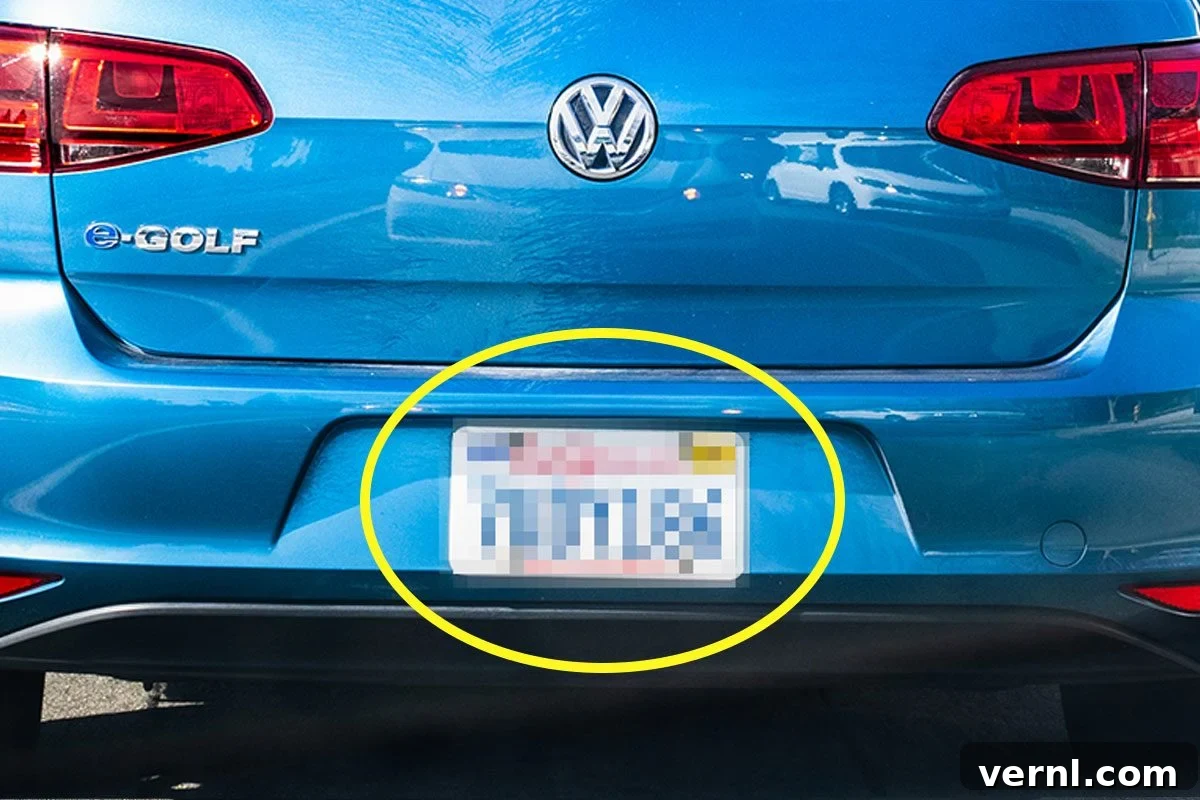
Getting a new license plate is a common necessity for many drivers. Whether you’ve just purchased a new vehicle, relocated to a different state, experienced the unfortunate incident of a stolen license plate, or simply need to replace an expired one, acquiring a new plate is part of vehicle ownership. While the Department of Motor Vehicles (DMV) typically offers a standard, randomized license plate at no additional cost, many individuals seek a more personal touch. This is where personalized license plates come into play, offering a unique opportunity to express individuality on the road, far beyond the confines of a funny bumper sticker.
Personalized, or “vanity,” license plates allow vehicle owners to display custom alphanumeric combinations that reflect their personality, hobbies, affiliations, or even inside jokes. This level of customization can transform a utilitarian vehicle accessory into a statement piece. However, prospective custom plate owners must be aware that this personalization often comes with a significant price tag and, crucially, a stringent set of rules and restrictions. These regulations vary considerably depending on your state of residence, governing what combinations of letters and numbers are permissible. To navigate this intricate landscape, we’ve consulted with leading automotive experts to bring you a comprehensive guide on the nuances of personalized license plates, including essential rules and insightful tips for crafting your unique plate.
Essential Rules for Personalized License Plates: What You Need to Know
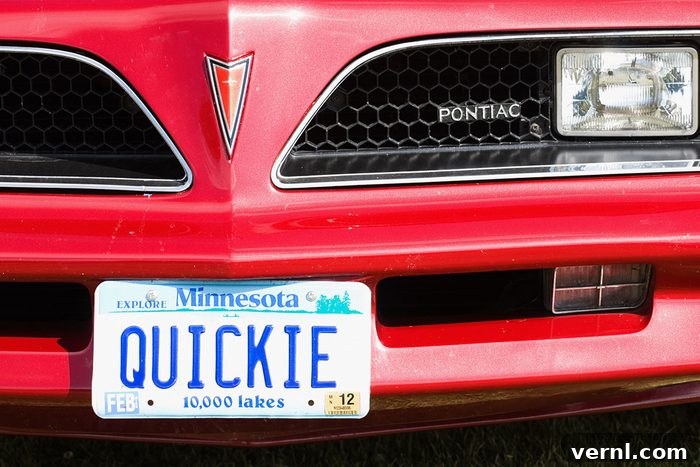
When embarking on the journey to create a personalized license plate, it’s crucial to understand that certain fundamental rules apply universally across most, if not all, states. These general guidelines are designed to uphold public decency, ensure road safety, and prevent misuse of vehicle identification. Amelia Dalgaard, QBIC at Motorhead Mama, concisely summarizes this principle: “Generally, most states are hesitant to issue plates that could be considered offensive. So, if you wouldn’t say it to your grandmother, you can’t put it on your plate.” This ‘grandmother test’ is a simple yet effective benchmark for acceptable content.
Expanding on this, Alice Coleman, an automotive expert at EpicVIN, highlights specific categories that typically lead to rejection. According to Coleman, plates cannot be offensive, obscene, or misleading. The ‘misleading’ category is particularly important as it includes anything that could cause confusion or imply authority, such as attempting to impersonate law enforcement or government officials. She further elaborates, “Anything with hate speech, sexual terms, drug references, or confusing letter/number combos (like ‘0O0O0’ that mimic other plates) will usually be denied.” This last point is critical for safety and administrative reasons, as combinations that are too similar to standard plates or are difficult to distinguish can hinder identification by law enforcement or emergency services, and even lead to issues with automated plate readers.
Beyond the content, most states also impose structural restrictions. These often include character limits, typically ranging from 6 to 8 characters, and restrictions on the types of characters allowed (usually only letters and numbers, with limited allowance for spaces, hyphens, or special symbols). Some states also prohibit combinations that could be mistaken for existing plate series or those reserved for specific vehicle types. Understanding these broad parameters is the first step in successfully designing a custom plate that stands out for the right reasons.
Navigating State-Specific Regulations for Vanity Plates
While general rules provide a baseline, the true complexity of personalized license plates emerges at the state level. Each state’s Department of Motor Vehicles (DMV) or equivalent agency maintains its own set of unique rules, reflecting local cultural sensitivities, administrative needs, and legislative priorities. These state-specific regulations add another layer of consideration for aspiring custom plate owners.
For instance, California, known for its diverse population and proactive regulatory environment, operates with particularly tough filters. According to Alice Coleman, content that implies drugs or gang terminology faces heightened scrutiny. Amelia Dalgaard adds a fascinating specific example: in California, the number ’69’ can only be used on a license plate if it directly refers to the vehicle’s model year. Any other usage is typically denied, primarily due to concerns that it will be interpreted as a sexual reference, demonstrating a clear effort to maintain public decorum on state roadways.
Florida also presents a distinct set of prohibitions. As reported by FloridaLicensePlate.org, trademarked or copyrighted material is strictly off-limits, preventing individuals from displaying brand names or protected slogans without explicit permission. Additionally, Florida explicitly forbids misleading content that could be confused with official government or emergency vehicle plates, reinforcing the need for clear identification. Perhaps most uniquely, the Sunshine State rejects plates with any reference to bodily functions, indicating a strict stance against vulgarity.
Other states contribute their own specific nuances. In New York, for example, the NYS DMV will not approve license plates that appear similarly to official or special classes, such as “POLICE” or “NYS,” to avoid confusion and maintain the integrity of official designations. Massachusetts has a specific formatting rule for vanity plates, requiring them to start with two letters. Furthermore, strict rules apply to punctuation, spaces, or periods – none are allowed. Many jurisdictions across the country also prohibit the substitution of letters with numbers that look similar (e.g., using ‘0’ for ‘O’ or ‘1’ for ‘I’) if the intent is to bypass content restrictions or create a confusing combination, emphasizing readability and clarity for all license plates.
These examples underscore the critical importance of consulting your specific state’s DMV website or regulations before submitting any personalized license plate request. What might be acceptable in one state could be outright rejected in another, leading to wasted time and application fees. The detailed guidelines often cover not only content but also character limits, permissible symbols, and reserved combinations, all designed to ensure that personalized plates enhance, rather than detract from, the overall system of vehicle identification.
Understanding Rejected Plates: Learning from Examples
To provide a clearer understanding of what constitutes unacceptable content, examining examples of rejected personalized license plates can be incredibly instructive. These real-world instances highlight the types of phrases and combinations that DMVs deem inappropriate, offensive, or misleading. According to a report by WTSP Tampa Bay, the state of Florida denied the following personalized license plates in 2024, offering a valuable glimpse into the boundaries:
- BADA55V: This combination clearly uses numeric substitutions (‘A55’ for ‘ASS’) to form a profane word, making it an obvious candidate for rejection based on obscenity.
- IAM DUI: Directly references driving under the influence, a serious criminal offense. Such a plate would be rejected for condoning illegal activity and promoting unsafe behavior.
- FBI FED: This combination attempts to mimic federal law enforcement identification, falling under the “misleading content” category. It could imply official authority, which is strictly prohibited.
- P00P BUT: Another clear example of vulgar language and reference to bodily functions, which, as previously noted, is specifically disallowed in Florida.
- PLZ 0FCR: This attempts to spell “Please Officer” with numeric substitution. While not directly offensive, it could be seen as an attempt to interact with law enforcement in a potentially confusing or inappropriate manner, or simply infringe on readability standards.
- P1SSAH: This is a thinly veiled attempt to spell out a highly offensive and vulgar term, warranting rejection on grounds of obscenity.
- C0CKY1: Again, using numeric substitution to spell out an explicit and offensive term, leading to rejection.
- HAWK2UA: While less overtly offensive than some others, this could be interpreted as a subtle reference to derogatory or aggressive language, or simply fail to meet general taste standards. Its rejection highlights the subjective nature of what states consider inappropriate.
As evident from this list, many of these license plates were denied due to their obscene or derogatory nature, which would be offensive to the majority of the public. This reinforces the ‘grandmother test’ principle. It’s also important to note that even if a personalized plate is initially approved and issued, many states reserve the right to invalidate it later. This power is often exercised in places like New York and California, where DMVs actively review plates for potential offense, and can revoke them if a complaint is filed or if new interpretations of rules emerge. If a plate is revoked, the owner will typically be required to surrender it and obtain a new, standard plate, often without a refund for the personalized plate fee.
Appealing a Rejected Personalized Plate
Receiving a rejection for your personalized license plate idea can be frustrating, especially if you believe your chosen combination is innocuous or has been misinterpreted. Fortunately, every state provides an appeal process for rejected plates, offering applicants an avenue to challenge the DMV’s decision. The specific procedures for appealing a rejection can vary significantly from one state to another, underscoring the importance of checking with your local DMV for precise guidance.
According to Amelia Dalgaard, the appeal process might involve submitting a written appeal, requiring an in-person appearance before a review board, or, in some less formal instances, a phone call. A written appeal typically requires you to articulate why your proposed plate should be approved, providing context, intent, and any supporting arguments that counter the rejection criteria. This might involve explaining acronyms, cultural references, or demonstrating that the combination does not violate any specific rule when properly understood.
A notable example of a successful challenge to license plate restrictions comes from Ohio. Patrick Peterson, an auto expert at GoodCar.com, recounts a lawsuit that led to a significant alteration of the state’s personalized plate restrictions. Following legal objections rooted in freedom of speech principles, terms such as ‘GAY’ and ‘MUSLIM’ were subsequently permitted. This case illustrates that while DMVs aim to uphold public standards, constitutional rights, particularly freedom of expression, can influence the scope of what is deemed acceptable. It highlights a tension between the state’s interest in regulating public decency and an individual’s right to self-expression, often resolved through legal challenge or policy review. Therefore, understanding your state’s appeal process and preparing a well-reasoned argument is crucial if you decide to contest a rejection.
Frequently Asked Questions About Personalized License Plates
Personalized license plates often raise several common questions among drivers. Here are answers to some of the most frequently asked queries:
Can two people have the same personalized plate in different states?
Yes, it is entirely possible for two individuals to have the exact same personalized plate combination if they reside in different states. This is because personalized license plates are jurisdiction-specific. As Alice Coleman explains, “Personalized plates are state-specific, so you could see ‘FASTCAR’ in Texas and another ‘FASTCAR’ in New York without conflict.” Each state operates its own independent registration system, meaning a unique combination within one state does not preclude the same combination from being issued in another. However, within the same state, no two vehicles can bear the identical personalized plate, as the system ensures uniqueness locally to avoid confusion and maintain proper identification.
Can I transfer my personalized plate to a new vehicle?
In most cases, yes, you can transfer your personalized plate to a new vehicle. This is a common practice that allows drivers to keep their unique identifier even when upgrading or changing their car. The process typically involves a small fee and a request made at the DMV during the vehicle’s registration process. Coleman advises, “You usually have to pay a small fee and request it at the DMV during registration.” It’s essential to check with your local DMV for the most up-to-date information regarding this process, as specific fees, required documentation, and any potential limitations (e.g., if the plate style is no longer issued or if the new vehicle type has different plate requirements) can vary from state to state.
How long does it take to get a personalized license plate?
The time it takes to receive a personalized license plate can vary significantly depending on your state’s processing times, the volume of applications, and whether your application requires manual review. Generally, after your application is approved and payment is processed, it can take anywhere from 4 to 12 weeks for your custom plates to be manufactured and mailed to you. Some states offer online tracking tools to check the status of your order, but it’s always best to inquire about estimated timelines when you submit your application.
What is the typical cost of a personalized license plate?
The cost of a personalized license plate varies by state, but it generally involves an initial application fee and often an annual renewal fee in addition to standard registration costs. These fees can range from as little as $25 to over $100 annually, depending on the state and whether the plate supports a special cause or design. Some states may also charge a one-time manufacturing fee. It’s important to factor in these recurring costs when deciding on a personalized plate, as they contribute to the “hefty price tag” mentioned earlier.
Can I reserve a personalized plate combination?
Some states offer a plate reservation service, allowing you to secure a desired personalized combination for a period, even if you are not immediately applying for the physical plate. This is useful if you have a specific idea in mind but are waiting to purchase a new vehicle or simply want to ensure your chosen text is available. Reservation fees and the duration of the reservation period are state-specific, so check with your local DMV for details on availability and how to proceed.
About the Experts
- Patrick Peterson is an auto expert and team lead at GoodCar.com.
- Amelia Dalgaard is QBIC at Motorhead Mama.
- Alice Coleman is an auto expert at EpicVIN.
Sources
- WTSP Tampa Bay: HAWK 2UH? Florida rejected these personalized license plates in 2024.
- NYS DMV: Restrictions on Personal Plates
- FloridaLicensePlate.org: Florida License Plate Lookup
Related Articles to Enhance Your Vehicle Knowledge
- Do You Know What That Little Button on Your Seat Belt Is For?
- What Those Lines on Your Backup Camera Really Tell You
- Here’s What The Small Panel On Your Car’s Front Bumper Is For