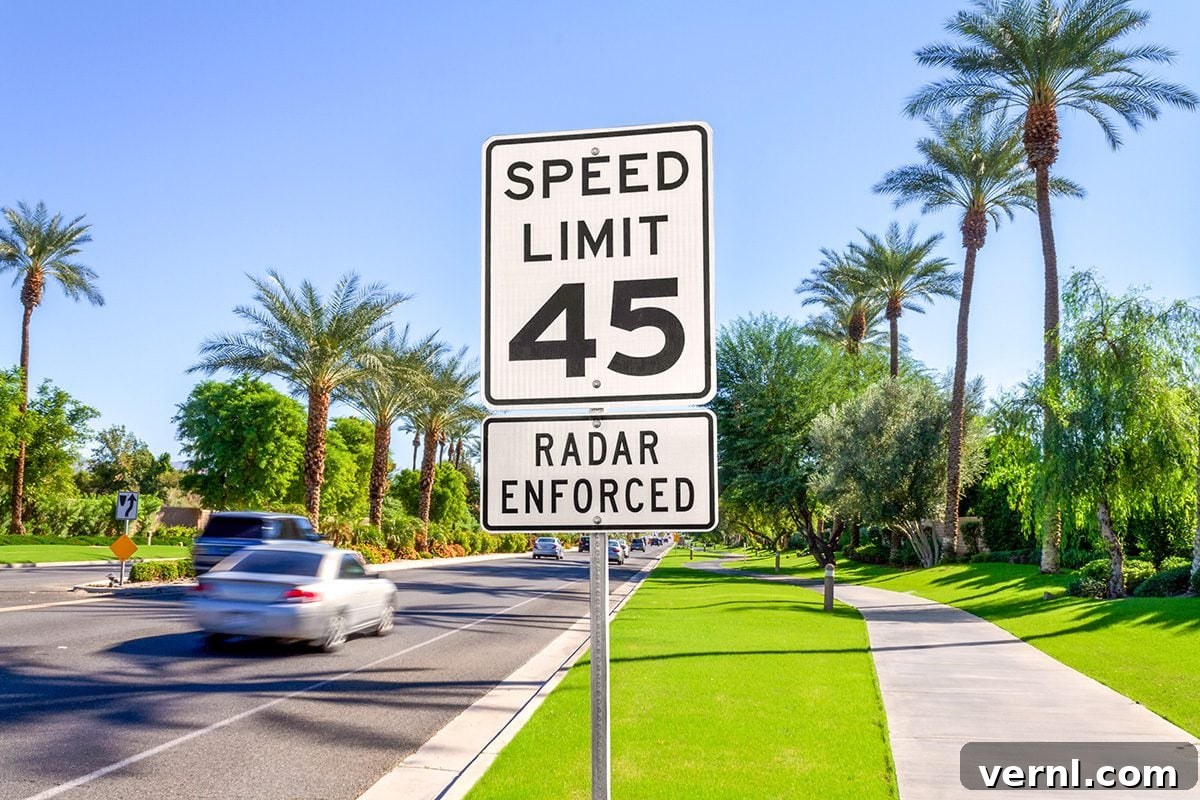
From the earliest days of horse-drawn carriages to the modern automobile era, the science of speed limits has been a fundamental tool in regulating how fast (or slow) people and their vehicles travel. Having dedicated years to researching and writing about automotive safety and maintenance, I’ve observed firsthand just how frequently speed limits are misunderstood, leading to confusion and, at times, frustration among drivers.
Speed limits are more than just numbers on a sign; they are critical public trust rules—or laws—meticulously designed to foster road safety, optimize traffic efficiency, and promote personal accountability for every road user. With the advent of the automobile in the early 20th century, the discipline of speed science has evolved dramatically, transforming into a highly specialized field within transportation engineering. Utilizing extensive data analysis and logical principles, dedicated speed engineers and scientists play a pivotal role in planning and designing our roadways and their accompanying infrastructure. Their work considers a dynamic interplay of factors, including evolving environmental needs, advancements in vehicle technology, and shifting driver behaviors. The ultimate goal is to strike a delicate but crucial balance: ensuring the smooth and proper flow of traffic while simultaneously safeguarding the lives of drivers, pedestrians, and cyclists alike.
In the following sections, we will delve deeper into this intricate world. Leading experts in transportation engineering, defensive driving, and traffic law will illuminate the methodologies behind how speed limits are established, explore why the current system is facing increasing scrutiny, and offer insights into what the future of speed management might hold for our roads.
How Are Speed Limits Established?
The process of setting speed limits in the United States is a complex undertaking, primarily guided by comprehensive federal standards. According to Nathan Kautz, a distinguished transportation engineer at Kittelson and Associates, Inc., “Speed limits in the U.S. are generally set using the guidance provided in the Federal Highway Administration (FHWA) Manual of Uniform Traffic Control Devices (MUTCD) 11th Edition.” The MUTCD serves as the authoritative national standard for all traffic control devices, including signs, signals, and pavement markings. It offers critical differentiations for various types of roadways, categorizing them into urban, suburban, and developed rural arterials versus freeways, expressways, and rural highways. This nuanced approach recognizes that different road environments necessitate distinct speed management strategies.
Beyond these classifications, the MUTCD provides detailed guidance on applying the ’85th percentile rule’—a traditional method we will discuss further—and outlines six crucial factors that must be thoroughly considered when establishing or reviewing speed limits. These factors ensure a holistic evaluation of the roadway environment:
- Roadway Environment: This includes surrounding land use (e.g., residential, commercial, industrial), the presence of schools or hospitals, and pedestrian/cyclist activity.
- Roadway Characteristics: Factors such as the number of lanes, curve radius, shoulder width, sight distances, pavement condition, and the presence of intersections or access points.
- Geographic Context: Encompassing terrain, climate considerations (e.g., fog, ice), and proximity to natural features or significant landmarks.
- Crash Experience: A critical analysis of historical crash data, including types, frequencies, and severities of collisions, helps identify problematic areas.
- Speed Distribution of Free-Flowing Vehicles: Observing the actual speeds at which most drivers travel under normal conditions is a key input.
- Speed Trends: Analyzing how speeds have changed over time due to factors like population growth, technological advancements, or changes in road design.
“Unfortunately, a significant portion of speed limit reviews are conducted reactively,” noted Robert Dillman, an authority on defensive driving. This means that assessments are often triggered only after substantial roadway alterations, policy shifts, zoning updates that change an area’s character, or, most critically, an increase in crash statistics. While the MUTCD sets robust federal guidance, Kautz also pointed out that “some municipalities utilize that as a foundational basis for developing their own specific traffic control standards, tailored to their unique local conditions and needs.” This demonstrates a flexible framework that allows for both national consistency and local adaptability.
Are Speed Limit Regulations Consistent Across the U.S.?
The uniformity of speed limit regulations across the United States is often assumed, but in reality, it is far from absolute. Mike Agruss, CEO and founder of Mike Agruss Law, confirmed this variability, stating, “Speed limit rules and laws are very different all around the U.S.; varying not just from state to state but also between cities in the same state.” While the FHWA provides overarching federal guidelines, states retain considerable authority to establish, interpret, and revise their own speed limits. This allows for adaptability to unique state-level demographics, geographical features, and traffic patterns.
Local authorities, in particular, play a crucial role in adapting these guidelines to specific community needs. For instance, based on a careful analysis of crash statistics and other relevant traffic data, “if persistent problems related to speed or safety continue to emerge on a particular road segment, it will likely prompt a municipality to reassess the prevailing speed limits,” explained Dillman. Furthermore, such issues can also drive innovative solutions, leading to the replacement of traditional and often hazardous four-way intersections with more modern, safer designs like roundabouts, rotaries, or even diverging diamond intersections. These contemporary intersection designs are specifically engineered to manage traffic flow more efficiently and reduce conflict points, thereby enhancing safety for all road users, often by implicitly influencing speeds without relying solely on enforcement.
The 85th Percentile Rule: A Growing Controversy
For decades, the 85th Percentile Rule has stood as the bedrock of traditional speed limit setting and evaluation methodologies. Nathan Kautz elaborated, “The 85th Percentile Rule is seen as the ‘traditional’ method of evaluating and setting speed limits.” This approach is fundamentally rooted in observing human behavior, rather than relying solely on abstract data or statistical models. As Wes Guckert, Chairman and CEO at The Traffic Group, explained, “this approach to setting speed limits is that the majority of drivers will naturally select the safest speed to travel under normal conditions for that roadway.” Mike Agruss further clarified the core principle of this controversy: “It is based on the premise that approximately 85% of drivers will instinctively choose a safe and appropriate speed when traveling on a specific road, assuming conditions are typical.” The rule, therefore, suggests that the posted speed limit should align with the speed at or below which 85% of traffic flows.
However, this long-standing methodology is facing increasing scrutiny and criticism. A significant flaw in this approach is its underlying assumption that drivers consistently adhere to the posted speed limit, or that the “natural” speed chosen by the majority is inherently safe for all road users. The FHWA has issued a stern warning against relying on driver behavior alone, cautioning that such a practice “may perpetuate high-speed travel” at the expense of everyone else sharing the road, particularly vulnerable road users like pedestrians and cyclists. This concern was underscored when the FHWA published its newest edition of the MUTCD, which clearly indicated a notable shift away from strict adherence to the 85th Percentile Rule, re-characterizing it more as a suggestion rather than an immutable rule.
The latest FHWA Speed Limit Setting Handbook further solidified this evolving perspective. It explicitly states, “Depending on the roadway context and conditions, setting speed limits based on the 85th-percentile may not represent an appropriate speed considering all road users and may perpetuate high-speed travel for the majority of drivers.” This acknowledges that what might be a comfortable speed for a driver in a vehicle may be perilous for a pedestrian crossing the street or a cyclist sharing the lane.
Robert Dillman articulates a prevalent modern argument: “Developed in the mid-20th century when roads were simpler and traffic volumes lower, today, many argue the 85th Percentile Rule is outdated.” The contemporary road environment is vastly different, characterized by a complex array of challenges: widespread distracted driving, the proliferation of larger and heavier vehicles (SUVs, trucks), and an infrastructure that often includes older road designs not engineered for current traffic realities. These factors, combined with higher traffic densities, significantly heighten the danger for more vehicles, pedestrians, and cyclists. Proponents of change, like Kautz, now advocate for “formal assessments conducted by expert traffic engineers who meticulously measure average vehicle speeds, analyze traffic volume, evaluate current road conditions, assess surrounding land use, and thoroughly review crash data.”
These more inclusive and data-driven assessments are vital for determining realistic and truly safe speed limits that are specifically tailored for individual highways and local byways. Such a comprehensive approach moves beyond merely observing modern driver behavior or relying solely on outdated road design principles. It allows transportation planners to proactively address a multitude of contemporary challenges, including the rapid integration of “semi-autonomous vehicles and other technological advancements that simply did not exist when this rule was conceived,” as Dillman pointed out. By considering a broader spectrum of data and contextual elements, these assessments can lead to speed limits that genuinely enhance safety and efficiency for all road users in the 21st century.
Understanding Speed Studies: The Data Behind the Limits
To move beyond mere assumptions and ensure that speed limits are truly effective, transportation professionals rely on meticulous data collection through what are known as speed studies. According to Wes Guckert, “A speed study meticulously examines how fast vehicles are traveling in each direction [on a specific road or highway], typically categorized by vehicle type, over an extended period, usually 24 to 48 hours. The objective is to accurately determine average vehicle speeds and the critical 85th percentile speeds.” These studies employ various methods, from simple radar guns to more sophisticated pneumatic road tubes or inductive loops embedded in the pavement, all designed to capture accurate speed data without influencing driver behavior.
Once the raw data is collected, it undergoes thorough analysis and is then critically compared to the current posted speed limit data. Agruss notes that this comparison is invaluable: “It can clearly show if there are significant discrepancies or issues, and subsequently allow experts to make informed recommendations [to governing authorities] as to whether to raise, lower, or maintain the current speed limit.” For instance, if a road has a posted speed limit of 35 mph, but the speed study reveals that 85 percent of vehicles are consistently traveling at 40 mph or even 45 mph under normal conditions, it may warrant consideration for an increase in the posted limit to better reflect actual safe driving patterns. This approach aims to minimize arbitrary limits that are widely ignored, fostering greater compliance.
However, Guckert stresses that raw data alone is not sufficient; context and surroundings are paramount. In every situation, “Engineering judgment comes into play.” He provides a critical example: “If the 35 miles per hour limit is situated within a school zone, the governing body typically makes the responsible decision to retain that specific speed limit or, in some cases, even reduce it further. This decision is directly influenced by the heightened safety needs of the surrounding environment, prioritizing the protection of children and other vulnerable pedestrians.” This underscores that speed limits are not merely statistical averages but must reflect a balance of traffic flow efficiency and paramount safety concerns, especially in sensitive areas.
How Often Are Speed Limits Reviewed and Updated?
The frequency with which speed limits are reviewed is not fixed; rather, “It depends,” as Nathan Kautz aptly states. Speed studies, while crucial, are inherently challenging undertakings. They demand significant time, extensive resources, and considerable financial investment, making frequent, proactive overhauls impractical for every roadway segment. Kautz added, “Generally, speed limits are most often reviewed after a major road construction project or other significant infrastructure upgrade has been completed.” This ensures that the limits are appropriate for the newly configured roadway, which might have altered characteristics like lane configurations, sightlines, or access points.
The MUTCD itself suggests that comprehensive speed studies should be initiated whenever a roadway has “undergone significant changes since the last review.” These significant changes can include not just physical alterations to the road but also shifts in land use (e.g., a rural area developing into a suburban one), increased commercial activity, or the establishment of new residential communities. Furthermore, public input plays a vital role. Citizens or concerned municipal officials frequently request a speed limit review, particularly if they observe a notable increase in the number of pedestrians and cyclists utilizing the roadway, or, more critically, if there is an alarming rise in the number of traffic crashes, especially those involving fatalities or serious injuries. These reactive triggers are often the primary impetus for reassessment.
Beyond these immediate triggers, a broader paradigm shift is occurring in urban planning and transportation engineering. Driven by continuous technological advancements in vehicle design and road building materials, along with a deeper understanding of how traffic patterns impact communities, the environment, and overall safety, city planners and transportation engineers are fundamentally rethinking highway, intersection, and on-off ramp designs. The objective is to create infrastructure that not only inherently encourages drivers to travel at appropriate, safer speeds but also actively helps to reduce traffic bottlenecks and, paradoxically, contributes to lowering overall travel times by ensuring smoother, more consistent flow. This holistic approach aims for a more resilient, safe, and efficient transportation network for the future.
Frequently Asked Questions About Speed Limits
Why not simply set lower speed limits to maximize safety?
While intuitively it might seem that lower speed limits would always equate to greater safety, the reality is far more nuanced. Robert Agruss explains that “going too slowly can also be problematic because it creates more bottlenecks in traffic, leading to driver frustration, uneven traffic flow, and, crucially, widespread noncompliance.” The issue of compliance is, in fact, often a larger hurdle than the numerical limit itself. My personal experience, commuting 90 minutes each day on the PA Turnpike for 25 years, consistently showed most vehicles and drivers routinely traveling above the posted speed limit. This often compelled me to also drive above the limit just to keep pace with the dominant flow of traffic, highlighting the powerful influence of prevailing speeds. Dillman confirms this pattern, noting, “The only locations where lower speed limits are routinely followed are clearly delineated school zones, active work zones, or other areas with predictably high pedestrian traffic volumes.” In these specific contexts, the visible presence of vulnerable groups or immediate hazards naturally encourages drivers to reduce speed.
Given the challenges of enforcement and driver behavior, Wes Guckert proposes a pragmatic solution: “The most effective way to police speed limits, in many cases, is to install automated speed cameras.” His rationale is straightforward: “Once drivers receive several tickets, the financial deterrent and the consistent enforcement will typically compel them to start obeying the posted speed limit more consistently.” While speed cameras can be controversial due to privacy concerns and perceived revenue generation, their effectiveness in reducing speeds and crashes in high-risk areas is well-documented in many jurisdictions globally.
Are minimum speed limits a common feature on roadways?
Yes, minimum speed limits are indeed a common and essential feature, particularly on high-speed roadways like highways and expressways. Their primary purpose is to prevent slower-moving vehicles from inadvertently triggering safety issues that could jeopardize the overall flow and safety of traffic. For instance, excessively slow vehicles on fast-moving highways can lead to dangerous situations such as rear-end collisions, as drivers approaching from behind may not anticipate such a drastic speed differential. They can also significantly disrupt the smooth flow of traffic, causing accordion-effect backups, congestion, and increased driver frustration. Agruss concisely summarizes the rationale: “Safe speed limits are ultimately about balancing the imperative of safety with the necessity of traffic efficiency.” Minimum speed limits are thus a critical component of maintaining this delicate balance, ensuring that all vehicles operate within a reasonable speed range that promotes both safety and optimal traffic flow.
About the Experts
Nathan Kautz is a highly respected transportation professional at Kittelson and Associates, Inc. With 15 years of extensive experience in transportation engineering, he has a proven track record of managing and performing complex speed studies for both state agencies and as a consultant. His expertise extends to leading initiatives such as a Vision Zero Plan with the Polk Transportation Planning Organization and producing a statewide Safety Academy for the Florida Department of Transportation, underscoring his commitment to enhancing road safety through innovative planning and education.
Mike Agruss is a distinguished legal professional, holding a Bachelor of Arts in Law and Society from USC and a Juris Doctor from the University of Illinois Chicago (UIC) School of Law. He is an esteemed member of the UIC John Marshall Journal of Information Technology and serves as the CEO and founder of Mike Agruss Law. One of Mike’s core areas of concentration involves road safety, specifically focusing on strategies to reduce the incidence of vehicle accidents, alongside maintaining a comprehensive understanding of transportation and speed limit laws.
Robert Dillman earned his Master of Arts in International Security from Arizona State University. In 2012, he established the NEVO Defensive Driving Academy. He later transitioned from NEVO to serve as a Security Driver Training Instructor for the Department of State, bringing his expertise in advanced driving techniques to critical security operations.
Wes Guckert is a highly accomplished professional in the field of transportation, holding certification as a Professional Transportation Planner (PTP). He is also a respected Harvard University Lecturer and a distinguished Fellow with the Institute of Transportation Engineers. Furthermore, he recently served as the Immediate Past Chair of the Urban Land Institute’s Public Development and Infrastructure Council. Wes holds a Bachelor of Science degree from the University of the State of New York and is recognized as an expert in both traffic engineering and transportation planning. His technical advisory roles span transit planning, traffic impact analysis, traffic signal design, traffic circulation strategies, and access studies. Notably, he has played a major role in the successful completion of over 9,000 projects across diverse urban and suburban areas. His professional affiliations include the American Planning Association (APA), the Institute of Transportation Engineers (ITE), the Transportation Research Board (TRB), and the Urban Land Institute (ULI).
Sources
- ABC News: “A decades-old rule lets drivers set speed limits on US roads. That could be changing.” (Aug 17, 2025)
- Jalopnik: “Speed Limits May No Longer Be Decided By How Fast Drivers Want To Go” (Aug 18, 2025)
- Philadelphia Inquirer: “Slow down on Broad Street. Speed cameras are set to go live soon” (Aug 28, 2025)
- SupercarBlondie: America may stop letting speed limits be decided by how fast drivers go” (Aug 21, 2025)
- U.S. Department of Transportation, National Highway Traffic Safety Administration: “Speeding” (Aug 27, 2025)
Related Articles
- Do You Know What That Little Button on Your Seat Belt Is For?
- What Those Lines on Your Backup Camera Really Tell You
- Here’s What The Small Panel On Your Car’s Front Bumper Is For