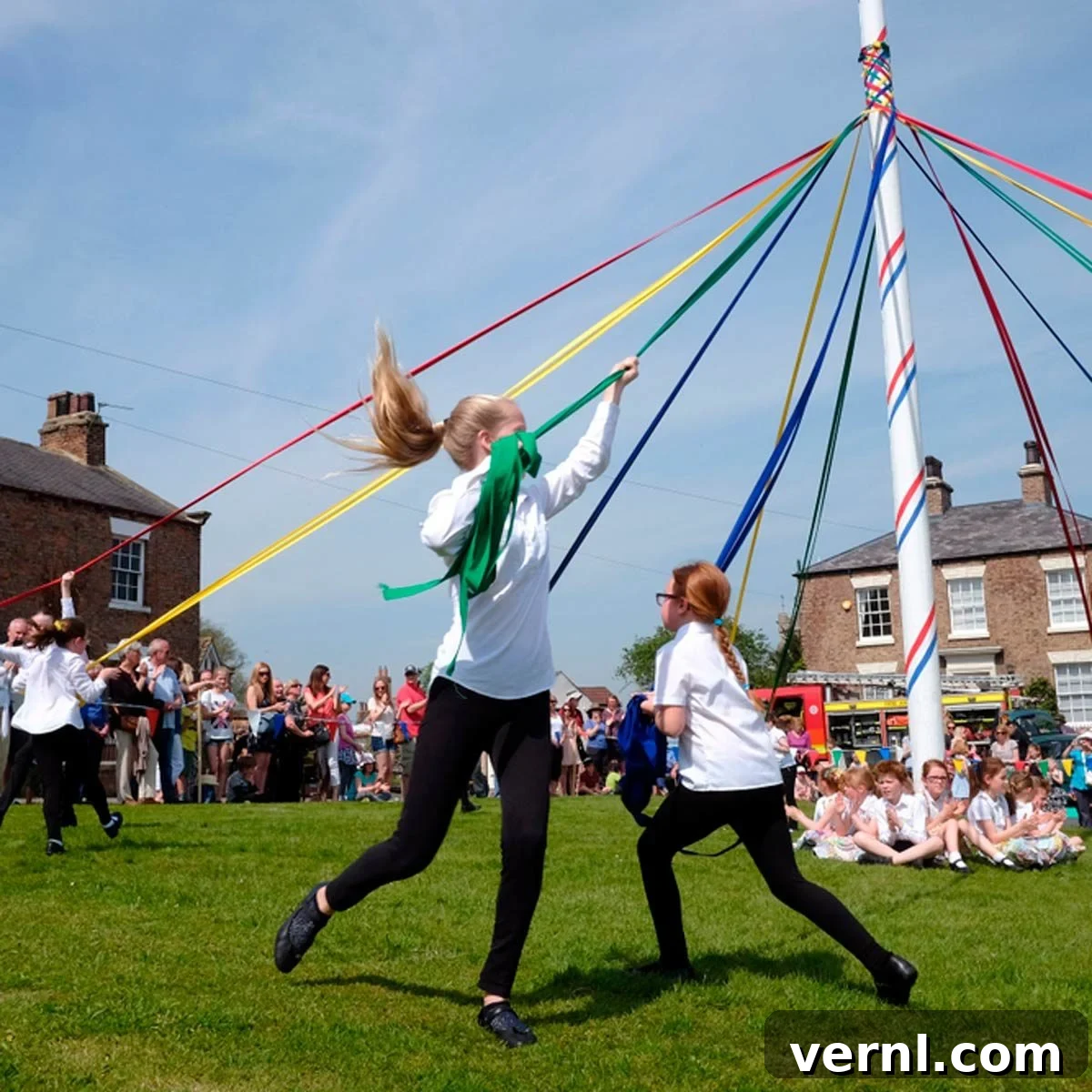
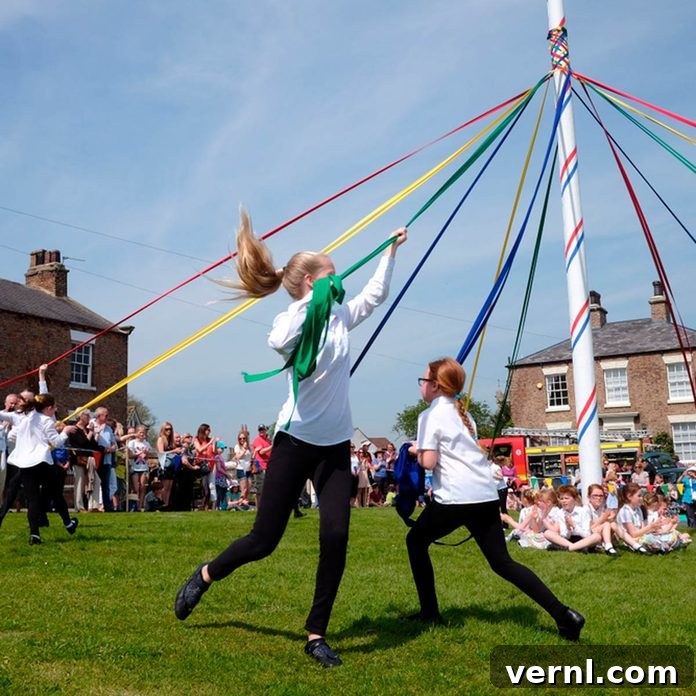
As the chill of winter recedes and the world awakens with vibrant colors, communities across the globe eagerly anticipate a truly enchanting spectacle: the Maypole dance. This age-old tradition, characterized by dancers gracefully weaving colorful ribbons around a central pole, is a quintessential celebration of spring’s arrival. More than just a dance, it’s a living tapestry woven from centuries of history, rich symbolism, and the enduring human connection to nature’s rhythms. But what exactly is the history of the maypole, and why does this festive ritual continue to captivate our imaginations and bring communities together to celebrate May Day?
The Enduring Legacy of the Maypole: A Journey Through Time and Tradition
The origins of the maypole are as intricate and intertwined as the ribbons that adorn it, stretching back through millennia. While historians may debate the exact genesis, ample evidence points to its deep roots in ancient pagan rituals, particularly in regions across Europe. This tradition wasn’t confined to a single locale; historical accounts and folklore trace similar arboreal celebrations to diverse areas including ancient Rome, various parts of Western Europe, and even hints of related practices in places as far-flung as India, Latin America, and Northern Africa. These global connections often suggest a universal human impulse to venerate trees and the life they represent.
The most prominent historical evidence, however, firmly anchors the modern Maypole tradition to pagan rituals in Germanic regions around the 13th century. Here, and in other parts of Europe, trees were often seen as sacred symbols, embodying life, growth, and the connection between the earth and sky. The erection of a tree or pole, adorned and celebrated, was likely a powerful fertility ritual—a plea or thanksgiving for bountiful harvests, healthy livestock, and the continuation of life after the harsh winter months. As the tradition evolved, it seamlessly merged with celebrations of spring’s vibrant return, or in Scandinavian cultures, the joyous arrival of Midsummer, marking the peak of the sun’s power.
The practice likely spread through cultural exchange and migration, adapting to local customs and beliefs. In some areas, the Maypole became a central feature of village festivities, a focal point for communal singing, dancing, and feasting. It was a tangible way to mark the changing seasons, a collective expression of hope for good fortune and prosperity that the warmer months would bring. This deep-seated historical significance underscores why the Maypole remains such a cherished May Day tradition, often accompanied by other charming customs like the hanging of May baskets, filled with flowers and treats, on neighbors’ doors as a gesture of goodwill and spring cheer.
Symbolism Woven in Ribbons: Unpacking the Maypole’s Deeper Meanings
Beyond its festive appearance, the Maypole is rich with layers of symbolism, making it a profound representation of natural cycles and human aspirations. Originally, the Maypole was often a living tree, brought from the forest to the village, reflecting the direct reverence for nature. Over time, it typically transformed into a carefully selected tree trunk of appropriate height, age, and species, with pine or birch being common choices due to their strong, straight forms. This central pole itself carries significant meaning. Many interpretations suggest that the upright, sturdy trunk symbolizes masculine energy, vigor, and the life-giving force of nature.
Complementing this, the vibrant ribbons and floral garlands that are meticulously woven around the pole are often seen as embodying feminine energy, representing fertility, beauty, and the blossoming abundance of spring. Together, the pole and its adornments create a powerful duality, a harmonious balance of masculine and feminine principles essential for life and growth. The intertwining of these elements during the dance symbolizes creation, unity, and the cyclical nature of existence. The colors of the ribbons themselves can also hold significance, each hue potentially representing different aspects of nature, emotions, or blessings desired for the community.
The dancers, whether pairs of boys and girls (each holding ribbons of distinct colors) or a multi-generational group with younger participants at the inner circle and older ones at the outer, perform a captivating ritual. Their movements, weaving in and out, create intricate patterns down the length of the pole. This dance is more than mere choreography; it’s a communal act of bringing together disparate elements into a unified whole. It serves as a splendid, joyful reminder that winter’s dormancy has given way to spring’s lively embrace, signaling that rebirth has begun, and the world is once again vibrant with promise. The completed woven pole stands as a testament to collective effort and a beautiful visual representation of life’s complex and interwoven tapestry.
Challenges and Resurgence: The Maypole Through the Ages
While the Maypole tradition is deeply cherished today, its journey through history has not been without its challenges. During the 16th and 17th centuries, particularly in regions influenced by Puritanical thought in England and later in colonial New England, May Day celebrations faced significant opposition. The Puritans, with their austere religious doctrines, viewed the joyful, expressive dancing, singing, and feasting associated with May Day as “bacchanalian” – wild, unrestrained, and paganistic rituals that clashed with their strict moral code. They saw the revelry as indulgent and impious, a distraction from devout living, and a remnant of pre-Christian practices they sought to eradicate.
This disapproval led to bans and suppression of Maypole festivities in many areas. In England, under the Puritan rule of Oliver Cromwell in the mid-17th century, maypoles were often cut down, and celebrations outlawed. This period marked a significant decline in the overt practice of May Day traditions. However, despite these efforts, the deeply ingrained cultural significance of the Maypole meant that the tradition persisted, often secretly in rural communities or in areas where Puritan influence was less dominant. It survived as an underground custom, a testament to the human desire for celebration and connection to ancestral heritage.
Fortunately, as societal attitudes softened and religious strictures eased over time, May Day celebrations gradually made their way back into the public sphere. The 18th and 19th centuries saw a resurgence, often romanticized as a revival of quaint, traditional village life. The Maypole reclaimed its place as a symbol of joyous community gathering and a wondrous shift from the dreary cold season to the lively warmer one. This resilience highlights the Maypole’s enduring appeal as a timeless expression of hope, renewal, and collective spirit, transcending various social and political climates.
May Day Celebrations Around the World Today
Today, the spirit of May Day and the Maypole tradition continues to thrive, celebrated with varying degrees of enthusiasm and unique local customs across the globe. Some of the most dedicated revelers can be found in the British Isles, particularly in Scotland and Ireland, where May Day often coincides with Beltane. Beltane, a significant ancient Gaelic festival, marks the beginning of summer, traditionally observed with bonfires, rituals to protect livestock, and community gatherings. While not always featuring a ribbon-woven pole, the essence of celebrating nature’s bounty and the turning of the season aligns perfectly with Maypole festivities.
In the United Kingdom, Maypoles remain a beloved sight in many villages and towns, especially during traditional May Day fairs. Here, the maypole dance is often accompanied by other folk traditions like Morris dancing, a vibrant form of English folk dance characterized by rhythmic stepping and the use of bells, sticks, or handkerchiefs. These events are not just performances but vibrant community spectacles, drawing people of all ages to partake in a living history.
Germany also boasts a rich Maypole tradition, particularly in Bavaria, where the “Maibaum” (May tree) is a source of immense regional pride. Bavarian maypoles are often elaborately painted in the region’s distinctive white and blue colors and adorned with intricate carvings or representations of local craftspeople, trades, and village life. The raising of the Maibaum is a major communal event, sometimes requiring the coordinated effort of many villagers and even involving a ceremonial procession and competition with neighboring towns. This demonstrates a deep-seated connection to local identity and heritage.
Even on this side of the pond, in North America, Maypole festivities can still be found. While perhaps not as widespread as in parts of Europe, many communities, schools, and cultural organizations embrace the tradition, particularly as an educational activity for children. These celebrations often focus on teaching about history, fostering community spirit, and enjoying the simple pleasure of an outdoor spring festival. They serve as a gentle reminder of the global interconnectedness of human culture and the universal joy found in celebrating the natural world.
Embracing the Spirit of May Day: Start Your Own Tradition
The Maypole, with its colorful ribbons and joyful dance, stands as a timeless symbol of renewal, community, and the human connection to the natural world. It is a powerful reminder that despite the passage of centuries, the simple act of celebrating the changing seasons and coming together as a community remains a fundamental human need. Whether you’re drawn to its ancient pagan roots, its intricate symbolism, or simply the vibrant spectacle of the dance, May Day offers a unique opportunity to pause and appreciate the beauty of spring’s arrival.
To partake in this year’s celebrations, you might seek out local festivals or inquire if your community or your child’s school hosts a Maypole event. Many towns and historical societies organize public May Day festivities, offering a chance to witness traditional dances and perhaps even join in. If a formal event isn’t available, consider starting a new tradition yourself. A simple gathering in your backyard or neighborhood park with friends and family, a small decorative pole, some colorful ribbons, and a speaker playing festive music can create a memorable and meaningful celebration. Embrace the spirit of community, renewal, and joy that the Maypole so beautifully embodies, and let the dance of spring inspire new beginnings in your life.