Rigid Core Flooring: The Ultimate Solution for Modern Homes
Imagine investing countless hours and effort into a beautiful home renovation, only for it to be undone by an unexpected mishap. I experienced this firsthand after painstakingly installing two-inch oak hardwood flooring in my kitchen. The process was demanding, requiring precise nailing and meticulous attention to detail. However, shortly after completion, a minor leak from the refrigerator’s icemaker line turned into a major disaster. Water silently seeped beneath the pristine oak, causing severe cupping and irreparable damage. The beautiful new floor had to be ripped out and replaced, a frustrating and costly repeat of an already arduous task.
If only I had known about rigid core flooring then, the story would have been entirely different. That unfortunate incident highlighted a crucial lesson about choosing the right flooring for high-moisture areas. Had I opted for rigid core, not only would the water damage have been a non-issue, but the installation process itself would have been significantly simpler and less time-consuming. Beyond its practical advantages, rigid core flooring offers a luxurious look and comfortable feel underfoot, making it a truly superior choice for contemporary living spaces.
At the time, as a professional hardwood flooring installer and refinisher, my preference naturally leaned towards real wood. Hardwood was, and in many ways still is, the gold standard for elegance and traditional appeal. But times change, and so does flooring technology. Today, I wouldn’t hesitate to recommend rigid core flooring for areas like kitchens, bathrooms, and basements. Its remarkable waterproof properties, combined with its luxurious aesthetic and impressive durability, make it an incredibly compelling alternative to traditional options. It’s no wonder it’s often referred to as luxury vinyl flooring or luxury vinyl plank (LVP).
While some might initially perceive its synthetic nature as a drawback, modern manufacturing has made incredible strides. Manufacturers are continually improving the finish and texture, creating designs that are virtually indistinguishable from natural materials. The realism achieved in rigid core products today means you can enjoy the sophisticated look of hardwood or natural stone without any of the associated vulnerabilities.
What Exactly Is Rigid Core Flooring?
Rigid core flooring represents a significant advancement in the world of vinyl flooring. It’s a robust type of vinyl plank flooring meticulously engineered in multiple layers, typically four or five, designed to offer unparalleled stability and performance. The vast majority of luxury vinyl plank (LVP) flooring sold today falls under the rigid core category. Due to its advanced engineered composite core, it’s also widely known as engineered vinyl plank (EVP) flooring.
The construction of rigid core flooring is key to its superior characteristics:
- Wear Layer: This is the uppermost layer, the one you walk on. It features a transparent, highly durable coating, often enhanced with scratch-resistant additives. Its primary role is to protect the floor from daily wear and tear, scuffs, and minor scratches, ensuring its beauty endures for years.
- Printed Design Layer: Beneath the wear layer lies the high-definition photographic film. This is where the magic happens, as it flawlessly mimics the appearance of natural materials like genuine hardwood, elegant ceramic tile, or rugged natural stone. The quality of this layer is what gives rigid core its incredible aesthetic versatility and realism.
- Rigid Core Layer: This is the defining feature of rigid core flooring. Unlike traditional vinyl, which has a more flexible core, this layer is crafted from a dense, composite material. It can be made from crushed limestone mixed with plastic resin (known as Stone Plastic Composite or SPC) or wood fibers combined with plastic (known as Wood Plastic Composite or WPC). The rigid core provides exceptional stability, preventing warping, buckling, and telegraphing imperfections from the subfloor. SPC cores are renowned for their extreme durability and dent resistance, while WPC cores tend to be thicker, offering a slightly softer, more comfortable feel underfoot and enhanced sound absorption.
- Underlayment/Backing Layer: Most high-quality rigid core products incorporate an attached underlayment, often made from cork or EVA foam, as the final layer. This integrated backing serves multiple critical functions: it provides additional cushioning for enhanced walking comfort, improves sound attenuation (reducing noise transfer), and offers superior thermal insulation. It also helps to smooth out minor subfloor irregularities and contributes to the floor’s overall stability.
Key Advantages and Disadvantages of Rigid Core Flooring
Rigid core flooring stands out in the market for its impressive array of benefits, particularly its 100 percent waterproof nature. This quality alone makes it an ideal choice for moisture-prone areas where other types of flooring, such as traditional hardwood or even some laminates, would quickly warp, swell, or separate. Basements, for instance, are perfect candidates for rigid core installations, providing peace of mind against potential leaks or humidity issues. However, like any product, it comes with its own set of considerations.
Pros of Rigid Core Flooring:
- Unrivaled Waterproof Performance: This is perhaps its most significant advantage. The multi-layered construction, especially the non-porous core, makes rigid core impervious to water. Spills, pet accidents, and even significant leaks won’t penetrate or damage the planks, making it perfect for kitchens, bathrooms, laundry rooms, and basements.
- Exceptional Durability and Stability: The dense rigid core provides outstanding resistance to dents, impacts, and scratches from daily foot traffic, furniture, and pet claws. It also offers superior dimensional stability, meaning it won’t expand or contract significantly with temperature and humidity fluctuations, a common problem with other flooring types.
- Vast Design Versatility: Rigid core flooring comes in an astonishing array of patterns, textures, and colors. Whether you desire the timeless elegance of oak, the rustic charm of distressed wood, the modern appeal of concrete, or the sophisticated look of natural stone or ceramic tile, there’s a rigid core design to match. Advanced printing and embossing techniques create incredibly realistic visuals and tactile textures.
- Enhanced Comfort and Sound Insulation: Many rigid core products feature an integrated underlayment (often cork or foam) that adds a noticeable layer of comfort underfoot. This cushioning effect not only makes walking more pleasant but also significantly reduces ambient noise, absorbing footsteps and preventing sound from echoing, similar to the acoustic benefits of carpeting.
- DIY-Friendly Installation: Designed with convenience in mind, rigid core planks typically feature a user-friendly click-lock or tongue-and-groove system. This makes installation a floating floor, meaning the planks simply snap together without needing to be glued or nailed to the subfloor. This straightforward process allows many homeowners to undertake DIY installation, leading to significant cost savings on labor.
- Low Maintenance Requirements: Rigid core flooring is remarkably easy to clean and maintain. Regular sweeping or vacuuming, coupled with occasional damp mopping with a mild cleaner, is usually all that’s needed to keep it looking pristine. Its waterproof surface prevents stains from penetrating, simplifying spill cleanup.
- Long-Lasting Warranties: Manufacturers typically offer generous warranties for rigid core flooring, often ranging from 20 to 25 years for residential use, and sometimes even longer. This reflects the confidence manufacturers have in the product’s durability and performance.
- Versatile Placement: Due to its waterproof and stable nature, rigid core flooring can be installed in virtually any room in the house, including high-moisture and high-traffic areas like entryways, mudrooms, and even some outdoor covered spaces, depending on the specific product.
Cons of Rigid Core Flooring:
- Perception vs. Reality of Appearance: While manufacturers have made incredible progress, some still perceive rigid core flooring as having a “plastic-like” look or feel compared to genuine hardwood or stone. However, advancements in digital printing and embossing are rapidly closing this gap.
- Surface Vulnerability to Deep Scratches and Dents: While the wear layer is highly scratch-resistant, it is not entirely scratch-proof. Extremely heavy foot traffic, sharp objects, abrasive particles, or untreated pet nails can still cause visible scratches or indentations over time. These are often more difficult to repair seamlessly than minor damage on real wood.
- Not as Long-Lasting as Some Other Materials: While warranties are excellent, rigid core flooring typically won’t outlast the centuries-long lifespan of high-quality hardwood that can be refinished multiple times, or the decades-long durability of ceramic or porcelain tile which rarely needs replacement. Once the wear layer is compromised, the plank typically needs replacing.
- Potential for UV Fading: Like many materials, prolonged exposure to direct, intense sunlight can cause the color and pattern of rigid core flooring to fade over time. This is more pronounced in areas with large, south-facing windows without adequate UV protection.
- Temperature Sensitivity (Extreme): While stable, extreme temperature fluctuations (e.g., in unheated cabins or sunrooms that experience extreme heat) can potentially impact its long-term performance if the product isn’t specifically rated for such conditions.
- Not Suitable for Radiant Heat (Check Manufacturer): While many newer rigid core products are compatible with radiant heating systems, it’s crucial to verify manufacturer specifications, as some older or specific types may not be recommended.
Understanding the Cost of Rigid Core Flooring
When considering any home improvement, cost is always a significant factor. Rigid core flooring offers an attractive balance of quality and affordability, making it a popular choice for many homeowners. The material cost for rigid core flooring typically ranges from $1.70 to $8.00 per square foot (psf), with a national average hovering around $4.00 psf. This pricing positions it as a highly competitive option in the flooring market.
To put this into perspective:
- Engineered Hardwood: Generally costs more, ranging from $3.00 to $10.00 psf.
- Natural Stone Tile: Can be significantly more expensive, typically $5.00 to $10.00 psf or higher.
- Laminate Flooring: Often a less expensive option, but lacks the waterproof capabilities of rigid core.
- Ceramic Tile: Comparable or slightly more expensive than rigid core, requiring more complex installation.
- Carpet: Can be cheaper, but with different aesthetic and functional properties.
The true financial advantage of rigid core flooring often becomes apparent when considering installation costs. Professional installation for most flooring types can add a substantial amount, typically ranging from $4.00 to $7.50 psf. However, thanks to its user-friendly click-lock system, rigid core flooring is one of the most DIY-friendly options available, alongside laminate. By choosing to install it yourself, you can eliminate a significant portion of the overall project cost, making it an even more budget-conscious choice for home renovators.
It’s worth noting that in today’s market, the terms “rigid core flooring,” “luxury vinyl plank (LVP),” and “luxury vinyl tile (LVT)” are virtually synonymous. This is because the rigid core construction has largely replaced the older, more flexible vinyl cores, establishing it as the standard for high-performance vinyl flooring.
A Step-by-Step Guide to Installing Rigid Core Flooring
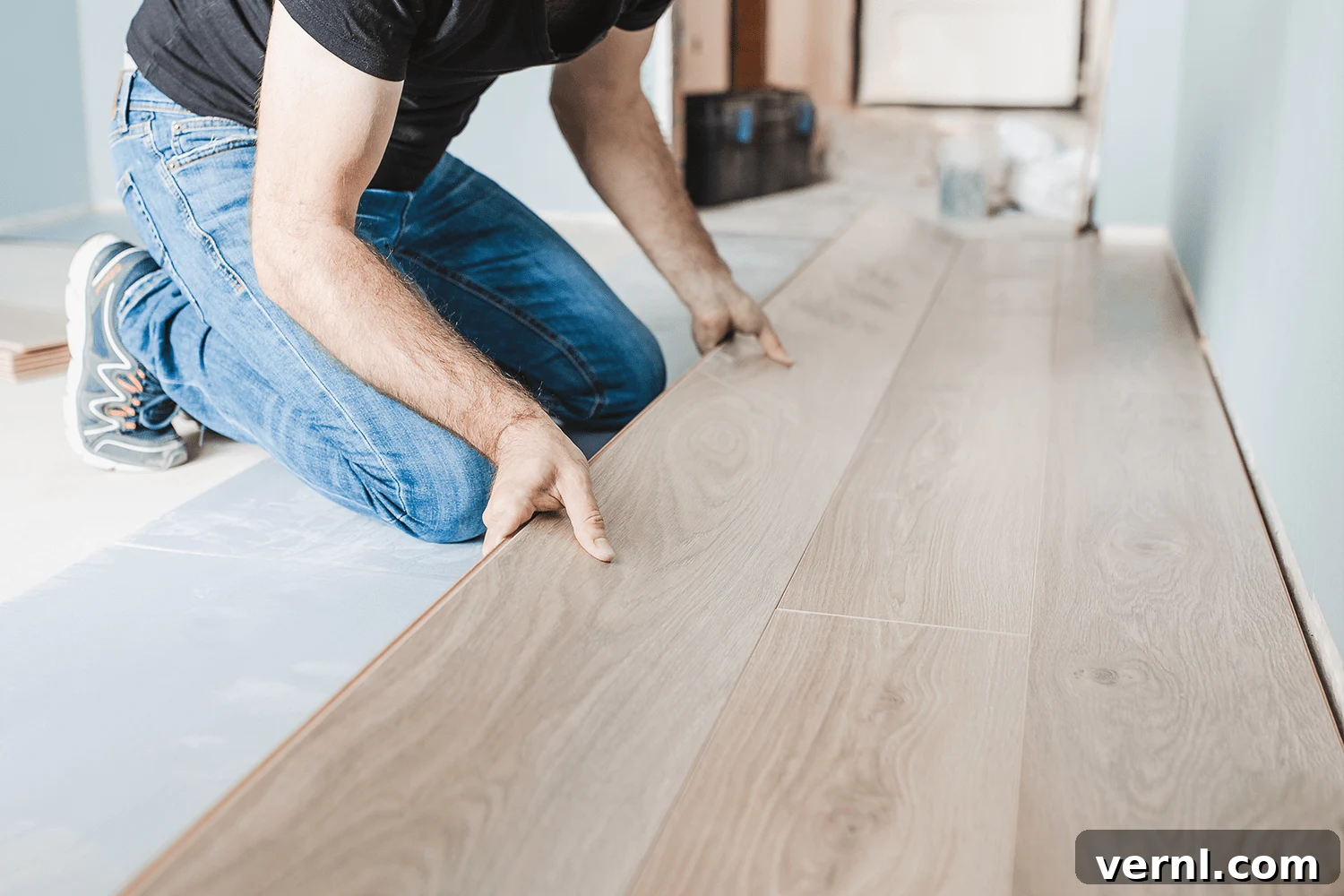
One of the most appealing aspects of rigid core flooring is its straightforward installation process, making it an excellent project for enthusiastic DIYers. If you’ve ever tackled laminate flooring installation, you’ll find the methods for rigid core remarkably similar, often even easier. The planks are designed with precision-engineered snap-together tongues and grooves, creating a secure, floating floor system that doesn’t require direct attachment to the subfloor.
Pre-Installation Essentials:
- Acclimation: Allow the flooring planks to acclimate to your home’s temperature and humidity for at least 48 hours before installation. This prevents potential expansion or contraction issues after installation.
- Subfloor Preparation: A clean, dry, and most importantly, level subfloor is crucial. Address any unevenness with appropriate leveling compounds. Repair any loose boards or excessive movement. For concrete subfloors, a moisture test is recommended to ensure no excessive moisture could affect the flooring or underlayment.
- Remove Existing Trim: Carefully remove baseboards and door casings, as you’ll need to reinstall them or new ones after the flooring is laid.
- Gather Tools: You’ll need a tape measure, utility knife, straightedge, tapping block, rubber mallet, spacers, pencil, and potentially a jigsaw or miter saw for intricate cuts.
Installation Steps:
- Plan Your Layout: Determine the direction you want your planks to run. Typically, running them parallel to the longest wall or perpendicular to the main light source creates an appealing aesthetic. Stagger your seams for a natural look, ensuring no two end joints are closer than 6-8 inches.
- First Row: Start in a corner, laying the first plank with the tongue side facing the wall. Use spacers to maintain an expansion gap (usually 1/4 to 1/2 inch, consult manufacturer guidelines) around the perimeter of the room. This gap is essential to allow for minor expansion and contraction of the floor.
- Connecting Planks: Interlock the short ends of the first row’s planks. Use a tapping block and rubber mallet to gently secure the joints. You’ll likely need to cut the last plank in the row to fit, using the leftover piece to start your next row if it’s long enough.
- Subsequent Rows: Angle the tongue of the new plank into the groove of the previously laid row, and then gently press or tap it down until it locks into place. Continue this process, staggering the end joints from row to row to create a strong, stable floor and a more visually appealing pattern.
- Making Cuts: For straight cuts, simply score the surface of the plank with a utility knife along a straightedge, then snap the plank over the edge. For more intricate cuts, such as around door frames, pipes, or curves, a jigsaw or miter saw will provide cleaner, more precise results.
- Working Around Obstacles: For door jambs, you can often undercut the jamb to slide the flooring underneath, creating a seamless look. For pipes or other round obstacles, create a template and carefully cut around them, ensuring adequate expansion gaps.
- Final Touches: Once all planks are laid, remove the spacers. Reinstall or replace your baseboards and shoe molding to cover the expansion gaps, providing a clean, finished edge.
While many rigid core products come with an attached underlayment, providing cushioning and insulation, you may opt to install an additional underlayment for enhanced comfort, sound reduction, or specific thermal properties. Always consult the manufacturer’s installation guidelines for your specific product, as recommendations can vary slightly.
Caring for Your Rigid Core Flooring
Maintaining the beauty and longevity of your rigid core flooring is remarkably simple:
- Regular Cleaning: Sweep or vacuum frequently to remove dirt, dust, and grit that can scratch the wear layer. Use a soft-bristle broom or a vacuum cleaner with a hard floor attachment.
- Damp Mopping: For deeper cleaning, use a damp mop with a pH-neutral floor cleaner specifically designed for vinyl flooring. Avoid excessive water, as while the floor is waterproof, standing water can seep into expansion gaps or affect the subfloor over time.
- Immediate Spill Cleanup: Wipe up spills promptly to prevent staining, although rigid core is highly stain-resistant.
- Protect Against Scratches: Use felt pads under furniture legs, especially those that are frequently moved. For heavy furniture, use wide, flat glides. Trim pet nails regularly to minimize scratches.
- Prevent Fading: Use blinds, curtains, or UV-protective window films on windows that receive direct, intense sunlight to protect against potential color fading.
- Avoid Harsh Chemicals: Never use abrasive cleaners, wax-based products, steam cleaners, or polish on rigid core flooring, as these can damage the wear layer and dull its finish.
Conclusion: Why Rigid Core Flooring is a Smart Investment
Rigid core flooring has truly revolutionized the flooring industry, offering an exceptional blend of aesthetics, performance, and practicality. My personal experience with hardwood disaster solidified my appreciation for its unparalleled waterproof capabilities and robust durability. It eliminates the anxieties associated with spills and moisture, making it an ideal choice for any room in your home, especially those high-risk areas like kitchens, bathrooms, basements, and entryways.
With its stunning visual versatility, mimicking everything from exotic hardwoods to luxurious natural stone, rigid core allows homeowners to achieve high-end designs without the high-end maintenance or vulnerability. Its DIY-friendly installation and competitive pricing further enhance its appeal, making a beautiful, durable floor accessible to more budgets.
Whether you’re embarking on a full home renovation or simply upgrading a single room, rigid core flooring stands out as a smart, long-term investment. It provides peace of mind, lasting beauty, and a comfortable living environment, proving that you don’t have to sacrifice style for functionality. Embrace the future of flooring with rigid core – a choice you won’t regret.