
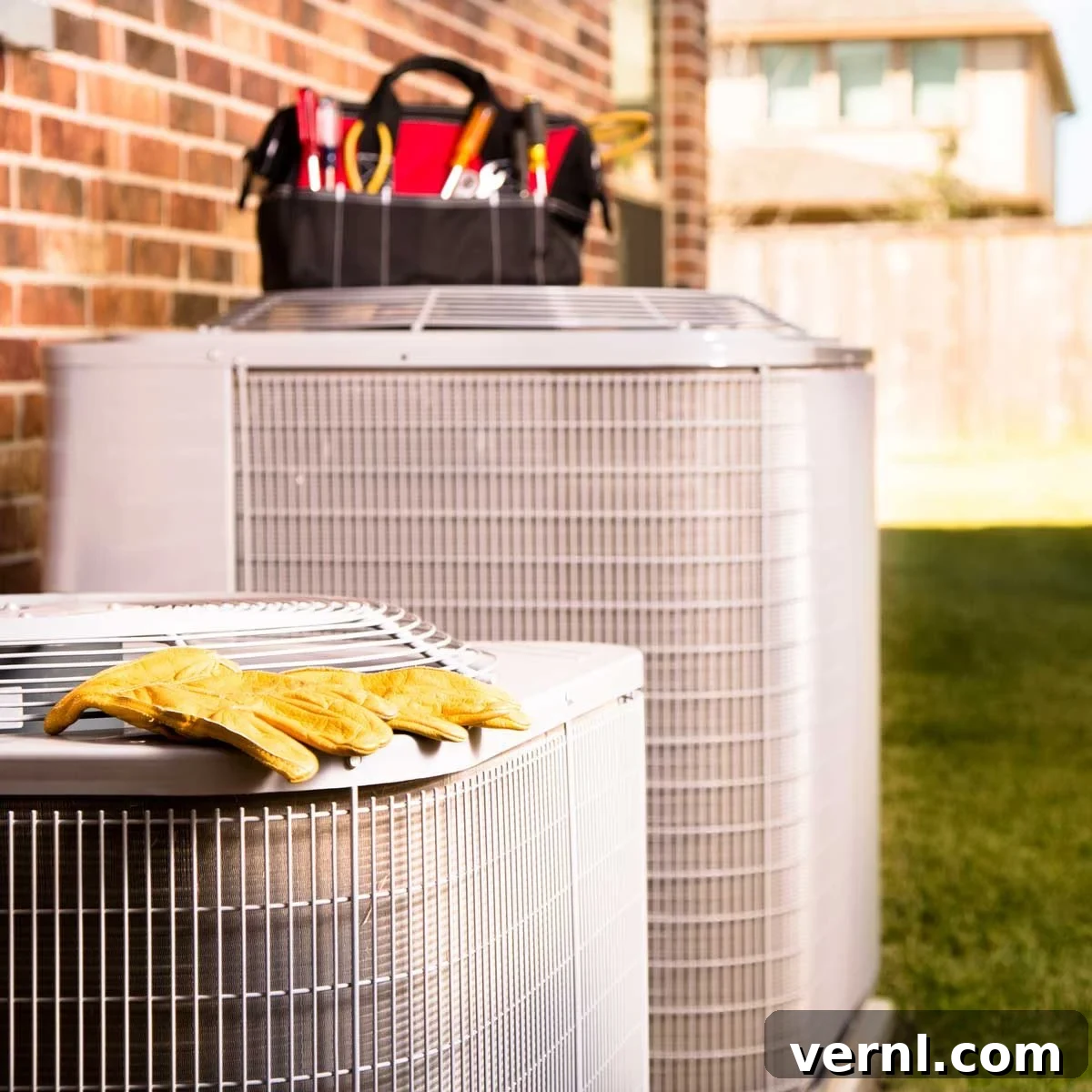
Central Air Conditioner Not Cooling? Expert Troubleshooting & Maintenance Tips
Few things are as disruptive to home comfort as a central air conditioner that suddenly stops blowing cool air. What begins as a minor inconvenience in early summer can quickly escalate into a serious health concern during peak heat waves, especially for vulnerable populations such as the elderly or those with disabilities. The Centers for Disease Control and Prevention (CDC) and the National Weather Service highlight the severe risks, estimating an average of 1,220 heat-exposure related deaths annually.
While consistent preventative maintenance is the best defense against AC malfunctions, it’s a common oversight for homeowners to neglect essential appliances until a problem arises. Even with diligent care, mechanical systems with moving parts are susceptible to wear and tear. This comprehensive guide is designed to empower you with the knowledge to troubleshoot common issues when your central air conditioner isn’t cooling properly, helping you identify problems and determine when it’s time to call in a professional.
Understanding Your Central Air Conditioner: Basic Terminology
Before diving into troubleshooting, let’s briefly review how your central air conditioning system operates. This foundational knowledge will help you better understand the potential issues.
Air conditioners function by continuously circulating a chemical fluid called refrigerant through a closed system of coils. The process involves two main sets of coils:
- Evaporator Coils: Located inside your home, these coils absorb heat from the indoor air. As warm indoor air passes over the cold evaporator coils, the refrigerant inside them absorbs the heat, turning into a low-pressure gas. The now-cooled air is then distributed throughout your home via a network of ducts and vents.
- Condenser Coils: Positioned in the outdoor unit, these coils release the absorbed heat to the outside environment. The gaseous refrigerant is compressed by the compressor, increasing its temperature and pressure. It then flows to the condenser coils, where it dissipates its heat into the cooler outdoor air, returning to a liquid state.
The entire system is managed by your thermostat, which signals the control board (often called the PCB or Printed Circuit Board) to activate the compressor, fans (including the indoor blower), and other components to maintain your desired temperature.
For the purpose of this article, we are focusing on split-unit central air conditioners. This common configuration means the evaporator coil and blower fan are housed inside your home (often within the furnace unit), while the compressor, condenser coils, and condenser fan are located in a separate outdoor unit.
The First Steps: Checking Your Central Air Conditioner’s Power Supply
When your central AC unit isn’t cooling, the most logical starting point is to verify that it’s receiving power. Many AC problems can be traced back to a simple electrical interruption. Check these three critical power points systematically:
1. The Circuit Breaker at the Electrical Panel
Your central air conditioner is a significant electrical appliance and is typically connected to a dedicated circuit breaker in your home’s main electrical panel. Locate your electrical panel (usually in a basement, garage, or utility closet) and identify the breaker labeled for your AC unit (or “HVAC,” “Furnace,” etc.).
- Check the Position: A tripped breaker will usually be in the “off” position or, more commonly, an intermediate position between “on” and “off.”
- Resetting: If the breaker is tripped, firmly push it all the way to the “off” position first, then firmly flip it back to the “on” position. Avoid simply flicking it back.
- Repeated Tripping: If the breaker immediately trips again or trips frequently, this is a strong indication of an underlying electrical problem, such as an overloaded circuit, a short circuit, or a failing motor. In such cases, it’s crucial to contact a qualified electrician or HVAC technician to diagnose and resolve the issue safely.
2. The Exterior Unit’s Disconnect Switch
Near your outdoor condenser unit, you’ll find a small metal box mounted on the wall. This is the AC disconnect switch, a safety feature that allows power to the outdoor unit to be cut off for maintenance or emergencies. It often contains a pull-out block or a lever switch.
- Check for Engagement: Ensure the pull-out block is fully inserted, or the lever switch is in the “on” position.
- Accidental Disengagement: Sometimes, this switch can be accidentally pulled out or flipped off during yard work or other outdoor activities.
3. The Furnace or Heat Pump’s Power Switch
The indoor component of your split AC system (the evaporator coil and blower fan) is typically integrated with your furnace or heat pump. This indoor unit also has its own power switch, often resembling a standard light switch, located near the unit itself (e.g., on a wall, or directly on the furnace casing).
- Verify “On” Position: Ensure this switch is in the “on” position.
- Common Accidental Flip: This switch is notorious for being accidentally bumped or turned off during cleaning, storage, or by curious children. The fix can be as simple as flipping it back on.
4. Thermostat Batteries
While not a direct power issue to the AC unit itself, a dead thermostat battery can prevent it from communicating with your system. Most modern programmable and smart thermostats require batteries. Check if your thermostat’s display is blank or showing a low battery indicator and replace the batteries if necessary. This is a quick and easy fix that is often overlooked.
Addressing Air Flow: The Most Common AC Problem
Within a central air conditioning system, problems related to airflow are among the most frequent culprits for inadequate cooling, and thankfully, they are often the easiest to diagnose and repair. The heart of your indoor airflow system is the large fan, known as the “blower,” located inside your home’s furnace or air handler unit.
1. Inspect and Replace the Furnace Filter
A dirty or clogged furnace filter is arguably the most common cause of poor AC performance. Its function is to trap dust, pet dander, pollen, and other airborne particles, preventing them from accumulating on the evaporator coils and circulating throughout your home. However, a neglected filter becomes a significant impediment to proper airflow.
- How it Causes Problems: A clogged filter restricts the volume of air that can pass through the system. This means less air can flow across the evaporator coils, reducing their ability to absorb heat effectively. The reduced airflow can also lead to the evaporator coils becoming excessively cold and freezing over, which further exacerbates the problem by completely blocking airflow and potentially leading to water leaks.
- Checking the Filter: Locate the filter slot in your furnace or air handler (often a rectangular slot where the return duct meets the unit). Pull out the existing filter. If it’s heavily coated in dirt, dust, or pet hair, it’s time for a replacement.
- Filter Types and Frequency: Filters come in various MERV (Minimum Efficiency Reporting Value) ratings. While higher MERV ratings capture more particles, they also restrict airflow more, so ensure you use the correct type recommended for your system. As a general rule, replace your furnace filter every 1-3 months, or more frequently if you have pets, allergies, or live in a dusty environment. Regular replacement is vital for both system efficiency and indoor air quality.
2. Check the Ductwork Trunk Near the Blower
If the blower fan is running and you’ve confirmed your filter is clean, the next step is to assess the temperature of the main ductwork trunk just past the blower unit. This can provide a quick indication of whether the cooling process is actually happening inside your unit.
- The Test: Carefully feel the metal surface of the largest duct (the supply plenum) immediately after it exits the indoor air handler.
- What to Look For: If this trunk is distinctly cold, it indicates that your evaporator coils are effectively cooling the air. This suggests the problem lies further down the line, meaning there’s an obstruction or leakage preventing that cold air from reaching your living spaces. If the trunk feels lukewarm or room temperature, the issue is likely within the AC unit itself (e.g., coils, refrigerant, or compressor).
Troubleshooting Your Ductwork System
The ductwork network is the circulatory system of your AC, distributing cool air throughout your home. Issues within this system can significantly impact comfort and efficiency.
1. Inspect Ductwork Dampers
Many homes, especially those with multiple zones or larger layouts, utilize dampers within the ductwork. These adjustable plates allow you to regulate airflow to specific areas, directing more cool air to rooms that need it most or reducing flow to unoccupied zones. However, if improperly set or accidentally moved, dampers can become roadblocks.
- Function and Impact: Dampers can be manual (requiring physical adjustment) or automatic (controlled by a zoning system). If a damper is closed or significantly misaligned in a crucial part of your duct system, it will restrict the flow of cold air to entire sections of your home, leading to uneven cooling or no cooling at all in certain rooms.
- Checking Dampers: Trace your accessible ductwork and look for levers or knobs on the exterior of the ducts. Ensure they are in the open position, allowing air to flow freely. If you have a zoned system, ensure your thermostat settings are correct for the zones you want to cool.
2. Look for Damaged or Leaky Ducts
Ductwork is often hidden behind walls and ceilings, making it easy to forget, but it’s prone to wear, damage, and leaks. Over time, ducts can become disconnected, develop cracks, or lose their insulating properties.
- Consequences of Leaks: Leaky ducts allow a significant amount of your carefully cooled air to escape into unconditioned spaces (like attics, crawl spaces, or basements) before it ever reaches your living areas. This results in wasted energy, higher utility bills, and a noticeable reduction in cooling performance inside your home.
- Signs of Leaks: You might notice uneven cooling, rooms that are consistently warmer than others, or unusually high energy bills. If accessible, visually inspect ducts for gaps, tears, or loose connections. You might even feel drafts of cold air escaping from seams.
- Professional Help: Sealing or repairing ductwork can be a complex task, often best left to HVAC professionals who can perform comprehensive duct integrity tests and seal leaks effectively.
3. Check Your Room Vents (Registers)
The final point of delivery for cool air in your home is through the adjustable vents or registers in each room. These can be easily obstructed or inadvertently closed.
- Obstructions: Ensure that furniture, rugs, curtains, or other household items are not blocking any supply vents (where air comes out) or return vents (where air is drawn back into the system). Blocked vents impede airflow and lead to inefficient cooling.
- Adjustments: Confirm that the louvers on the vents are open. While it might seem intuitive to close vents in unused rooms, doing so can actually create pressure imbalances in your duct system, making your AC work harder and potentially leading to problems like frozen coils. It’s generally better to keep all vents at least partially open.
- Dust Buildup: Peek inside the vents with a flashlight. If you see significant dust, pet hair, or debris accumulation, it might be time to consider professional air duct cleaning. While cleaning vents themselves is easy, a thorough duct cleaning requires specialized equipment.
Diagnosing Issues with Your Coils
The evaporator and condenser coils are central to the heat exchange process. Problems with either can severely impact your AC’s ability to cool.
1. Inspect the Evaporator Coils (Indoor Unit) for Ice Buildup
If you notice excessive water dripping from your AC cabinet or observe ice forming around the refrigerant line (the copper tube leading into your indoor unit) or directly on the evaporator coils themselves, your system is likely suffering from frozen evaporator coils. This is a common and serious problem that leads to poor cooling and higher energy consumption.
- Why Coils Freeze:
- Poor Airflow: The most frequent cause is insufficient airflow over the coils, often due to a dirty air filter, blocked return vents, or a malfunctioning blower fan. When warm air isn’t adequately passed over the coils, they get too cold, causing moisture in the air to condense and freeze onto the coil surface.
- Low Refrigerant: A leak in the refrigerant line can cause a drop in pressure within the system, leading the evaporator coils to become excessively cold and freeze.
- Mechanical Issues: A faulty expansion valve or other component can also contribute to freezing.
- Troubleshooting and Thawing: To address this, immediately turn off your AC unit (set the thermostat to “off”) but keep the fan running (set to “On” or “Fan Only”). Running the fan will circulate warmer indoor air over the frozen coils, helping them to melt. Allow the unit to thaw completely, which can take several hours (typically 4-24 hours depending on the severity). Place towels or a pan underneath the indoor unit to catch any melting ice.
- Preventative Steps: While the unit is thawing, ensure you change your air filter and check for any blocked vents or return registers.
- Recurrence: If the ice reappears shortly after you restart the system, even with a clean filter and good airflow, it strongly indicates a deeper issue such as a refrigerant leak or a mechanical problem, requiring professional diagnosis and repair.
2. Clean the Condenser Coils (Outdoor Unit)
Your central air conditioner’s primary job is to move heat from the interior of your home to the outside. This heat is expelled by the outdoor condenser unit. (If you stand near the outdoor unit while it’s running, you should feel a blast of warm air escaping – that’s the heat from your home being released.)
However, if the condenser coils are covered in dirt, leaves, grass clippings, or other debris, they cannot effectively dissipate this heat. This “insulation” effect traps heat within the unit, forcing your AC to work much harder to cool your home, leading to reduced efficiency, higher energy bills, and often intermittent cooling (short bursts of cold air followed by lukewarm air from the vents) as the system struggles to shed heat and may even cycle off prematurely to prevent overheating.
- Cleaning Procedure:
- Power Off: Crucially, turn off all power to the outdoor unit at the disconnect switch (the box on the wall near the unit) and at the main circuit breaker inside your home to prevent accidental startup.
- Remove Debris: Use a brush or your hands to gently remove any large debris (leaves, twigs, grass) from the exterior fins and around the base of the unit.
- Rinsing: Using a garden hose (not a pressure washer, which can damage the delicate fins), gently spray water from the inside of the coil outward, pushing dirt and debris through the fins. If accessing the inside is difficult, spray thoroughly from the outside. Avoid bending the aluminum fins; if they are bent, you can carefully straighten them with a fin comb.
- Clear the Area: Trim back any shrubs or plants, ensuring at least a 2-foot clearance around all sides of the condenser unit to promote optimal airflow.
- Frequency: It’s advisable to clean your condenser coils at least once a year, preferably at the beginning of the cooling season, or more often if you live in a dusty area or have shedding trees nearby.
Electrical Components: The Capacitor
If your exterior unit isn’t starting up at all, or if the fan attempts to spin but then stops, or you hear a humming noise but no action, a faulty capacitor may be the culprit. The capacitor is a cylindrical electrical component (often found in the control panel of the outdoor unit) that provides the necessary electrical jolt to start the compressor and fan motor.
- Symptoms of Failure: Besides the humming or failed startup, a failing capacitor can cause the outdoor fan to run but the compressor not to, or vice-versa. Visually, a bad capacitor might appear swollen or bulging at the top, or have fluid leaking from it.
- DIY Potential (with caution): Replacing an AC capacitor is considered a relatively straightforward DIY air conditioner repair for those comfortable and experienced with working with electrical components. However, this is a task that comes with a critical safety warning: capacitors can hold a lethal electrical charge even after the power to the unit has been turned off. They must be safely discharged before handling.
- Safety First: If you are not absolutely confident in your ability to safely discharge and replace a capacitor, it is always best to call a qualified HVAC technician. The risks associated with high voltage electricity are severe.
Complex Issues: Compressor and Refrigerant Problems
Unfortunately, some of the more complex issues affecting your central air conditioner often extend beyond the scope of typical DIY repairs. Problems with the compressor or refrigerant system are generally best handled by certified HVAC professionals.
1. Compressor Malfunction
The compressor is the heart of your AC system, responsible for compressing the refrigerant and moving it through the coils. A failing compressor means your AC simply cannot perform its core function of heat exchange.
- Symptoms: A complete lack of cooling, loud grinding or squealing noises coming from the outdoor unit, or the outdoor unit not turning on at all (even if the fan runs).
- Costly Repair: Compressor replacement is one of the most expensive AC repairs. In many cases, especially for older units, the cost of replacing the compressor approaches the cost of a brand-new AC system, making a full unit replacement a more economical and efficient long-term solution.
2. Refrigerant Leaks and Low Refrigerant Levels
Your air conditioning system is a sealed, “closed loop” system. This means the refrigerant within it is continuously reused and should never need to be “topped off” or refilled under normal circumstances. If your system is low on refrigerant, it’s not because it’s been “used up” – it’s because there’s a leak somewhere in the system.
- Consequences of Low Refrigerant: Low refrigerant levels significantly reduce your AC’s cooling capacity, leading to lukewarm air, longer run times, increased energy bills, and potential damage to the compressor. It can also cause the evaporator coils to freeze, as mentioned earlier.
- Signs of a Leak: Besides poor cooling, you might notice a hissing sound from the refrigerant lines, or oily residue around connections or coils (refrigerant contains oil).
- Why Professional Help is Essential:
- Leak Detection and Repair: Simply refilling the refrigerant without finding and fixing the leak is a temporary, ineffective, and environmentally harmful solution. A professional technician has the tools and expertise to pinpoint the leak, repair it, and then properly recharge the system.
- Environmental Regulations: Refrigerants are potent greenhouse gases, and their handling is strictly regulated. Adding refrigerant yourself can lead to environmental damage and is illegal without proper certification.
- Refrigerant Type: Your system uses a specific type of refrigerant. Older systems often use R-22 (Freon), which has been largely phased out due due to environmental concerns. If your system requires R-22 and has a leak, the repair costs can be substantial due to the dwindling supply and high cost of R-22. In such cases, it may be more cost-effective to consider a central AC unit replacement to a more modern, efficient, and environmentally friendly system (e.g., one using R-410A).
Additional Troubleshooting: The Thermostat
While often overlooked when the AC isn’t blowing cool air, your thermostat is the command center of your HVAC system. A malfunctioning thermostat can mistakenly tell your AC to do nothing at all.
- Check Settings: Ensure your thermostat is set to “Cool” mode, not “Heat” or “Fan Only.” Verify that the desired temperature setting is significantly lower than the current room temperature.
- Batteries: As mentioned, replace dead batteries in wireless or smart thermostats.
- Dirty Sensors: Dust accumulation on the thermostat’s internal temperature sensor can lead to inaccurate readings. Gently clean the vents or openings on the thermostat with a soft brush or compressed air.
- Calibration: If you suspect your thermostat is reading the temperature incorrectly, you can sometimes recalibrate it or compare its reading to a separate, accurate thermometer in the same room.
- Malfunction: If the screen is unresponsive, flickers, or if the unit doesn’t respond to any commands, the thermostat itself might be faulty and need replacement.
When to Call a Professional HVAC Technician
While this guide empowers you with many troubleshooting steps, it’s crucial to recognize when a problem is beyond DIY capabilities or requires specialized tools and expertise. You should always contact a certified HVAC professional if:
- You suspect a refrigerant leak.
- Your circuit breaker for the AC repeatedly trips.
- You hear unusual noises (grinding, squealing, banging) from the outdoor unit.
- Your AC is blowing hot air, indicating a compressor issue.
- You’ve tried all the basic troubleshooting steps, and the problem persists.
- You are uncomfortable or unsure about performing any electrical checks or repairs.
- Your system is old and inefficient, and you’re considering replacement.
FAQ: Your Central Air Conditioner Questions Answered
How often should I perform maintenance on my central air conditioner?
HVAC professionals generally recommend scheduling professional maintenance for your AC unit twice a year: once in the spring before the cooling season begins to ensure it’s ready for heavy use, and again in the fall after the cooling season ends to prepare it for winter. Between professional visits, you should take proactive steps like checking and changing your furnace filters every 1 to 3 months, or even more frequently if you have pets, allergies, or a large household, to ensure proper airflow.
How long do central air conditioning systems last with proper maintenance?
With consistent and proper maintenance, a central air conditioning system can have a lifespan of 15 to 20 years. Leading appliance manufacturers, such as Trane, confirm these estimates, emphasizing that regular servicing is key to maximizing efficiency and extending the unit’s operational life. While some units might last longer, the likelihood of a major component failure or a significant drop in efficiency increases substantially after this period, often making replacement a more cost-effective decision.
What are the signs of a major AC problem versus a minor one?
Minor problems often involve airflow (dirty filters, blocked vents), power interruptions (tripped breakers), or simple thermostat issues. These can often be resolved with basic troubleshooting. Major problems usually involve the internal sealed system (refrigerant leaks, compressor failure, significant electrical faults, or persistent freezing), which typically present with loud noises, warm air from vents, or a complete lack of operation that isn’t solved by simple fixes. These almost always require professional attention.
Can I improve my AC’s efficiency?
Absolutely. Regular filter changes, annual professional tune-ups, keeping the outdoor condenser unit clean and clear of debris, sealing leaky ductwork, ensuring all vents are open, and setting your thermostat to a reasonable temperature (e.g., 78°F) can significantly improve your AC’s efficiency and reduce energy consumption.
Sources
- CDC: HeatRisk – CDC/NWS Collaboration; (2025)
- Trane: How Long Do AC Units Last? (2025)